EXPERT REVIEWED
  FREE DELIVERY
  INSTALATION AVAILABLE
 Tiger Corner Summerhouse – Expert Review
First Added - November 28 2025
Last Updated - November 28 2025 - 0 Data Points Updated - 0 Data Points Added
Reviewed & curated by a panel of garden building experts. Using methodology 1.1
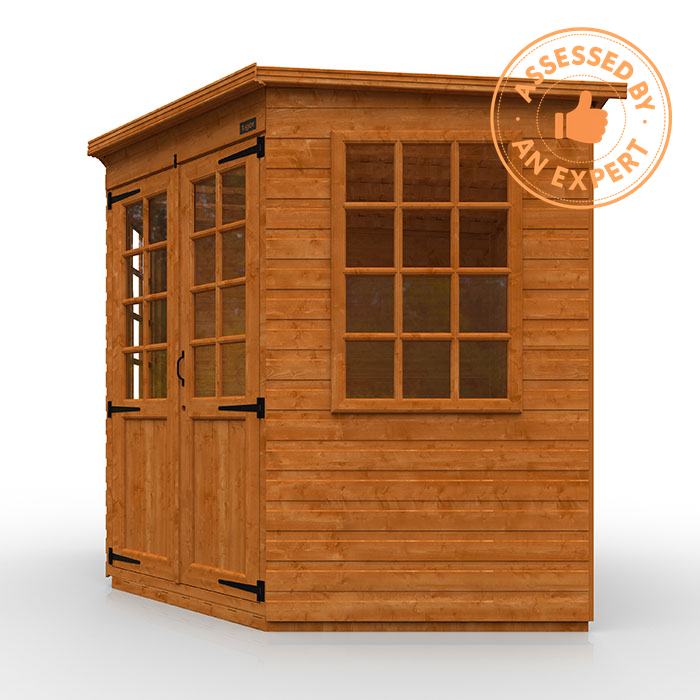
Product ID: tiger-sheds-tiger-corner-summerhouse
Size: Multiple sizes available
Merchants Checked: 10
There’s a particular moment when you step into a corner summerhouse that tells you almost everything you need to know.
It isn’t visual.
It isn’t about how many windows it has.
It happens when you step over the threshold, shift your weight, and subconsciously register whether the building feels settled — or whether it feels like something that might move with you.
Corner summerhouses are structurally unforgiving. Angled walls, wide openings, and generous glazing all work against rigidity. Plenty of models look attractive from the outside, but once you’re inside them the illusion falls apart: thin panels, hollow walls, floors that feel like they’re spanning space rather than resting on structure.
That’s why the Tiger Corner Summerhouse deserves a closer look.
Inspection context — and why it matters
We haven’t yet physically inspected this exact Georgian-windowed configuration on a Tiger show site. At the time of writing, it wasn’t on display at the Otley, Tong, or Horsforth locations.
What we have inspected — thoroughly — is the Tiger Vista Corner Summerhouse, displayed at both Tong and Otley.
This distinction matters, because structurally the two buildings are the same in every way that counts:
- Same footprints and corner geometry
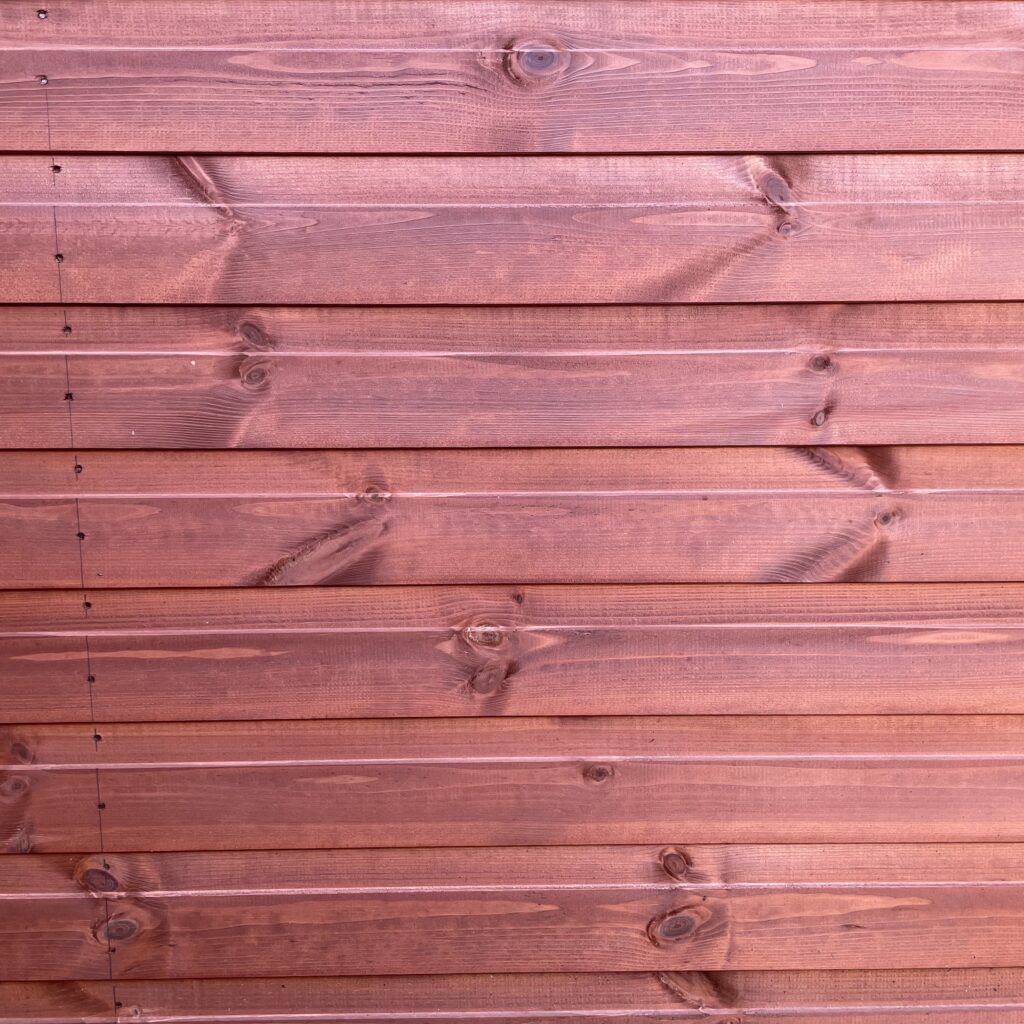
- Same 12mm tongue-and-groove shiplap cladding
- Same 12mm tongue-and-groove floor
- Same 12mm tongue-and-groove roof
- Same 28 × 44mm rounded framing
- Same load paths and fixing philosophy
The only meaningful difference is glazing style.
And crucially, the Vista is the full-pane version — more glass, less timber. From a structural point of view, that makes it the harder building to get right.
If a full-pane corner summerhouse feels rigid and composed, the version that replaces some of that glass with timber panels — as the Georgian model does — will, by definition, be stronger still.
That makes our inspection a conservative baseline, not an optimistic one.

The first step inside — what the building tells you immediately
The first thing you notice inside the Vista model is how little there is to notice.
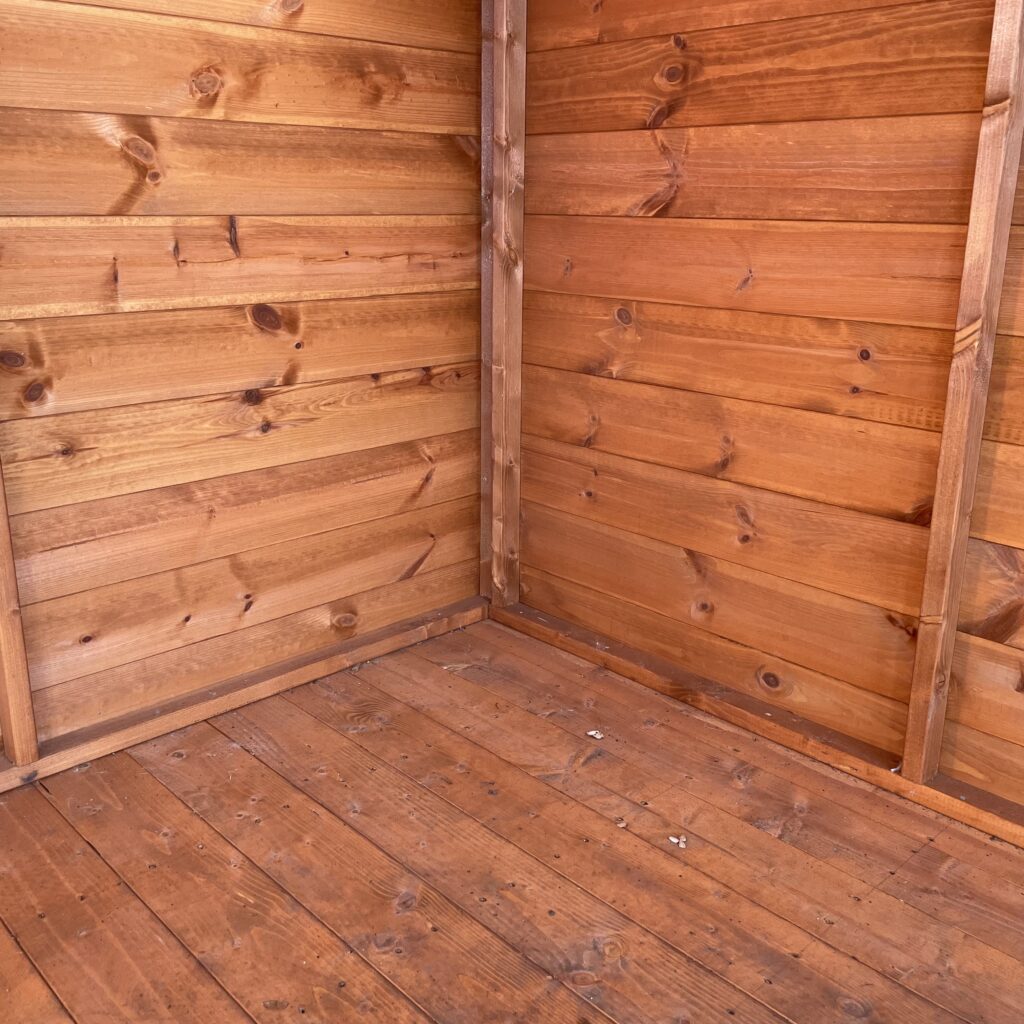
There’s no bounce underfoot. No spring through the centre of the floor. No sense that weight is being carried by boards alone. The floor feels flat, calm, and properly supported — which aligns with how the building is actually constructed, with wall panels fixed directly down into the floor bearers so the whole structure behaves as a single unit.
Anyone who’s stood inside enough garden buildings knows this moment well. A weak floor announces itself instantly. This one doesn’t.
That single detail sets the tone for everything else.
Walls that work together, not independently
Press gently against the walls and you don’t get the hollow, drum-skin response that gives away cheaper corner buildings.
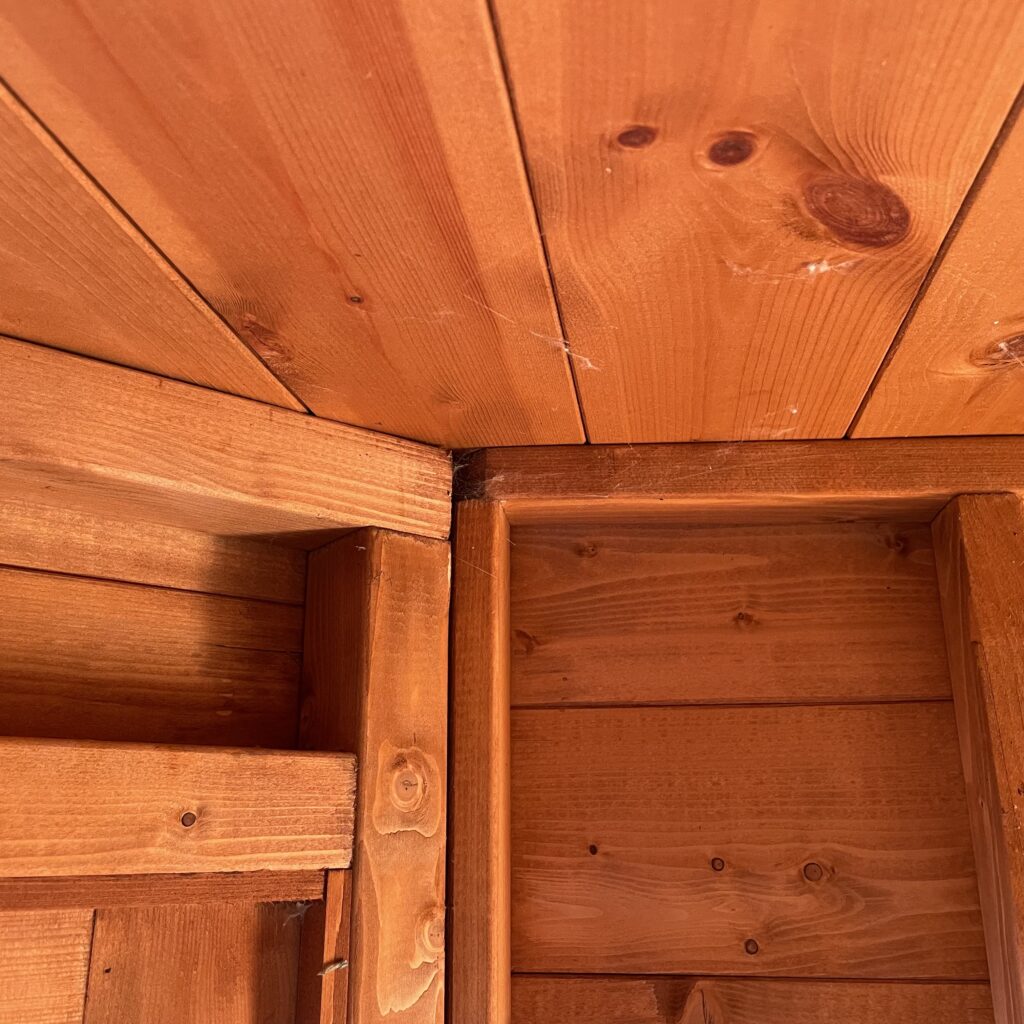
The 12mm shiplap boards sit tightly together, but they’re not being asked to do all the work. Behind them, the 28 × 44mm framing is sensibly spaced and properly tied in, so when you apply pressure, the resistance feels shared rather than localised.
That’s exactly what you want in a corner layout, where forces travel diagonally rather than straight down. Poor designs rack over time because each wall starts reacting independently. Here, the walls feel like they’re sharing load.
Now bring the Georgian version back into the picture.
Replacing some of the full-pane glazing with solid timber panels introduces more continuity into the wall structure. Structurally, that almost always increases stiffness. So if the Vista already feels planted, the Georgian version starts from a position of advantage.
A real-world comparison that matters
This isn’t theoretical.
On a daily commute, we regularly pass a much cheaper corner summerhouse from another manufacturer — overlap panels, lightweight framing, styrene glazing. Even from the road, it looks hollow. In strong winds, it visibly flexes. It has that unmistakable temporary feel.
Standing inside the Tiger Corner Summerhouse, that comparison simply doesn’t exist.
This building doesn’t feel like it’s hoping for calm weather.
Light without fragility
One of the reasons people choose the Georgian version over the full-pane Vista is balance.
You still get plenty of natural light — the two fixed Georgian windows are generous — but the building no longer feels reliant on large, uninterrupted glass sections to define its character.
The Georgian bars are applied externally, so from inside you’re looking through clean, uninterrupted glass. That preserves light while allowing the timber around the openings to quietly do its job.
The result is a space that feels like a room, not a display case.
Doors that feel engineered, not tolerated
Doors are often the first thing to reveal long-term weakness in a corner building.
Here, the half-glazed double doors feel properly weighted and well controlled. The reduced glazing in the Georgian doors allows for longer, better-distributed hinges, which immediately shows in use. The doors don’t sag, don’t swing loosely, and don’t feel like they’re under tension.
You also get a proper lock-and-key system, reinforcing that this is intended as a usable garden room rather than a decorative feature.
This is one of those details that doesn’t shout — but it’s exactly the sort of thing that still matters years later.


The roof — quietly doing its job
Inside the building, the roof doesn’t draw attention to itself, which is precisely the point.
The pitch is gentle rather than dramatic, but effective. The internal lines are clean, there’s no visual sag, and everything feels aligned. Structurally, the roof is fixed through into the wall framing rather than simply nailed along edges, so it behaves as part of the building rather than a lid placed on top.
You get the impression that someone has actually thought about how forces travel through the structure, rather than just assembling panels to hit a price.


A necessary moment of honesty — glazing installation
There is one area where care genuinely matters.
The glazing is installed during assembly rather than factory-sealed. It works, but it rewards patience. Fixings are close to glass, and sealing needs to be thorough.
We’ve seen on other buildings how a single rushed bead of silicone can become a talking point after the first storm. Take your time here and it simply never becomes an issue. Rush it, and you may create a problem that didn’t need to exist.
It’s not a flaw — just a step that deserves respect.


Timber quality, finish, and the details that add up
Every time we’ve been inside a Tiger summerhouse, one thing has been consistent: they smell dry, solid, and clean.
There’s no mustiness. No damp timber smell. No sense of cheap treatment masking poor wood quality. Run your hand along the timber and it’s smooth. Look closely and you notice the small things — extra fixings, neat trims, tidy junctions — that don’t shout, but accumulate.
Compared to cheaper corner summerhouses, there’s simply more structure, more fastening, and more care here.


Size, weight, and presence
Available in 6×6, 7×7, and 8×8 sizes, this is not a lightweight building. Even the smallest size carries real mass, and the largest pushes well beyond anything you’d describe as flimsy.
Internally, the proportions feel comfortable without being overbearing. There’s enough height to move naturally, enough wall space to furnish the room properly, and enough presence that the building feels intentional rather than tucked away.
Long-term expectations
Taking everything together — the Vista inspection, the shared construction, and the additional timber in the Georgian configuration — this is a building we would expect to:
- Stay square over time
- Resist wind movement better than most corner designs
- Age predictably with proper annual treatment
Not because it’s flashy, but because it’s been properly thought through.
Final expert verdict
The Tiger Corner Summerhouse (Georgian Windows) is a serious, well-designed garden building.
It’s classic in appearance, robust in construction, and clearly built by a manufacturer that understands timber buildings rather than simply assembling them. While glazing installation deserves care, it’s a minor consideration in the context of the overall build quality.
If you’re looking for a corner summerhouse that feels permanent rather than temporary — something you won’t be second-guessing after the first winter — this sits firmly in that category.
You’re not buying something you’ll worry about.
You’re buying something that should quietly do its job for years.