EXPERT REVIEWED
  FREE DELIVERY
  INSTALATION AVAILABLE
 Tiger Elite Pressure Treated Apex Shed – Show Site Review
First Added - November 28 2025
Last Updated - November 28 2025 - 0 Data Points Updated - 0 Data Points Added
Reviewed & curated by a panel of garden building experts. Using methodology 1.1
Product ID: tiger-sheds-tiger-elite-pressure-treated-apex-shed
Size: Multiple sizes available
Merchants Checked: 10
Available From: 1
Support WhatShed: by making a purchase after clicking a link above, a portion of the sale supports this site.
A First-Hand, In-Person Review from the Tong & Otley Show Sites
When a Shed Makes You Stop Walking
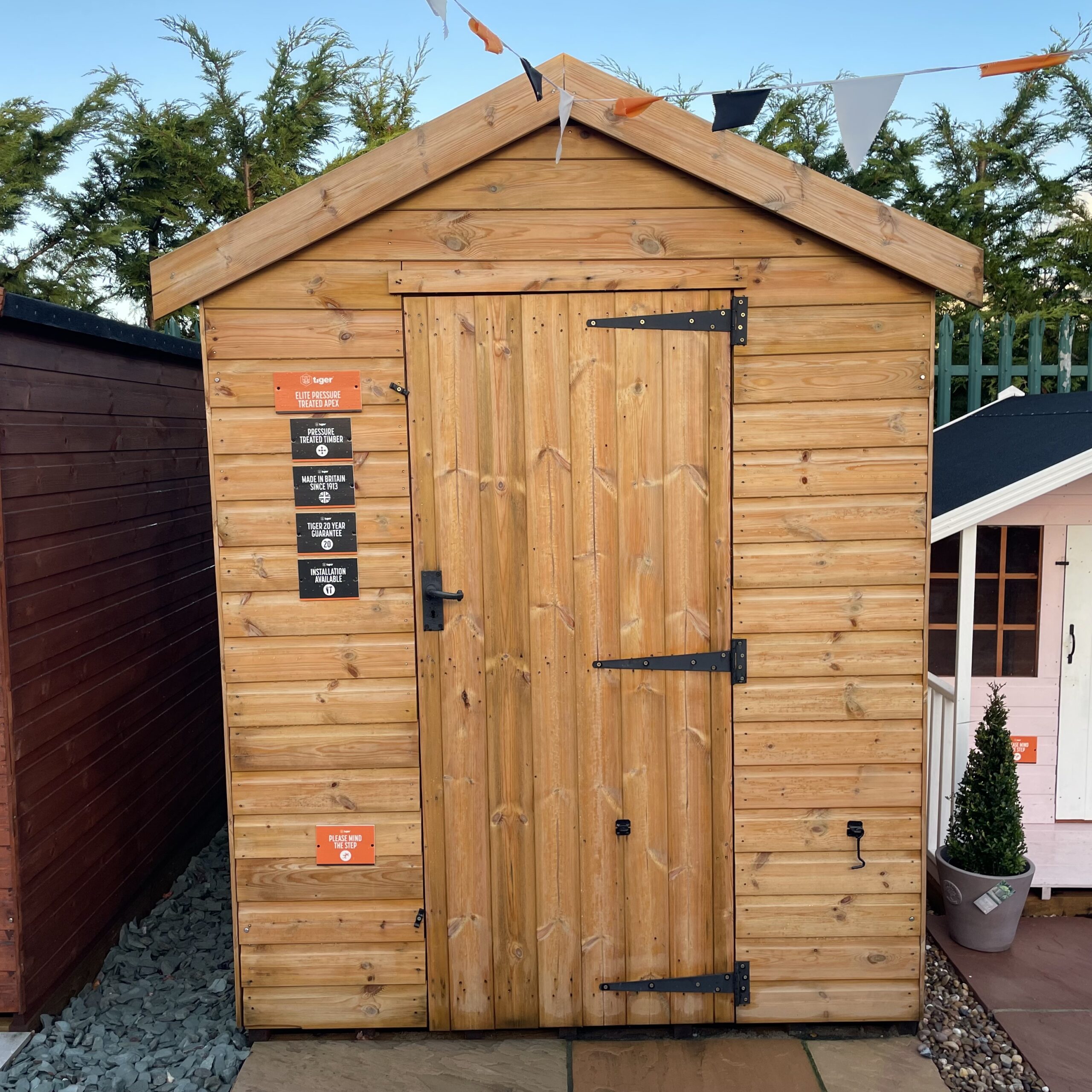
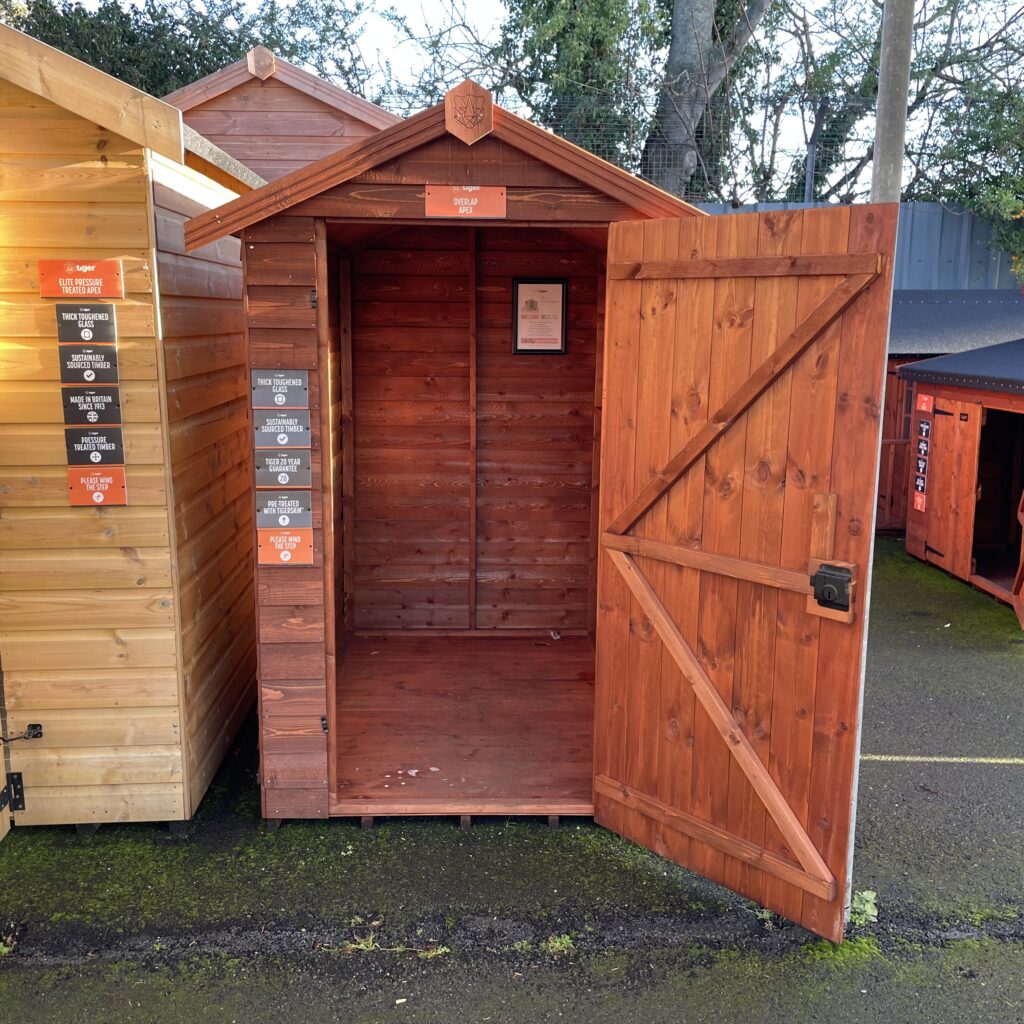
The first time we saw the Tiger Elite Pressure Treated Apex Shed at the Tong show site, we didn’t walk straight up to it. We actually slowed down first.
Not because it was flashy — it isn’t — but because it immediately looked different to the sheds around it. From about 40 to 50 feet away, it already felt heavier, taller, and more settled in its proportions. It didn’t have that slightly temporary look that a lot of garden sheds do, where they only start to feel convincing once you’re right next to them.
That first impression stayed with us. And when we inspected the same model again at the Otley show site, months later and in different weather, it only strengthened.
The best way we can describe the Elite Apex is this:
if you took a highly skilled company that genuinely knew what it was doing, gave them a blank sheet of paper, and asked them to design the best traditional apex shed they know how to make — using all of their experience — this is probably what they’d come up with.
Tiger Sheds have been building garden sheds for over 100 years, and this feels like a product that sits right at the end of that learning curve. The proportions are spot on. Nothing feels accidental. Nothing feels cost-led.

Same Size on Paper, Very Different in Reality
One of the reasons this shed impresses so quickly is that it exposes a misconception people often have when shopping for sheds: that size alone tells you what you’re getting.
Take a 7×5 shed as an example. Tiger make a 7×5 overlap apex shed, and they also make a 7×5 Elite pressure treated apex shed. On paper, they’re the same size. In reality, they are very different buildings.
The overlap version isn’t a bad shed — far from it. But it’s not as tall. The framing isn’t as substantial. The windows aren’t finished in the same way. And once you’ve seen them side by side, those “little things” stop feeling little at all.
It’s like cars. A cheap car and an expensive car will both get you from A to B. They technically do the same job. But they’re built for different markets, different customers, and very different lifespans. The garden shed industry is exactly the same.
Within Tiger’s own range, their apex sheds naturally fall into three tiers:
- Value overlap sheds
- Shiplap tongue & groove sheds
- Elite pressure treated sheds
The Elite range sits very clearly at the top — and it’s obvious why the moment you start looking closely.

“This Looks Solid” — From a Distance
Our very first reaction, standing back and looking at the Elite Apex, was simply: this looks solid.
Not just “nice”, not just “well finished” — solid. It has that look where you half-jokingly think you could huff and puff like one of the Three Little Pigs and still not shift it. Not something you expect to think while reviewing a garden shed, but that was genuinely the impression.
And the important thing is that this feeling doesn’t disappear when you walk up to it. If anything, it gets stronger.
Walking Around It With the Photos
When we later went back through our photos from both show sites, it was interesting how consistent our reactions were. The same things kept jumping out: the framing thickness, the way the windows were finished, how tightly everything came together.
This wasn’t a case of one clever detail doing all the work. It was lots of small, correct decisions stacking up into a very confident whole.
Doors, Hinges, and Proper Hardware
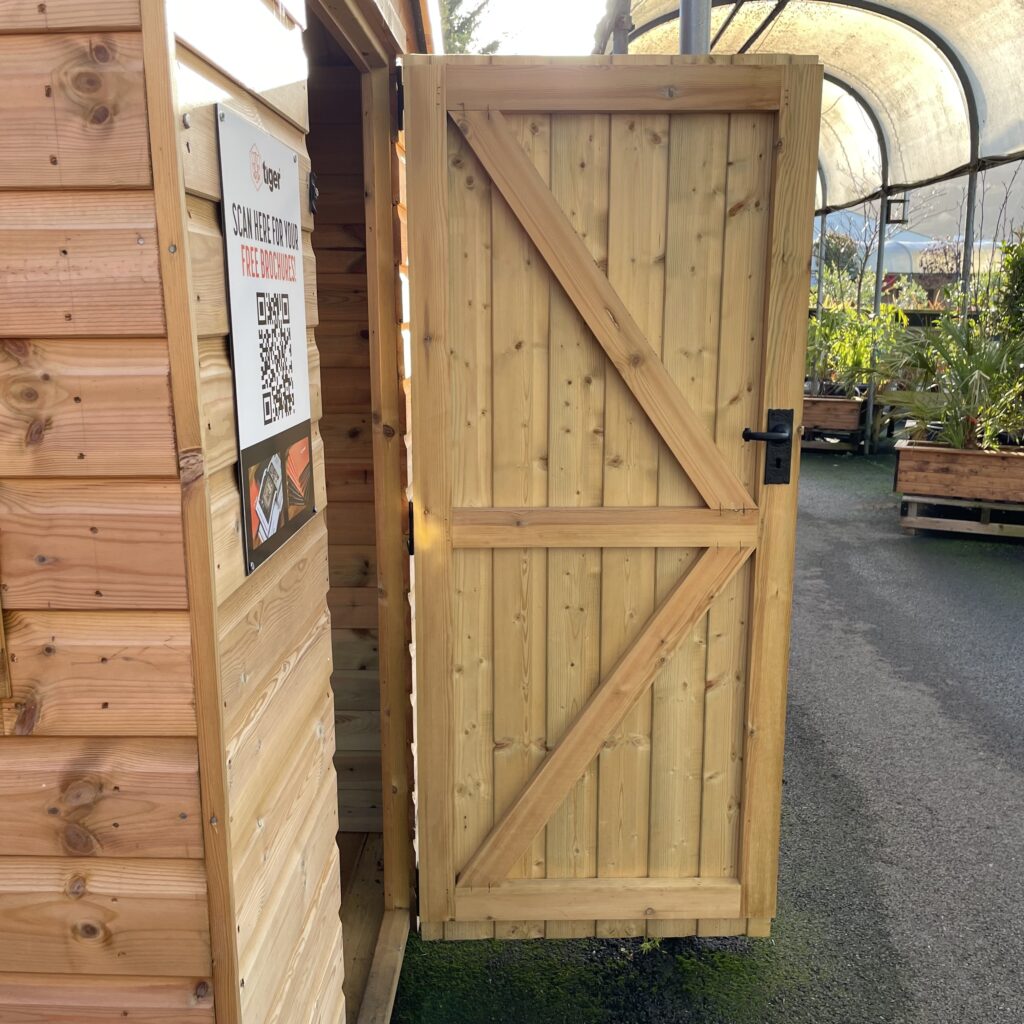
The door is a good place to start because it tells you immediately what kind of shed you’re dealing with.
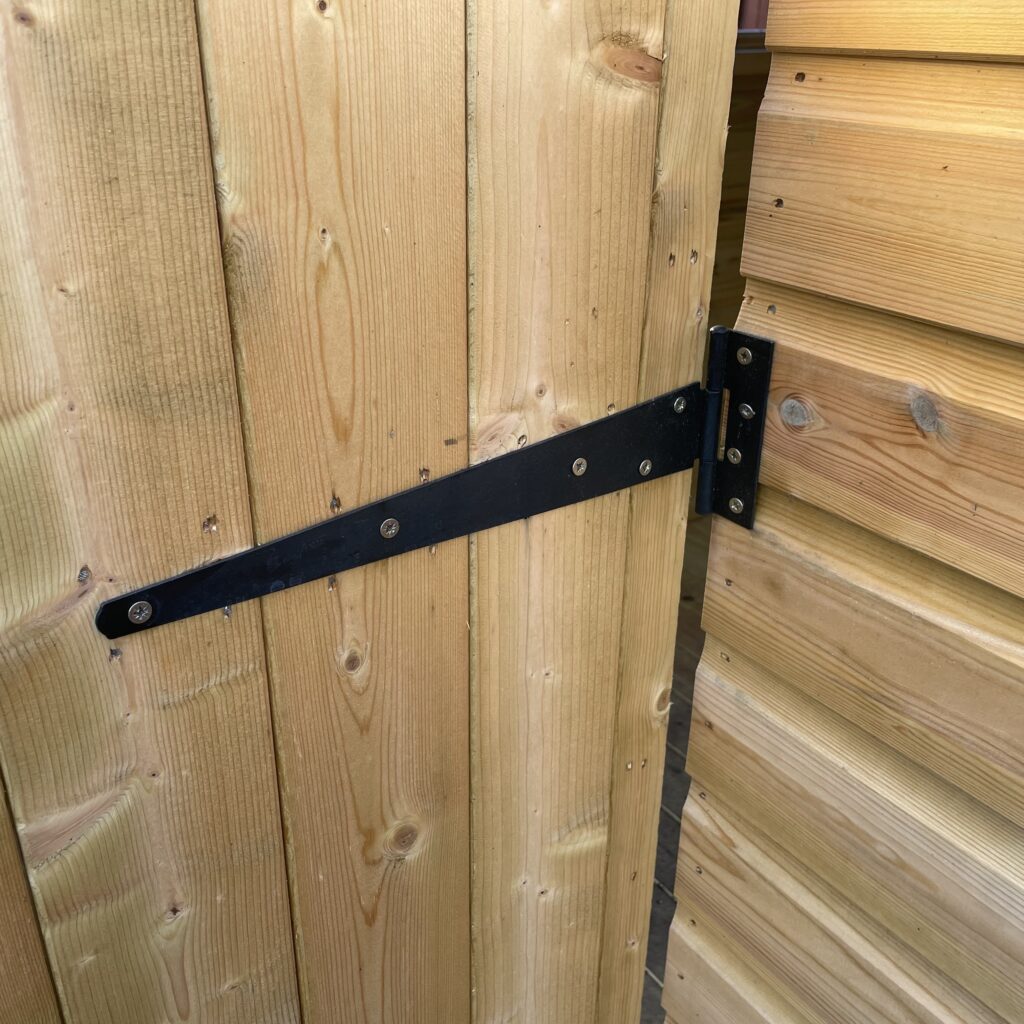
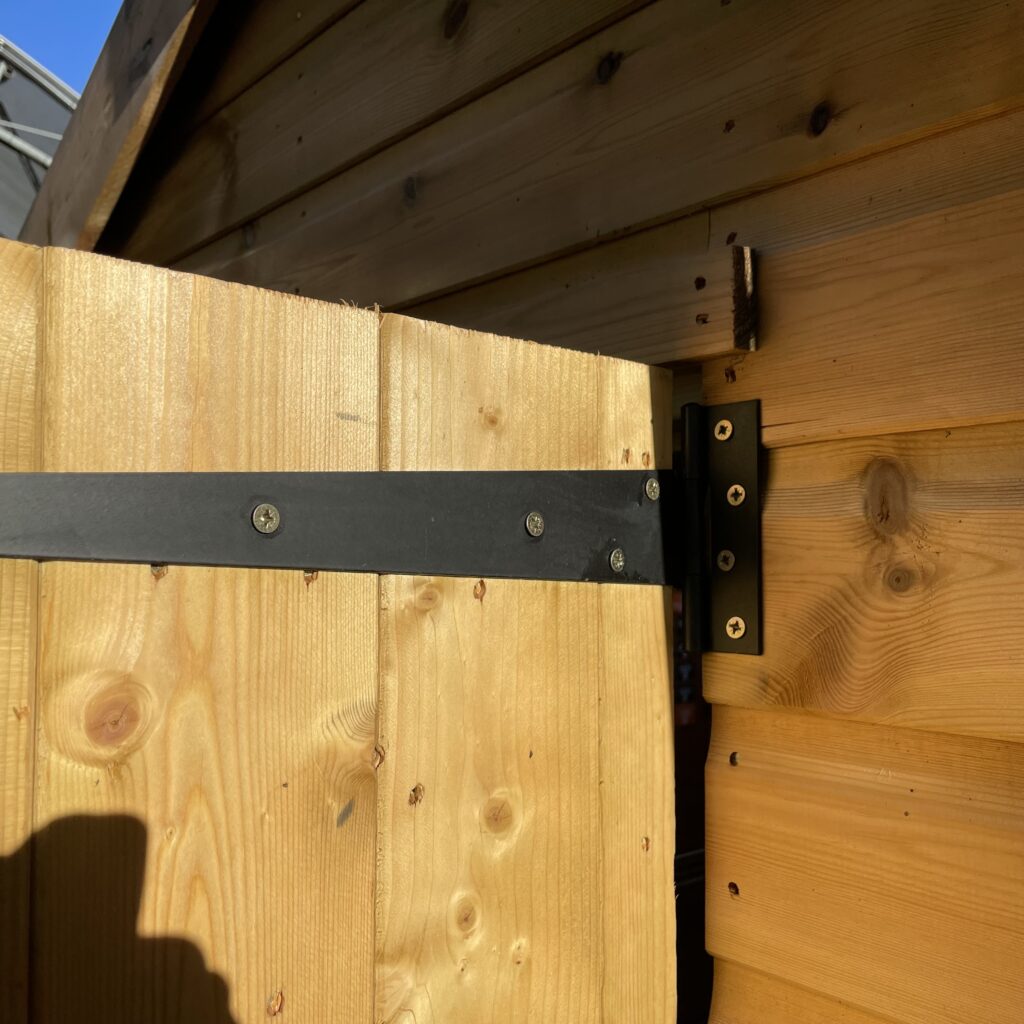
On the Elite Apex, the door is hung on externally applied T-hinges. These are an upgrade over standard hinges because they have more fixing points and distribute the load far more effectively across the door. They also extend further along the door, which gives noticeably better support.
One small criticism — and this is worth mentioning honestly — is that the screws are externally accessible. In theory, that’s a security risk if someone wanted to remove the hinges. In practice, it’s much less of an issue here than on lighter sheds, because the door itself is thick, heavily framed, and secured with a proper lock.
What’s also worth pointing out is the fixings themselves. The screws used here are galvanised, not just powder-coated. That means they’re going to resist corrosion far better over time than the fixings used on lower-tier sheds, which often rely on coating alone.
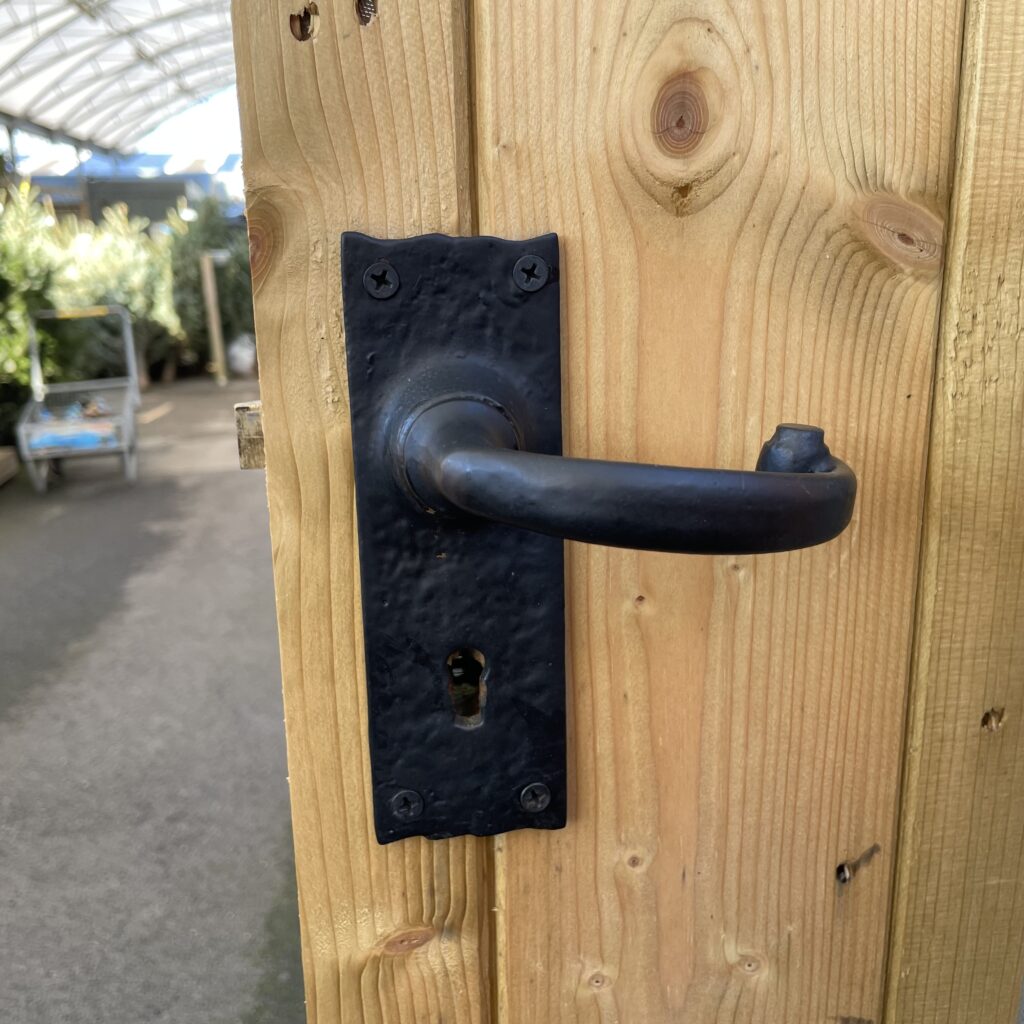
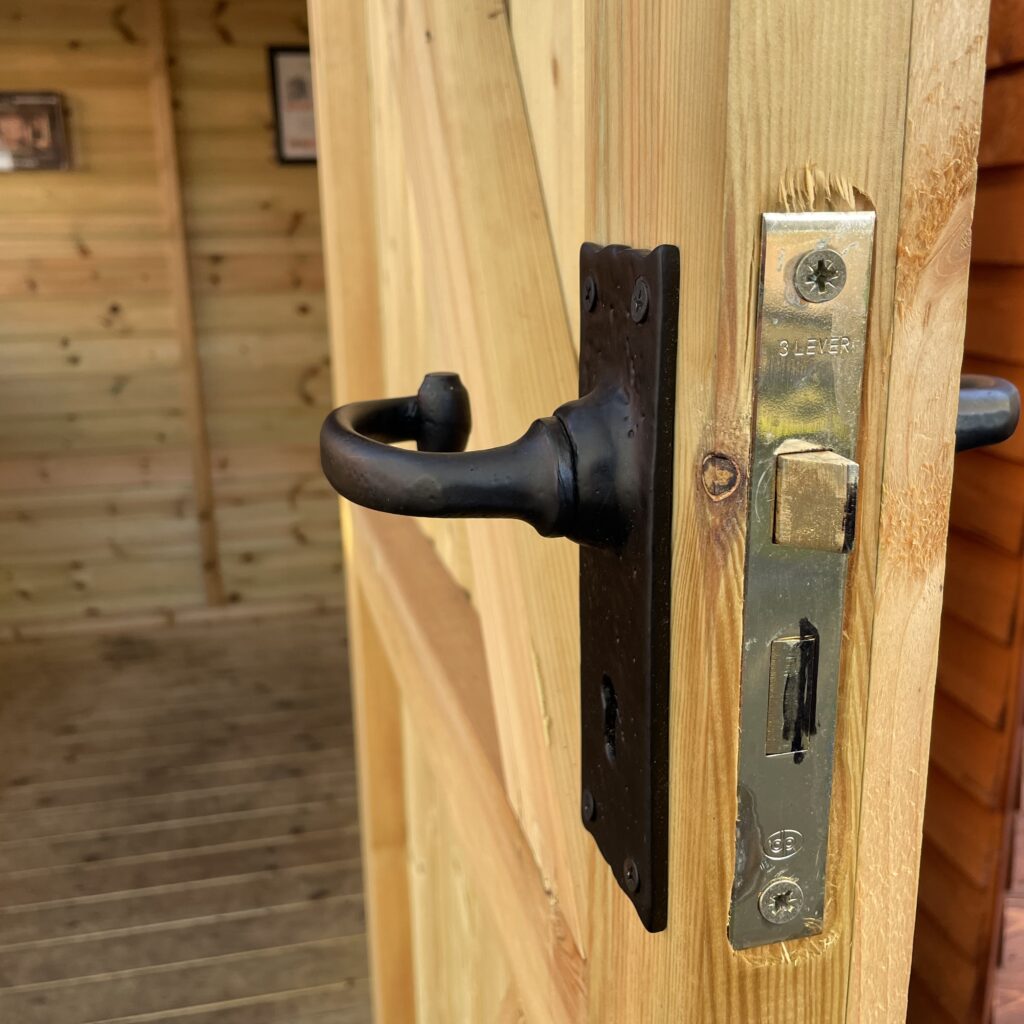
The door handle and ironmongery feel properly made. This isn’t lightweight shed hardware — it’s the sort of thing you’d expect to see on a solid outbuilding or a country-style farmhouse door. The lock is a three-lever lock, which should last a very long time as long as it’s occasionally lubricated.
Windows: A Detail That Really Stood Out
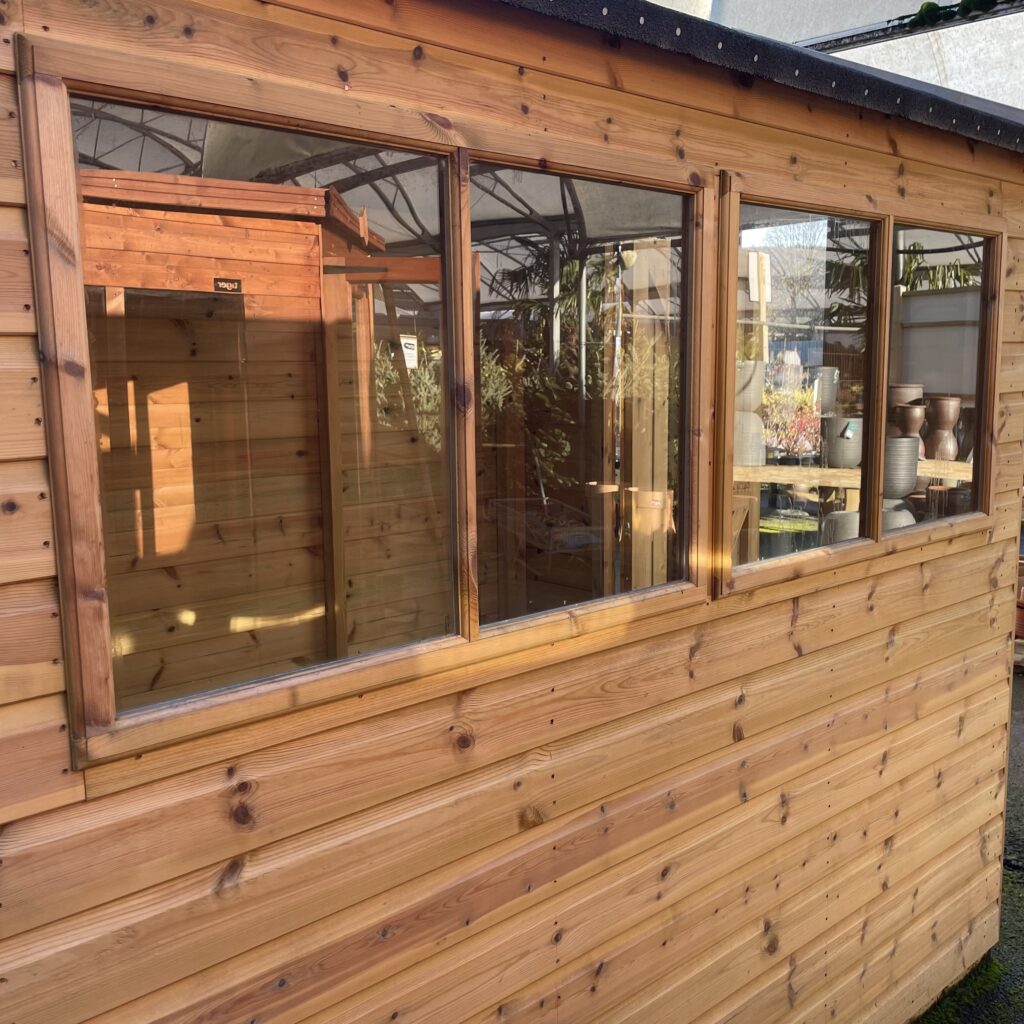
The windows on the Elite Apex genuinely impressed us.
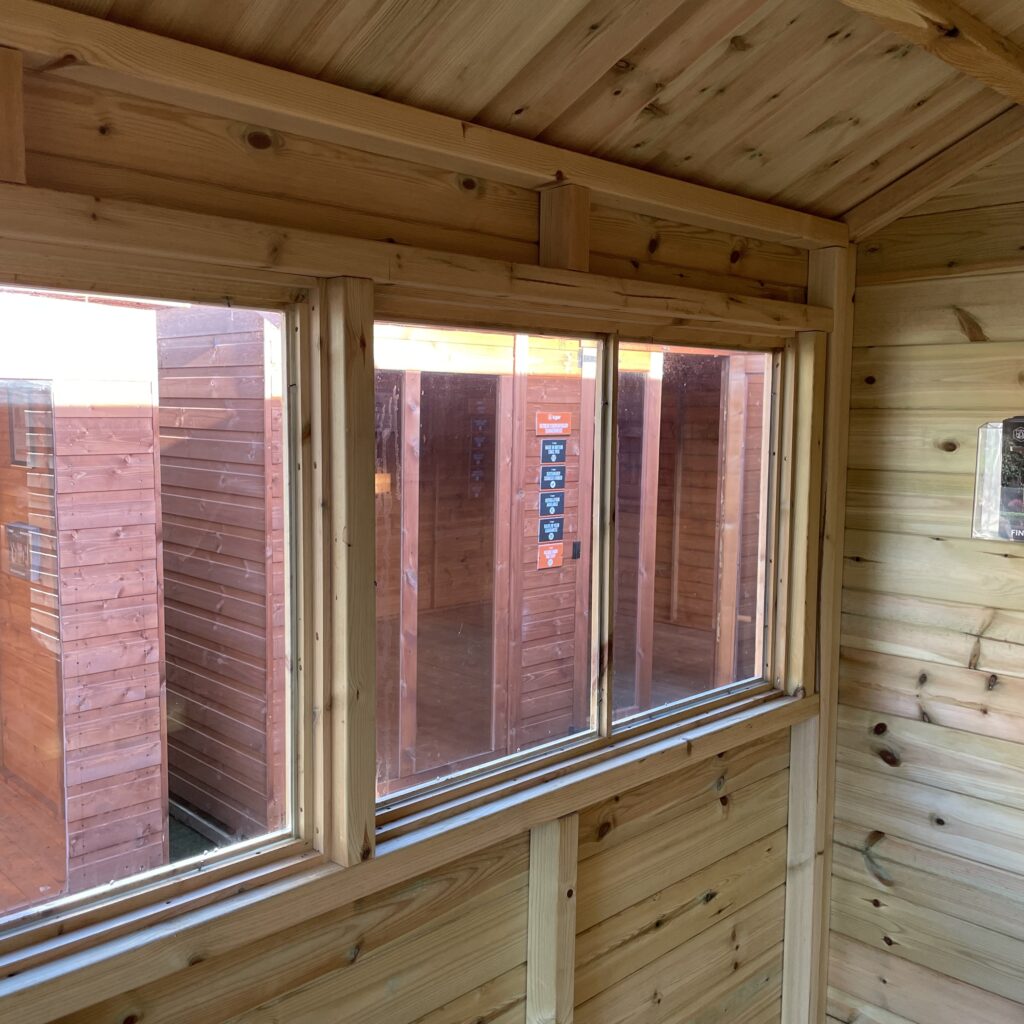
The model we inspected had four fixed windows, and what struck us immediately was the external window framing. On Tiger’s standard 12mm shiplap sheds, you don’t get this. Here, you do — and aesthetically, it makes a big difference. Psychologically, it also just feels more secure. The building looks finished, not patched together.
This is an area where our broader experience really comes into play. Over the years, we’ve seen some genuinely poor shed windows — including vacuum-formed plastic “bubble” windows that bowed outward and felt like you could almost push them out by hand if you tried. After seeing that kind of thing, it’s genuinely refreshing to see properly framed windows with toughened glass on a shed.
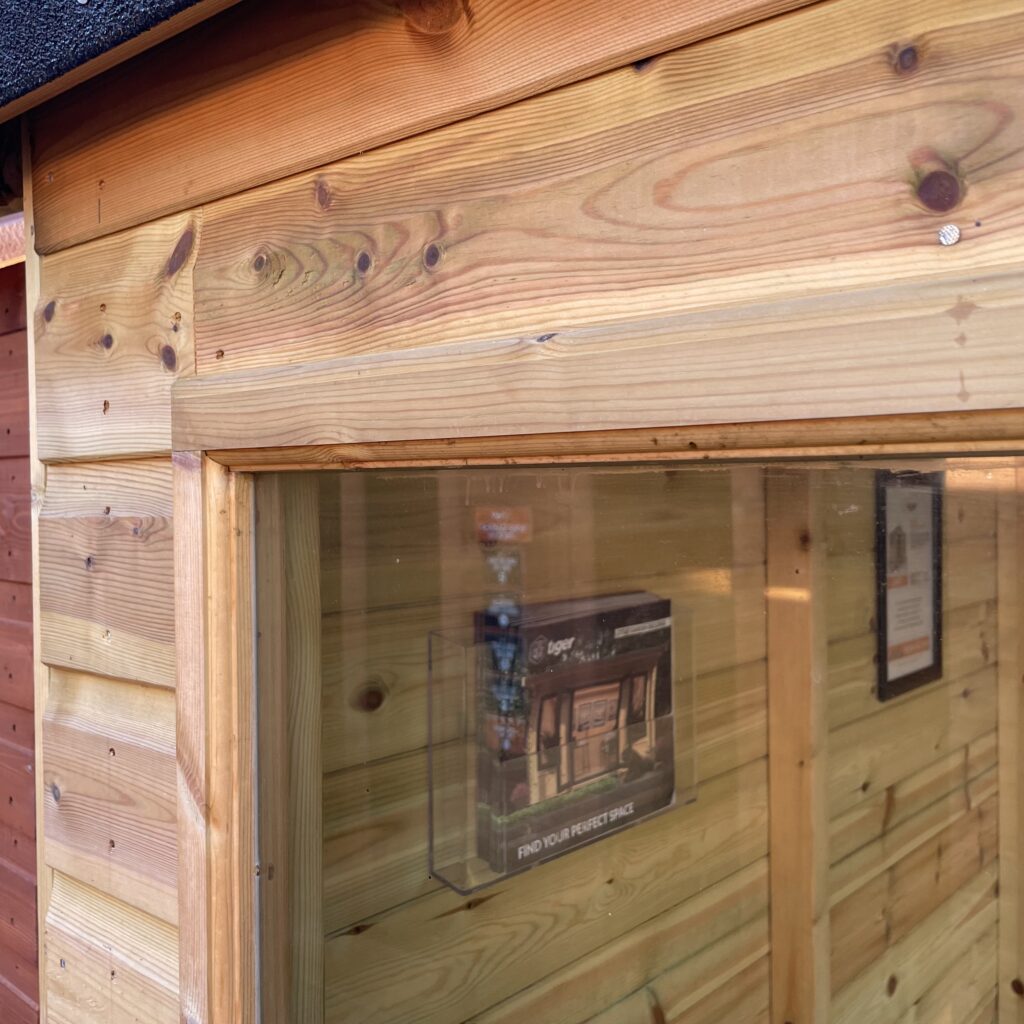
Internally, the glazing is installed using silicone sealant and pinned in place, which is standard practice. Ideally, you might expect fully sealed units given how good the external finishing is, but this is mitigated by the thickness of the framing. The glass sits further back, which reduces the chance of brushing against it — something that can be an issue on thinner-framed sheds where the glazing is much closer to the internal space.





Cladding Quality You Can Feel
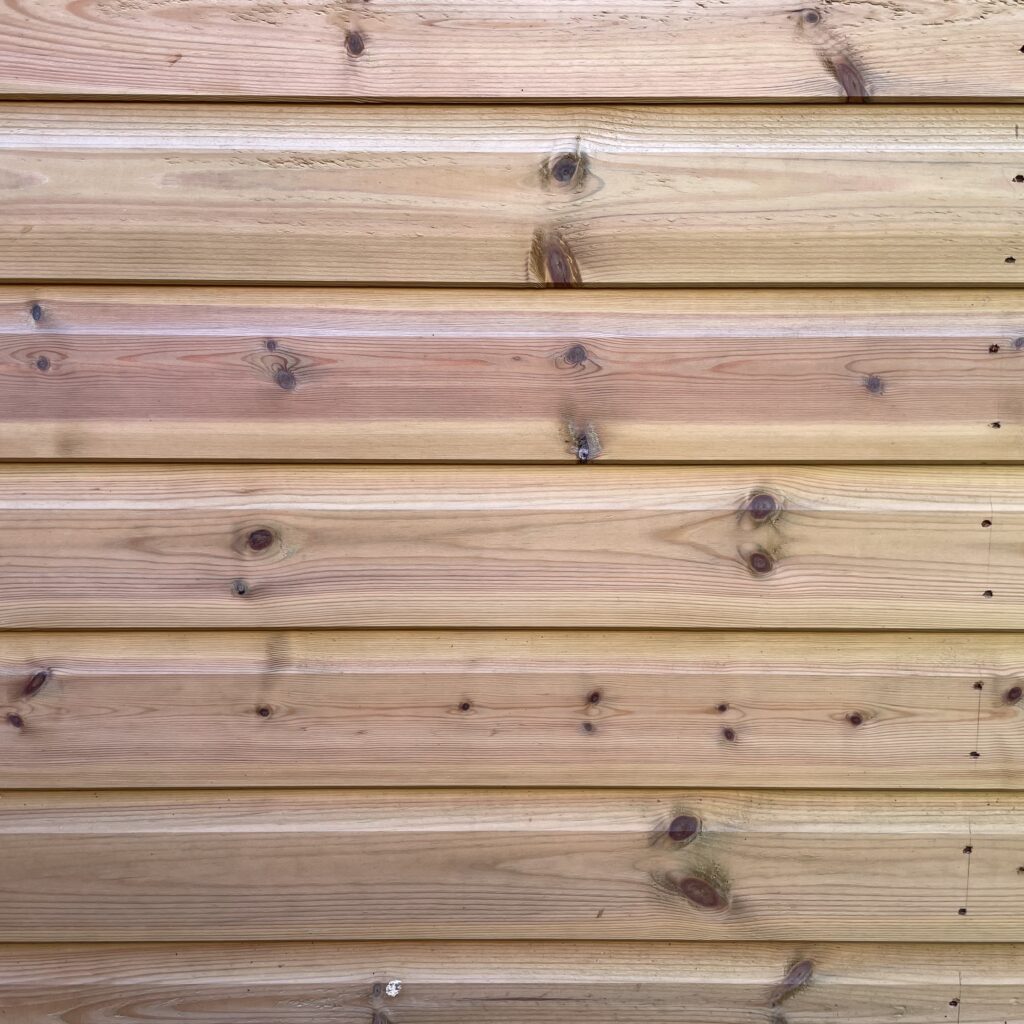
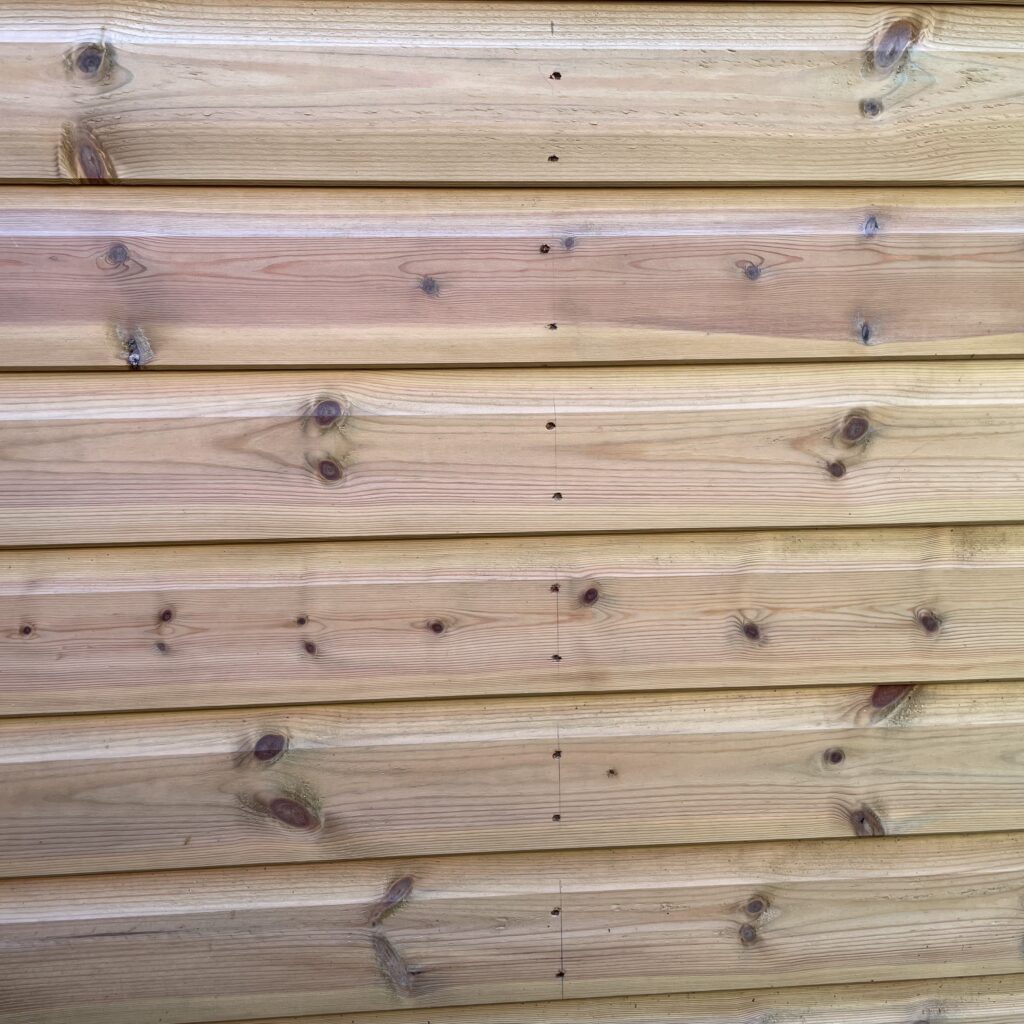
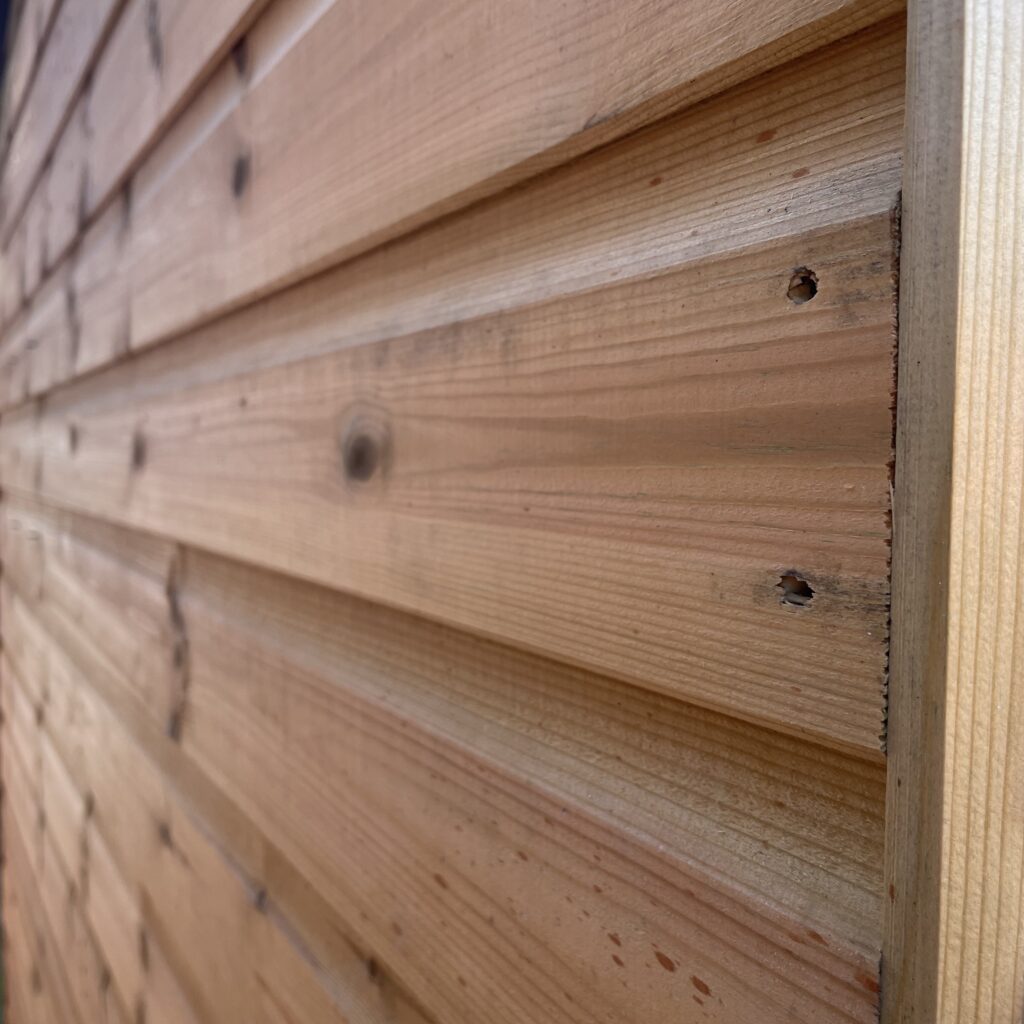
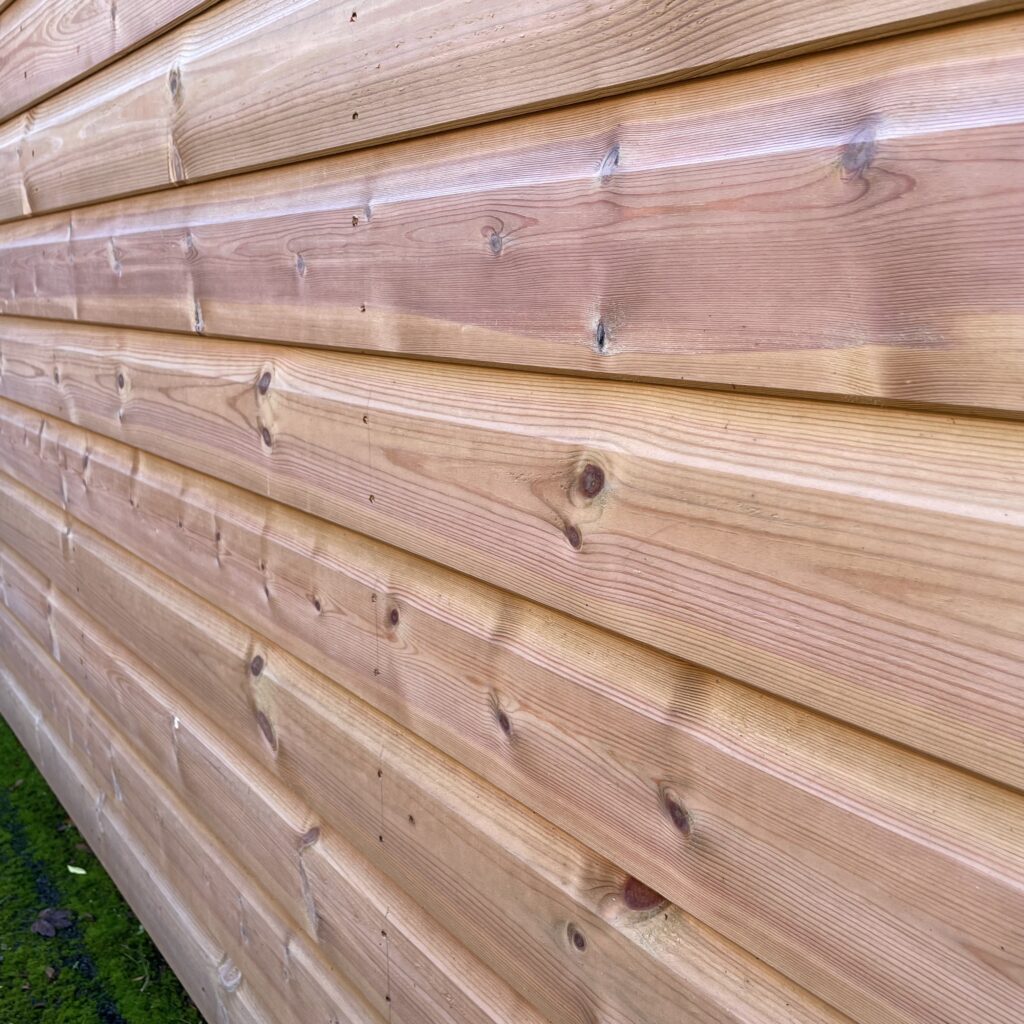
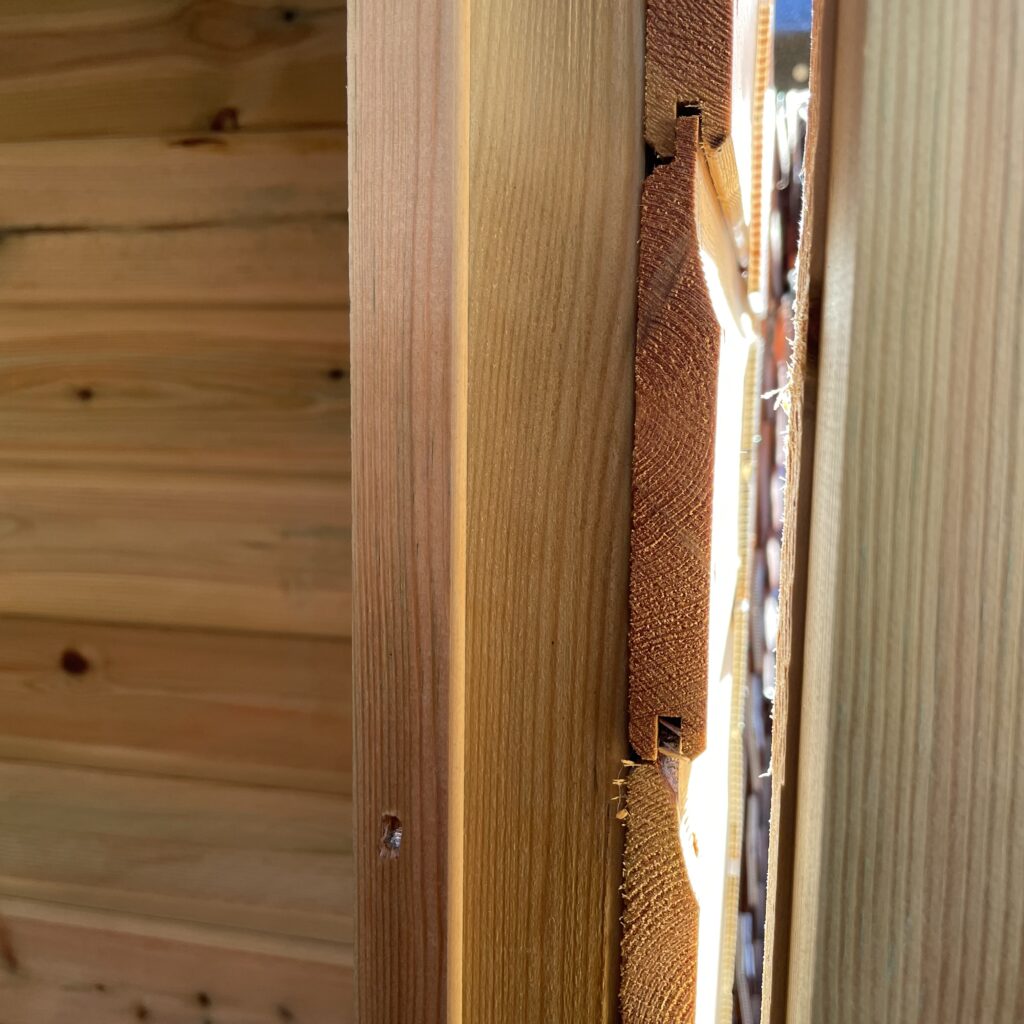
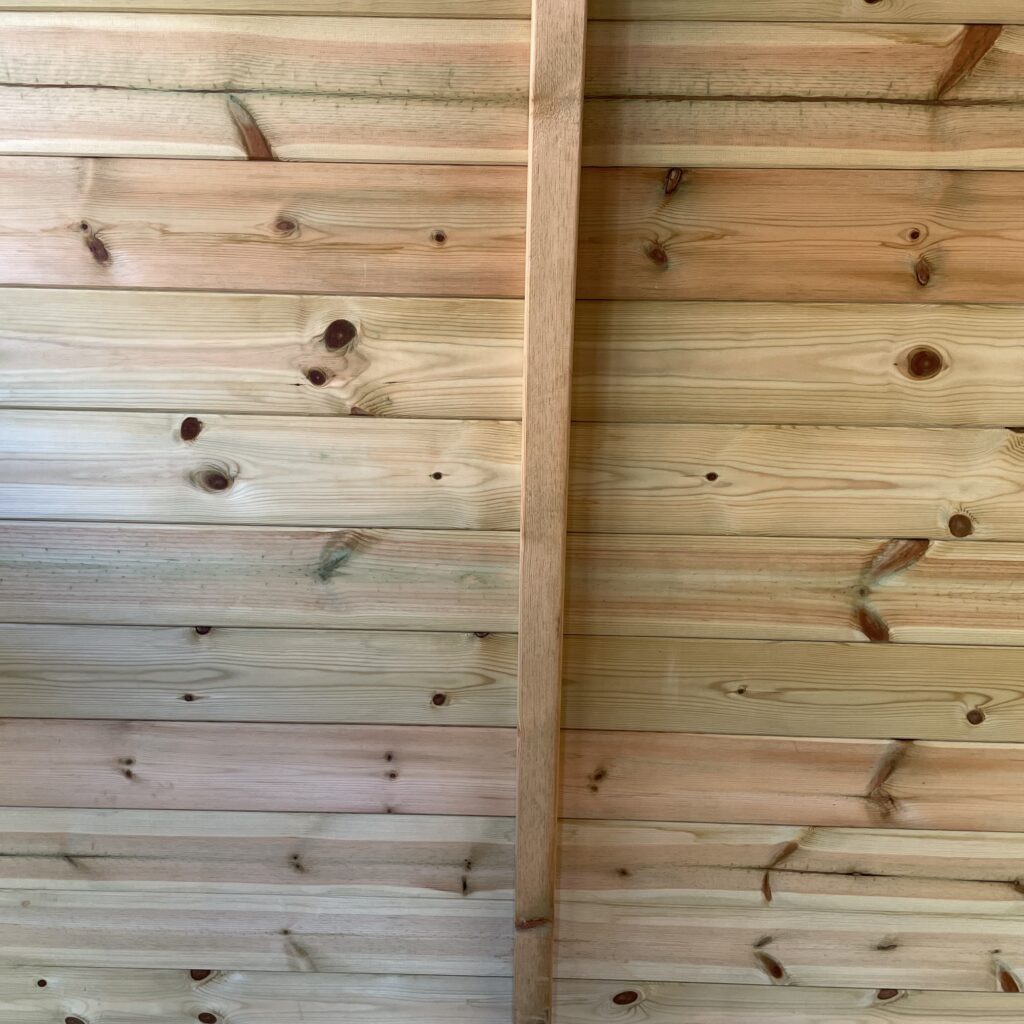
The wall cladding is 16mm pressure treated shiplap, and the quality of the milling is immediately obvious.
The boards are smooth, tight, and very consistently machined. The grain is tight, with relatively few knots — always a good sign — and the knots that are present aren’t overly penetrating. The pressure treatment is clearly visible without being aggressively green or visually intrusive. It still looks and feels like timber.
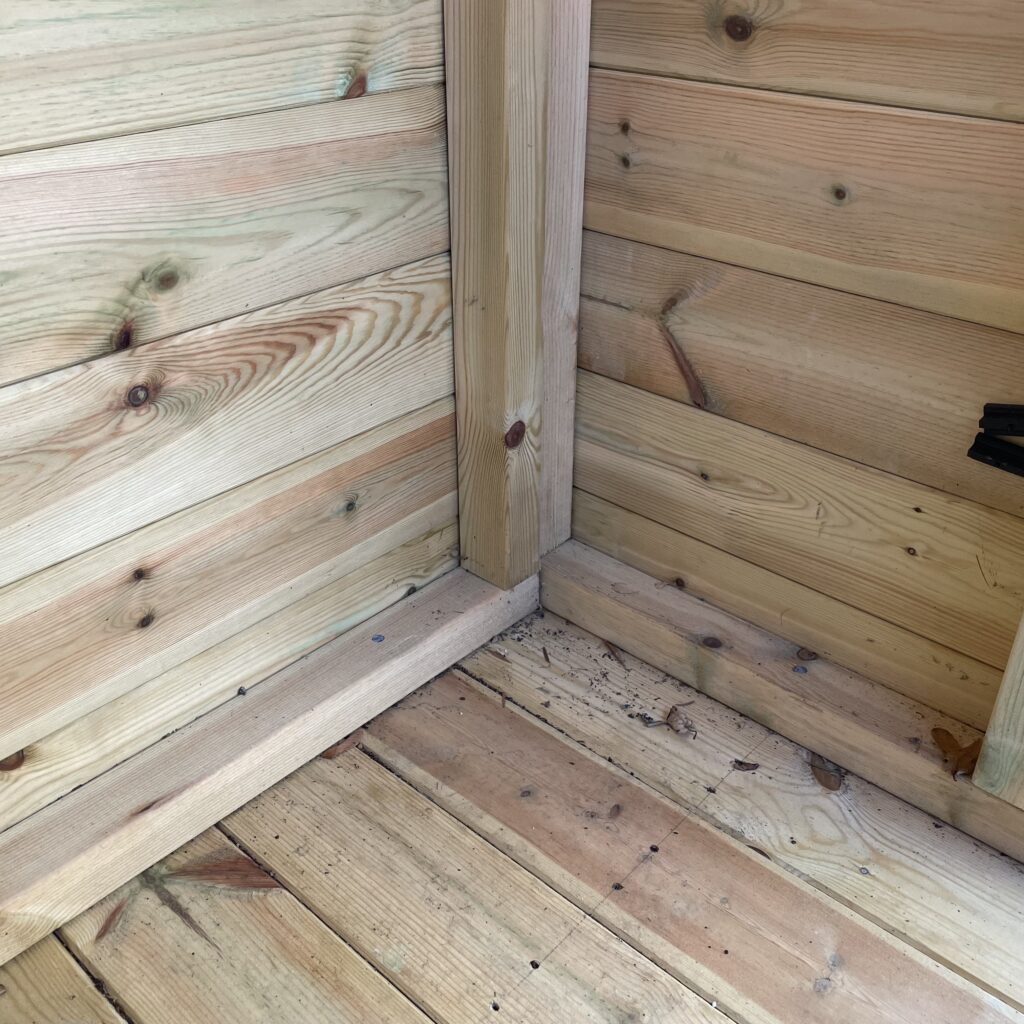
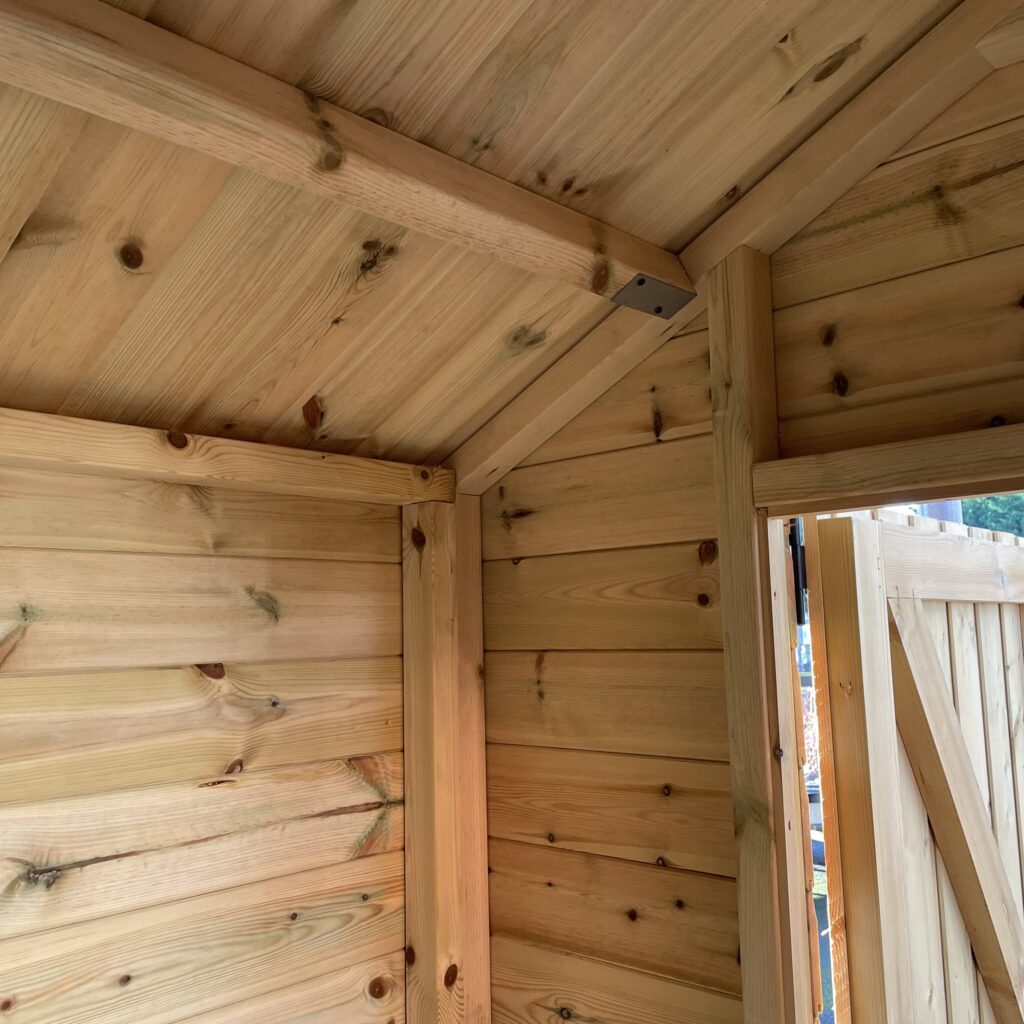
When you look closely at the corners, you can see just how precisely everything has been cut and assembled. The boards meet cleanly. The tolerances are tight. There are no rough edges or filler work. This is the sort of finish you expect from professional joinery rather than mass-produced panel work.

Framing: Where the Elite Really Shows Its Strength
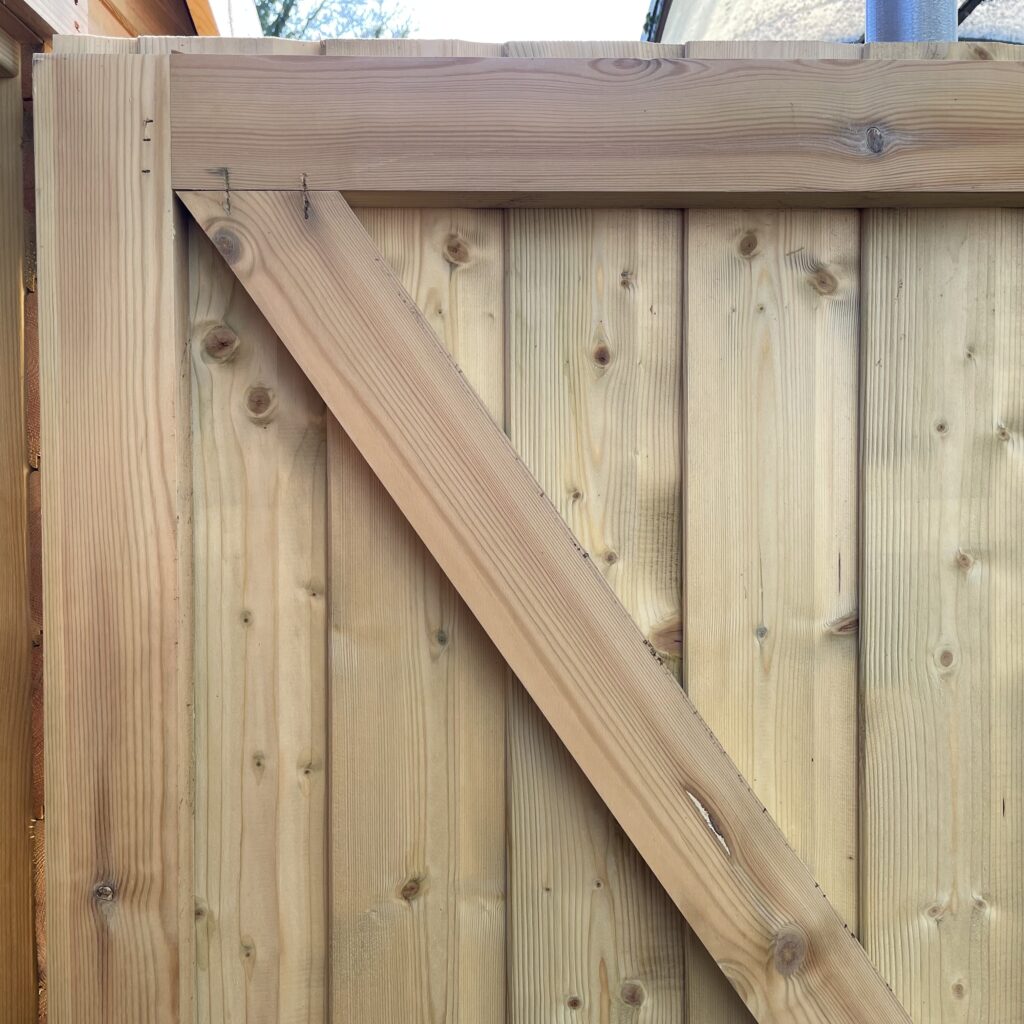
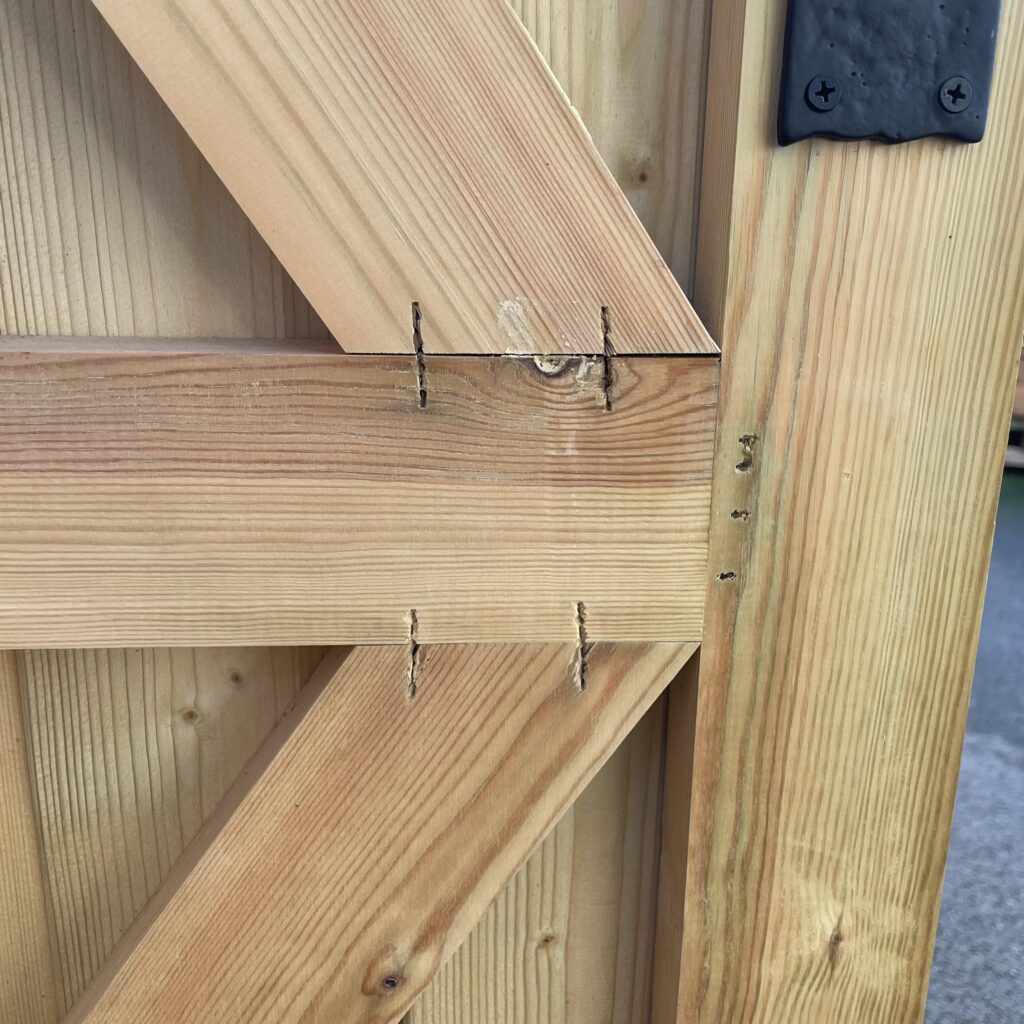
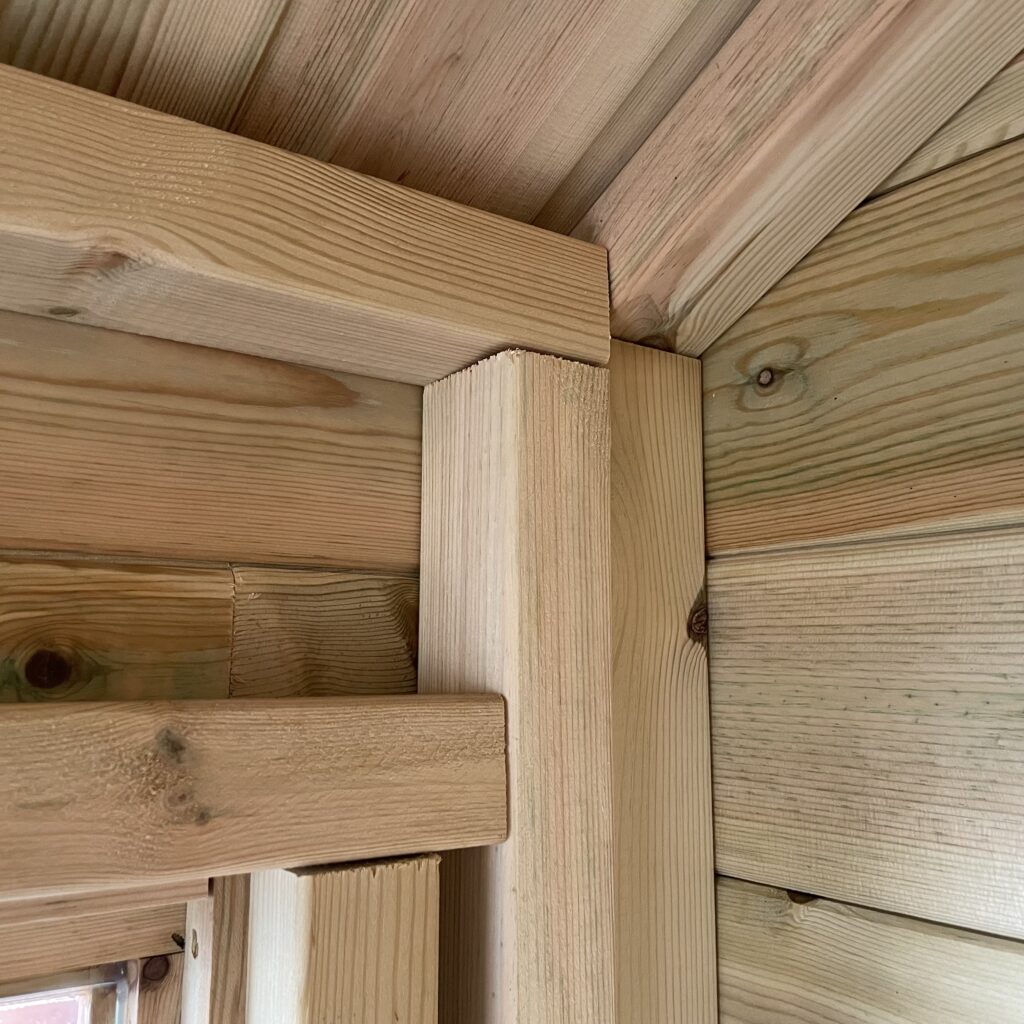
The Elite Apex uses 58mm x 44mm heavy-duty framing, and this is where the shed really earns its name.
Inside, the framing is thick, close together, and very neatly finished. Around the door and windows, the framing continues properly rather than being cut away and bodged back in. At the roof line, the uprights and cross members meet cleanly and confidently.
One way to think about it is grip. Thicker framing gives the structure more “purchase” on itself — like a climber having a bigger handhold. Everything grabs together more securely. The building anchors itself rather than relying on tension.
This is especially noticeable on larger sizes, where the extra bracing above the door and where the apex roof meets the walls becomes very apparent.
Floor and Roof: No OSB, No Compromises
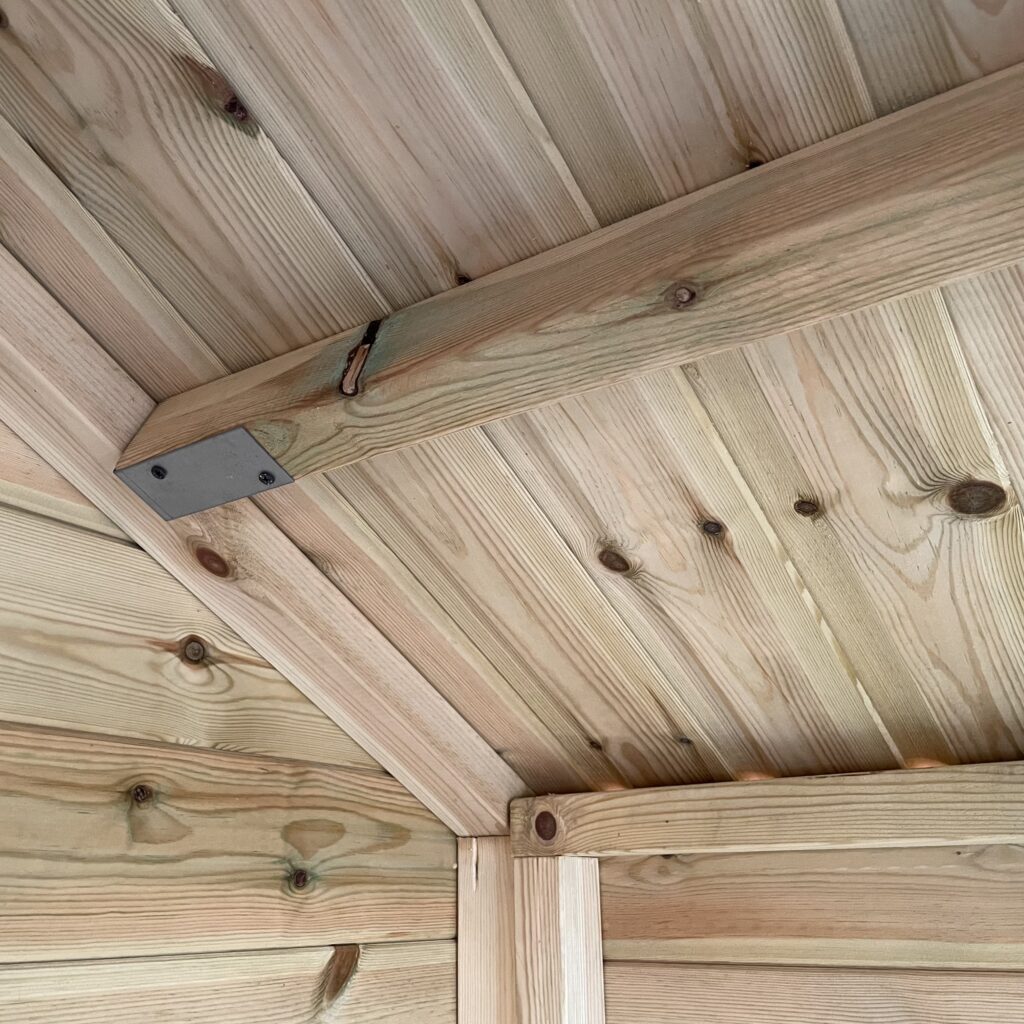
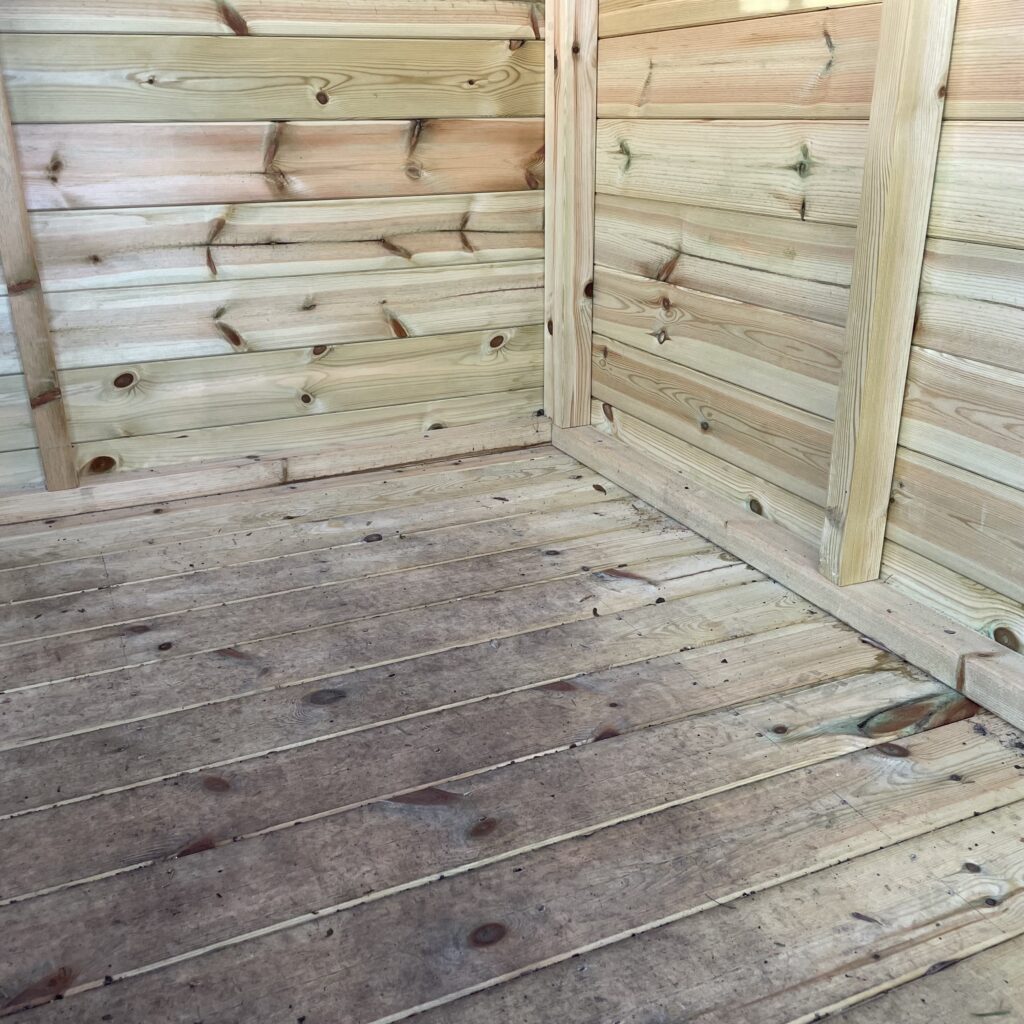
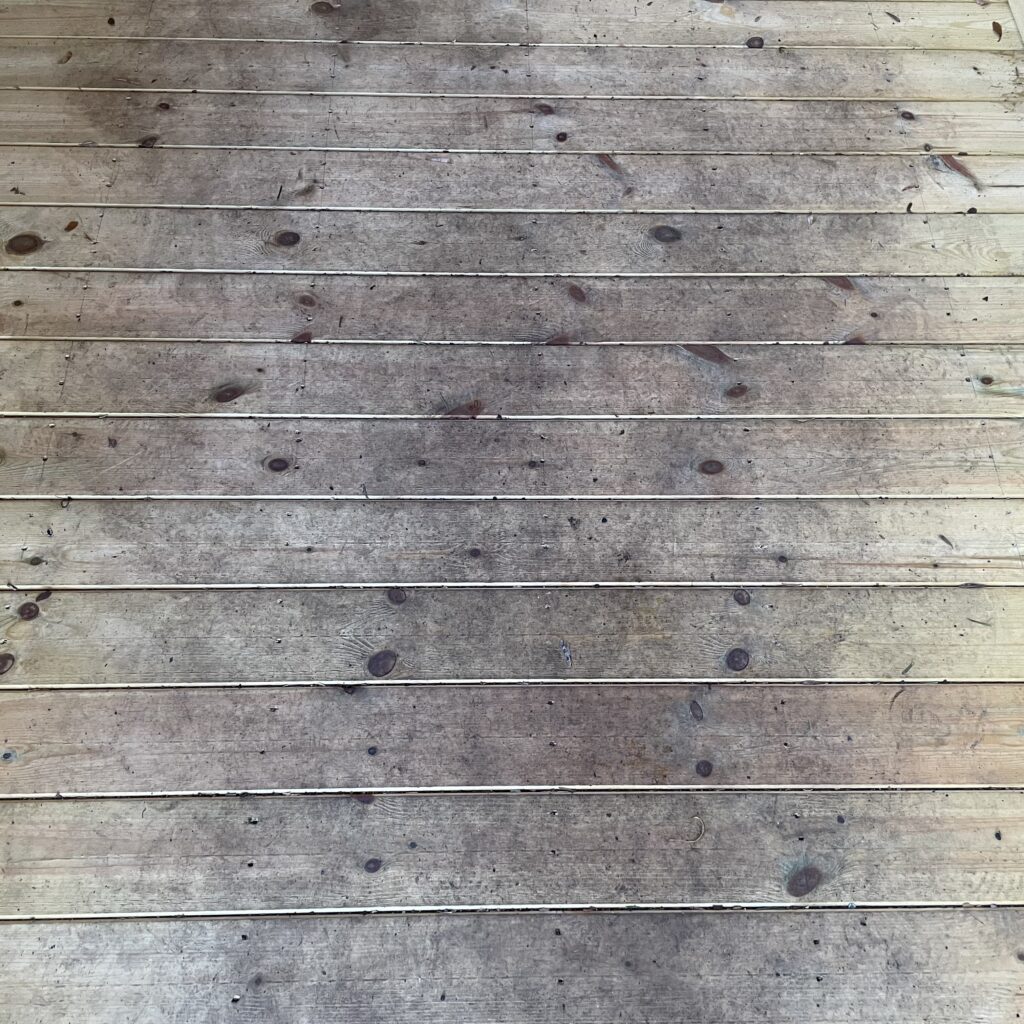
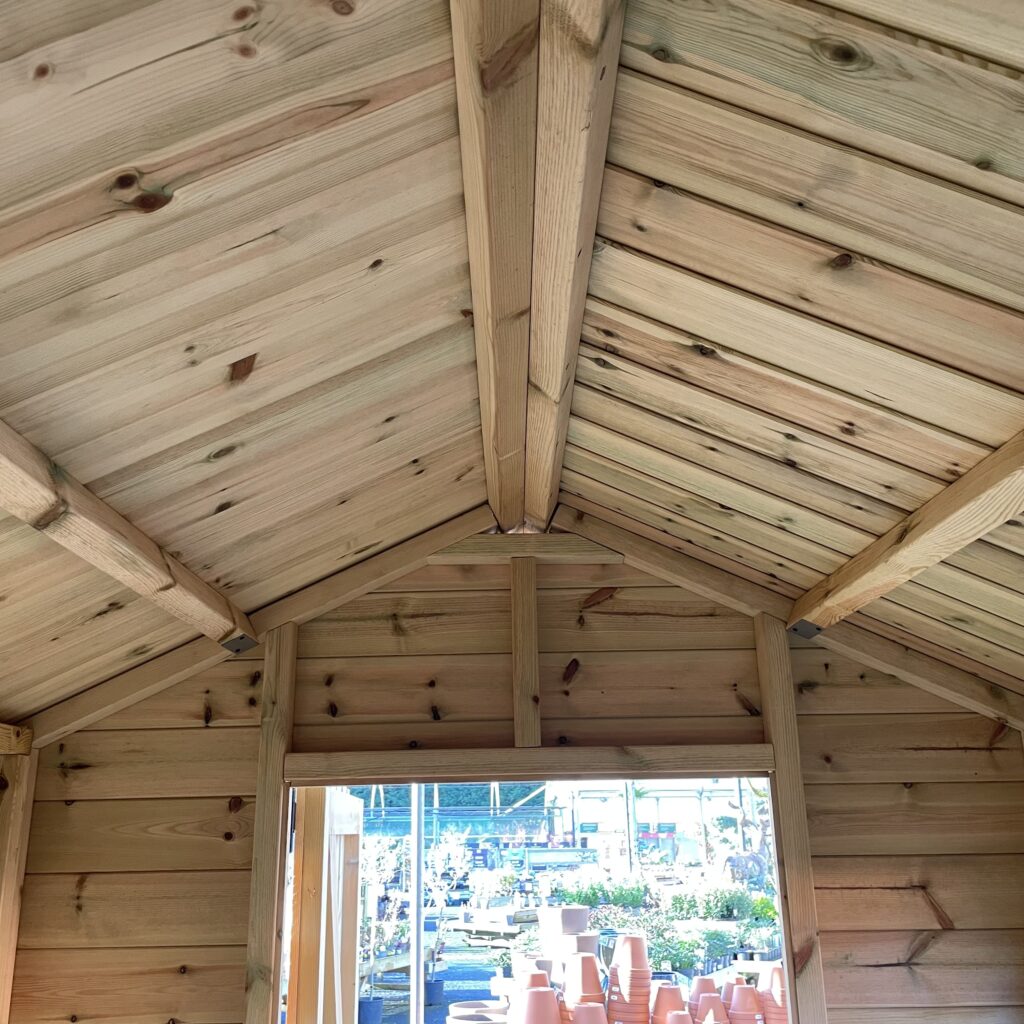
Both the floor and roof are 16mm tongue & groove, matching each other — something we always like to see.
When we walked across the floor, there was no movement at all. No flex, no bounce. When we knocked on it, the sound was crisp and sharp. If you’ve ever dealt with OSB or chipboard floors, you’ll know exactly what we mean when we say they have a dull, slightly spongy sound. There was none of that here.
The roof structure is equally solid. The framing is thick, the beams are close together, and on larger models you get additional apex trusses to prevent long-term sagging. When you shut the door and stand inside, the whole space just feels dry and calm.

Moisture, Weather, and Real-World Conditions
We carried out moisture testing inside the Elite Apex and recorded readings of around 12%, which is excellent for a timber building.
It’s also worth stressing that we inspected this shed in both September and December, and in both cases it had been raining. We saw no signs of water ingress whatsoever. No damp corners, no staining where panels meet, nothing creeping in at the roof line.
We ran our hands along the walls and roof, and at no point did it feel rough or splintery. Everything felt smooth, solid, and well finished.
Side-by-Side: Overlap vs Elite
One of the most effective ways to understand this shed is to see it next to Tiger’s overlap apex.
The overlap shed is still a good building. It doesn’t use OSB. It has proper glazing rather than plastic. It comes with a 20-year guarantee and will last well if you look after it.
But when you see the two together, the Elite is visibly taller, heavier, and more substantial. The framing is thicker. The windows are better finished. The whole building just feels more permanent.
To put it into context, the overlap is a bit like a diesel Audi — it’ll just keep going and going if you maintain it. The Elite, though, is the fire-and-forget version. It’s built to take abuse and keep working without demanding attention.
Final Verdict: A Benchmark Apex Shed
For us, this is probably our favourite apex shed that Tiger make.
It’s not trying to be clever. It’s not chasing trends. It’s simply very, very well made. Everything about it feels deliberate, confident, and designed for long-term use.
If you buy cheap, you buy twice. This is the opposite of that. This is a shed you install properly, look after sensibly, and then largely forget about — because it just works.
The only real regret you’re likely to have is if you move house and have to leave it behind for the next owner.