EXPERT REVIEWED
  FREE DELIVERY
  INSTALATION AVAILABLE
 Tiger Mini-Barn – Show Site Review
First Added - November 28 2025
Last Updated - November 28 2025 - 0 Data Points Updated - 0 Data Points Added
Reviewed & curated by a panel of garden building experts. Using methodology 1.1
Product ID: tiger-sheds-tiger-mini-barn
Size: Multiple sizes available
Merchants Checked: 10
Tiger Mini-Barn Review – A Statement Shed That Earns Its Confidence
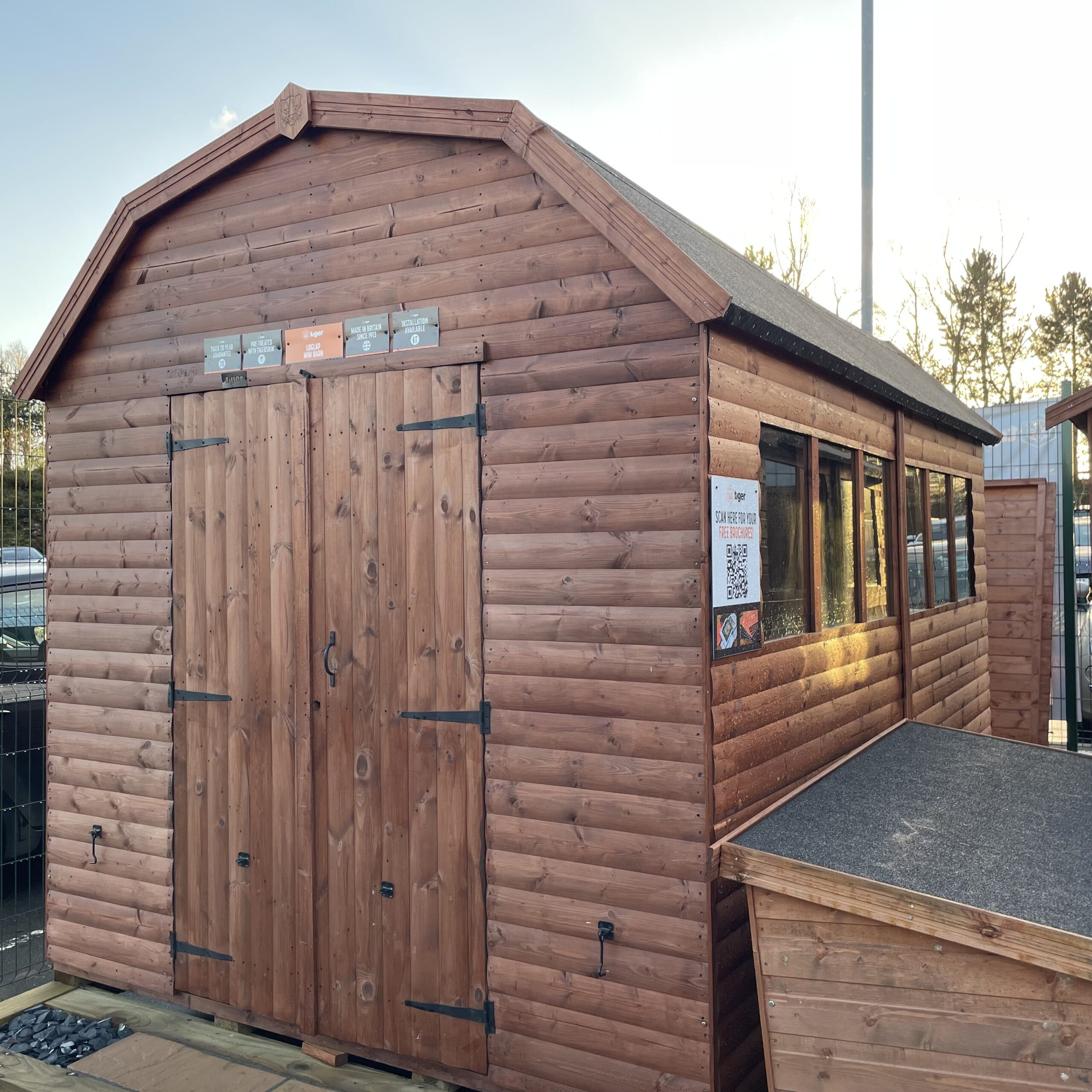
There are some garden buildings that simply do a job, and there are others that make a statement the moment you see them. The Tiger Mini-Barn very firmly falls into the latter category — and after inspecting it in person at both the Tong and Otley show sites, it’s easy to see why it has become one of the most distinctive buildings in the Tiger range.
This is not a shed designed by accident, and it’s not a shed built by a manufacturer cutting corners. In fact, one of the most telling things about the Mini-Barn is the roof design itself. The Dutch barn-style roof is considerably more complicated to manufacture than a standard apex or pent roof, and in the garden building industry simplicity almost always equals margin. Manufacturers that choose to make buildings like this are usually doing so because they are confident in their machining accuracy, their framing tolerances, and their overall build process.
Tiger clearly ticks all three boxes.
First Impressions – Why the Mini-Barn Feels “Premium” Immediately
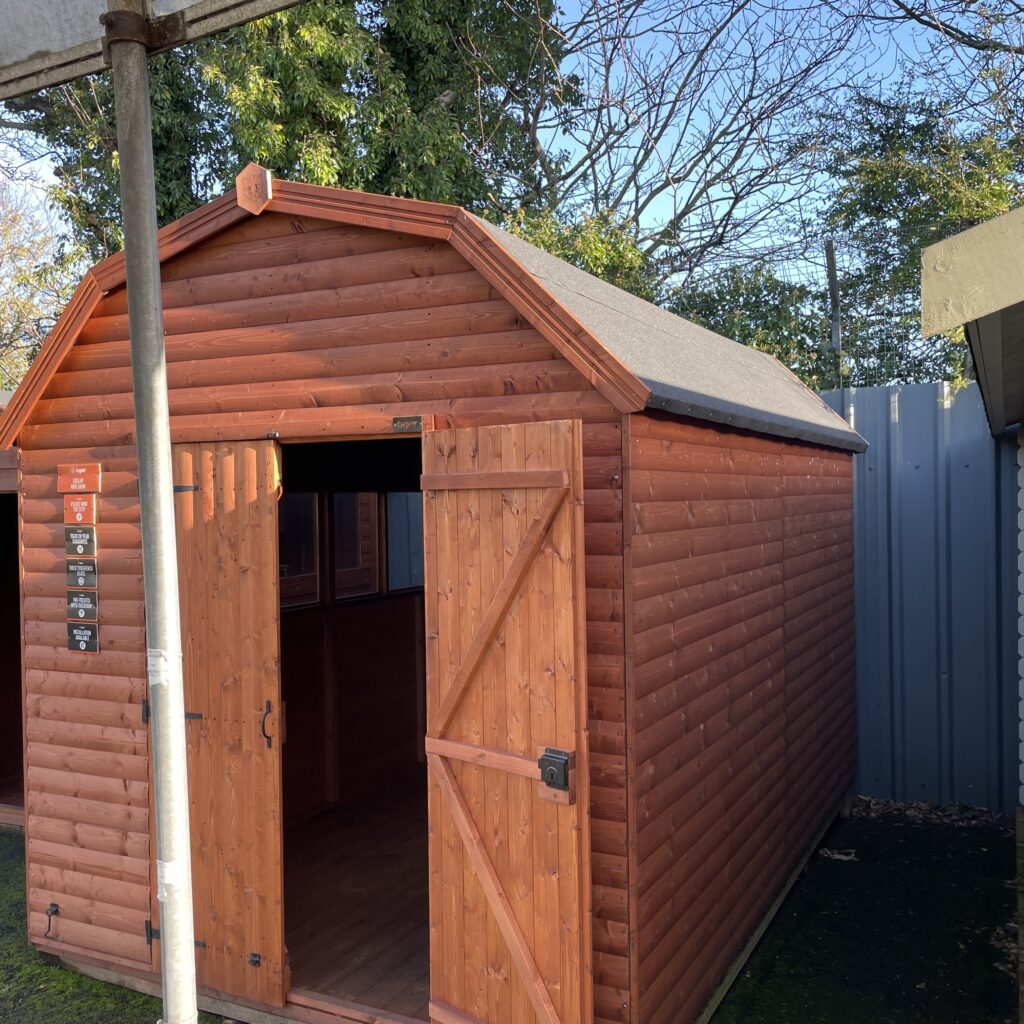
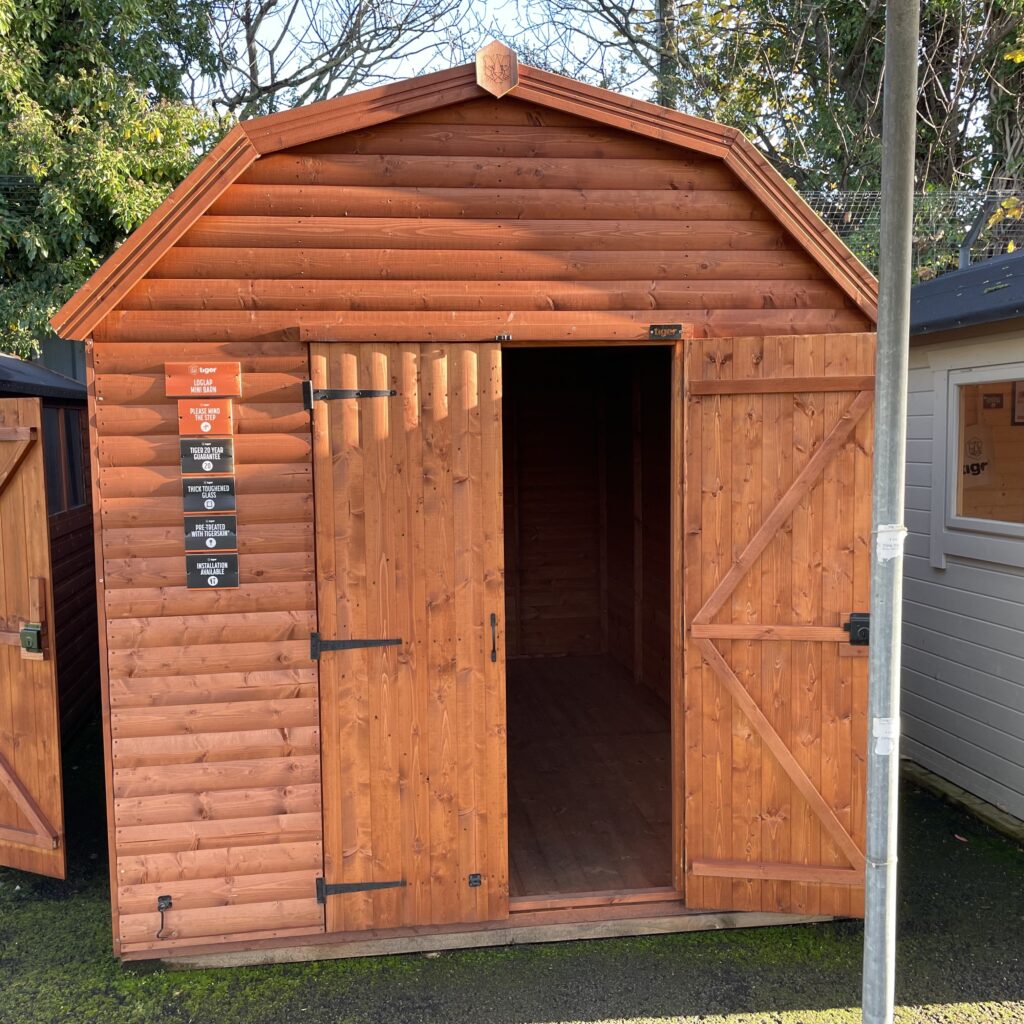
The first thing you notice about the Tiger Mini-Barn is its height and loftiness. If vertical space matters to you — whether for storage, a workshop, or simply avoiding that claustrophobic “shed ceiling” feeling — this building immediately stands out.
The version we inspected was the loglap variant, and it’s worth saying upfront that this is the configuration that really shows the Mini-Barn at its best. Tiger also offers a 12mm shiplap tongue & groove version, but the loglap model brings a level of visual solidity that genuinely elevates the building.
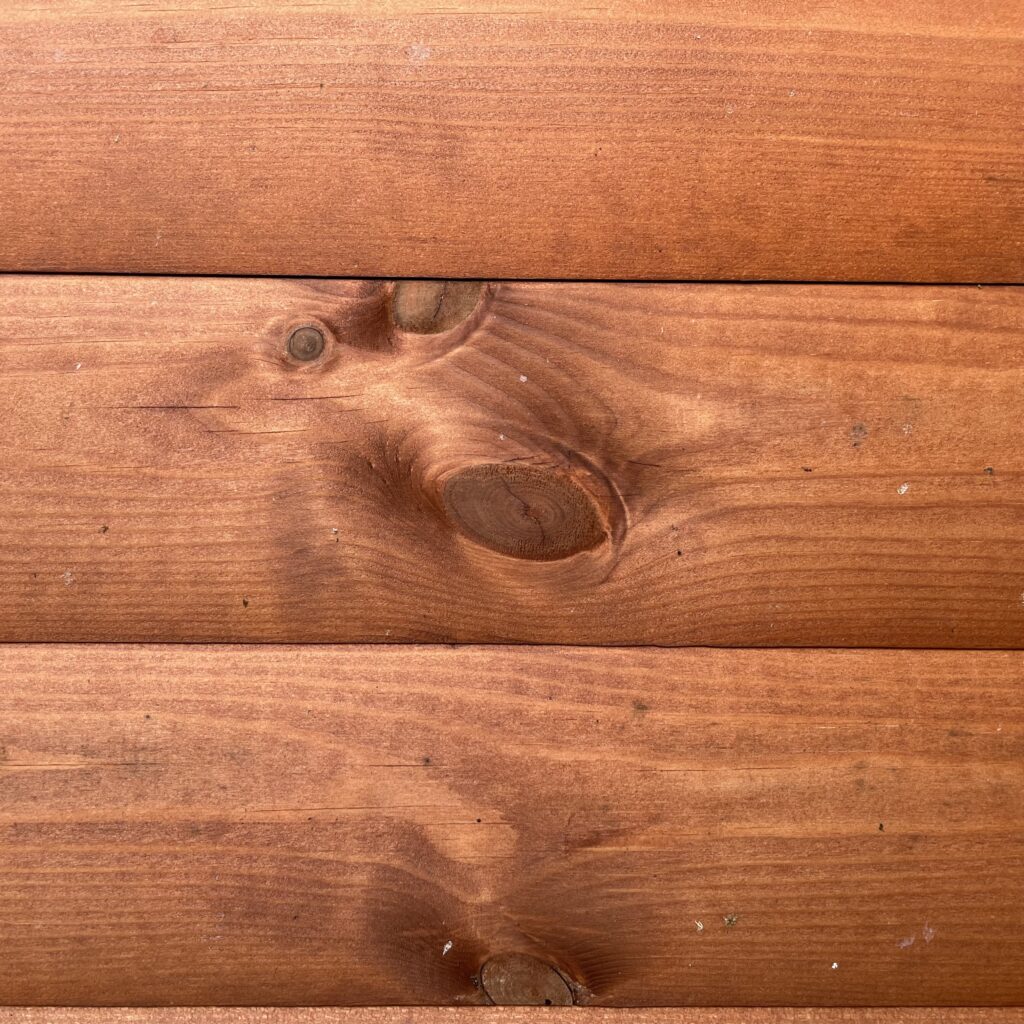
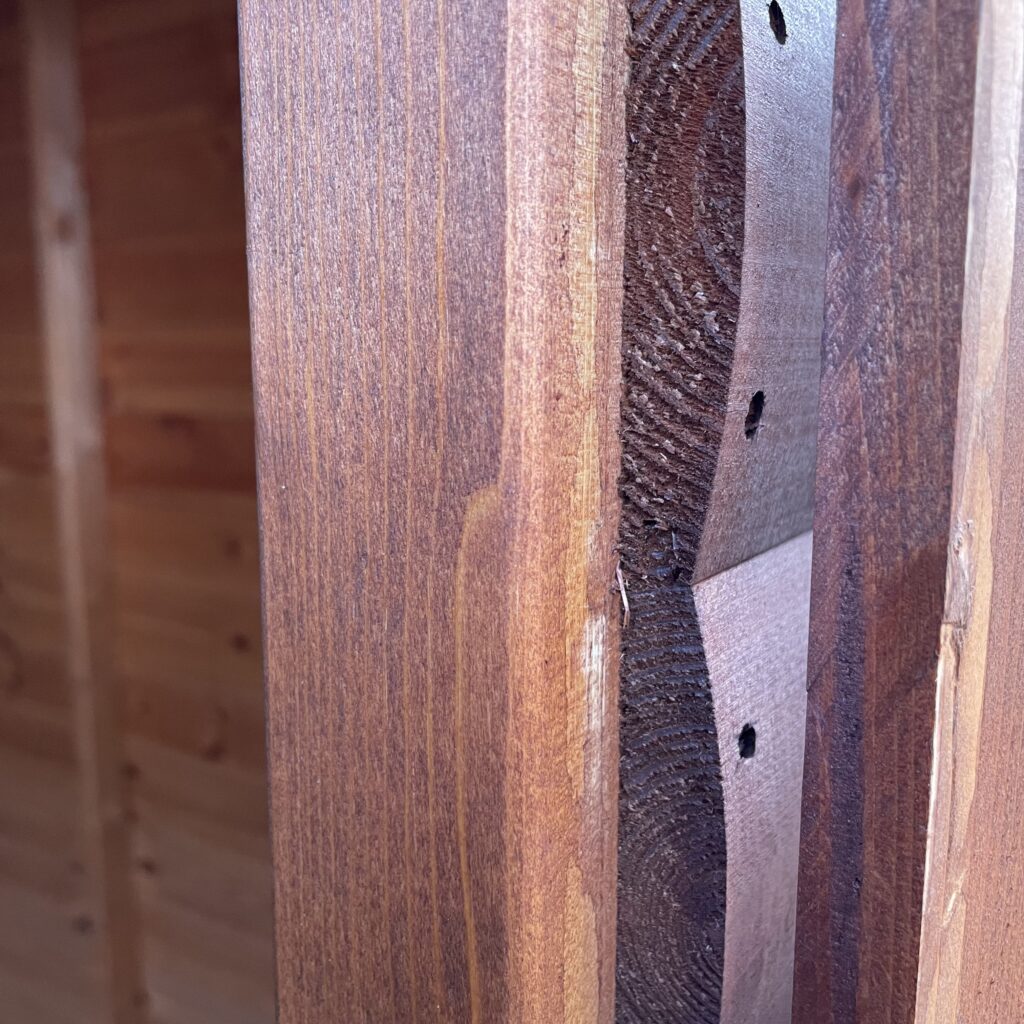
At first glance, the loglap cladding almost gives the impression that the building is made from much thicker timbers than it actually is. In reality, the thickest point of the loglap boards is around 15mm, which is broadly comparable to high-quality shiplap in terms of structural thickness — but aesthetically, it looks far more substantial. That illusion of mass works in your favour, especially if security or perceived robustness matters.
From a distance, it simply looks expensive.

Cladding Quality – Exceptionally Precise Loglap Machining
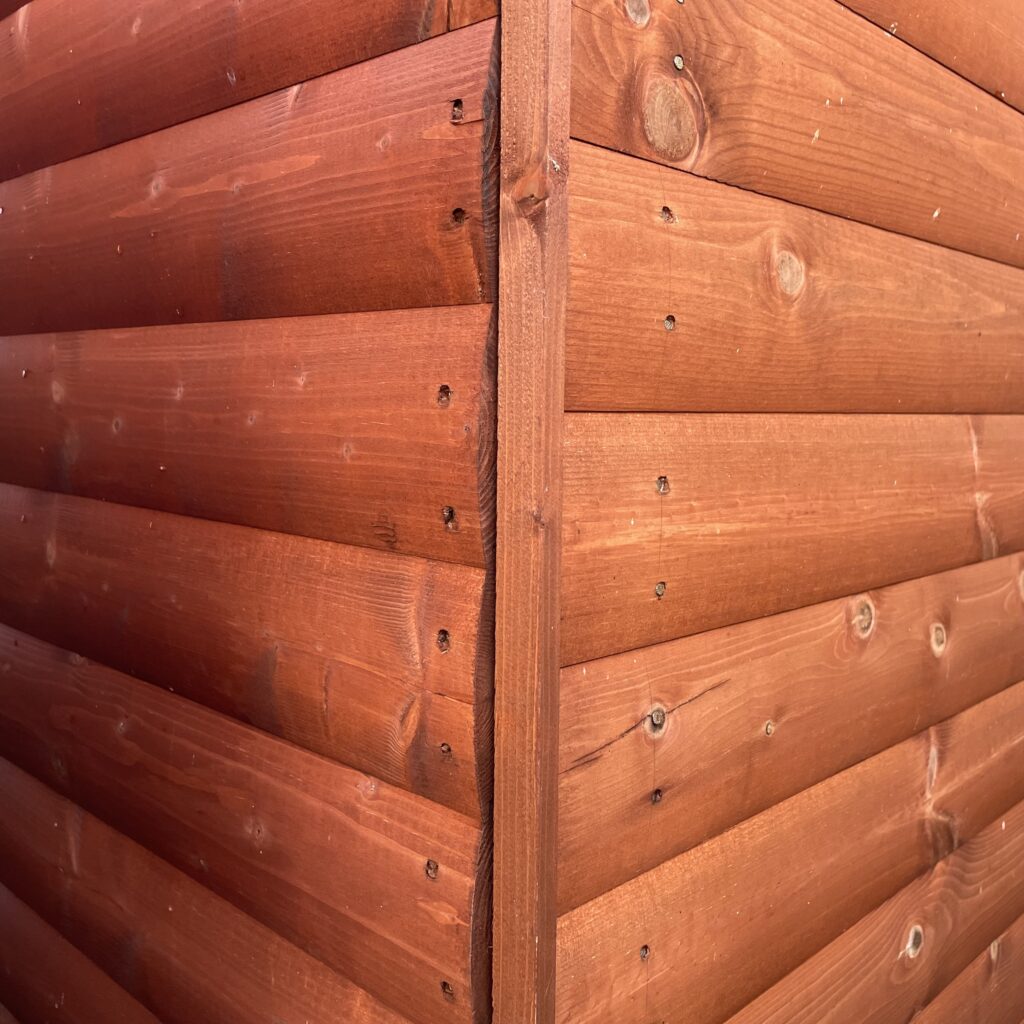
We’ve inspected a lot of loglap sheds over the years, and the machining quality here is genuinely excellent. The boards are tightly milled, consistent, and cleanly finished, with none of the rough edges or tolerance issues that you sometimes see on cheaper loglap buildings.
This is slow-grown timber, properly machined, and it shows. The boards interlock cleanly, sit flat, and give the exterior a very refined appearance. The precision is such that even up close, nothing looks rushed or compromised.
It’s also worth noting that loglap is unforgiving. Poor manufacturing shows up immediately because the rounded profile exaggerates gaps and inconsistencies. That simply isn’t the case here.
Size & Layout – The Six-Window 12×8 Model
The building we inspected was the largest Mini-Barn configuration Tiger produces, measuring 12ft x 8ft, and it featured six windows. Larger buildings inevitably introduce structural considerations that don’t exist at smaller sizes, particularly where wall panels meet and where roof spans increase.
One of the things we specifically wanted to see was how Tiger handles the mid-panel joins on a building of this width — and overall, they’ve done a good job.
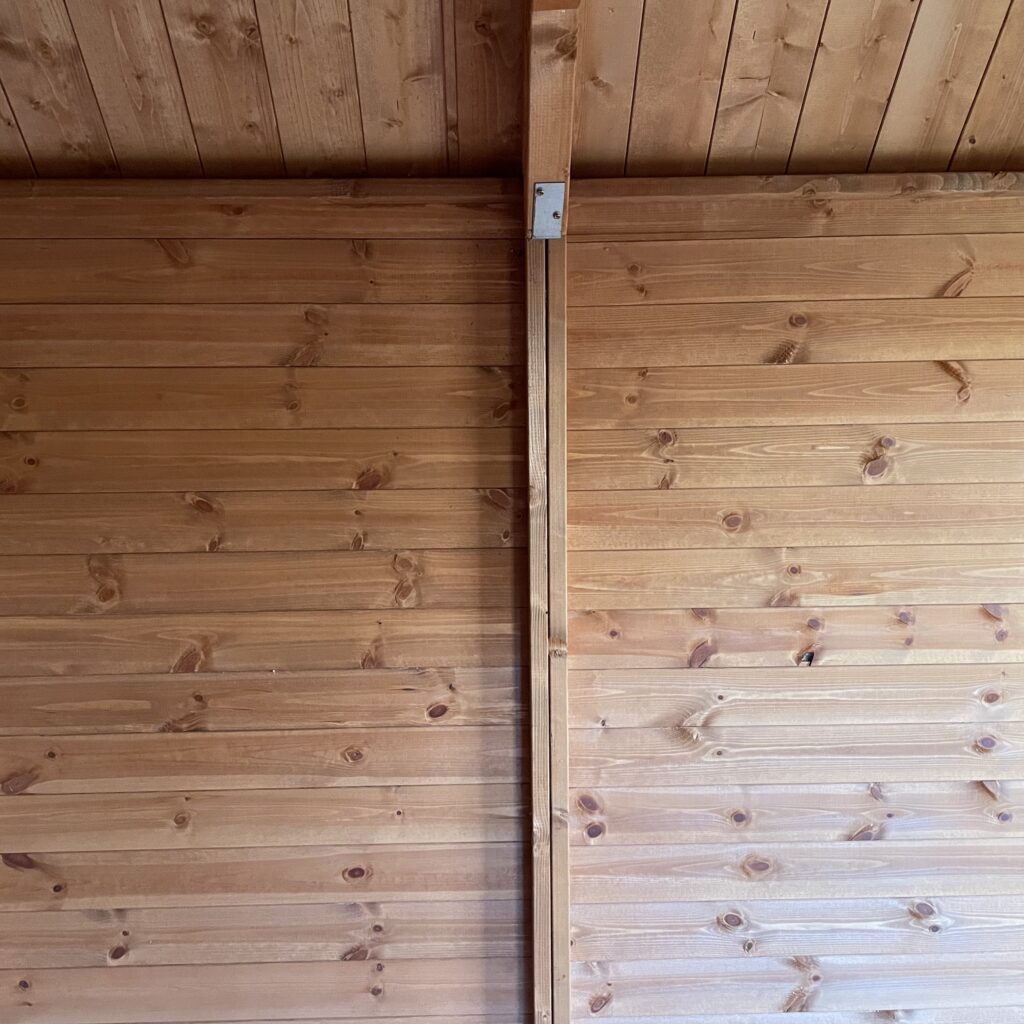
Internally, the building remains rigid and well tied together, and externally the joins are neat. There was one minor issue we’ll come to later, but structurally speaking, the integrity is there.
Roof Structure – Where the Mini-Barn Really Shines
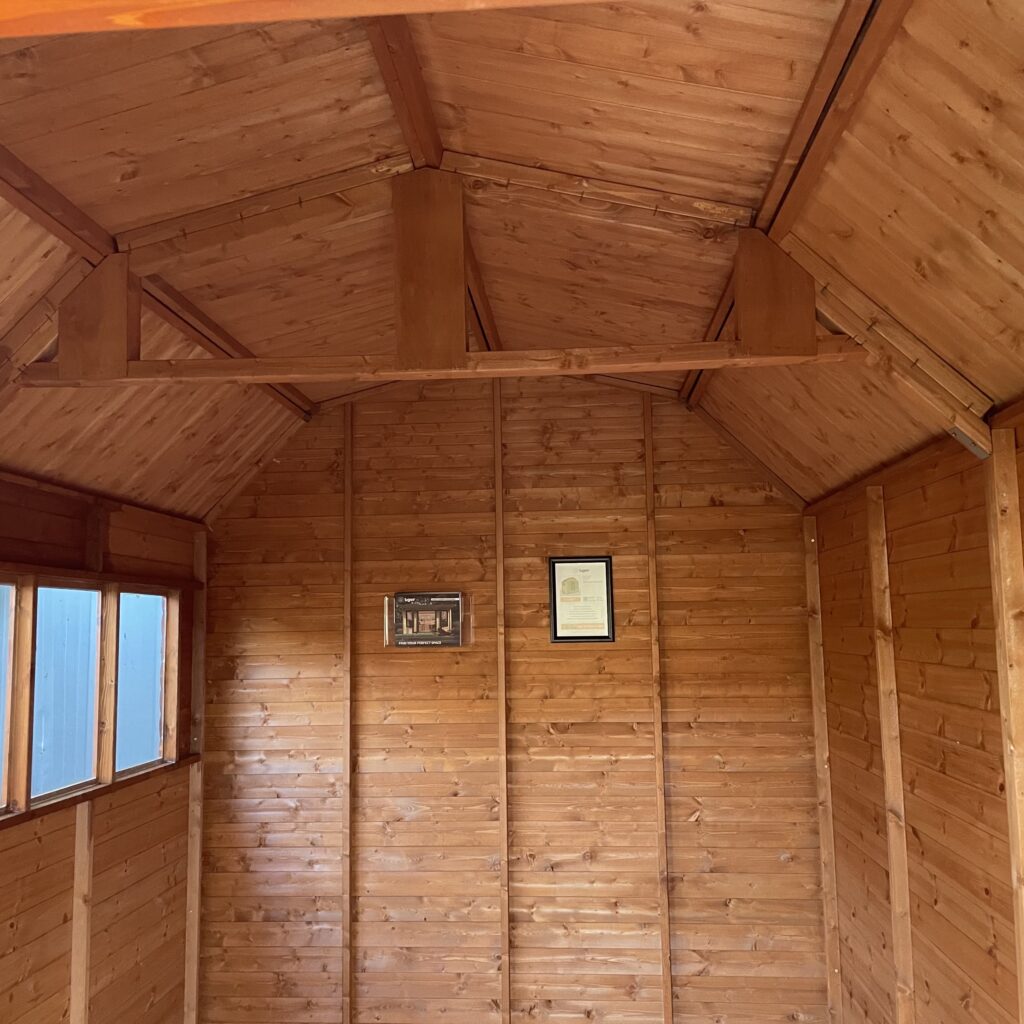
The barn-style roof isn’t just an aesthetic feature — it fundamentally changes how the building feels inside.
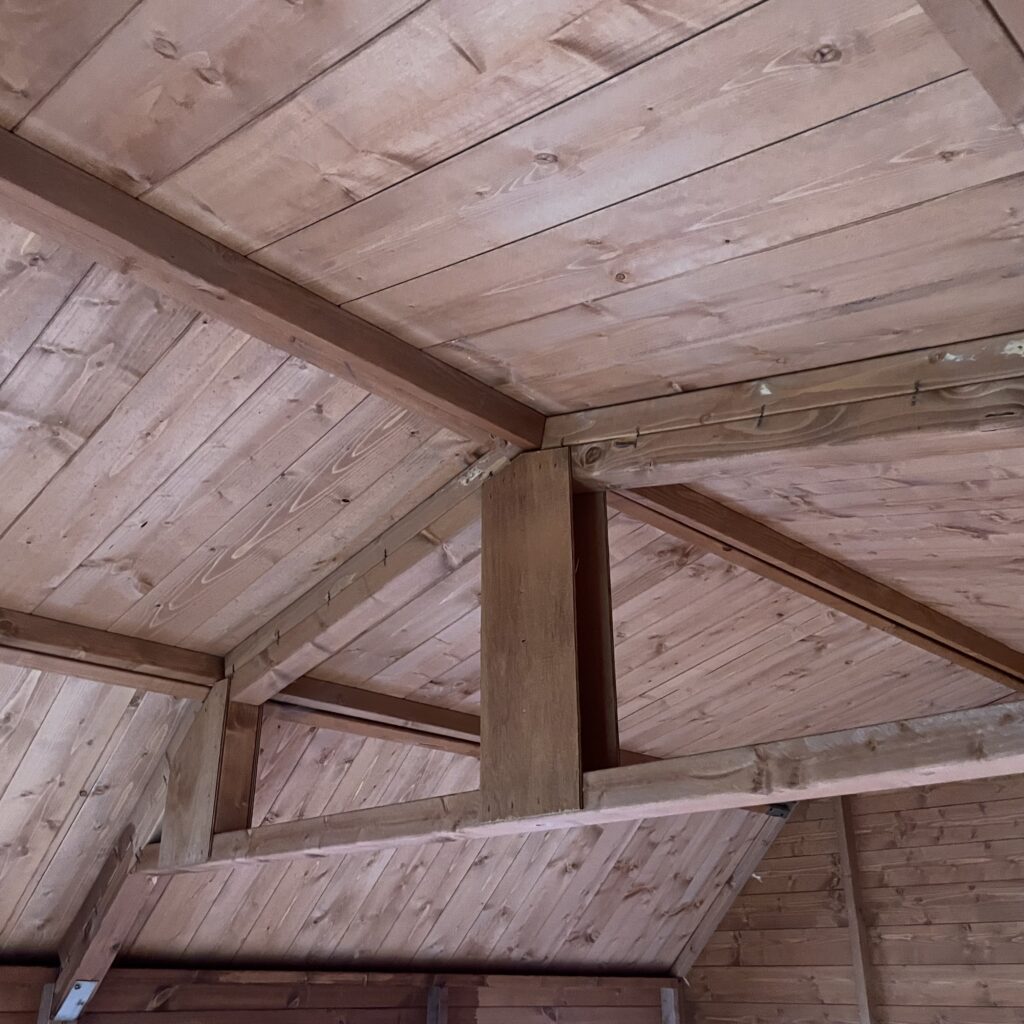
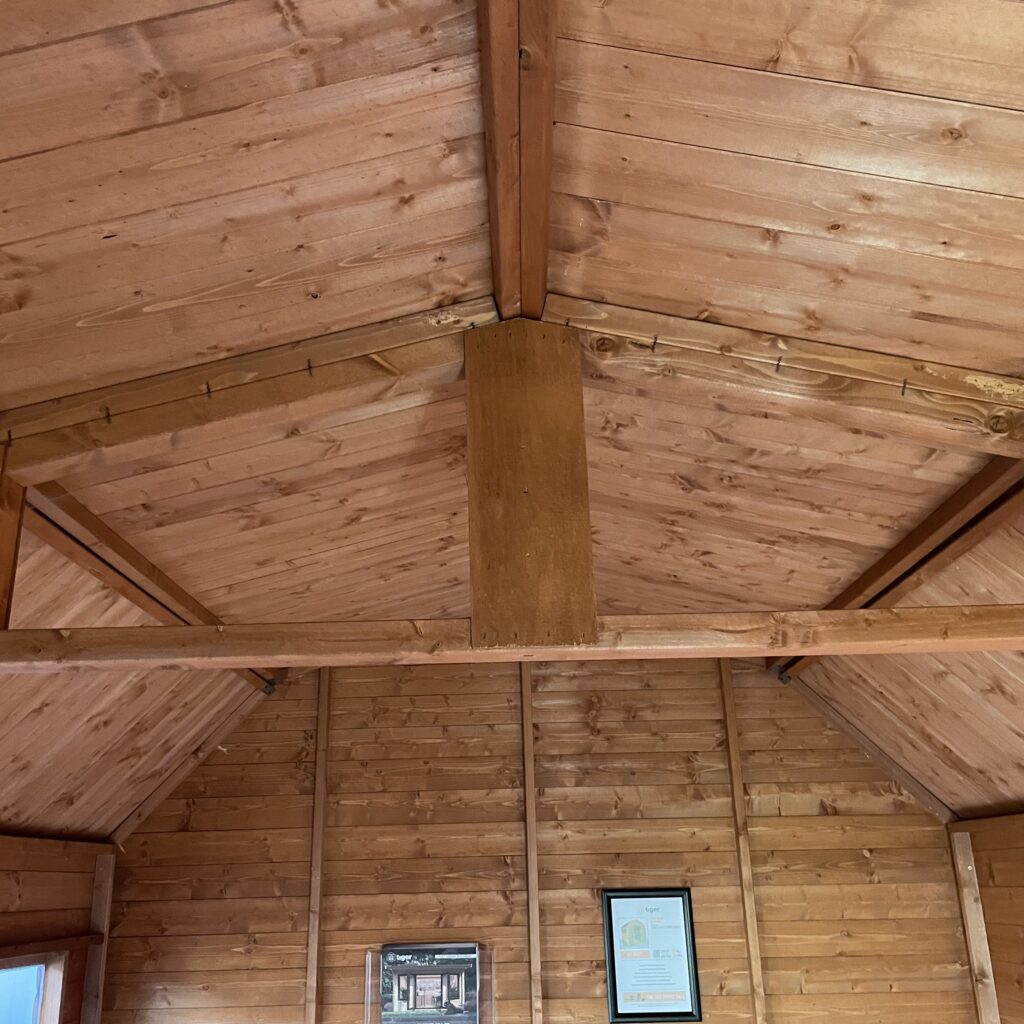
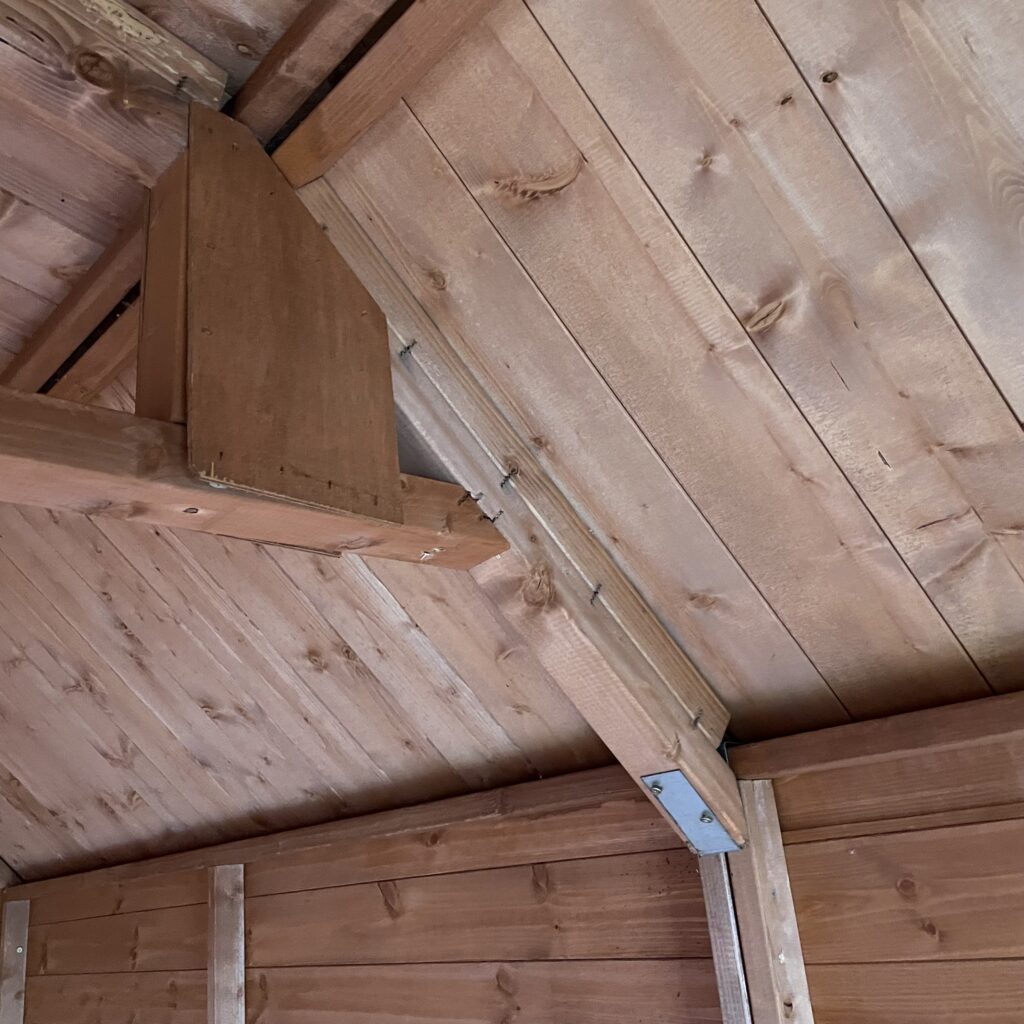
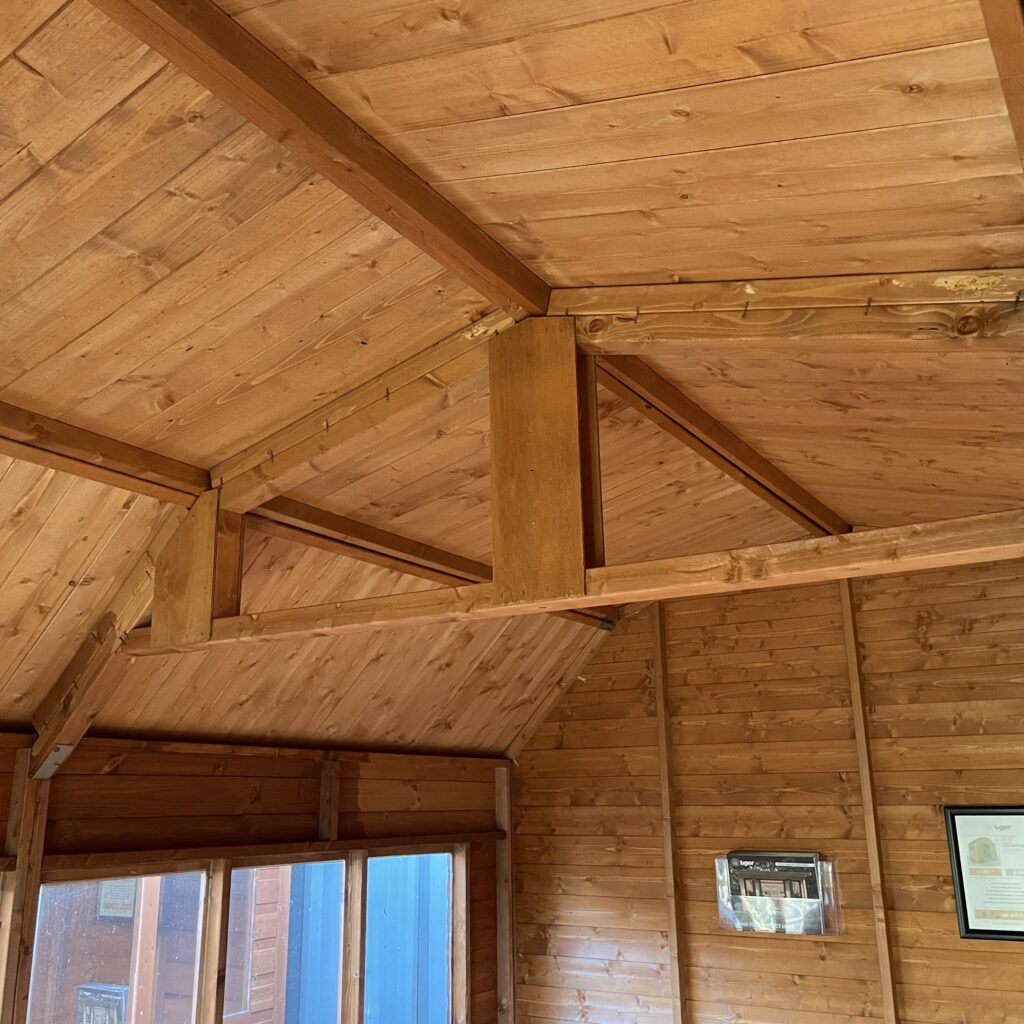
Unlike many apex sheds where a central tie beam can cut across headroom, the Mini-Barn’s tie beam is positioned noticeably higher. In fact, on the model we inspected, it was higher than the tie beams on comparable apex sheds we’ve reviewed.
This makes a real difference. If you’re working inside, moving tall items, or simply want the space to feel open, the Mini-Barn delivers.
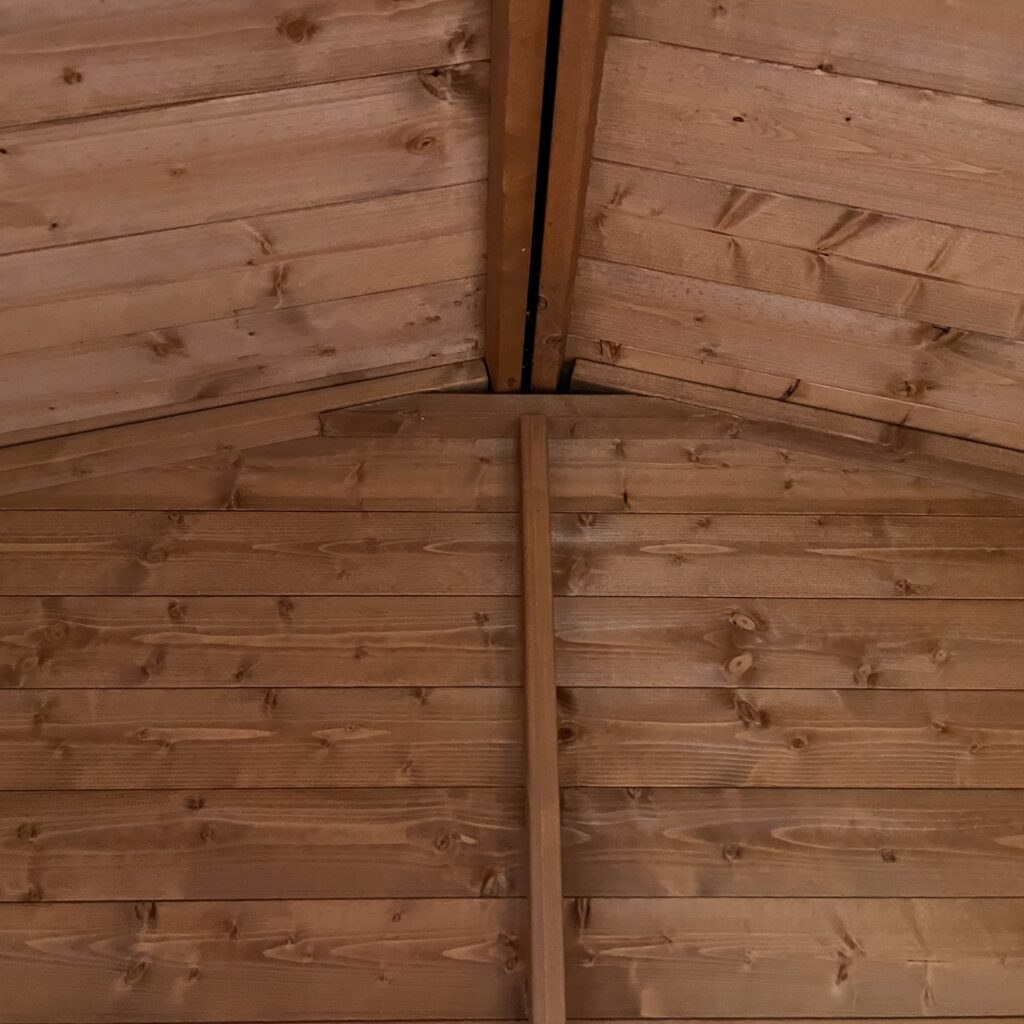
Because the building spans an 8ft width, Tiger has sensibly included a roof framing joint to tie everything together structurally. This isn’t a weakness — it’s a necessity at this size — and it’s been done cleanly.
The roof boards themselves are 12mm tongue & groove, well milled, smooth, and properly seated. In fact, the barn-style roof arguably shows off the quality of the timber better than many pent or standard apex roofs, simply because you see more of it.
Floors & Structural Testing – Real-World Measurements
We carried out our usual physical testing while inspecting the Mini-Barn.
- 75kg floor load test:
Deflection measured at approximately 2mm, which is excellent for a timber floor of this size. - 75kg wall deflection test:
Around 3mm of movement across the largest wall section — again, very solid.
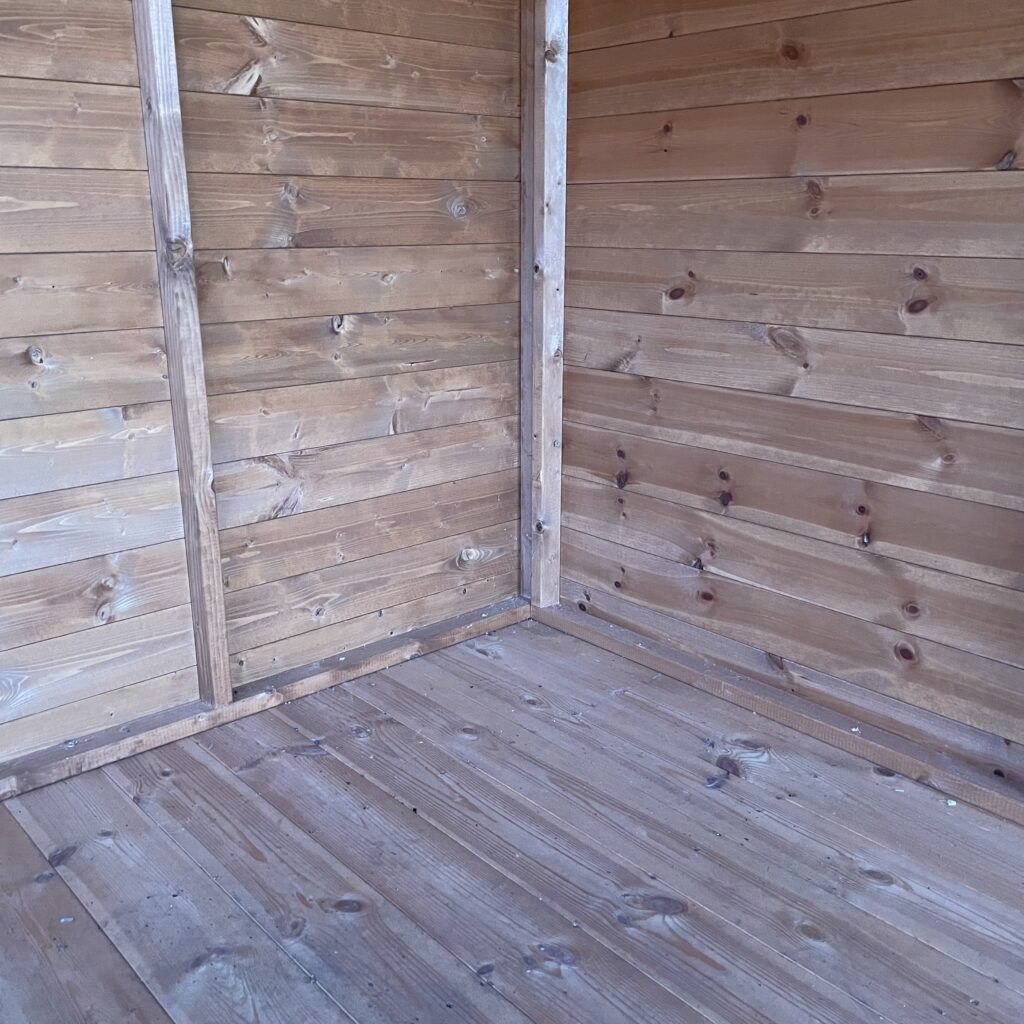
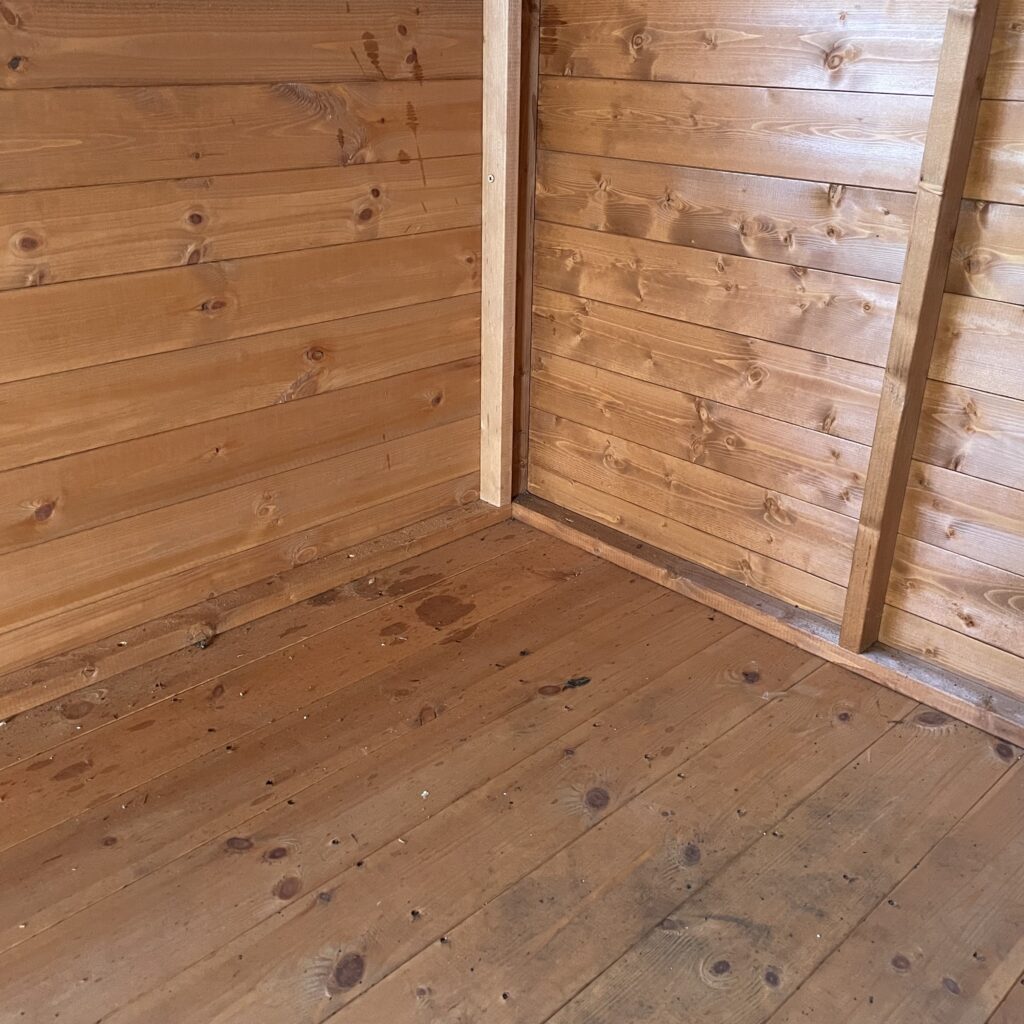
These figures put the Mini-Barn comfortably into the premium structural category, particularly for a building that isn’t marketed purely as a workshop.
The floor uses 12mm tongue & groove boards, and underfoot it feels firm, confidence-inspiring, and well supported.
Light Levels – One of the Brightest Sheds We’ve Tested
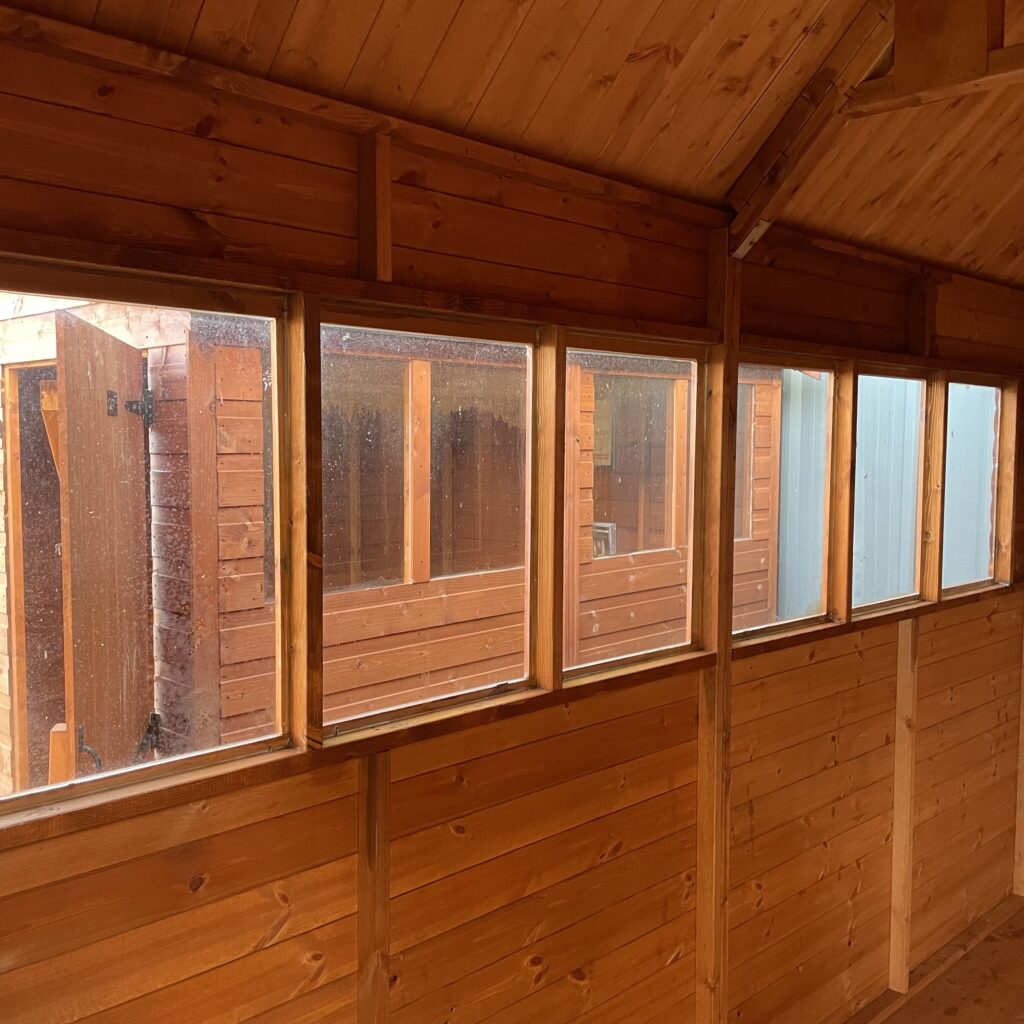
The six-window configuration absolutely floods the interior with light.
Using our lux meter, we measured:
- 35% of external light levels with doors and windows open
- 28% of external light levels with doors closed
That’s exceptionally good. Even allowing for the fact that this was a bright winter afternoon, these figures tell you something important: this is a building you can comfortably work in without artificial lighting for large parts of the day.
If you’re planning to use this as a workshop, studio, or hobby space, the light levels alone make it very appealing.
Windows – High Quality Glass, Traditional Fixings
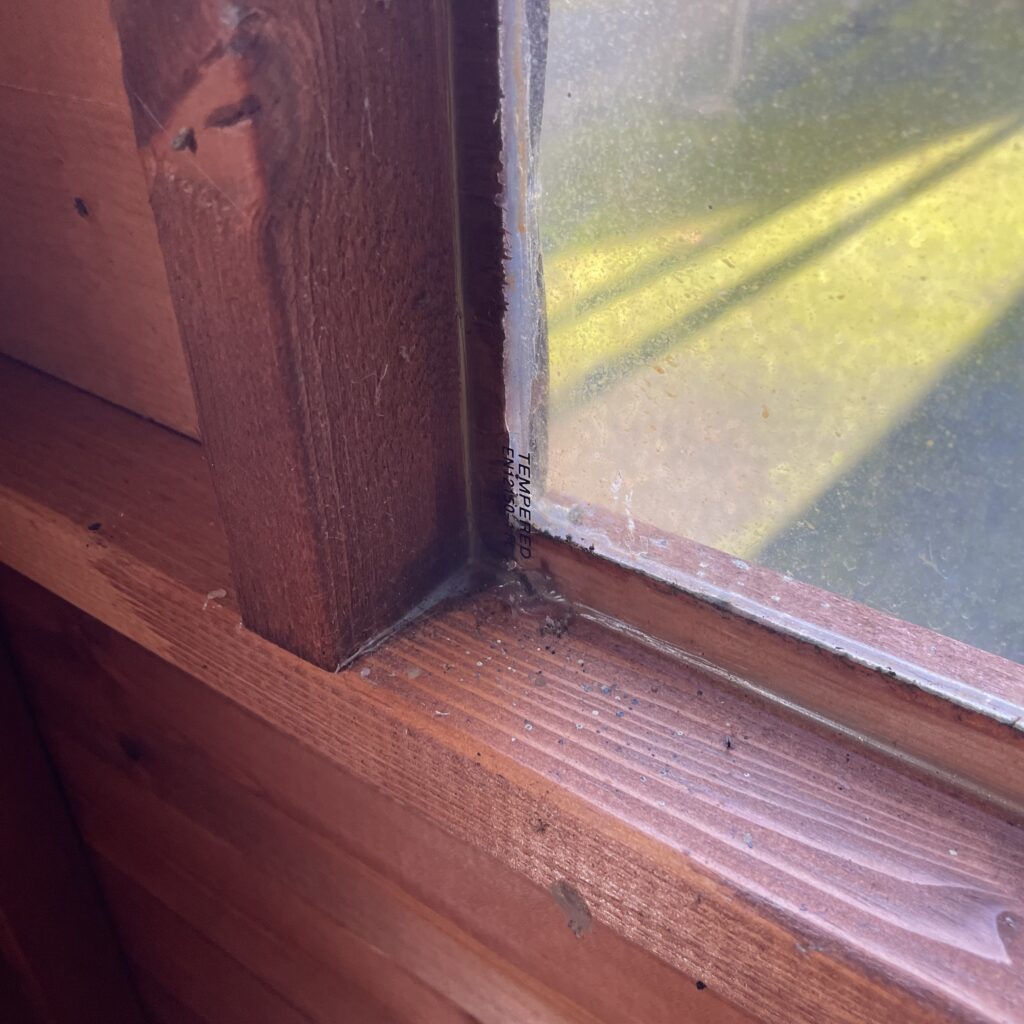
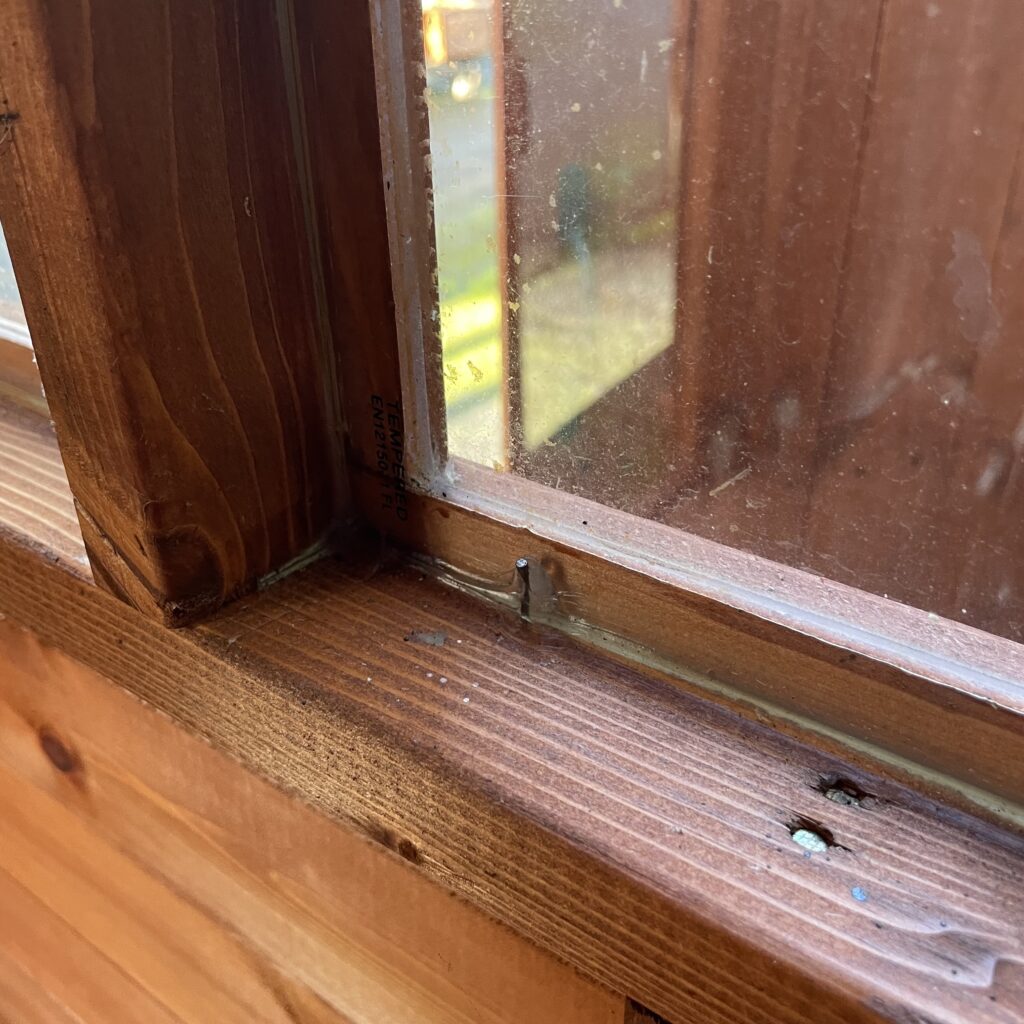
The windows are fitted with 3mm toughened glass, which is exactly what you want to see at this level. The glass itself is flat, clear, and free from distortion — no waviness, no cheap feel.
Installation follows Tiger’s traditional method: silicone is applied to the frame, the glass is seated, and then retaining pins are nailed in to hold it in place.
This system works, but it does come with a caveat. If you’re working close to the windows — brushing past them regularly — exposed nail heads aren’t ideal. We’ve never been huge fans of this approach, and while it’s common across the industry, it’s worth being aware of.
Tiger does offer alternative glazing options with architrave-style finishes, and for this building, we’d strongly recommend considering that upgrade.
Doors & Hinges – Solid, But One Area for Improvement
This is one of the very few areas where we think the Mini-Barn could be improved with minimal effort.
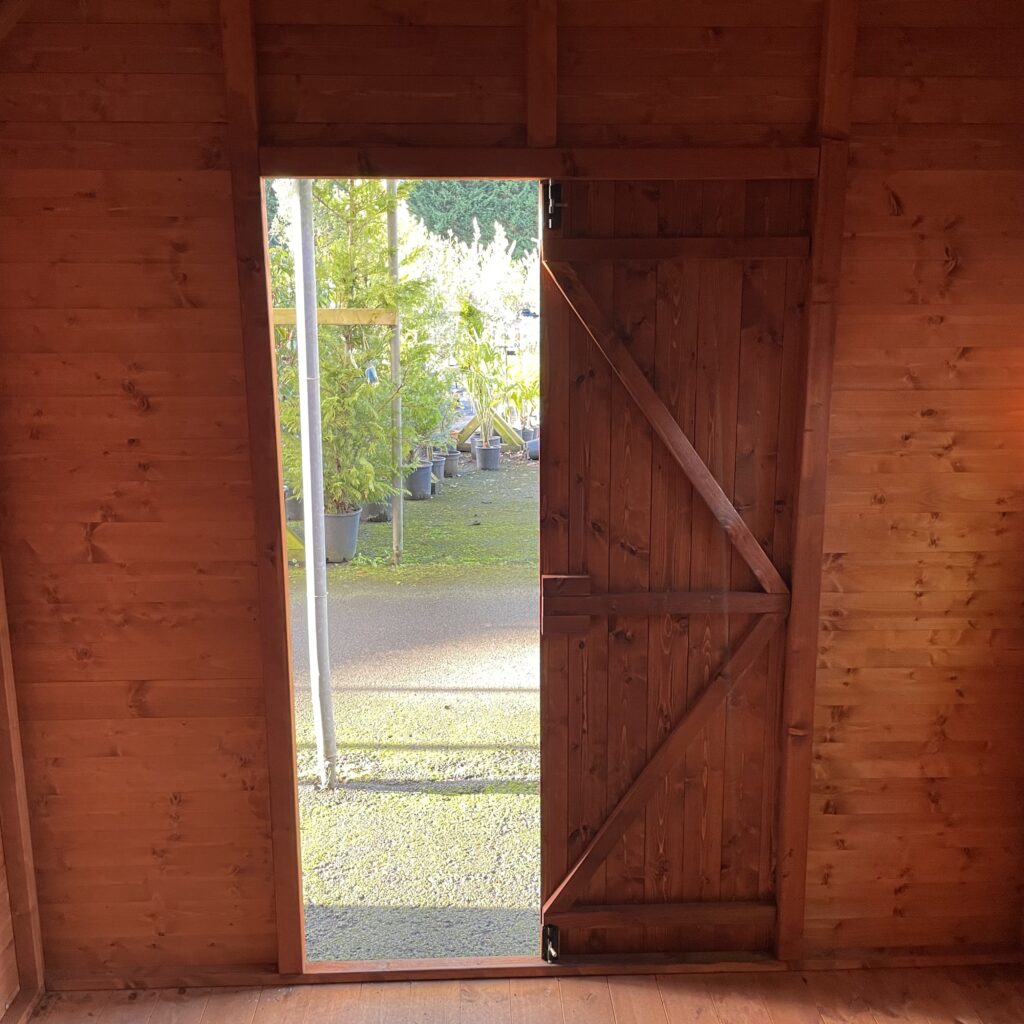
The doors themselves are solid, well-made, and feel substantial. However, because of the rounded loglap profile, the standard hinges don’t sit perfectly flush against the surface.
This means:
- Screws bite slightly unevenly into the frame
- The hinge isn’t fully recessed against flat timber
- In theory, leverage attacks would be easier than ideal
At the Otley show site, the doors were rock solid and operated perfectly. At Tong, we experienced a slight sticking issue when closing one door — nothing dramatic, but noticeable.
This isn’t a design flaw so much as a hardware mismatch. A slightly upgraded hinge with deeper fixings would almost certainly eliminate the issue entirely. It’s an easy fix during installation, and one we’d recommend if you plan to store valuables.
Weatherproofing & Water Ingress – Almost Perfect
The Mini-Barns we inspected had been on display for around 12 months, and importantly, they were completely dry inside. No staining, no damp smells, no visible water ingress around the roof angles — which is impressive given the complexity of the roof shape.
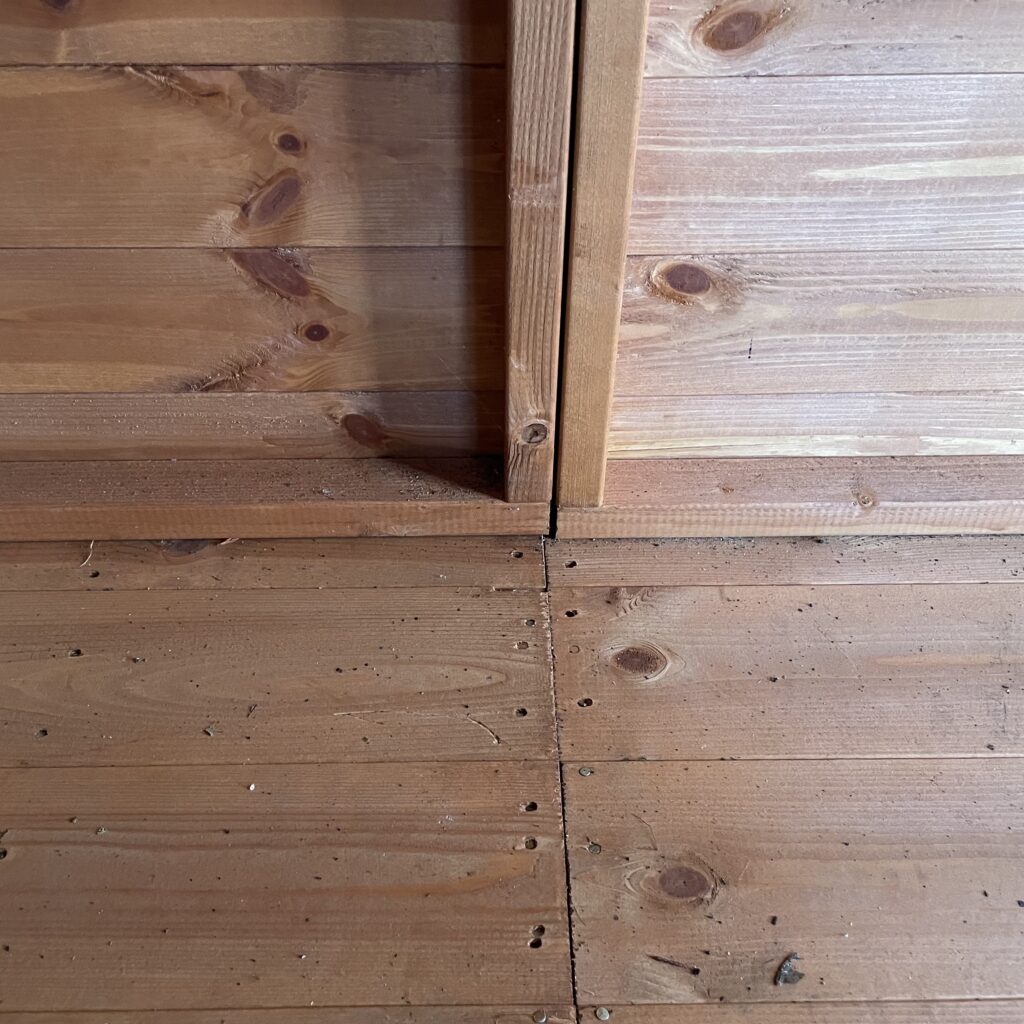
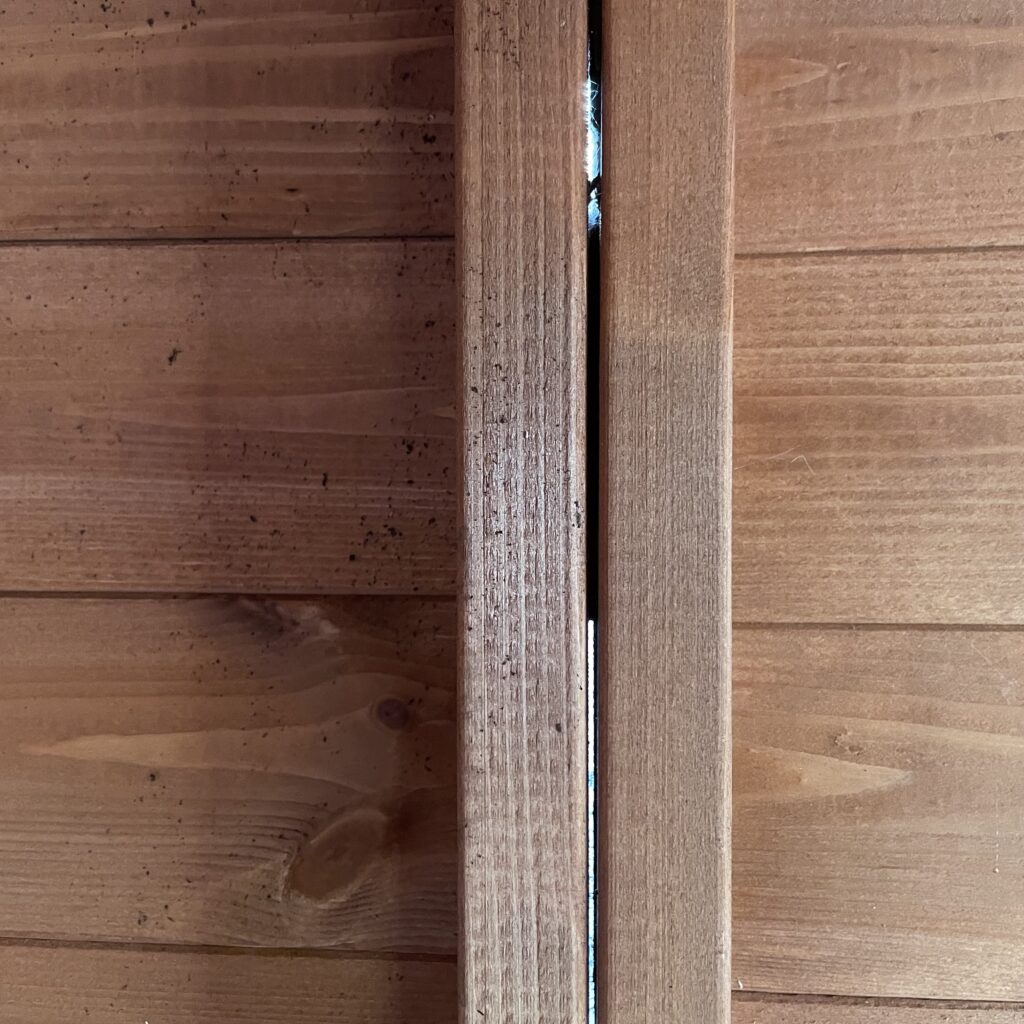
However, we did spot a small line of daylight visible through one of the external joins where two wall sections met. This is unusual for Tiger and likely comes down to a missing external joining strip, rather than a structural problem.
On shiplap buildings, Tiger typically covers these joins with an external batten. With loglap, that’s more challenging due to the rounded profile — but it’s still solvable. We strongly suspect this was simply overlooked during assembly rather than being a design issue.
Aesthetic Details – The “Mark of a Tiger”
The finishing touches are where this building really earns its premium feel.
- Carefully fitted roof edge battens
- Tiger branding centred and aligned
- Neat bargeboards
- Nothing feels out of place or rushed
These are the kinds of details you only really notice when they’re not done properly — and here, they are.
Inside and out, the building feels cohesive, intentional, and confidently executed.
Verdict – Who Is the Tiger Mini-Barn For?
The Tiger Mini-Barn is ideal if:
- You want height and volume, not just floor space
- You want a statement shed that looks genuinely premium
- You value light levels and internal comfort
- You appreciate good timber machining and framing
It’s not the cheapest shed Tiger makes, and it shouldn’t be. A couple of small upgrades — particularly hinges and window finishes — would elevate it even further, but even as standard, it’s a very high-quality building.
This is the kind of shed you buy because you want it, not because you’re settling.
And that, ultimately, says everything.