EXPERT REVIEWED
  FREE DELIVERY
  INSTALATION AVAILABLE
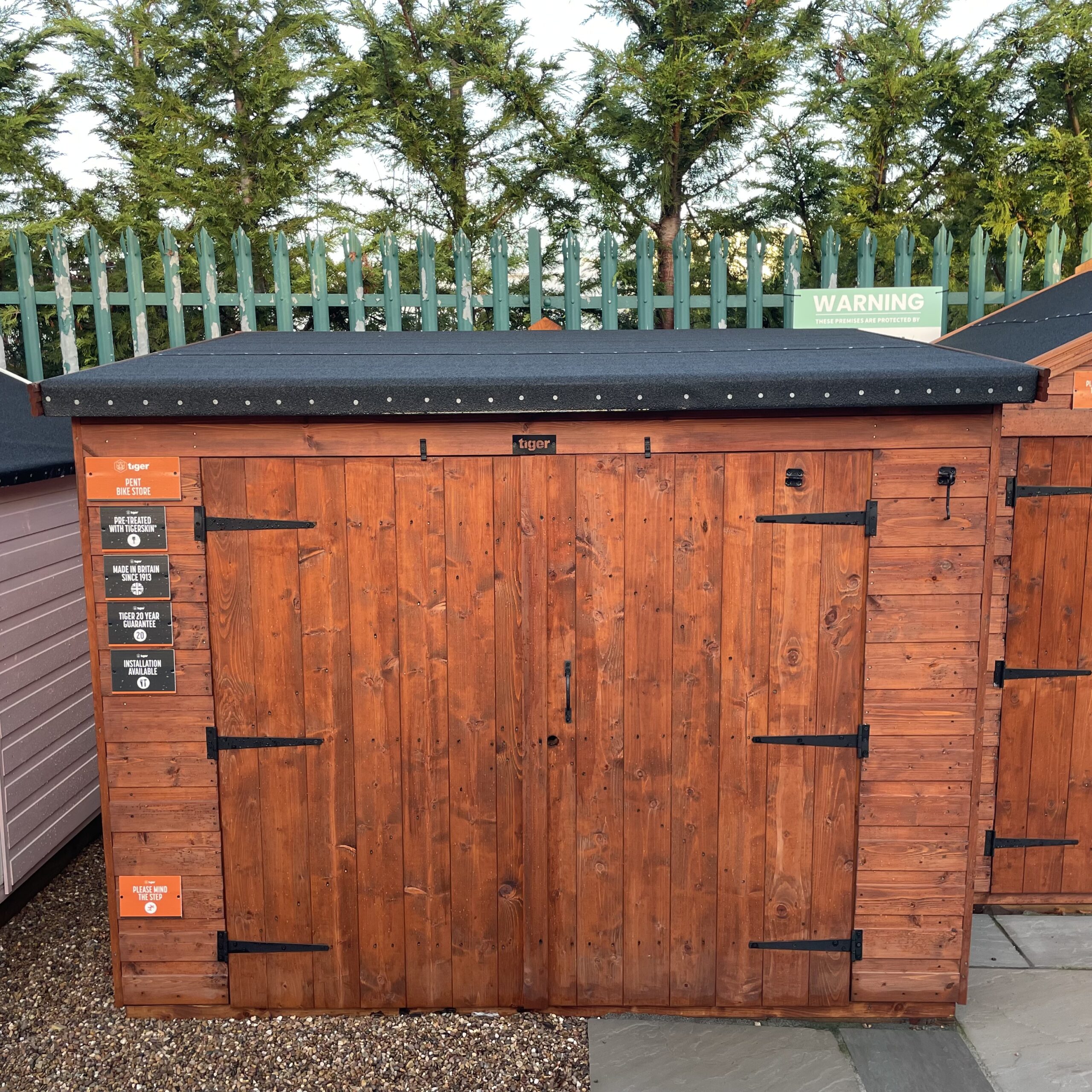
 Tiger Pent Bike Store – Show Site Review
First Added - November 28 2025
Last Updated - November 28 2025 - 0 Data Points Updated - 0 Data Points Added
Reviewed & curated by a panel of garden building experts. Using methodology 1.1
Product ID: tiger-sheds-tiger-pent-bike-store
Size: Multiple sizes available
Merchants Checked: 10
Some products only make sense once you’ve physically stood in front of them.
Bike stores are a perfect example. On a specification sheet, they often look deceptively similar: timber thicknesses, door sizes, roof types, and overall footprints don’t always tell the full story. It’s only when you walk up to one, open the doors, and imagine loading wet, muddy bikes day after day that the real strengths—and weaknesses—start to reveal themselves.
We inspected the Tiger Pent Bike Store at both the Tong and Otley show sites, spending time with each of the available depths. All imagery used for this review comes from those visits, and what follows is based on direct, first-hand assessment rather than assumptions drawn from a brochure.
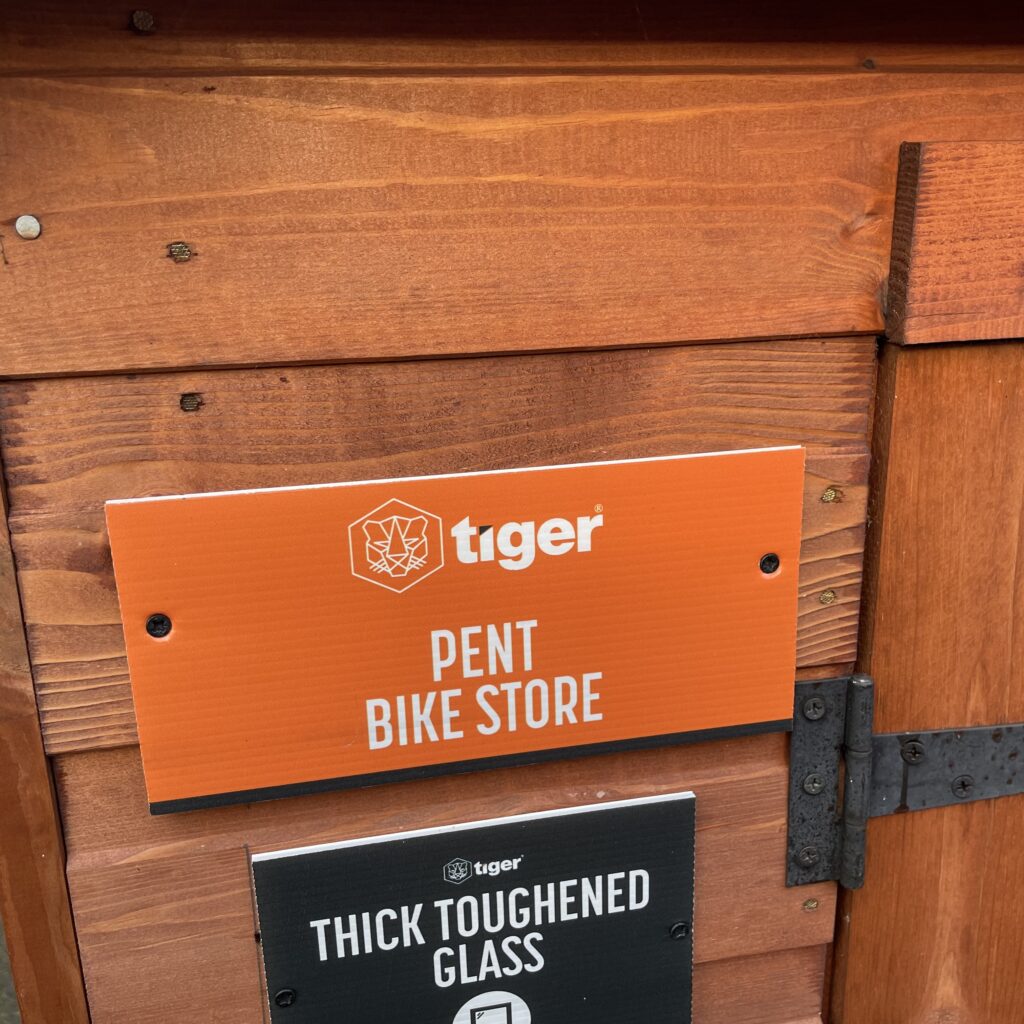
This is Tiger’s fixed-format pent bike store, distinct from the modular TigerFlex version. You choose the size you need, and the building arrives built specifically for that footprint.
Sizes and Real-World Capacity
The Tiger Pent Bike Store is available in three depths, while maintaining the same overall width:
- 7×3 ft
- 7×4 ft
- 7×5 ft
In practical terms, this means the internal storage volume scales in a predictable, usable way rather than simply adding dead space.
From what we saw on site:
- The 3ft deep model is realistically suited to two adult bikes, possibly three at a push if handlebars are narrow and you’re happy to angle them carefully.
- The 4ft model is the most balanced option for most households, comfortably handling three to four bikes.
- The 5ft model can take four to five bikes, depending on frame geometry, bar width, and whether you’re storing helmets and accessories alongside them.
These aren’t marketing numbers. They’re grounded in physically placing bikes inside the structures at the show sites and considering day-to-day usability rather than theoretical maximums.
Ergonomics First: How It Actually Feels to Use
Before talking about materials or construction quality, it’s important to address how this bike store feels to use, because that’s where the pent design makes itself known.
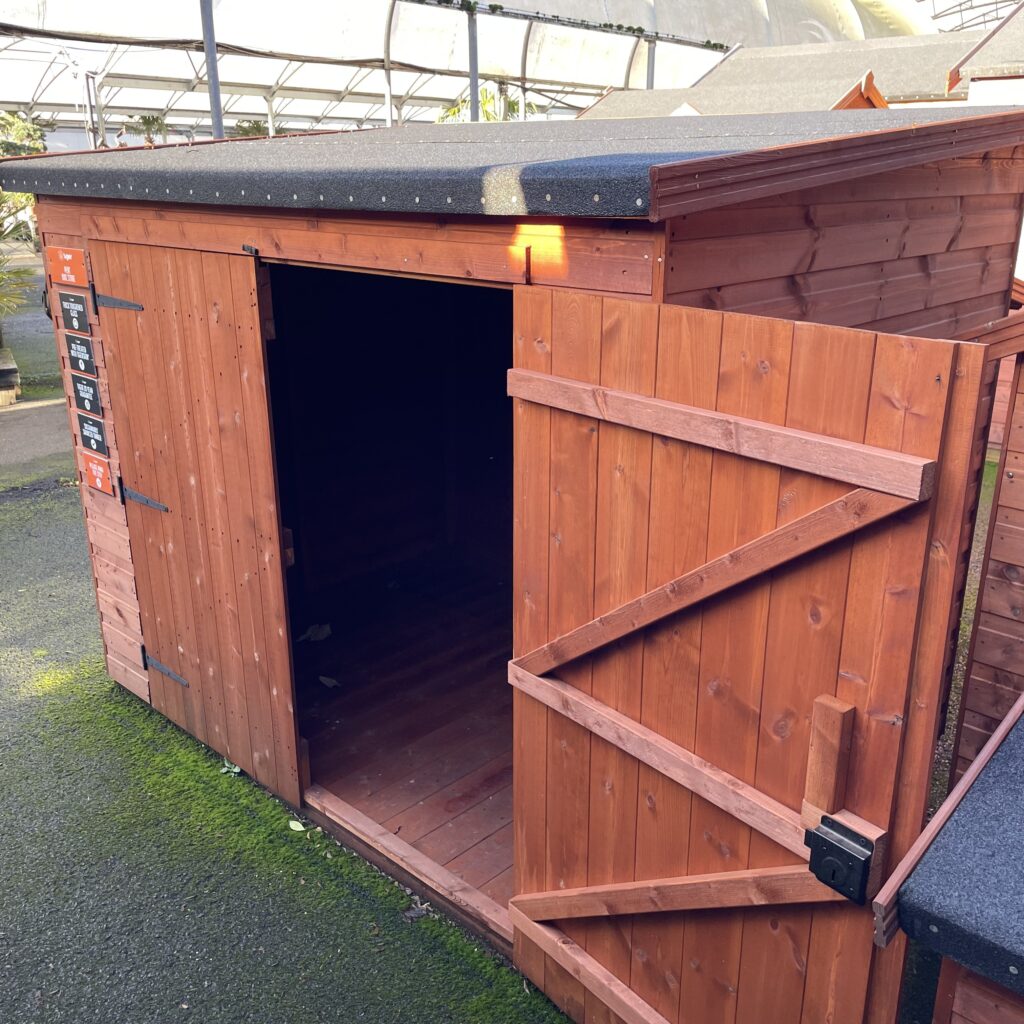
Compared to Tiger’s apex bike store, the pent version does not allow you to stand fully upright throughout the interior. This becomes more noticeable as you move from the 3ft to the 5ft depth.
On the 7×5 model in particular, you’re effectively dealing with the depth of a small shed, but without the vertical clearance you’d expect from a full apex roof. Retrieving a bike from the back requires bending and controlled manoeuvring.
That’s not a flaw — but it is a trade-off.
The pent roof slopes towards the front, meaning headroom actually increases as you move deeper inside. This is the reverse of what many people intuitively expect, especially if they’re familiar with Tiger’s TigerFlex bike store, where the roof slopes away from the entrance.
In use, this means:
- You duck slightly on entry
- Space opens up further inside
- The deepest part is the most comfortable to work in
It’s a subtle but important ergonomic detail, and one buyers should be aware of before choosing between Tiger’s different bike-store designs.
Build Quality: Full Shed Standards Applied Without Compromise
Once you move past ergonomics and start looking closely at the build, the Pent Bike Store becomes genuinely impressive.
The immediate reaction at both show sites was the same:
“This is built exactly like Tiger’s large workshops.”
That’s not hyperbole.
The materials and construction methods used here are the same ones Tiger apply to their full-size sheds and XL workshops, just scaled into a bike-store format.
According to the technical data sheet, the specification is consistent across all sizes :
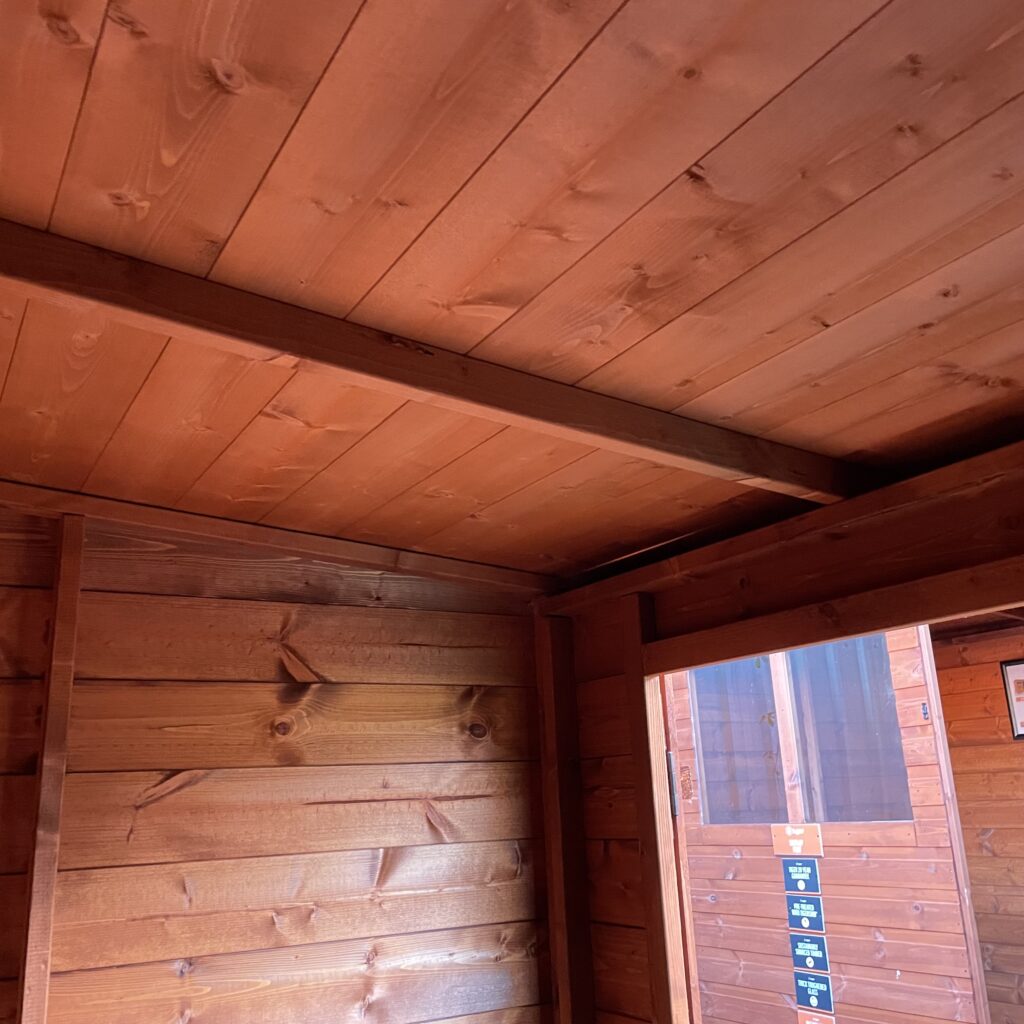
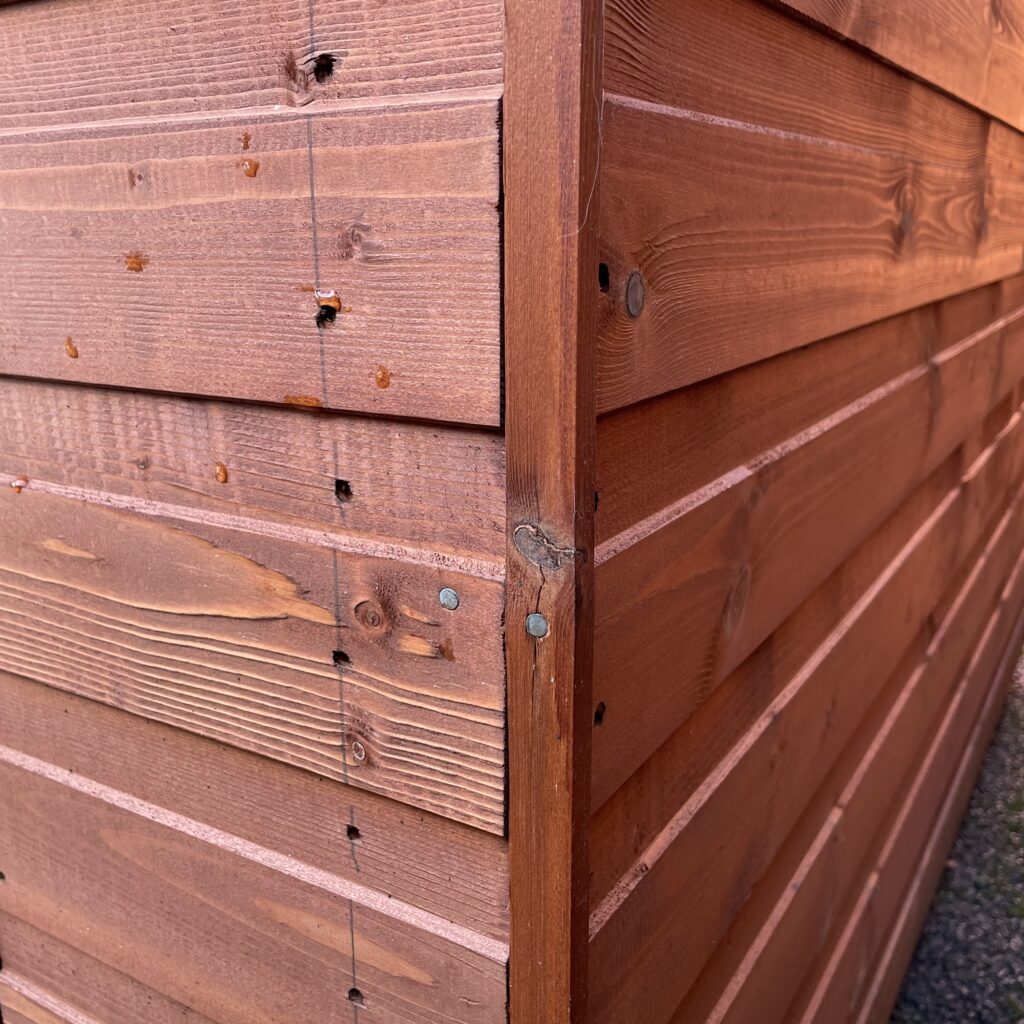
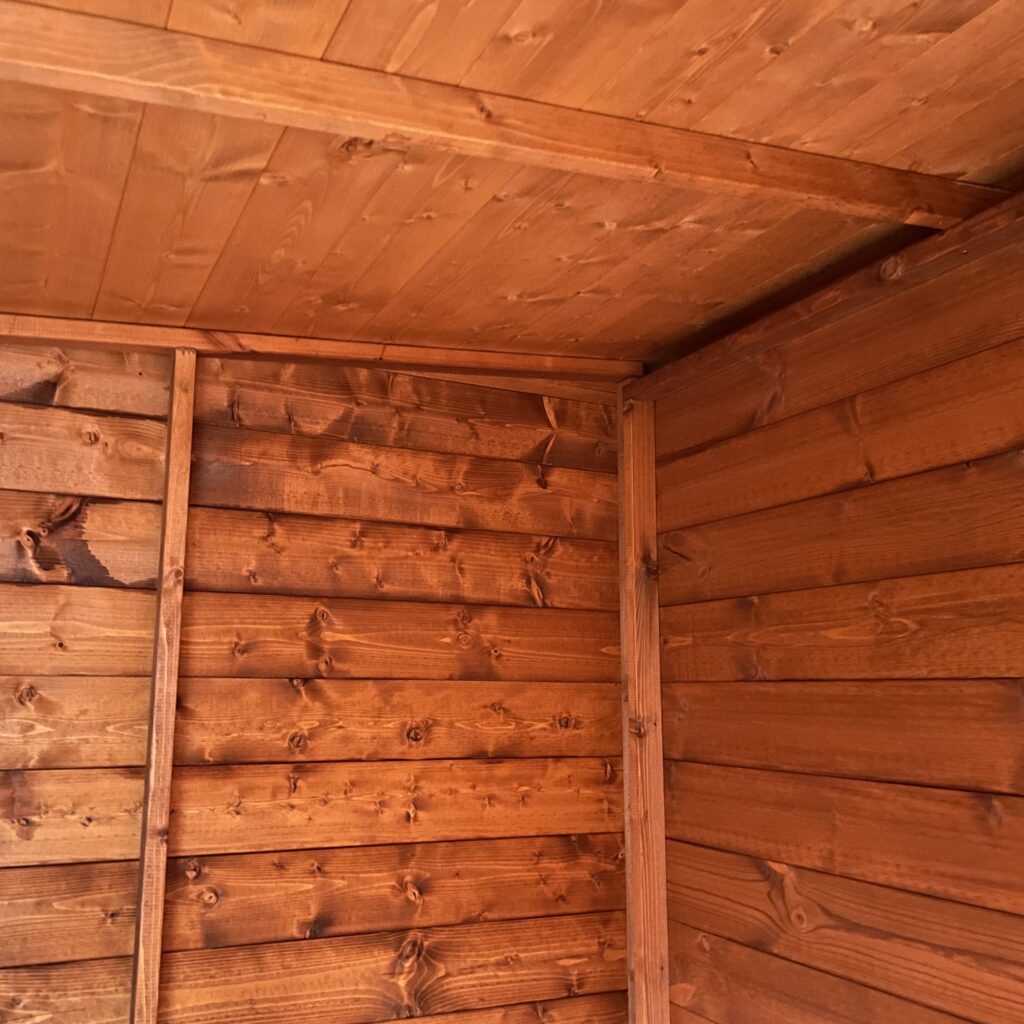
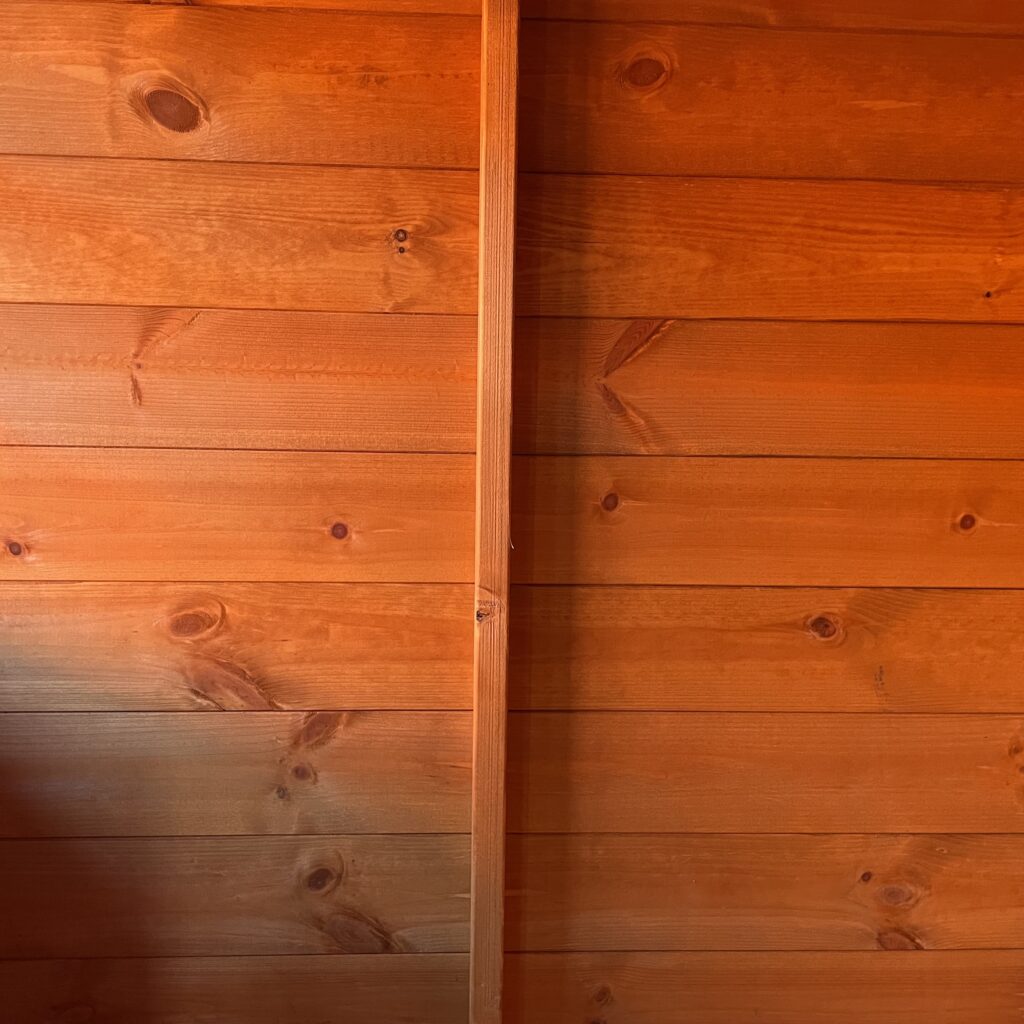
- 12mm shiplap tongue-and-groove cladding
- 12mm tongue-and-groove roof
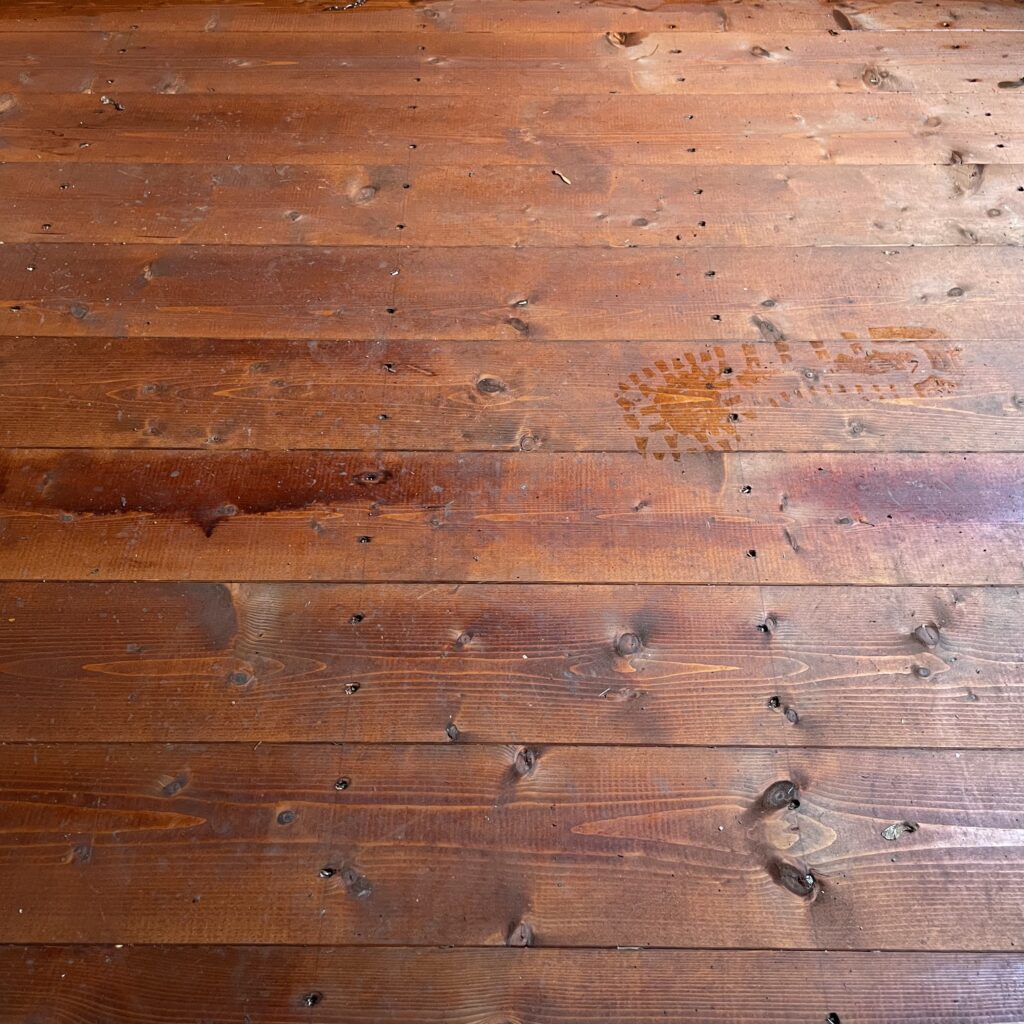
- 12mm tongue-and-groove floor
- 28×44mm rounded framing
Crucially, there is no OSB anywhere in the structure.
For a bike store, that matters more than many people realise.
Bikes in the UK are often put away wet. Timber tongue-and-groove floors are designed to cope with that — they absorb moisture, dry out, and recover. OSB and laminated boards do not. Once water gets into OSB, swelling and degradation are almost inevitable.
By sticking with solid timber throughout, Tiger have made a conscious decision to prioritise longevity over short-term cost savings.
This is very much a buy-once, not twice product.
Floor Strength and Weight Bearing
The floor deserves specific mention.
It is 12mm tongue-and-groove, supported by substantial bearers, and feels rigid under load. At both Tong and Otley, there was no discernible flex when stepping inside or rolling bikes in and out.
This matters if you’re storing:
- E-bikes
- Cargo bikes
- Bikes plus maintenance stands or toolboxes
The installation guidance emphasises the importance of a firm, level base, raised slightly above surrounding ground level to prevent standing water . Follow that advice, and the floor construction here should remain serviceable for many years.
Doors, Framing, and Craftsmanship
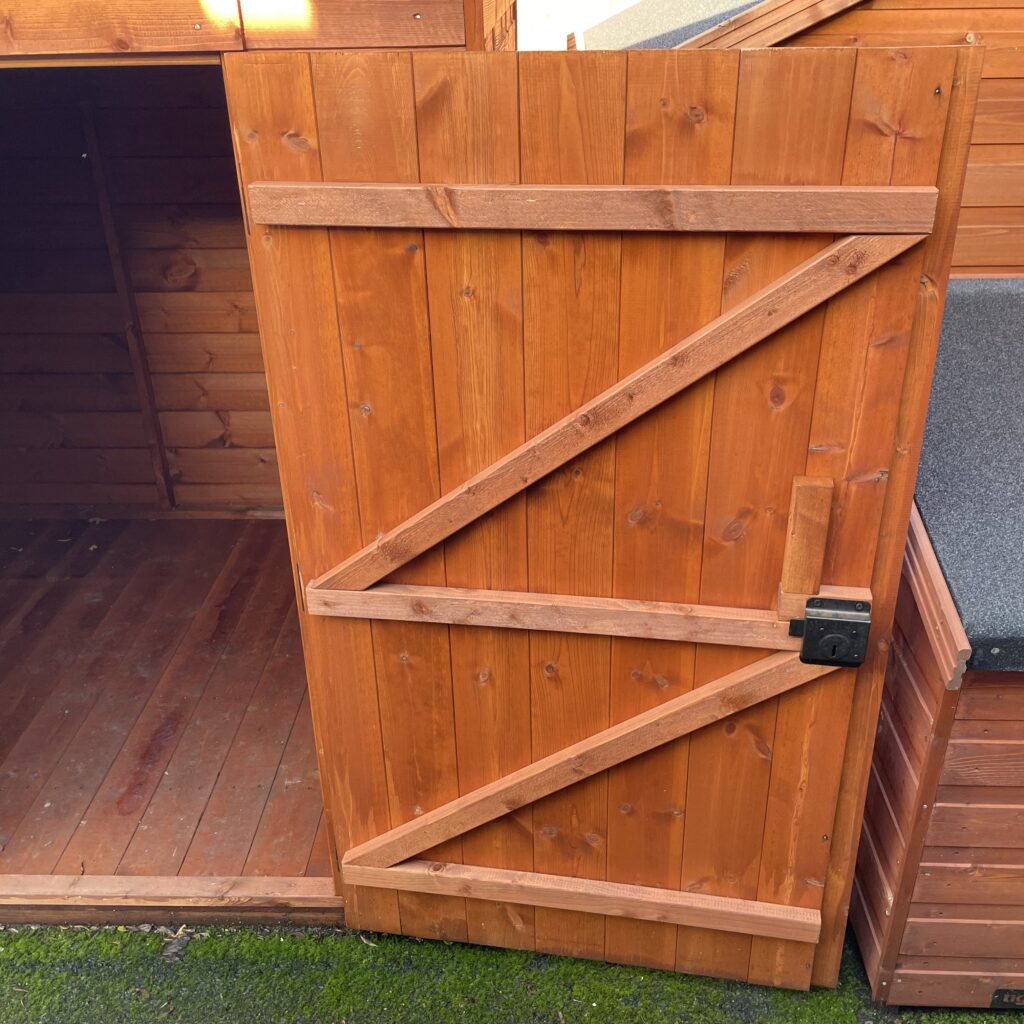
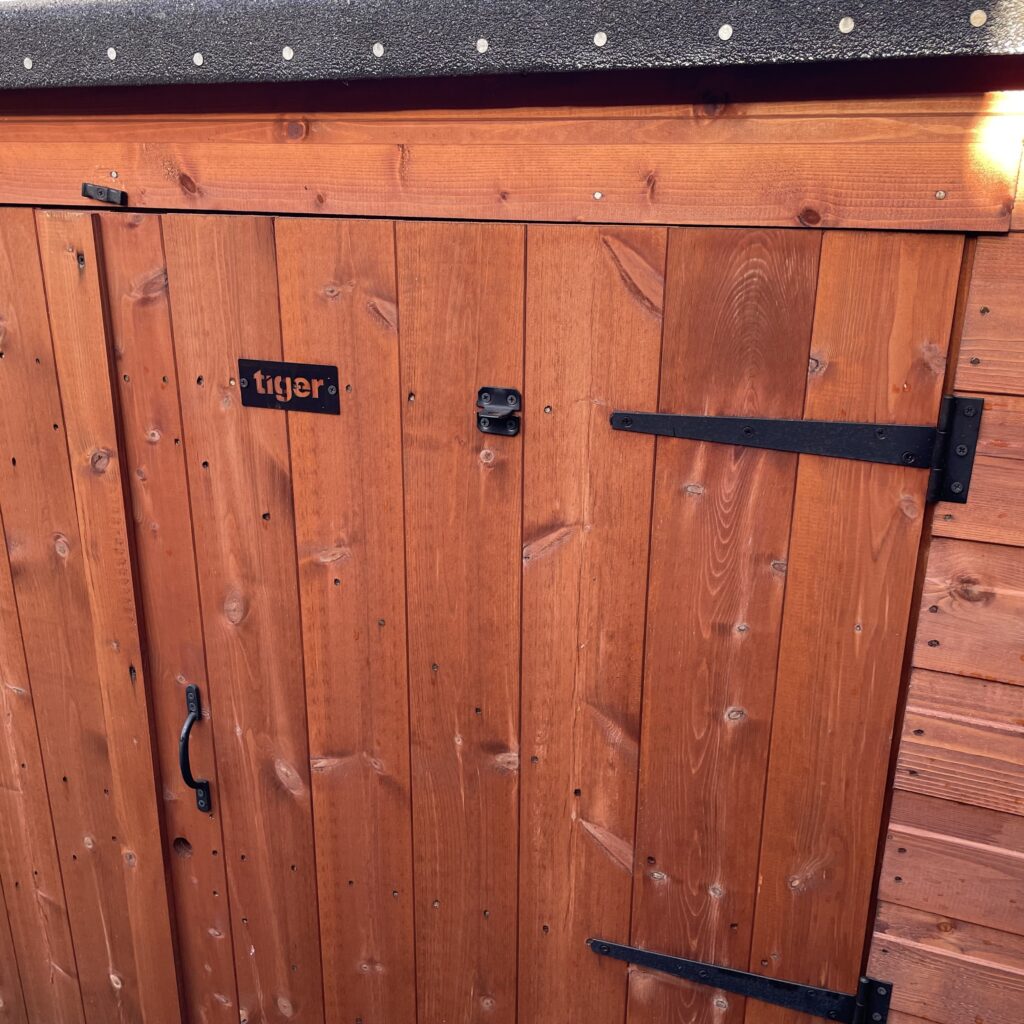
The doors are extra-large double doors, fully boarded and braced, using the same bracing pattern found on Tiger’s standard sheds .
When you open them, they don’t twist or sag. They feel properly weighted and solid in the hand.
Looking closely at the construction, you can see:
- Double-nailing of cladding boards into the frame
- Clean, consistent board spacing
- Pencil layout marks still visible in places — a subtle reminder that these are hand-built, not mass-moulded
There are also several thoughtful reinforcement details:
- Additional timber above the doors to reduce water ingress
- A timber block behind the door handle so fixings bite into solid wood
- Two bolt locks securing the secondary door
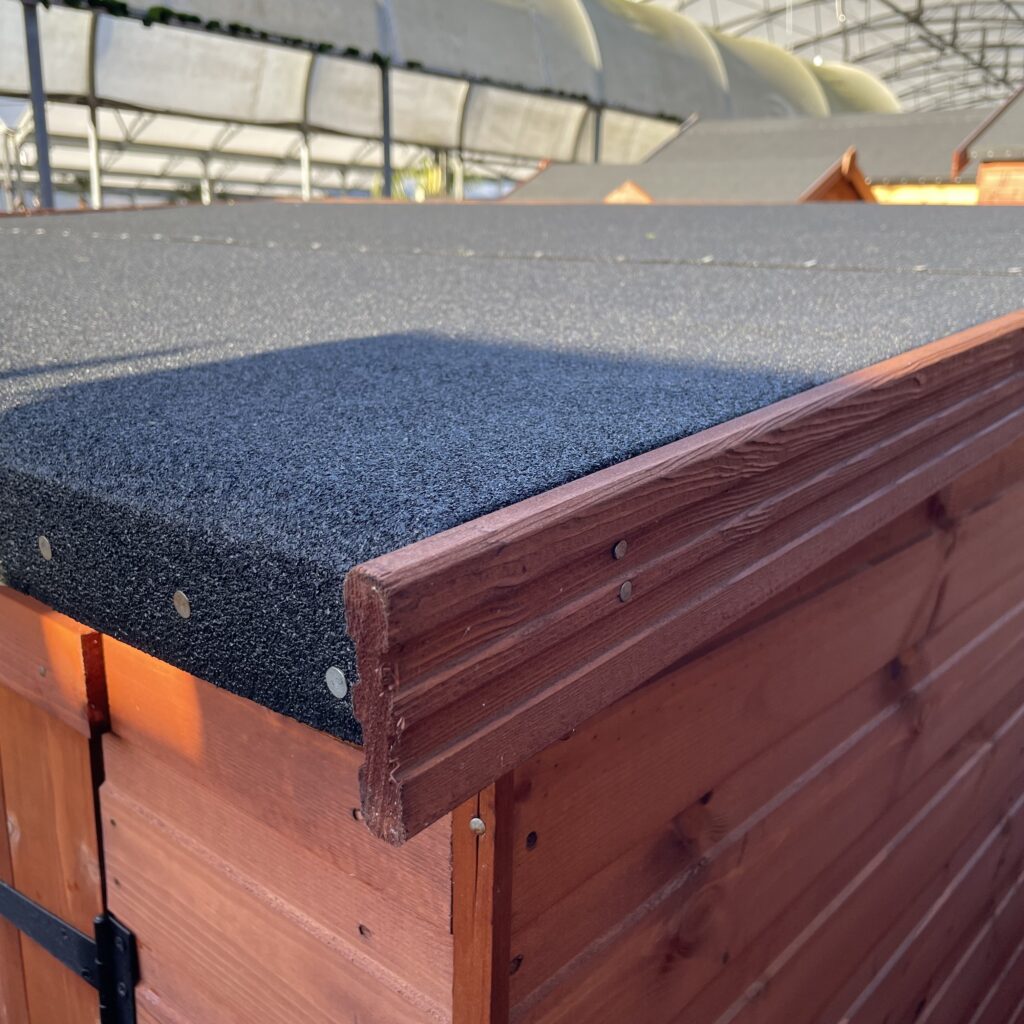
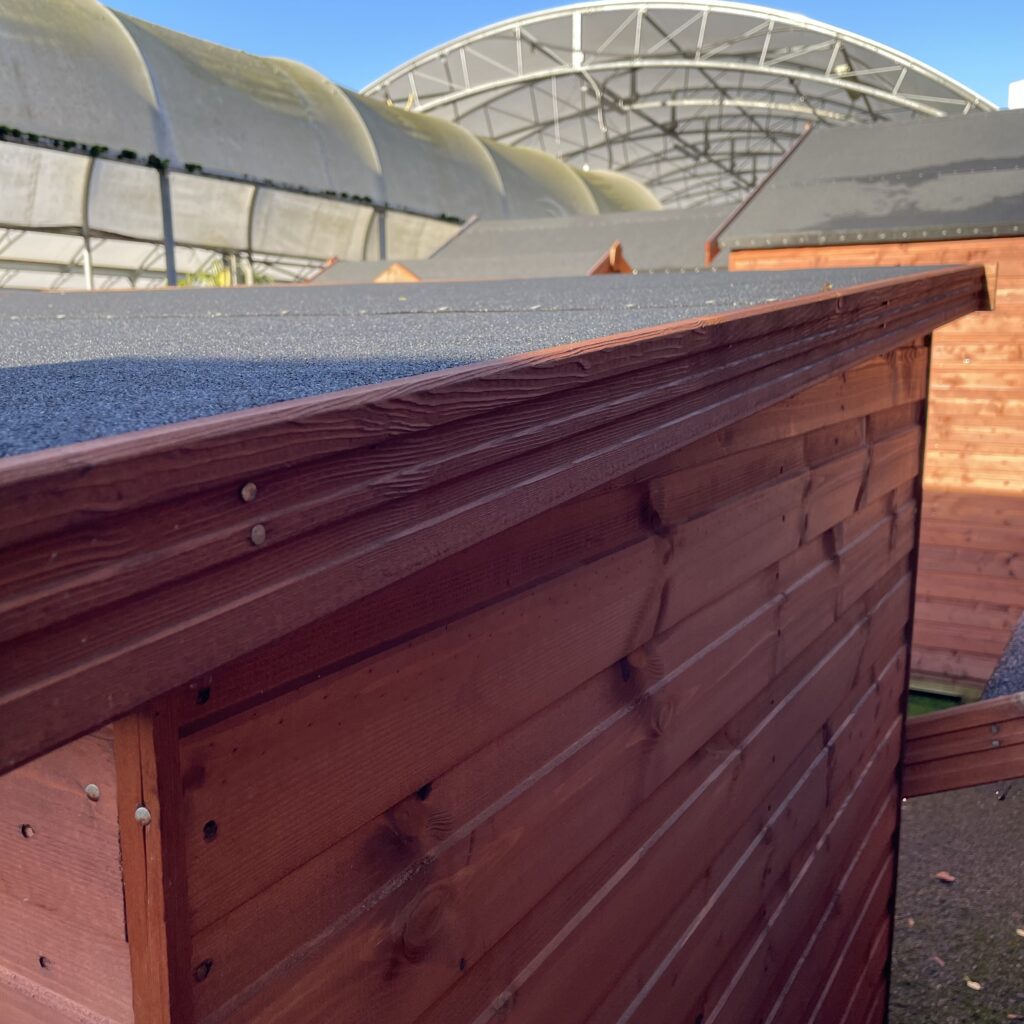
Roof edges are neatly finished with timber trims, and the overall structure feels tight and square.
Under hand pressure, the roof shows no flex or rattle.
Roof and Weatherproofing
The roof construction mirrors Tiger’s shed standards:
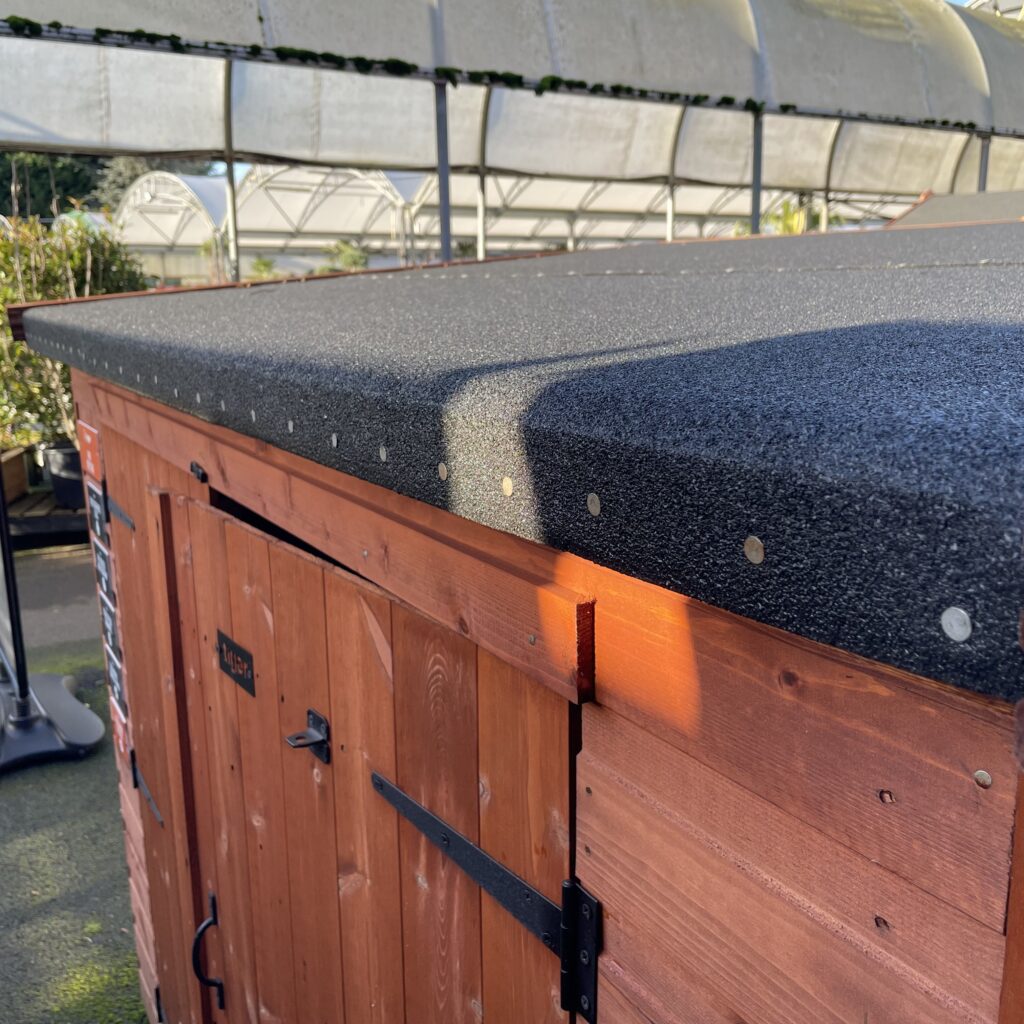
- 12mm tongue-and-groove roof boards
- Covered with black mineral felt
- Properly fixed rather than stapled
The pent design ensures effective water runoff, and at both show sites the felt sat flat and well-tensioned, with no lifting at the edges.
This is not a token roof designed to look the part — it’s a functional, durable covering designed to cope with year-round exposure.
Security: The One Fair Criticism
There is only one legitimate criticism worth making — and it’s important to be honest about it.
The hinges are fixed using standard screws.
To be clear: this is not a flimsy building. Forcing entry would require time, noise, and effort. Nothing about this bike store invites casual theft.
However, if you are storing very high-value bikes, particularly e-bikes, the hinge fixings are the theoretical weak point.
The good news is that this is easily addressed. Swapping the screws for security fixings is a simple, low-cost upgrade that materially improves resistance.
If absolute, industrial-level security is your top priority, galvanised steel bike stores with ground anchors may be more appropriate — but those are very different products, often far less attractive and less sympathetic to a garden setting.
Within the mid-to-upper wooden bike-store market, this Tiger model is extremely well thought out.
Treatment, Maintenance, and Guarantee
The building is supplied pre-treated in Tiger’s Burnt Orange water-based treatment . As with all Tiger buildings, this is a factory treatment designed to protect during transit and initial installation.
To validate the 20-year guarantee, Tiger are explicit that a high-quality oil- or solvent-based preservative must be applied after assembly, internally and externally, and then annually .
That guarantee is one of the strongest in the sector, particularly for a bike store, and based on the construction we inspected, it does not feel optimistic.
Assembly: Serious, But Sensible
Assembly follows Tiger’s standard pent-building process, with detailed instructions provided .
This is not a flat-pack in the casual sense. It requires care, alignment, and ideally two competent adults. Panels must be squared properly, and the base prepared correctly.
The instructions are clear, methodical, and well-illustrated. For those who prefer not to DIY, Tiger’s professional installation service is available.
Who Is This Bike Store Best For?
The Tiger Pent Bike Store is best suited to:
- Households with multiple bikes
- Cyclists who want timber construction over plastic or metal
- Buyers prioritising longevity and build quality
- Gardens where a low-profile structure is preferable
It is not designed as a workshop, and it does require some bending when accessing deeper sections — but as a dedicated bike store, it is one of the most solid wooden options we’ve inspected.
Final Verdict: A Proper Building Disguised as a Bike Store
The Tiger Pent Bike Store is not a lightweight garden accessory.
It is a serious timber structure, built using the same materials and methods as Tiger’s larger sheds and workshops, and that shows everywhere you look.
Aside from the hinge fixings — which are easily improved — there is very little here that feels compromised.
For buyers who want a wooden bike store that will stand the test of time, rather than something that needs replacing in a few years, this is an excellent option.
We really like it.