EXPERT REVIEWED
  FREE DELIVERY
  INSTALATION AVAILABLE
 Tiger Pent Retreat Summerhouse – Expert Review
First Added - November 28 2025
Last Updated - November 28 2025 - 0 Data Points Updated - 0 Data Points Added
Reviewed & curated by a panel of garden building experts. Using methodology 1.1
Product ID: tiger-sheds-tiger-pent-retreat-summerhouse
Size: Multiple sizes available
Merchants Checked: 10
Available From: 1
Support WhatShed: by making a purchase after clicking a link above, a portion of the sale supports this site.
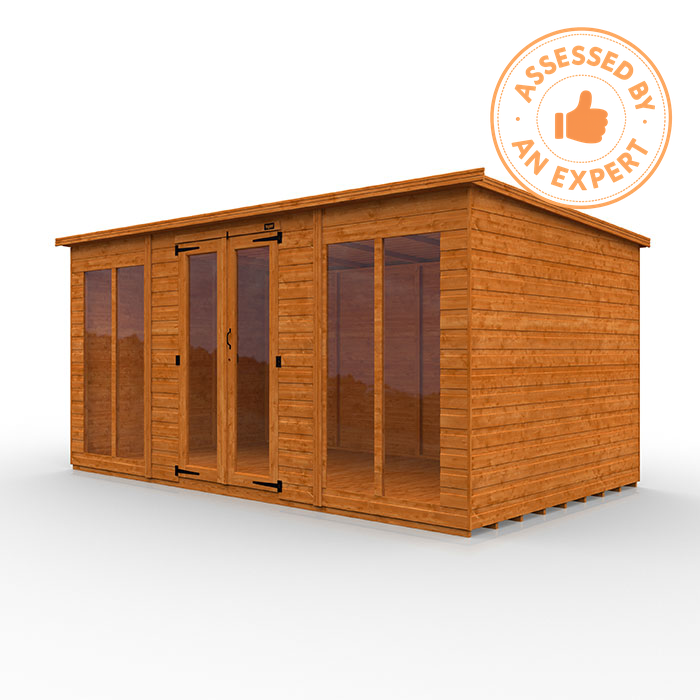
The Tiger Pent Retreat Summerhouse is the pent-roof counterpart to the Tiger Contemporary Retreat, and understanding that relationship is the key to understanding this building properly.
We’ve spent a significant amount of time inspecting the Contemporary Retreat (apex roof) at both the Tong and OtleyTiger show sites, including visits during winter conditions and immediately after heavy storms. Those inspections matter, because these are exactly the conditions a building like this will face year after year in a real garden.
While we haven’t physically inspected the pent-roof variant itself, both versions are built on the same construction platform. They share the same materials, the same framing system, the same doors and windows, the same floor and roof boarding, and the same overall build philosophy. The only meaningful difference is the roof design.
Because of that, everything we observed, tested, and verified on the Contemporary Retreat applies directly to the Pent Retreat, with the roof shape being the element that changes the building’s character rather than its quality.
First Impressions: Modern, Calm, and Intentionally Designed
The Pent Retreat feels very clearly designed for modern gardens.
Where more traditional summerhouses lean heavily on decorative features, this one is restrained and architectural. The pent roof gives it a cleaner profile, and visually it works particularly well when placed against a boundary or in a corner where the glazing can face open space rather than neighbouring fencing.
What’s important to say early on is that this does not feel like a lightweight or purely decorative building. Once you understand the materials involved, it becomes clear that this is a summerhouse designed to be used, not just looked at.
Wall Construction and Timber Quality
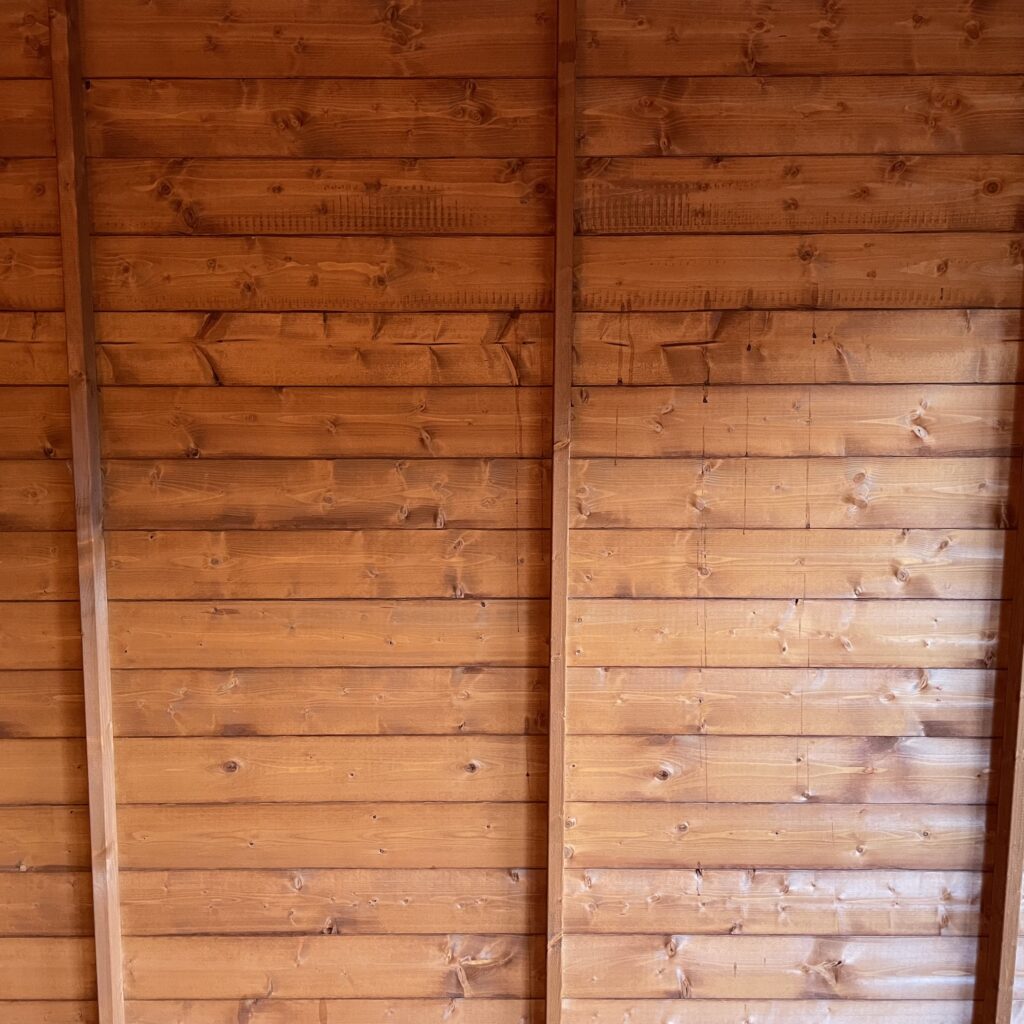
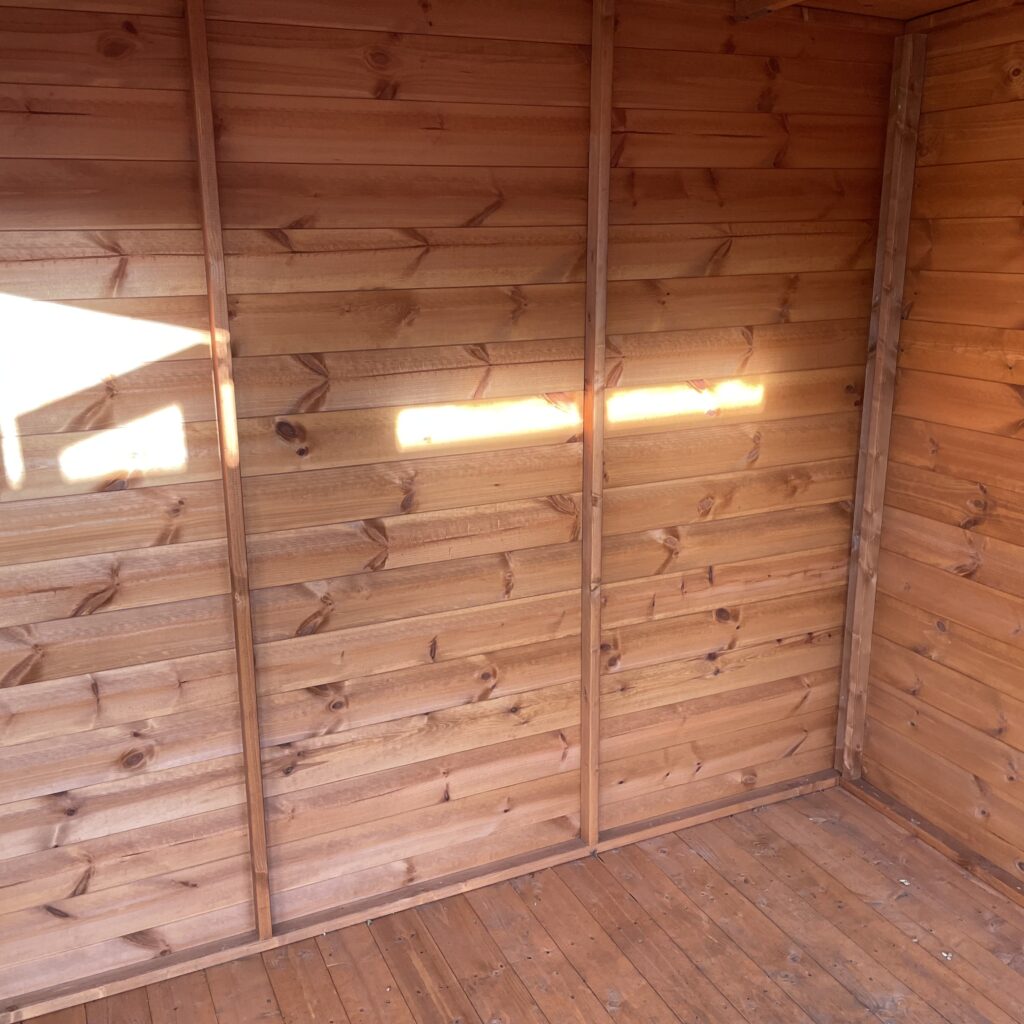
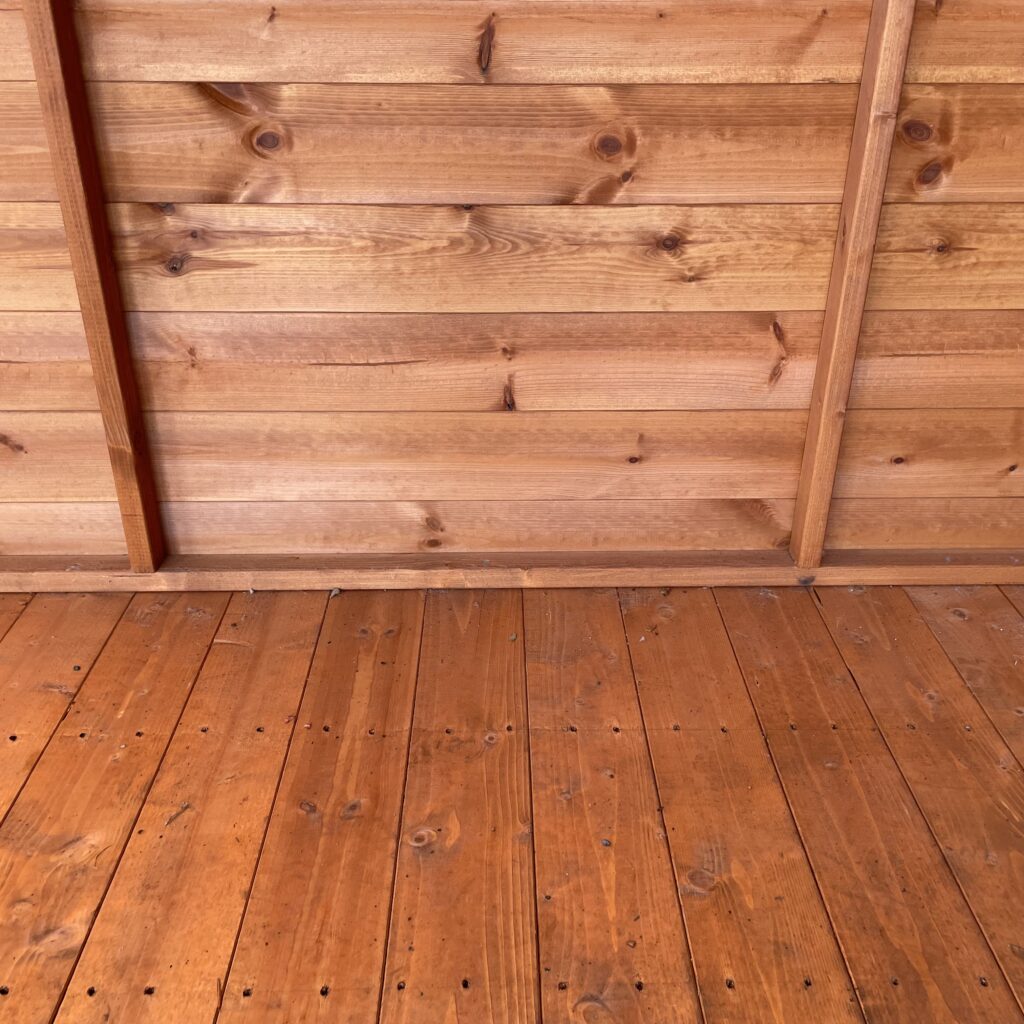
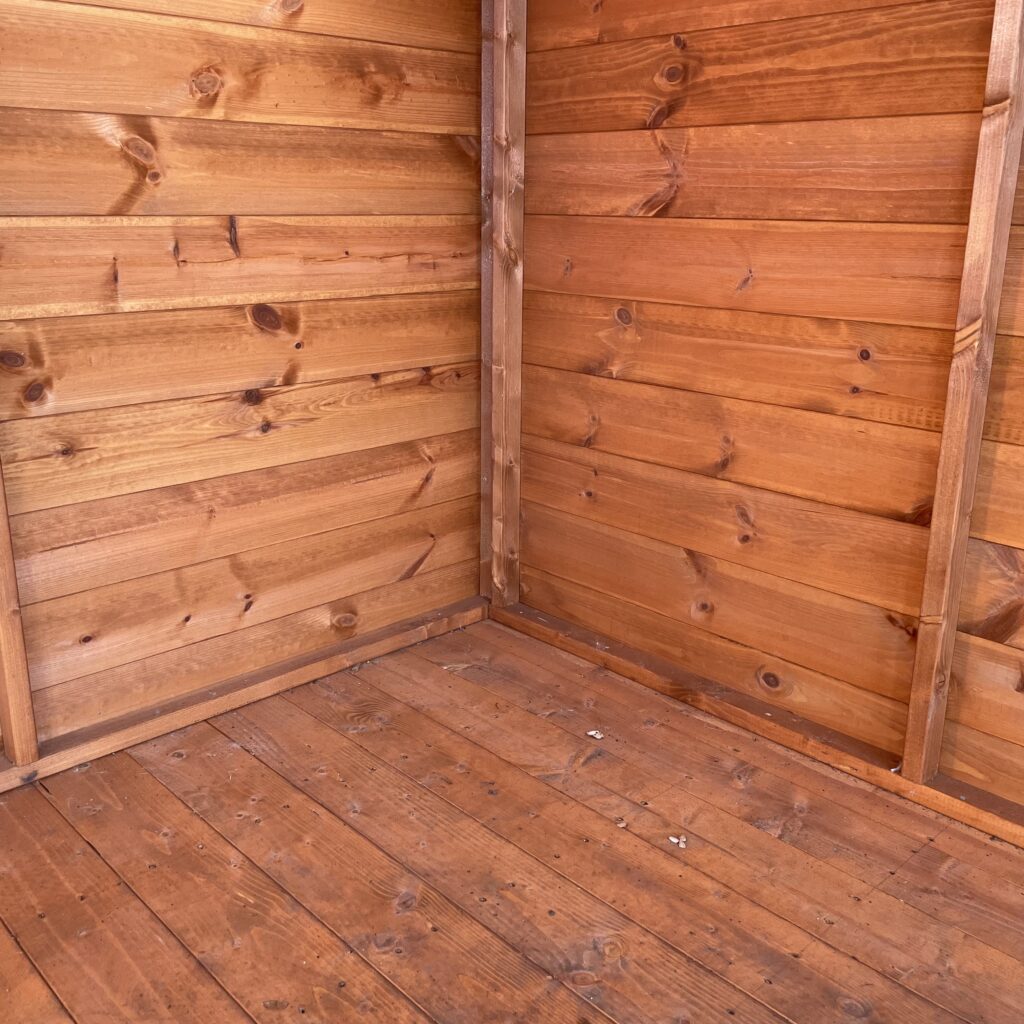
The walls are built using 12mm shiplap tongue-and-groove cladding, and this is one of the strongest aspects of the Pent Retreat.
During inspection of the apex version, we paid close attention to timber quality both inside and out. The boards were smooth to the touch, free from splinters, and consistent in thickness. There was no resin bleed, no rough machining, and no visible gaps between boards.
The timber itself is slow-grown Nordic spruce, identifiable by its tight grain and relatively small knot structure. That tighter grain allows Tiger to machine the boards very precisely, which is why the cladding locks together cleanly and stays stable over time.
Behind that cladding, Tiger use 28 × 44mm framing . This framing size strikes a very good balance for a summerhouse of this type: substantial enough to prevent wall movement, but not oversized to the point of being wasteful. When we leaned against the walls of the inspected Contemporary Retreat, there was no perceptible flex — something you immediately notice when compared with thinner-framed alternatives.
This combination of material quality and framing is a big part of why the building feels calm and solid rather than reactive or hollow.
Floor Construction and Underfoot Feel
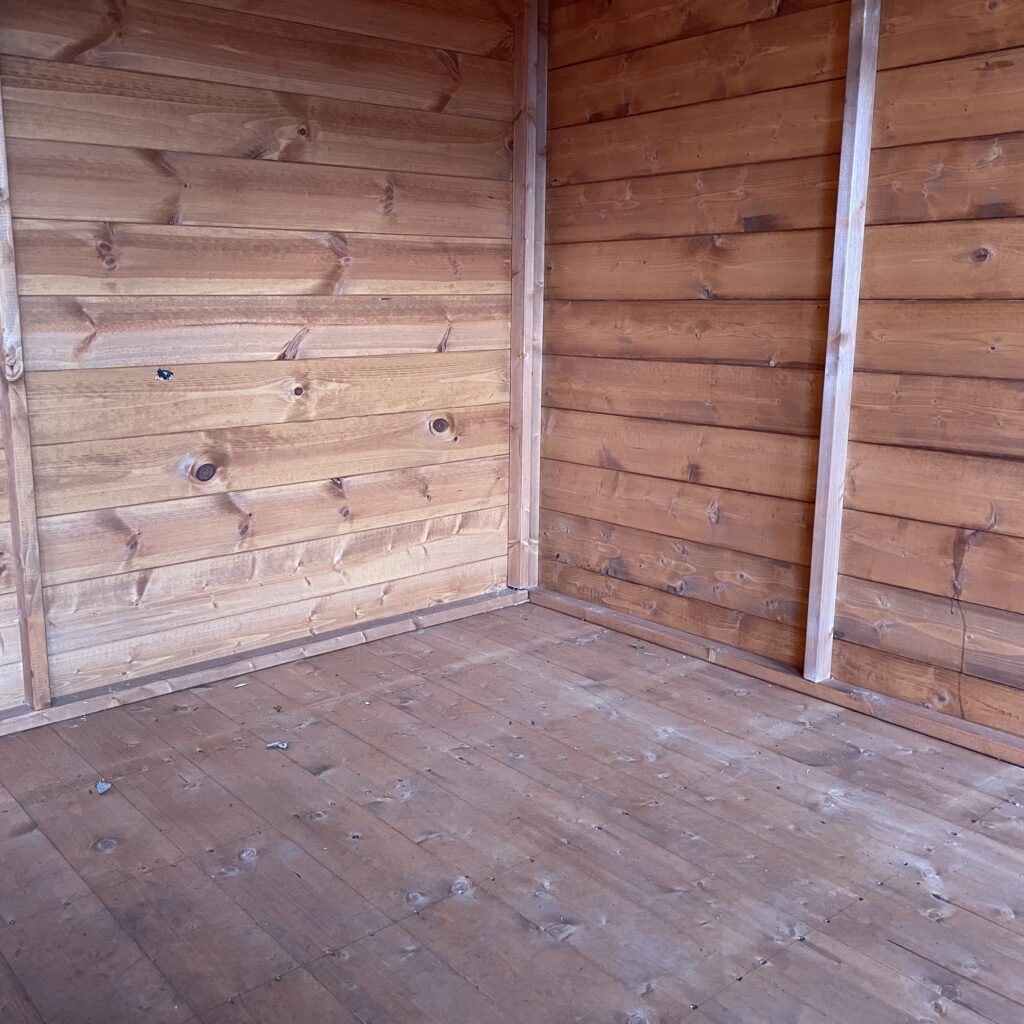
The floor is 12mm tongue-and-groove throughout, supported by a properly spaced bearer system.
On the inspected apex model, we carried out our usual real-world checks: walking the floor, shifting weight across the span, and loading approximately 75kg centrally while measuring deflection with a laser.
The results were excellent. Deflection was minimal — only a couple of millimetres at most — with no bounce, no creaking, and no sense of weakness, even in the larger footprints. It’s the sort of floor you stop thinking about entirely once you’re inside, which is exactly what you want in a building designed for relaxing or spending extended periods of time.
The Pent Retreat uses the same floor system, so there’s no reason to expect different behaviour here.
Doors, Windows, and Ironmongery
The joiner-made double doors were one of the first things that stood out during inspection of the apex version.
Despite heavy use at the show sites — with doors being opened and closed repeatedly by visitors — they operated smoothly, didn’t stick or rub, and showed no signs of swelling or misalignment. The hinges and door pulls are galvanised and feel substantial in use, and the lock engages cleanly without stiffness or grinding .
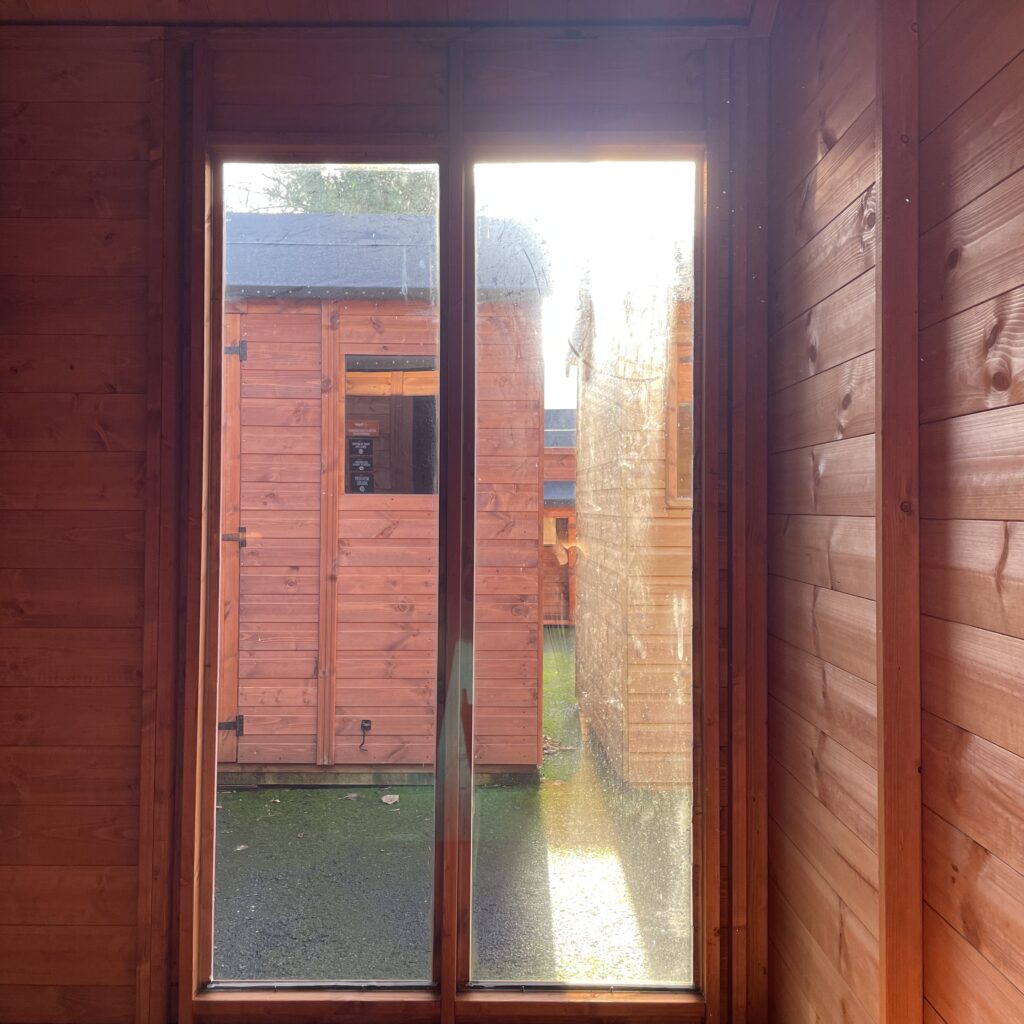
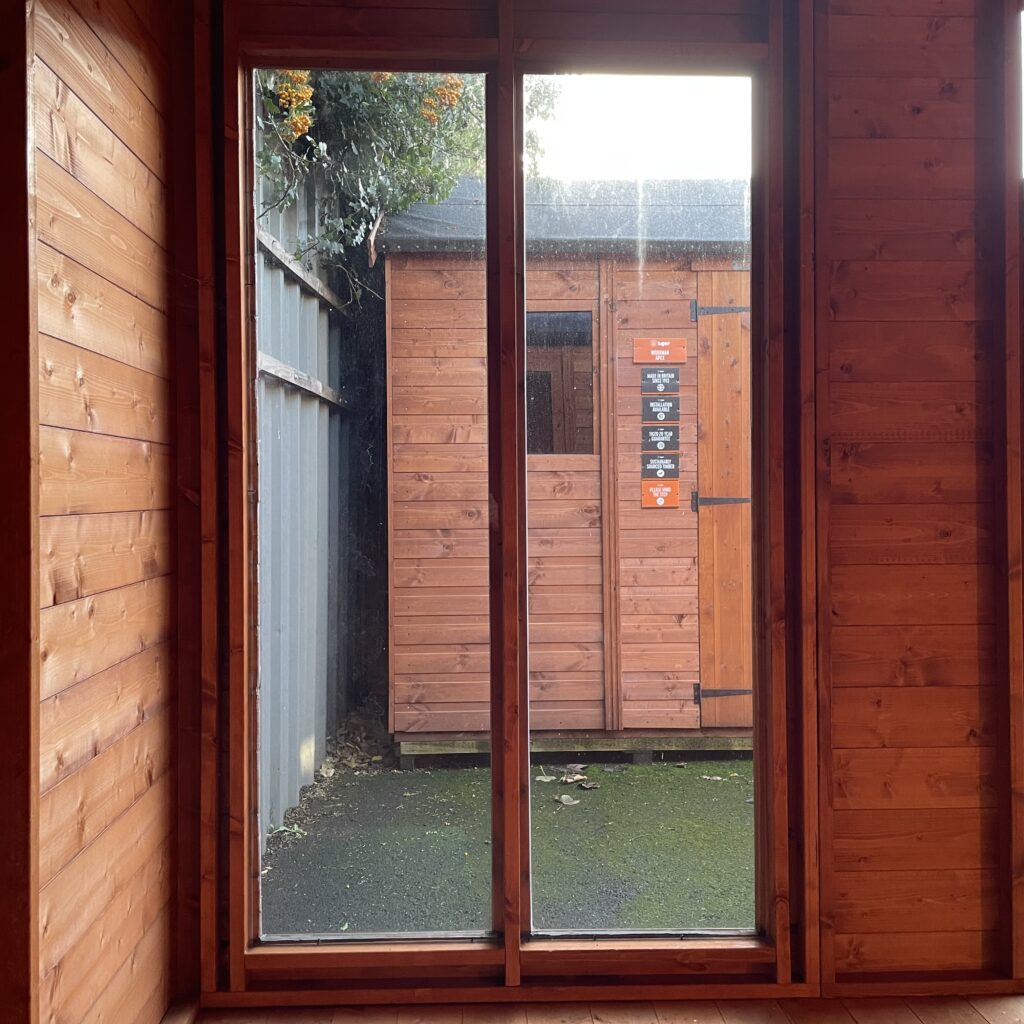
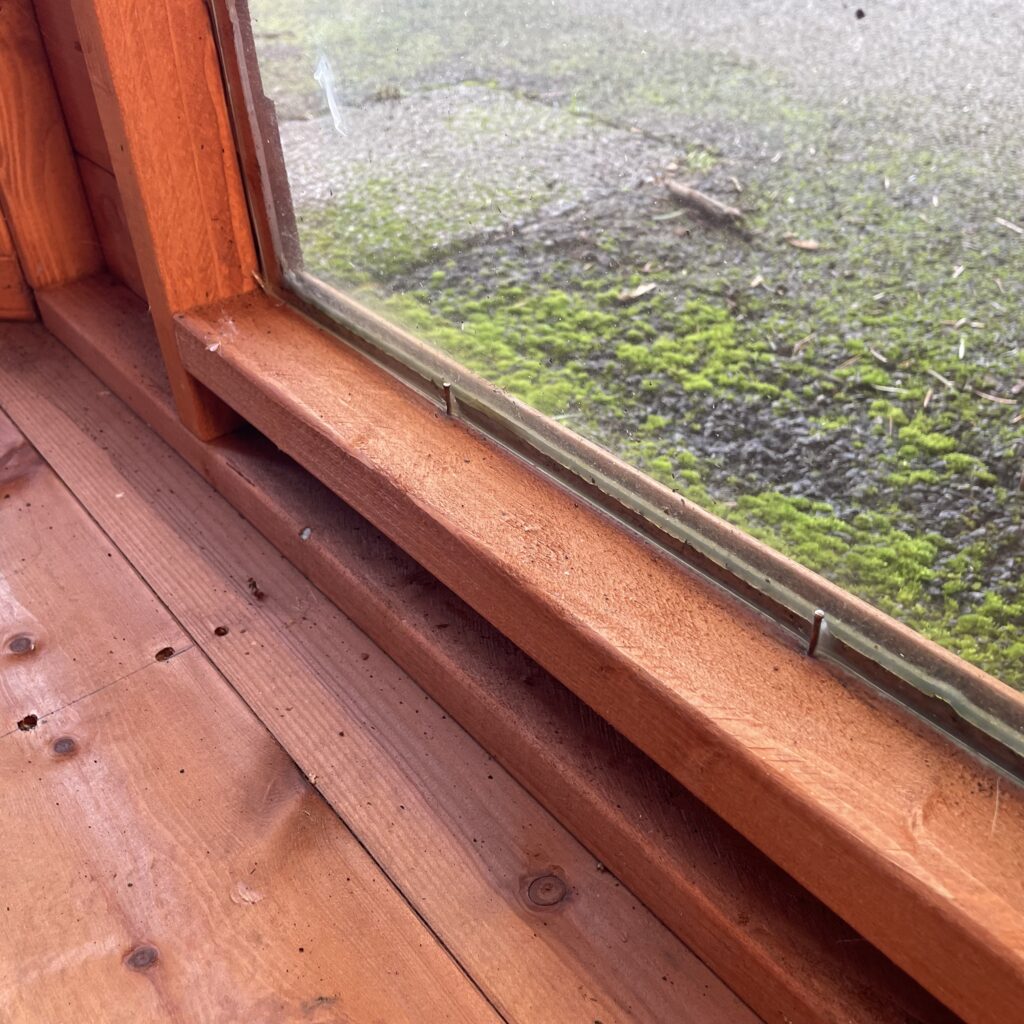
Windows are fitted with 3mm toughened glass as standard, which is exactly what you want to see on a building of this type . The glazing system relies on silicone sealing internally and externally, with the glass secured during installation. Structurally, this works well, but it does place importance on careful installation.
Tiger are explicit in their installation guidance that all glazing must be sealed on both sides to ensure weather resistance and longevity . When this is done properly, we’ve seen the system perform well even after heavy rain and storms. Where issues ever arise, they’re almost always down to rushed or incomplete sealing rather than a fault in the building itself.
Roof Construction: Materials That Matter
Regardless of roof shape, Tiger use 12mm tongue-and-groove boards for the roof — not OSB, plywood, or sheet board .
That matters more than many people realise. OSB can swell and degrade if moisture gets in, whereas properly fitted tongue-and-groove timber boards are far more resilient over the long term.
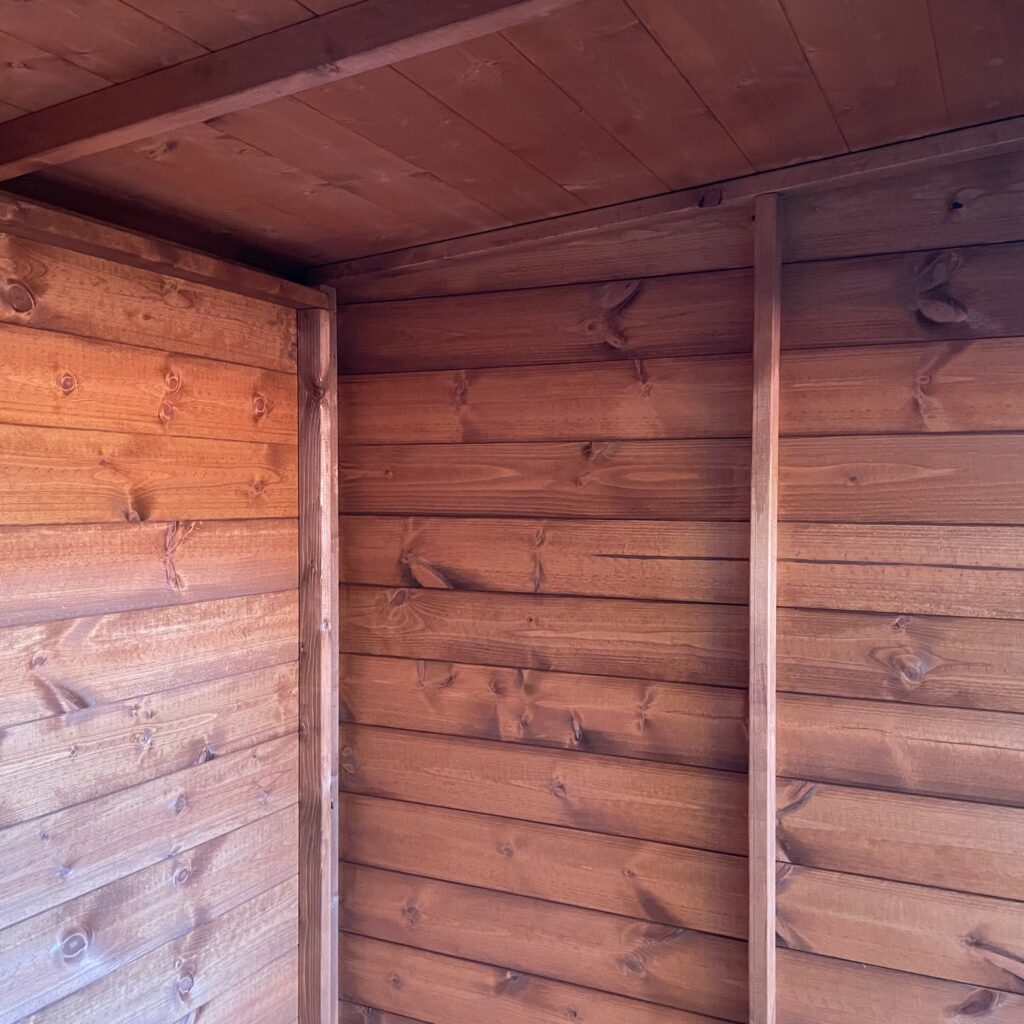
On the inspected apex version, the roof felt rigid, well supported, and carefully finished, with no sense of flex or drumming. The same roof boarding and support structure sit beneath the pent roof of the Pent Retreat.
The Pent Roof: What It Changes in Practice
The pent roof is the defining feature of this version, and it changes the feel of the space rather than its quality.
Headroom
A common concern with pent roofs is reduced internal height. Based on Tiger’s published dimensions — with internal eaves around 1811mm and internal high-side height around 1929mm, depending on size — and our experience across Tiger’s pent-roof range, that concern doesn’t apply here.
At just under six feet tall, we’ve never come close to hitting our head inside a Tiger pent-roof building, even at the lowest edge. Tiger don’t aggressively shave height to save material, and that generosity carries through here.
Structural Strength
Structurally, pent roofs are extremely efficient. Each roof beam runs directly from one side wall to the other, acting as a tie that locks the structure together. This creates a very rigid “box” effect, particularly noticeable in wider models.
While the apex version is perfectly strong, the pent roof actually offers exceptional lateral rigidity, which contributes to the settled, planted feel of the building.
Light and Atmosphere
The pent roof also changes how light behaves inside.
Rather than drawing your eye upward, it encourages you to look outward through the glazing, strengthening the connection to the garden. In larger sizes — up to 20ft long and 8ft deep — this works extremely well. The depth feels deliberate: deep enough to be genuinely usable, but shallow enough that daylight reaches the back of the space comfortably.
The overall effect is calmer and more contemporary than the apex version.
Warmth, Sound, and Moisture Behaviour
From real-world inspection of the apex Contemporary Retreat:
- The interior felt noticeably drier than outside after prolonged rain
- Closing the doors resulted in a clear drop in external noise
- On bright winter days, solar gain through the glazing made the interior feel warmer than expected
These characteristics are driven by material quality and tight construction, not roof shape, so they apply directly to the Pent Retreat as well.
This isn’t an insulated garden room, but for a 12mm summerhouse it performs extremely well in fair-weather and shoulder-season use.
Use Cases and Honest Limitations
The Tiger Pent Retreat is ideally suited to:
- Relaxing and lounging
- Reading or quiet retreat use
- Creative hobbies
- A calm garden escape
- Occasional light work or study
It’s not designed to be a fully insulated, year-round office. Like all summerhouses of this type, it will be cold in winter without additional insulation, and it benefits from thoughtful positioning to maximise sunlight.
Used for what it’s designed to be, it excels.
Final Expert Verdict
The Tiger Pent Retreat Summerhouse is not a compromise version of the apex model. It’s a deliberate alternative, offering a different internal atmosphere while retaining the same excellent build quality.
It combines:
- High-quality materials
- Thoughtful structural design
- Excellent rigidity
- A clean, modern aesthetic
If you want a contemporary summerhouse with a calmer, more outward-looking internal feel — and you value solid construction over decorative gimmicks — the Pent Retreat is an excellent choice.
Install it carefully, treat it properly, and it will reward you with many years of comfortable, reliable use.