EXPERT REVIEWED
  FREE DELIVERY
  INSTALATION AVAILABLE
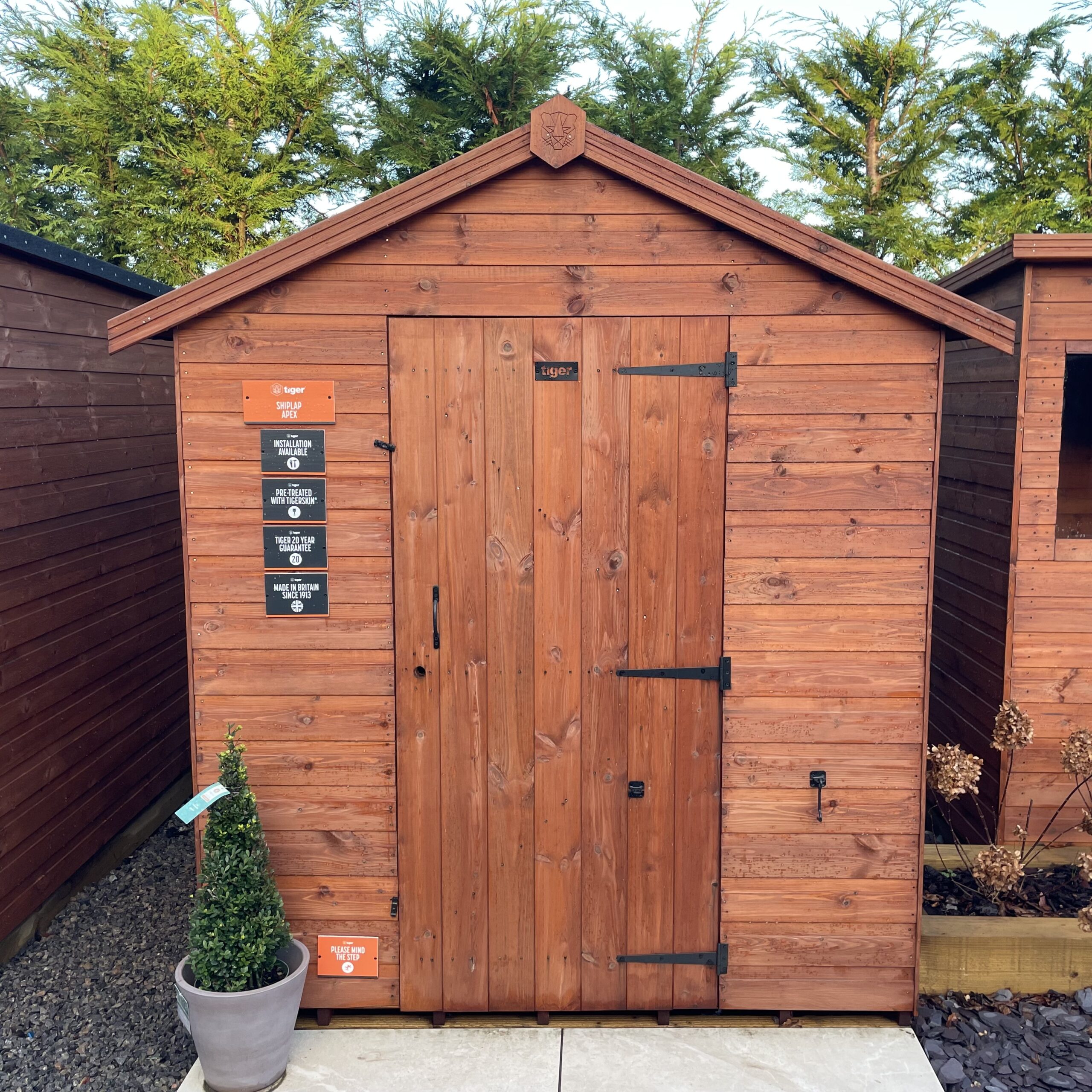
 Tiger Shiplap Apex Shed – Show Site Review
First Added - November 28 2025
Last Updated - November 28 2025 - 0 Data Points Updated - 0 Data Points Added
Reviewed & curated by a panel of garden building experts. Using methodology 1.1
Product ID: tiger-sheds-tiger-shiplap-apex-shed
Size: Multiple sizes available
Merchants Checked: 10
Available From: 1
Support WhatShed: by making a purchase after clicking a link above, a portion of the sale supports this site.
When people say they’re “buying a shed”, there are usually two images that pop into your head.
One is the classic apex roof shed — that familiar silhouette you could spot in a garden from fifty metres away. The other is the flatter pent shed. But if we’re talking about the archetypal, tried-and-tested British garden shed, it’s this: a shiplap tongue & groove apex, with proper framing, decent headroom, a door that doesn’t sag, and windows that actually make the space usable.
And honestly… Tiger have nailed it with this one.
If you want a shed that’s great for storing things, gives you the flexibility to add a workbench, and is a genuine “fire-and-forget” building — something you put up properly, look after properly, and expect to still be doing its job ten years from now — the Tiger Shiplap Apex Shed is exactly the sort of shed you buy.
It’s the classic shed. The one you could imagine seeing in someone’s garden a hundred years ago… except this would be built better, because it’s made with 12mm shiplap tongue & groove cladding, and it has that more refined, more rigid “proper timber building” feel that overlap sheds just don’t have.
Why this is the “default shed” for so many gardens
This is Tiger’s best-selling apex shed, and it feels like it. It isn’t trying to be quirky or clever — it’s trying to be the most dependable version of the shed most people actually want.
The size choice is a big part of why it’s so popular. You can go as small as 4×4, right up to 12×8, and that’s proper flexibility. It means you can choose it as a neat little storage shed… or scale it into something you can genuinely use as a light workshop.
And that’s something I always come back to with apex sheds: the shape is popular because it works. You get better internal volume, better headroom where you actually stand and move, and a layout that can grow with you. A lot of people start with “I just need storage”… and six months later they’re adding a shelf run, a bench, a tool rack, and suddenly it’s not just a shed — it’s where the garden jobs actually happen.
This shed supports that kind of real-world use.
My show-site inspections at Tong and Otley
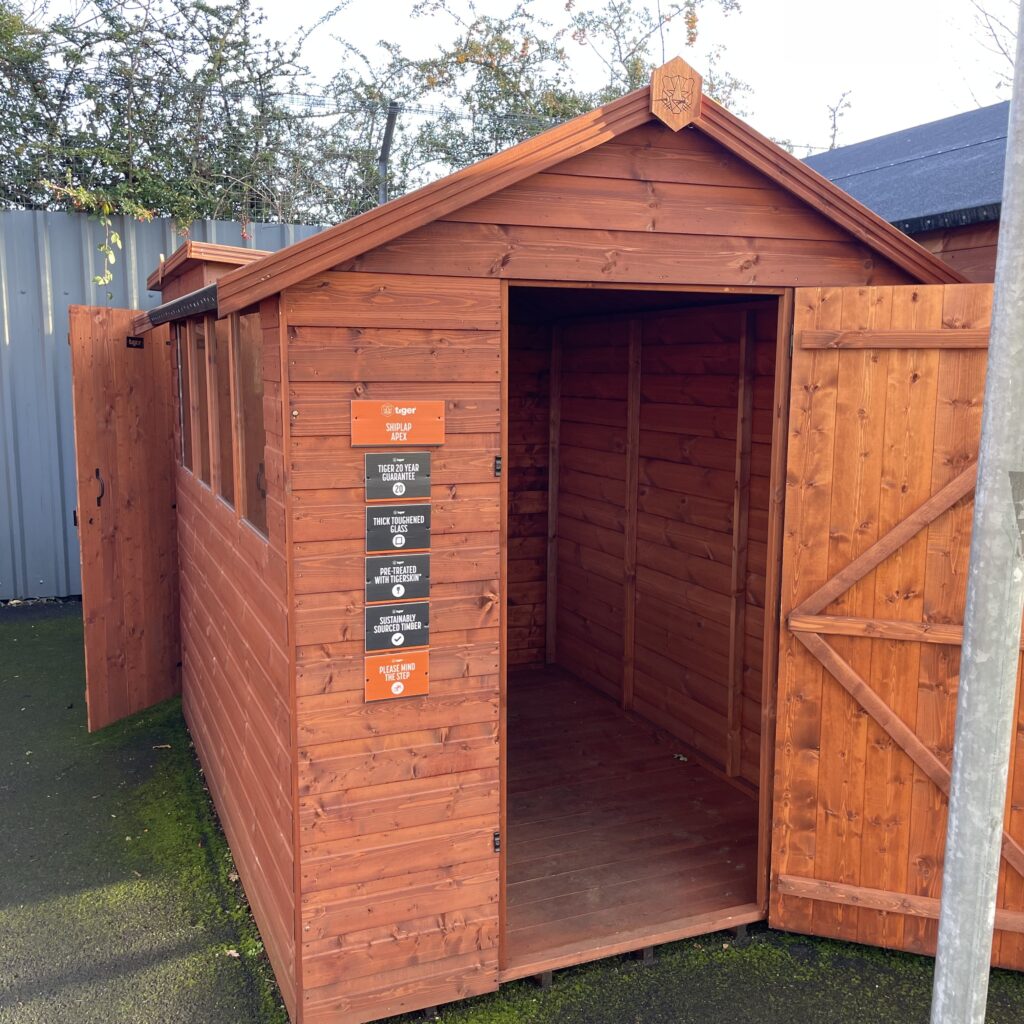
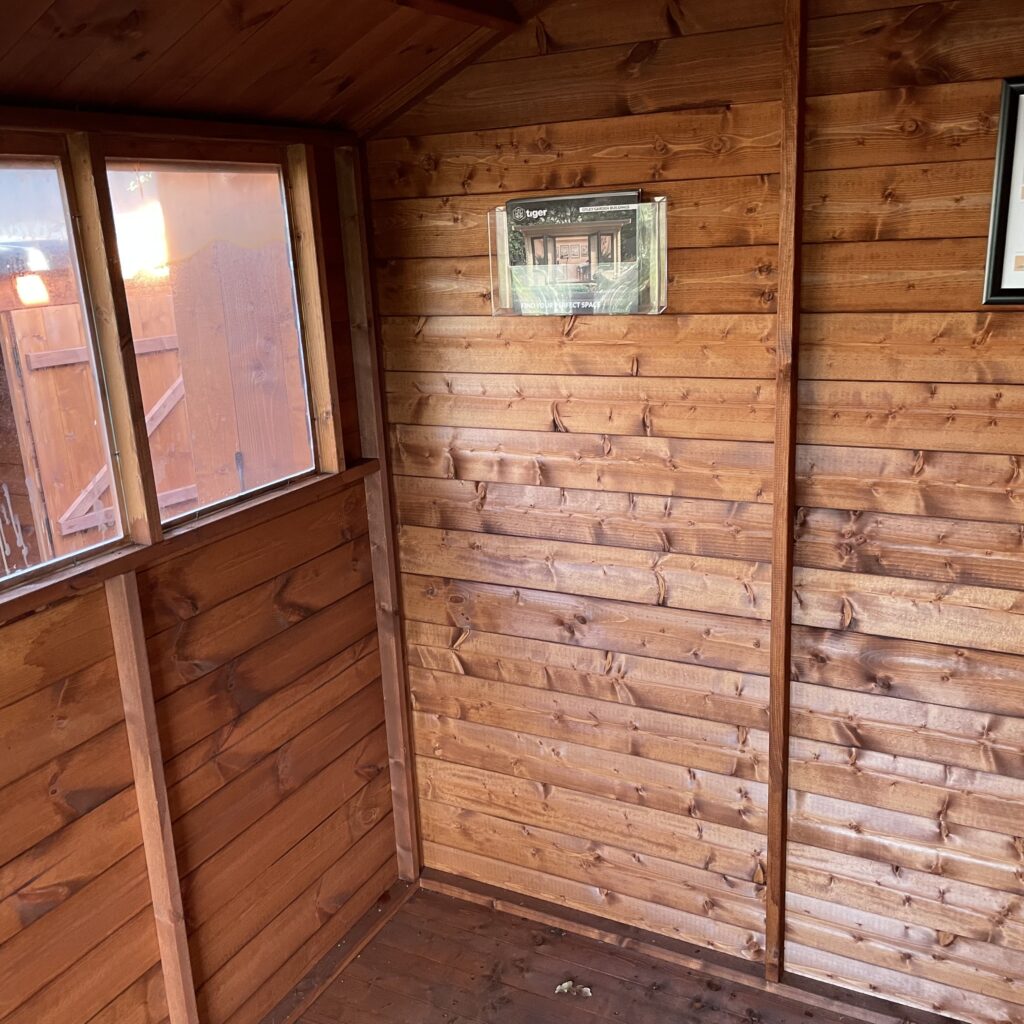
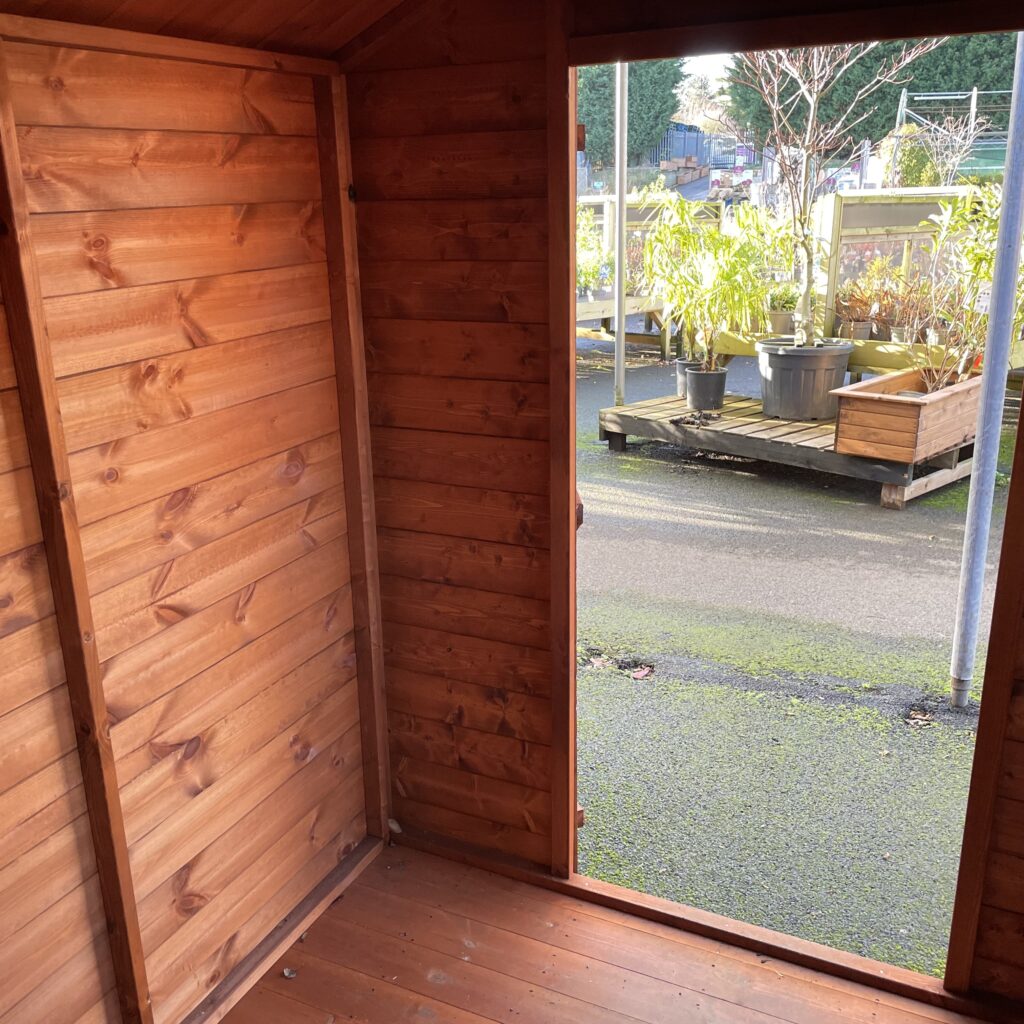
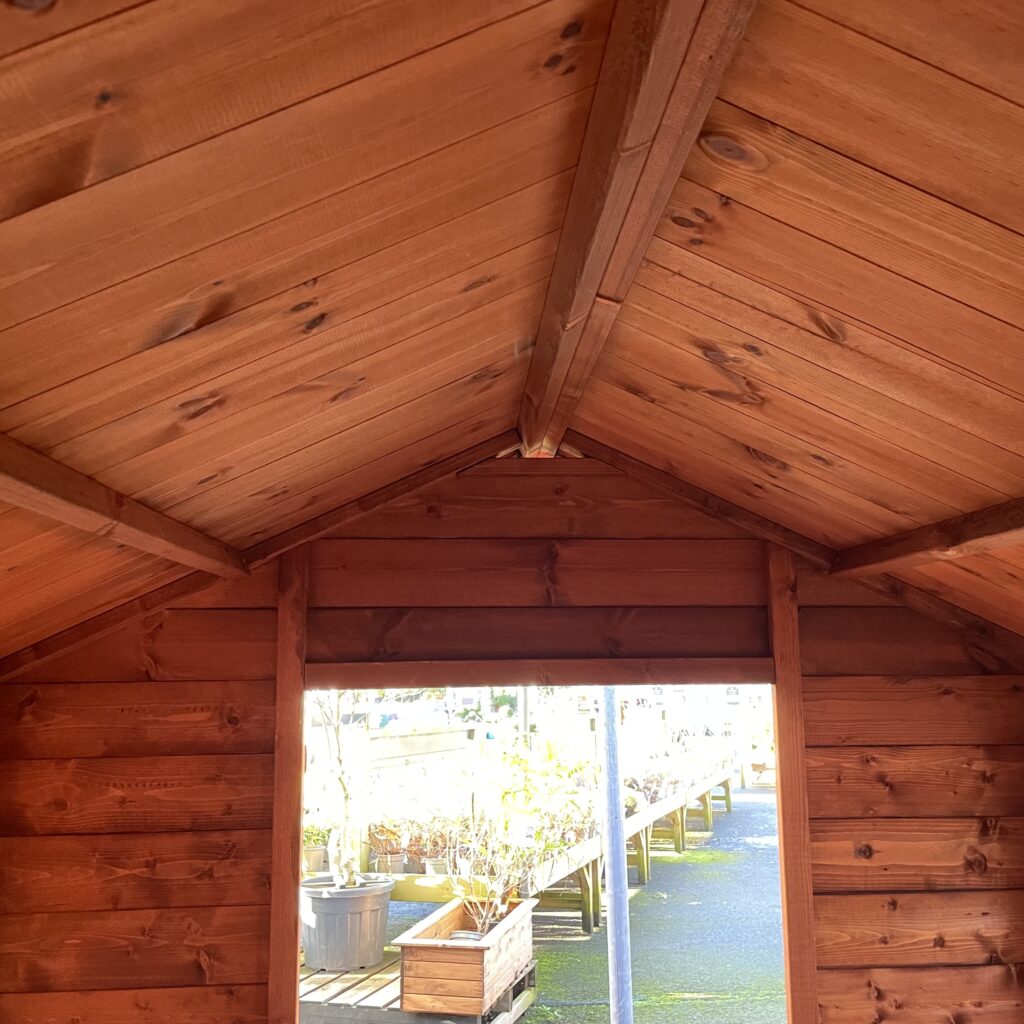
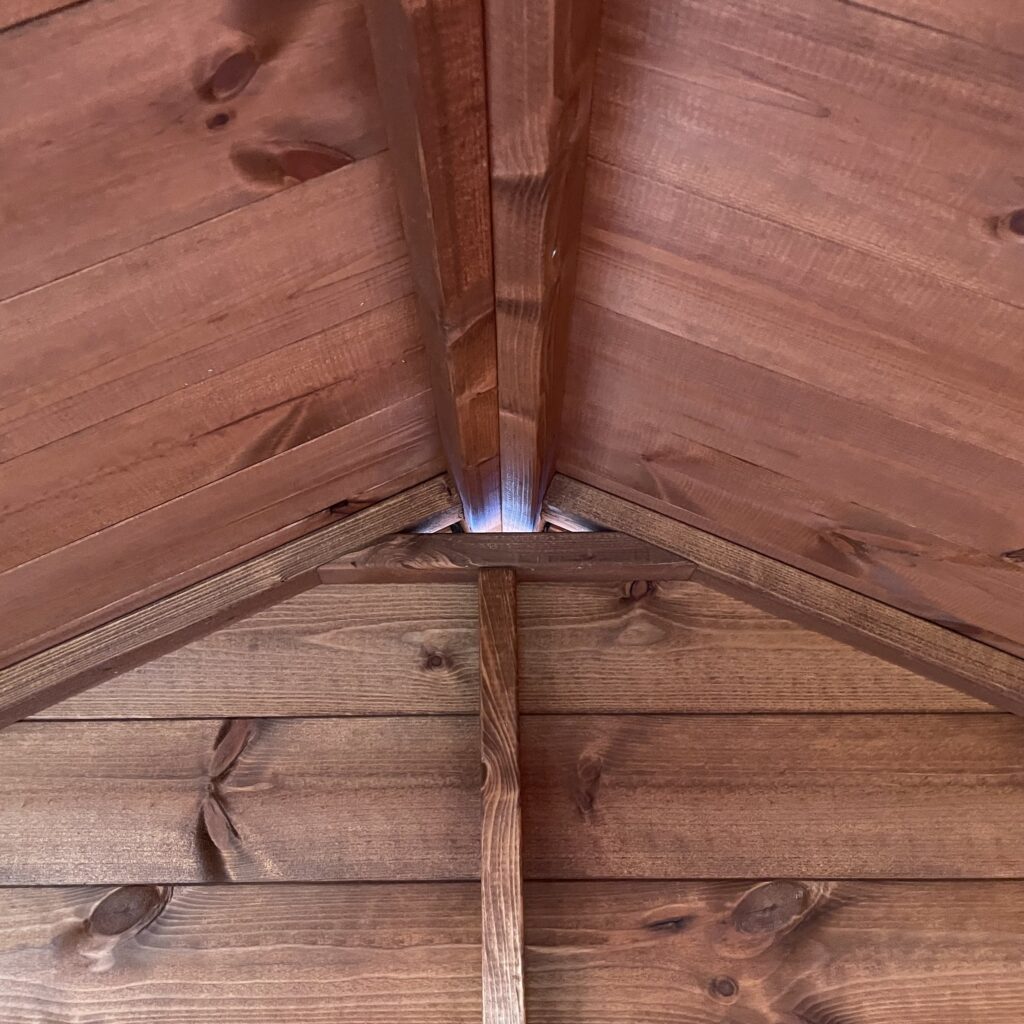
I physically inspected the Tiger Shiplap Apex Shed at both the Tong and Otley show sites, and I came away impressed at both.
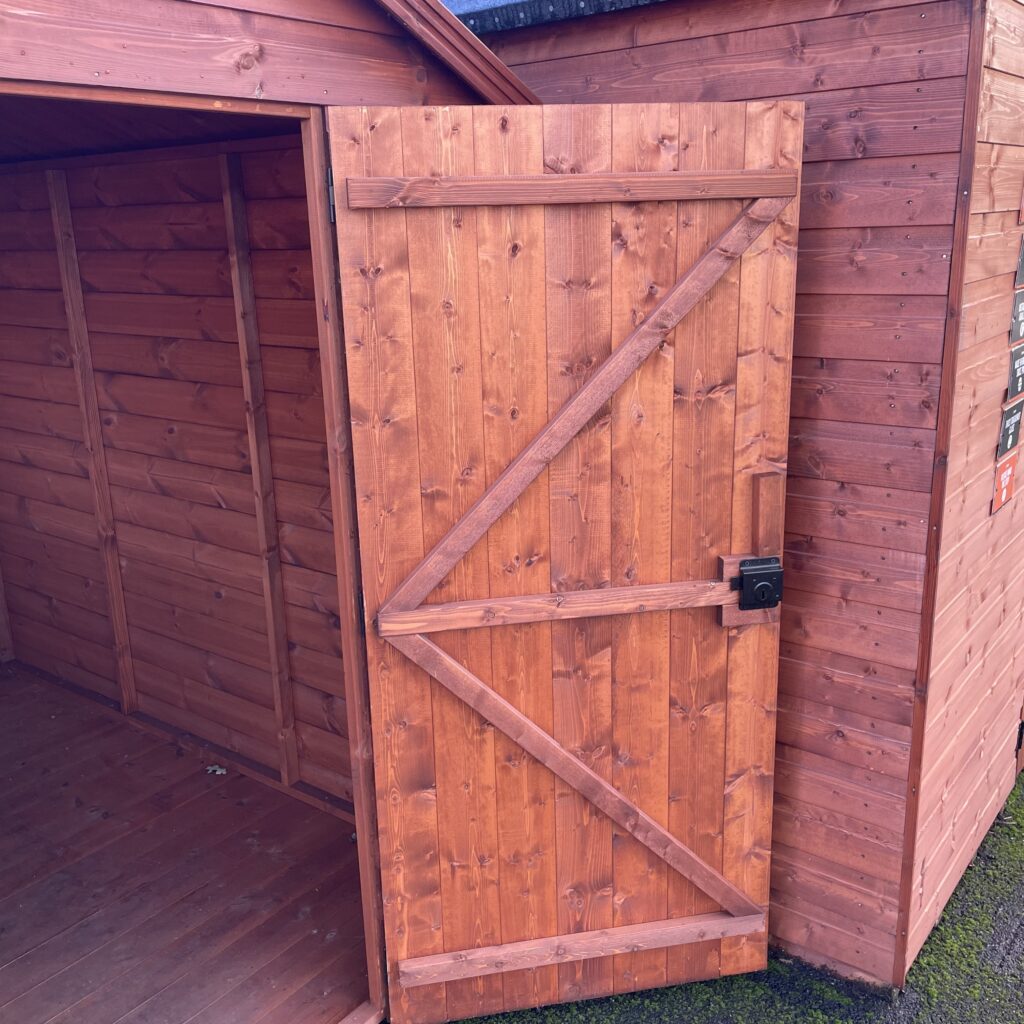
It was also displayed differently at the two sites — one time with the door open, the other with it closed — and that actually helped. When the door is open, you can immediately see the quality of the planing on the inside of the door boards, the bracing, the framing around it, and whether anything looks like it’s already trying to twist or sag.
That’s a quick truth test for sheds, because doors are where bad builds expose themselves. If a shed is going to start annoying you over time, it usually starts with the door: sticking, sagging, scraping, dropping out of square. Especially on show sites, where buildings are opened and closed constantly by visitors, and anything weak gets found out very quickly.
With this shed, I didn’t get any of that.
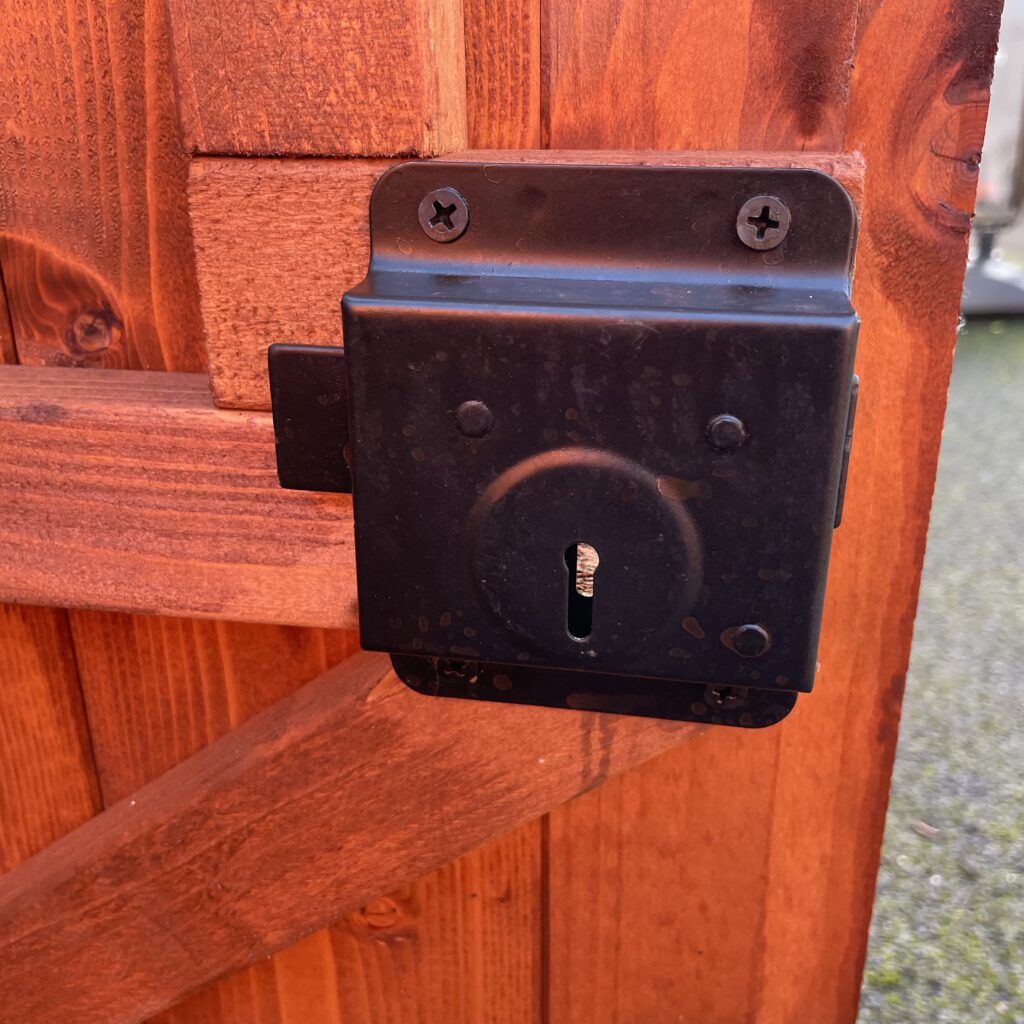
The door felt solid. It behaved like it should. And that alone puts it in a different class from the “shed-shaped objects” you see from some big retail chains.
First impressions from the outside: smooth timber, tidy joins, and a roof that looks built to last
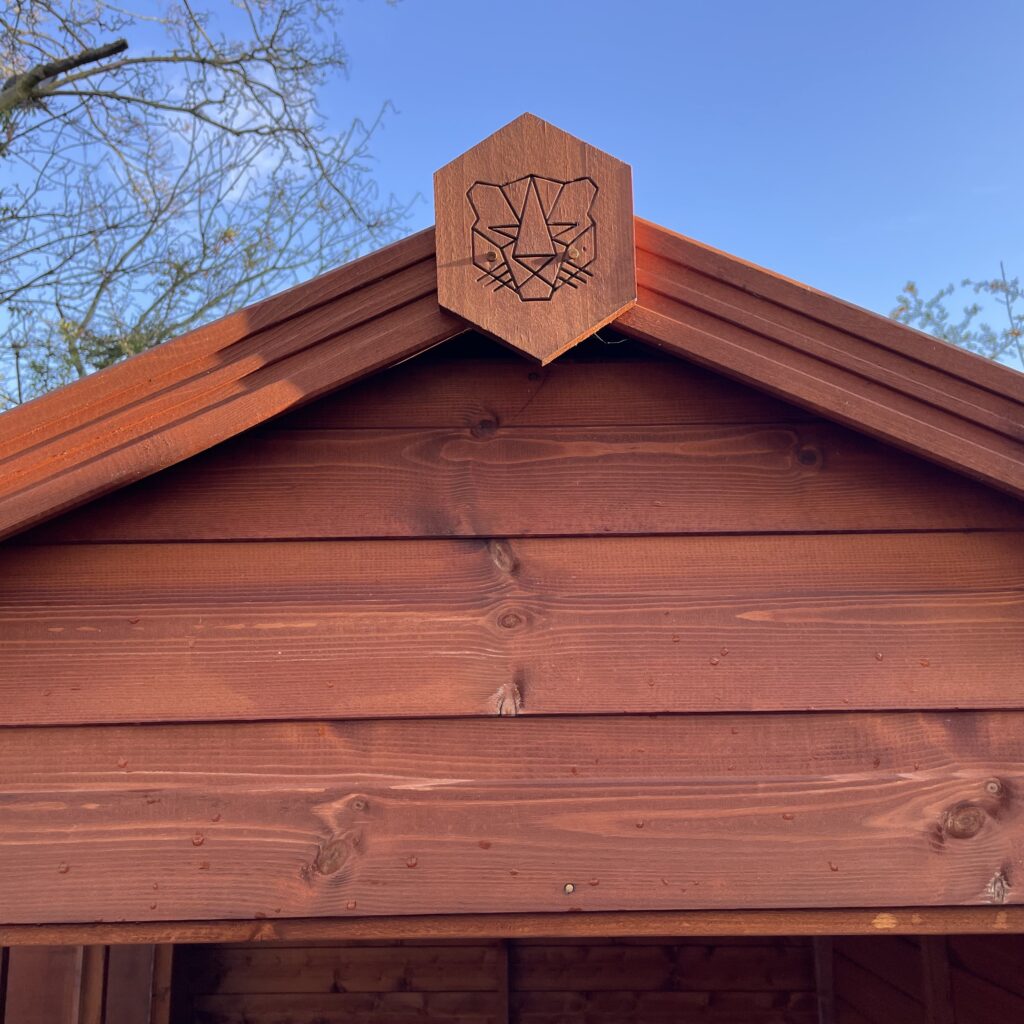
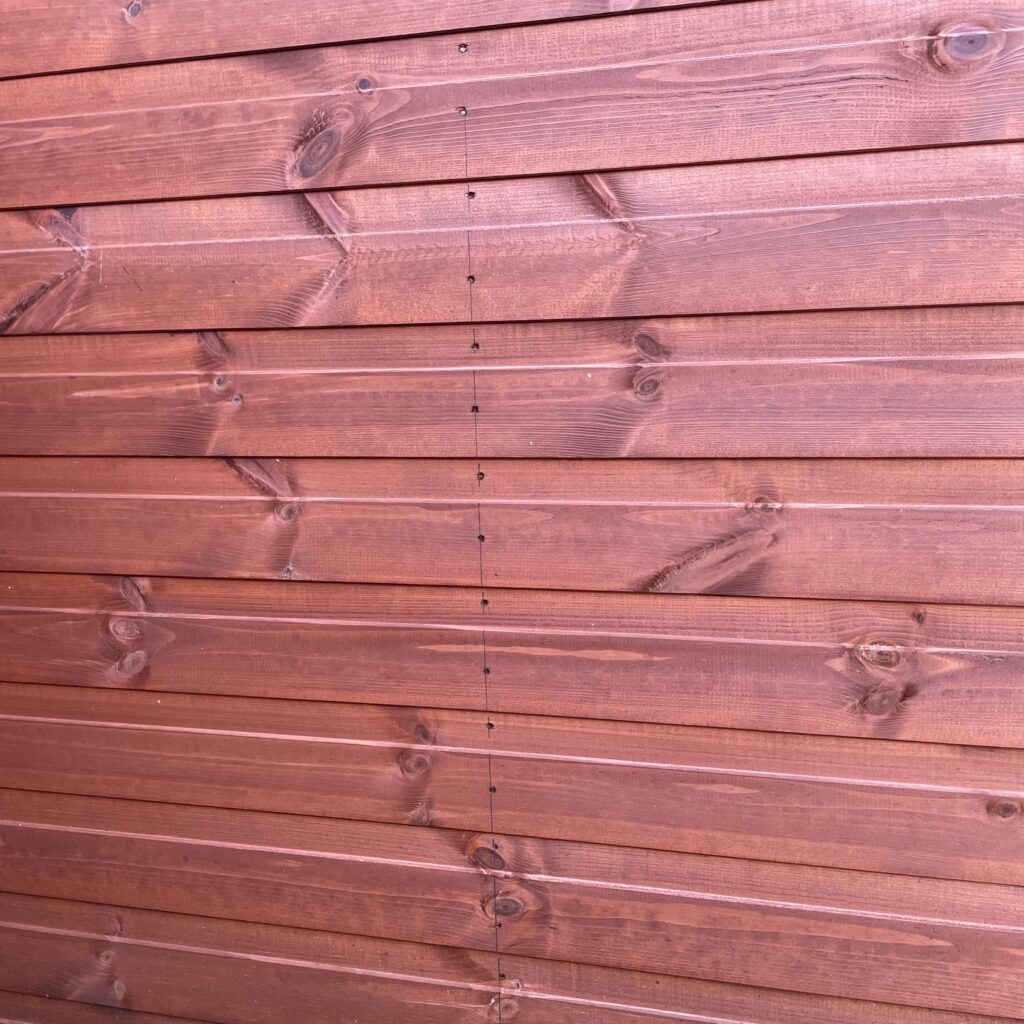
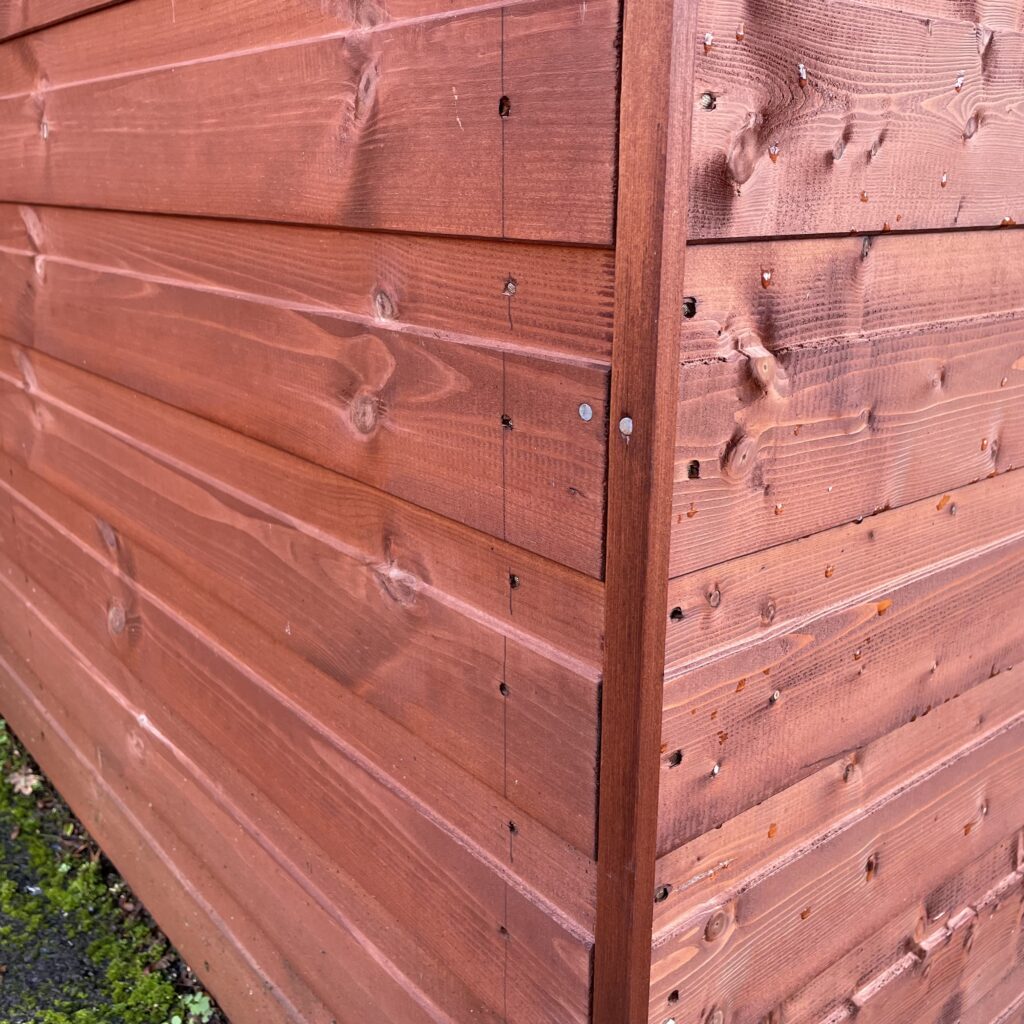
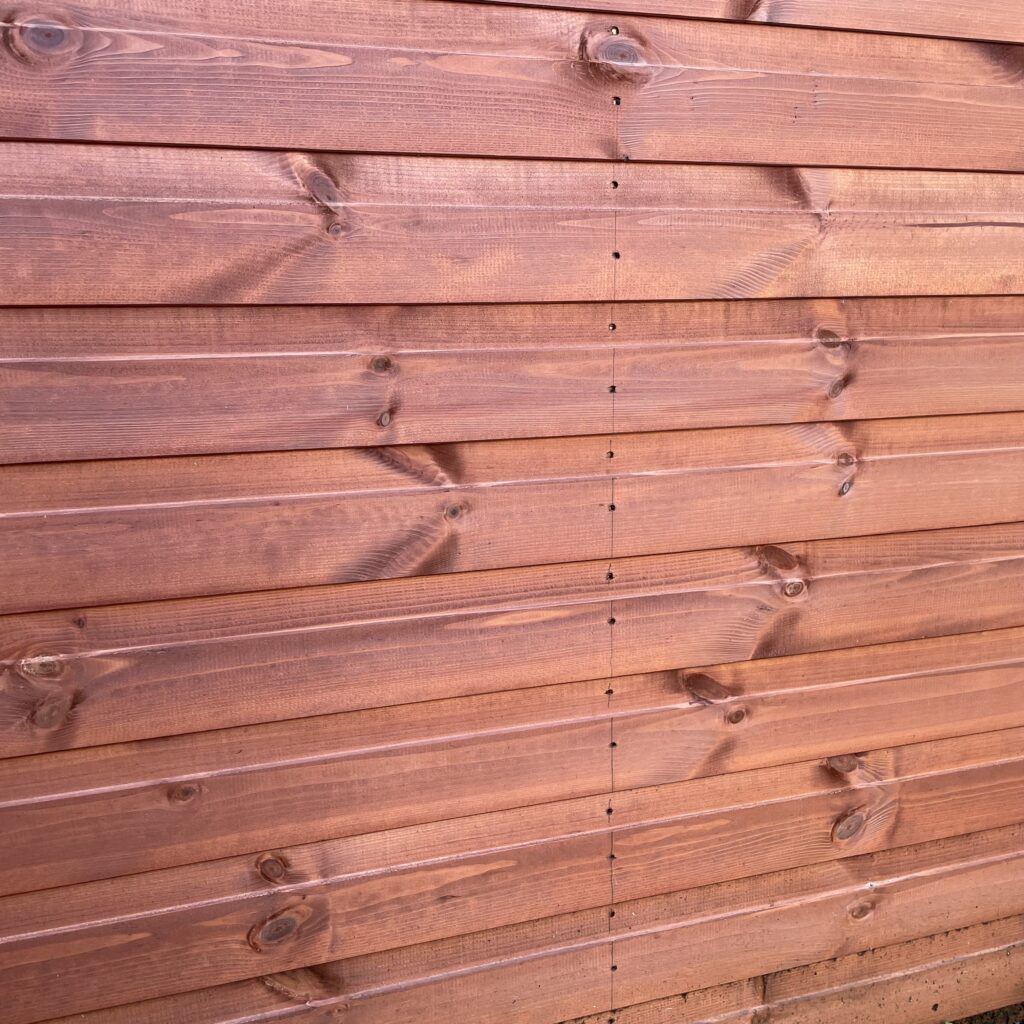
Walking around the outside, the first thing that hit me was the finish of the shiplap.
Tiger’s 12mm shiplap tongue & groove is consistently well milled — and I know that sounds like a small thing, but with timber you feel quality with your hands. You can tell when boards are rough, when edges feel fragile, when the cladding looks like it’s going to misbehave as the seasons change. Here, it had that clean, smooth, “properly finished” look. It looked refined rather than clunky.
I also always look at corners.
Corners are where cheaper manufacturers give themselves away. If the corners are untidy, if the panels don’t meet cleanly, if it looks like it needed a fight to get it square… that’s usually a warning that the hidden parts won’t be great either.
On this shed, the corners looked neat. It had that “quiet quality” feel — the kind of build where everything looks aligned because it is aligned.
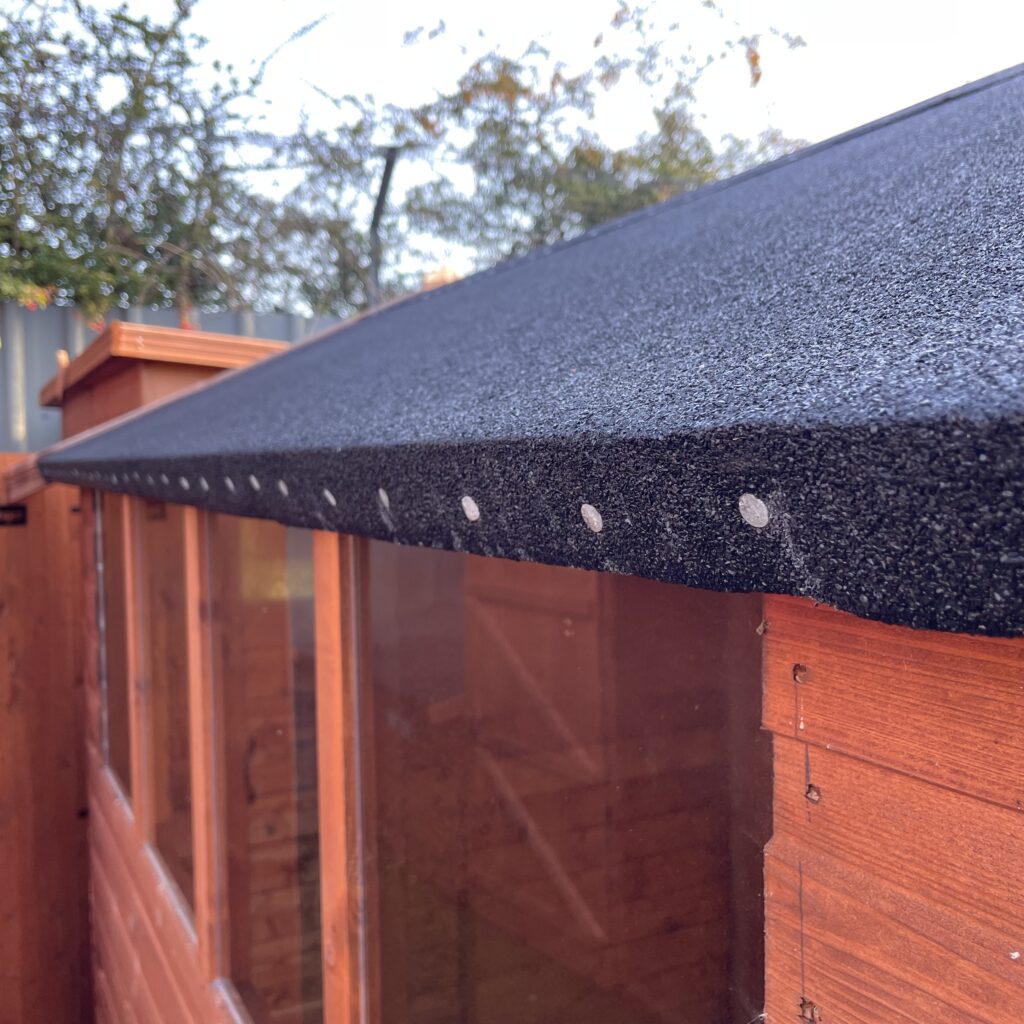
Then there’s the roof covering. This is one of those details most people ignore… until it fails.
On the Tiger shiplap range, the roof covering has consistently impressed me. It’s the thicker mineral-felt style rather than the brittle, budget felt you sometimes see elsewhere. Over the years I’ve been on show sites where cheap felt has cracked or torn — sometimes within a year — and once felt fails, that’s when you start seeing the problems you don’t want: water getting in, boards staying damp, edges lifting, general deterioration.
Tiger’s roof covering has always given me the impression of being there to do a job, not just to tick a box.

Stepping inside: that “taut echo” underfoot that tells you the floor is right
As soon as I stepped in, the first thing I noticed was the sound of my footsteps.
There’s a particular echo you get in a shed when the floor is properly supported. Not a hollow “bong” that feels cheap — more a crisp, taut sound that tells you the timber is solid and the structure underneath is doing its job.
This shed had that.
And I didn’t just rely on “feel” — I did my usual test. I placed a 75kg load on the floor, measured deflection with a laser, and I got around 2mm of deflection.
That’s excellent.
That result matches what you feel immediately: no bounce, no sponginess, no “this will annoy me every time I walk in here” sensation. It feels like a floor you can actually use, not something you have to tiptoe on.
And floors matter more than people think, because they’re one of the easiest places for manufacturers to cut corners. You can have decent-looking walls, but if the floor is weak you’ve got a shed that feels cheap every single time you step into it.
That wasn’t the case here.
Headroom and internal space: “I’m six foot and I’m comfortable”
I’m six foot tall, and I had plenty of headroom in this shed.
At no point did I feel like I was going to bang my head. Even as you move towards the edges where an apex roof slopes, it still felt properly proportioned and genuinely usable.
And this is where the comparison with overlap sheds becomes obvious.
On cheaper overlap versions — including overlap apex sheds — manufacturers often shave height to shave cost. It’s one of the easiest shortcuts in the book, and you don’t always realise it until you’re inside. You feel it immediately. It turns a shed from “usable space” into “storage box you crouch in.”
The Tiger Shiplap Apex didn’t feel like that at all. It felt like a shed you can stand in, move in, and work in.
The walls and framing: solid where it matters, with proof behind it
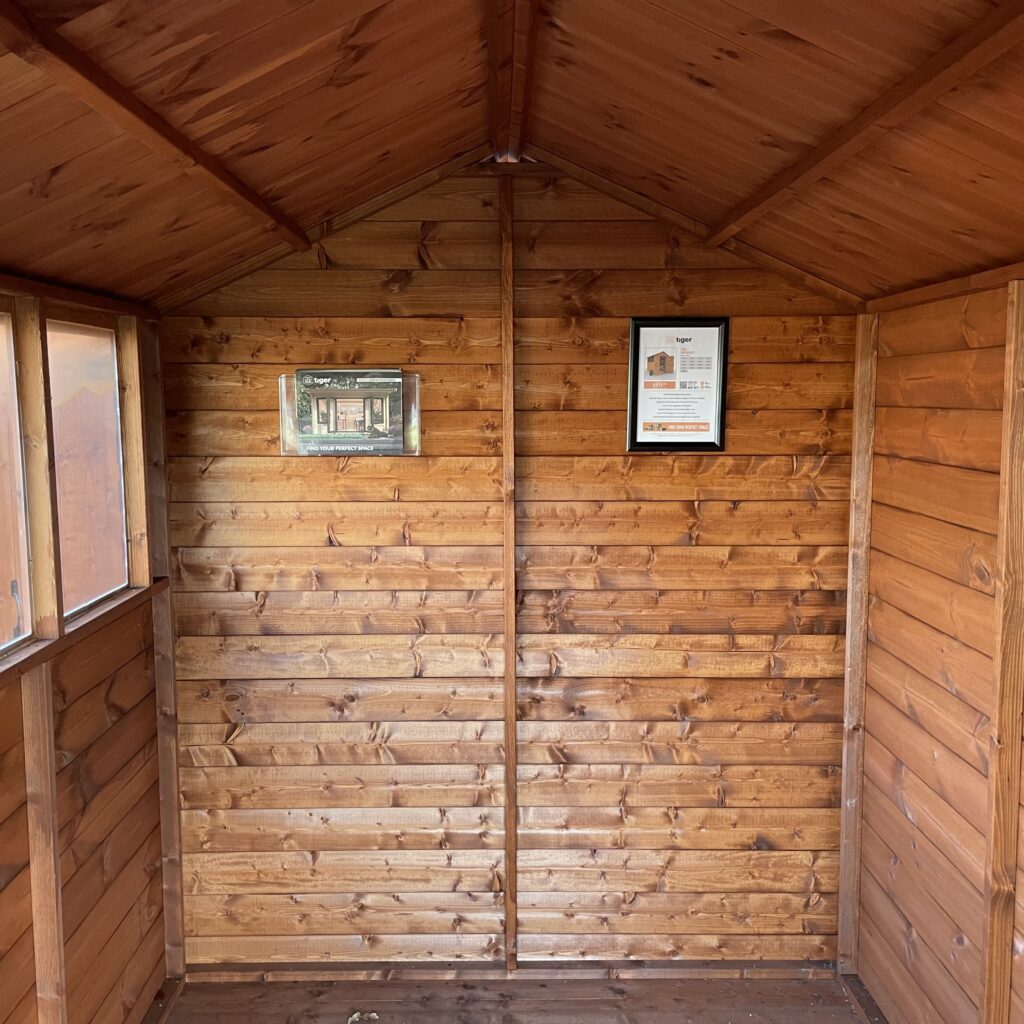
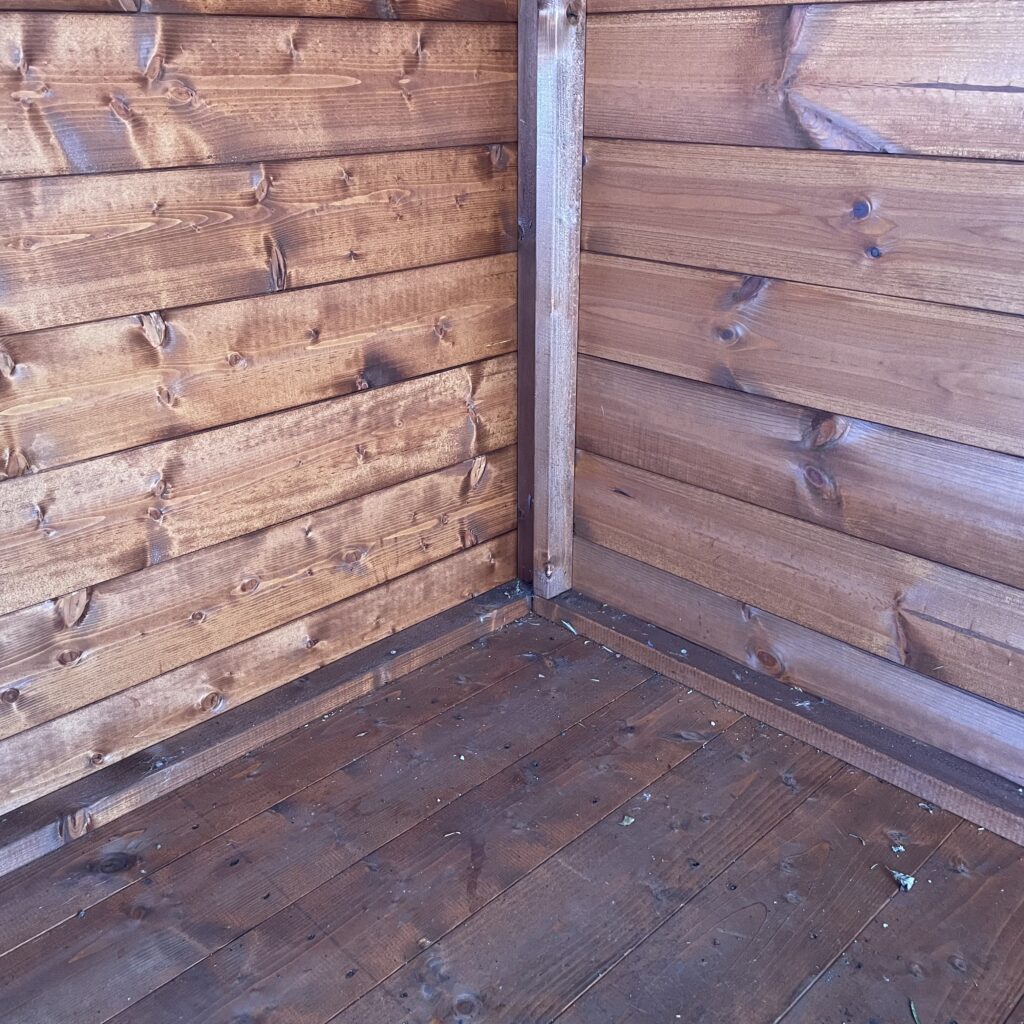
On the non-windowed side, I was particularly impressed with how smooth the tongue & groove boards were on the inside and how clean the framing felt. It’s the kind of interior finish that makes it genuinely easy to add things later — shelving, brackets, hooks — without feeling like you’re fighting the structure.
And again, I quantified what I was feeling.
I did another 75kg test against the main wall panel (the larger section on the non-windowed side), measured movement with a laser, and I got around 4mm of deflection.
That’s very solid.
It backs up exactly what your body tells you when you lean against it: this isn’t a flimsy structure that flexes and complains. It’s rigid. It feels dependable.
The windows and the light: this is the “workbench under the glass” shed
If you want to understand who this shed is really for, look at the window layout.
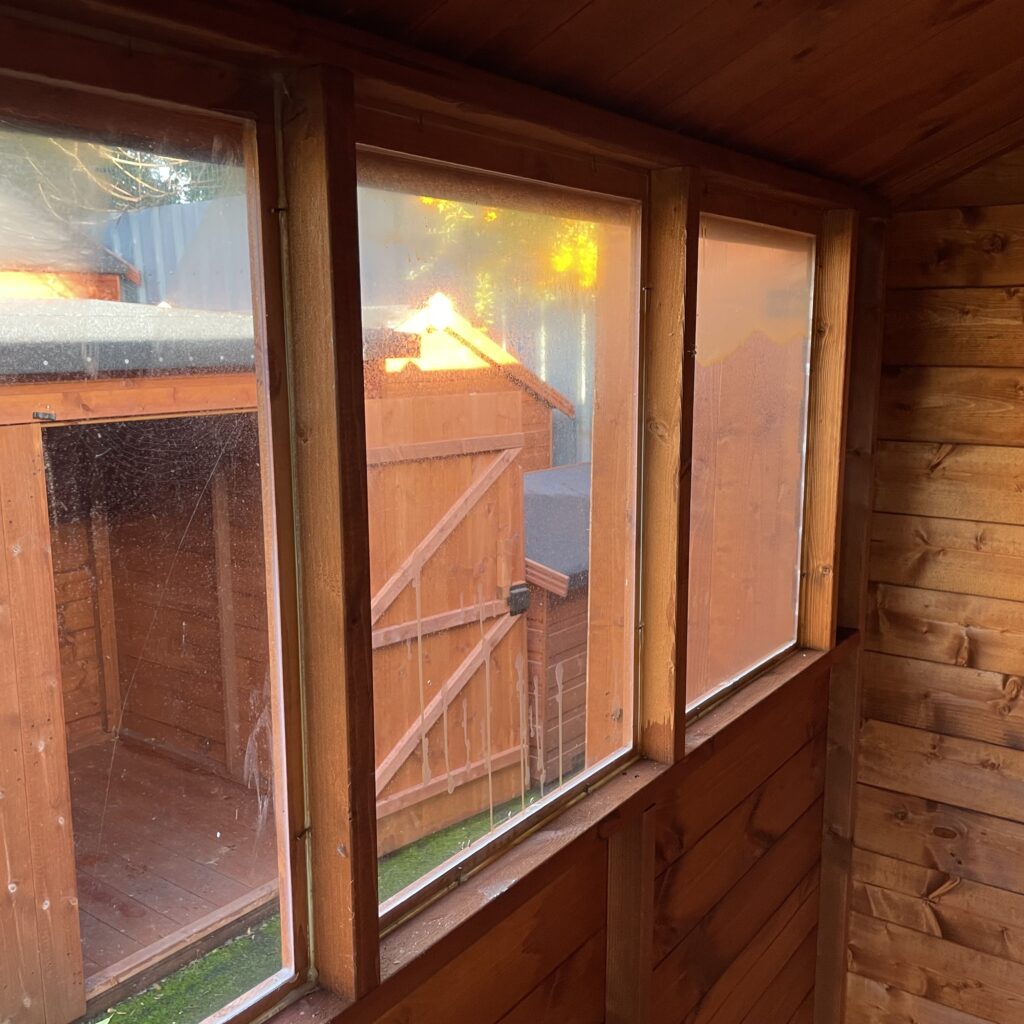
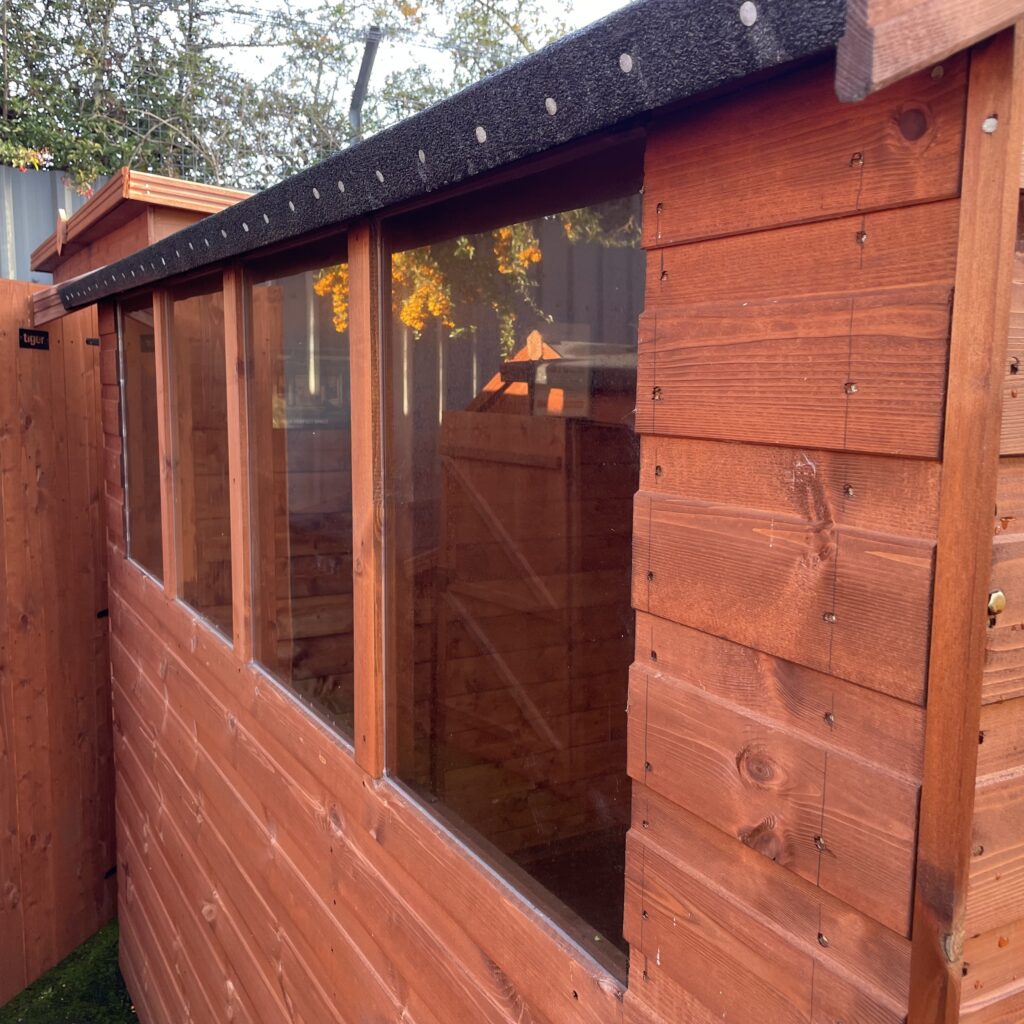
On the models I inspected, you’ve got a proper bank of windows — enough to flood the inside with light. And that makes a huge difference, because it turns the shed from “dark storage box” into “space you can actually spend time in.”
This is exactly the kind of shed where a small workbench under the windows makes perfect sense. Natural light falls straight onto the working surface, which is where you want it. And even on a dull day, it feels brighter than you’d expect a shed to feel.
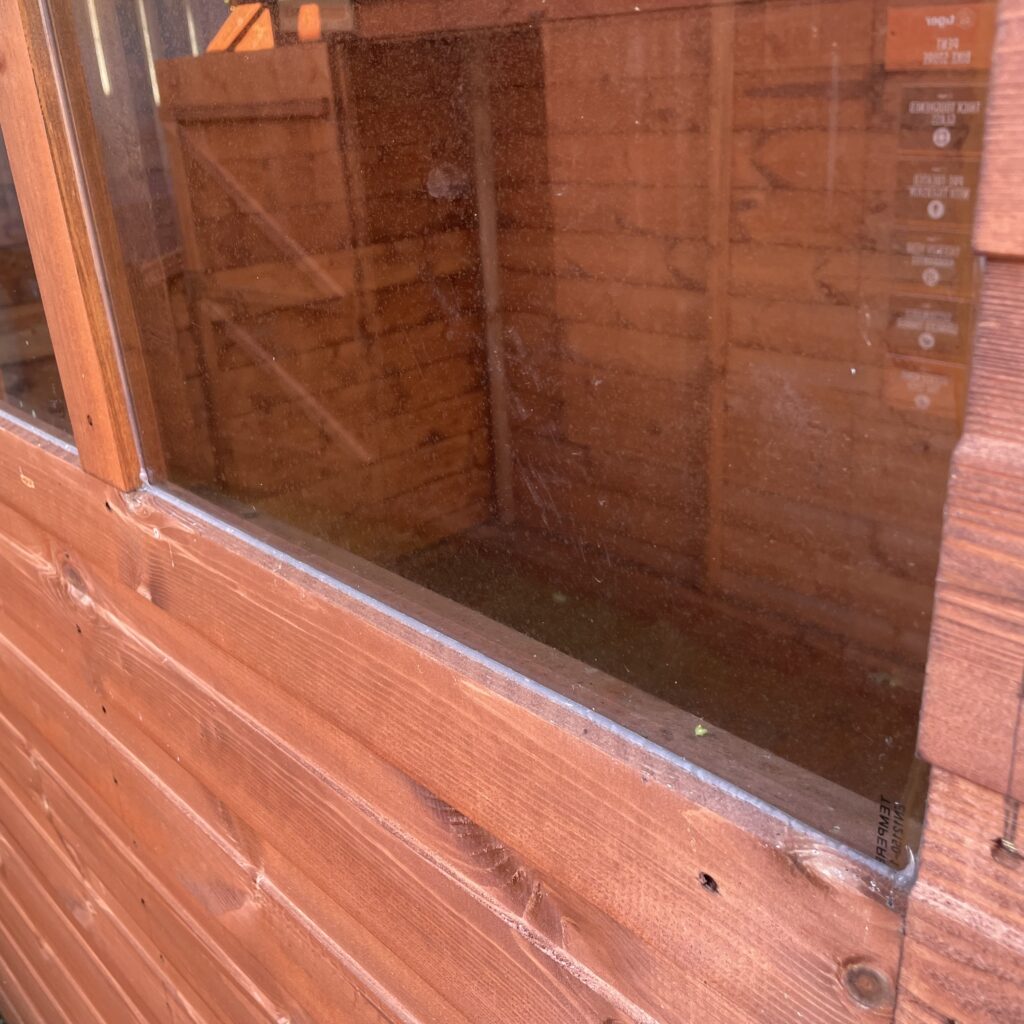
The glazing is 3mm toughened glass, which I’m always glad to see. We’ve seen every type of glazing over the years — cheap plastics that feel tinny, panes that rattle in wind, windows you can practically push in with your hand. Toughened glass doesn’t give you that disposable feeling. Press on it and it feels solid. It feels “proper”.
Now, there’s something I always say here, because it’s real-world important:
Fit and seal the glazing properly.
Tiger’s window fitting guidance is clear in principle: the panes are pinned into position from the inside, and then you need to seal the windows properly using a sealant such as silicone/mastic/putty (depending on your preference and what you’re comfortable using). If you want an even cleaner internal finish, you can also add beading — and it’s one of those small upgrades that makes the inside feel more “finished”.
That isn’t me being fussy. It’s experience. A shed can be brilliantly made, but a lot of “water ingress stories” come down to glazing that wasn’t sealed properly during install. Do it right and these windows stay solid and weather-tight.
The one glazing caveat I always mention (because it’s honest)
Because the panes are pinned in from the inside, you do end up with the small practical reality that some nail heads remain slightly exposed.
It’s not a deal-breaker and it’s not unique to Tiger — it’s a consequence of traditional glazing retention — but it’s worth knowing. If you’re brushing past the window area in a jacket or a wool jumper, there’s a chance you could snag fabric on a slightly proud nail head.
In practice, it’s easy to mitigate.
If you’re putting a workbench under the windows (which makes sense anyway), you’re not constantly walking past the glazing line. And if you want to go the extra step, internal beading gives you a cleaner finish and removes the snag risk altogether.
I’d rather mention it than pretend it doesn’t exist — because this is the sort of detail that proves a review is real.
The “fire and forget” idea: why this shed earns that label
When I say “fire and forget”, I don’t mean “never maintain it”. Timber buildings always need correct installation and ongoing care.
What I mean is: if you put it on a proper base, assemble it square, seal the glazing properly, and treat it as recommended, this is the type of shed that doesn’t constantly create drama.
It feels like a shed you can trust.
It doesn’t feel like something that will slowly go out of square and start irritating you. It doesn’t feel like something that will develop a bouncy floor. It doesn’t feel like something where you’re always thinking, “That corner doesn’t look right,” or “That door’s going to be trouble.”
It feels like a classic shed design that’s been refined by people who actually understand how sheds get used.
Where this sits versus overlap (and why that matters)
It’s worth being blunt about this, because it helps people buy the right thing.
Overlap cladding is cheaper to produce. That’s why overlap sheds exist: they hit a price point. But overlap also has a different feel and different limitations. It’s less refined, less rigid, and generally easier to compromise from a security point of view.
This shed isn’t overlap.
This is the shed for the person who wants the traditional look, but wants it executed properly. The interlocking nature of shiplap tongue & groove gives you better rigidity and a more finished build. And when you combine that with the solid floor feel and the structure you can measure with the 75kg test, it becomes a genuinely dependable building.
Upgrade paths that actually make sense
The standard shed is already excellent — I want to be clear about that — but Tiger’s upgrades are the sort that make sense depending on how you’ll use it.
If you know you’re going to treat it more like a workshop (more regular use, shelving, tool racks, heavier kit), then the heavy-duty framing option becomes very attractive. Thicker framing doesn’t just make the shed “a bit stronger” — it changes the whole feel of the structure and how confident you are mounting things to it.
And then there’s loglap cladding.
I’ve inspected plenty of Tiger loglap buildings over the years and I’ve never seen one that didn’t put a smile on my face. It looks premium, it feels premium, and it gives that more cabin-like aesthetic while still being a shed at heart.
Do you need loglap? No.
But if you love the classic apex shape and you want it to look more expensive and feel more substantial, loglap is a very nice way to go.
Who I think this shed is perfect for
If you want a shed that does the following…
- stores the usual garden life clutter properly (tools, mower, bags, furniture cushions, kids’ outdoor bits),
- gives you light so you aren’t working in a gloomy box,
- lets you add a workbench or racking without it feeling like a compromise,
- gives you proper headroom so you actually enjoy going into it,
- and feels like it’ll still be solid years down the line…
…this is exactly that shed.
It’s the “buy it once, install it properly, maintain it properly, stop thinking about it” type of building — which, for most people, is the highest compliment you can give a shed.
Final verdict
The Tiger Shiplap Apex Shed is the classic British garden shed done properly.
It looks like the shed everyone pictures in their head — but it behaves like a shed that’s been built with care: smooth shiplap tongue & groove, a door that feels solid and doesn’t sag, windows that flood the space with light, a floor that feels taut underfoot, and measurable rigidity proven by real testing (75kg load with ~2mm floor deflection, ~4mm wall deflection).
If you want a traditional shed that’s genuinely usable — not just a storage box — and you want one that you can confidently call “dependable”, this is one of the easiest recommendations in Tiger’s entire range.
And if you’re the type of person who wants to take it up a level later, the upgrade path is sensible: heavy-duty framing if you’ll work in it, loglap if you want it to feel more premium.
Put it on a proper base, seal the glazing properly, treat it as recommended — and this is exactly the kind of shed that’ll still be quietly doing its job ten years from now.