EXPERT REVIEWED
  FREE DELIVERY
  INSTALATION AVAILABLE
 Tiger Shiplap Pent Shed – Show Site Review
First Added - November 28 2025
Last Updated - November 28 2025 - 0 Data Points Updated - 0 Data Points Added
Reviewed & curated by a panel of garden building experts. Using methodology 1.1
Product ID: tiger-sheds-tiger-shiplap-pent-shed
Size: Multiple sizes available
Merchants Checked: 10
Available From: 1
Support WhatShed: by making a purchase after clicking a link above, a portion of the sale supports this site.
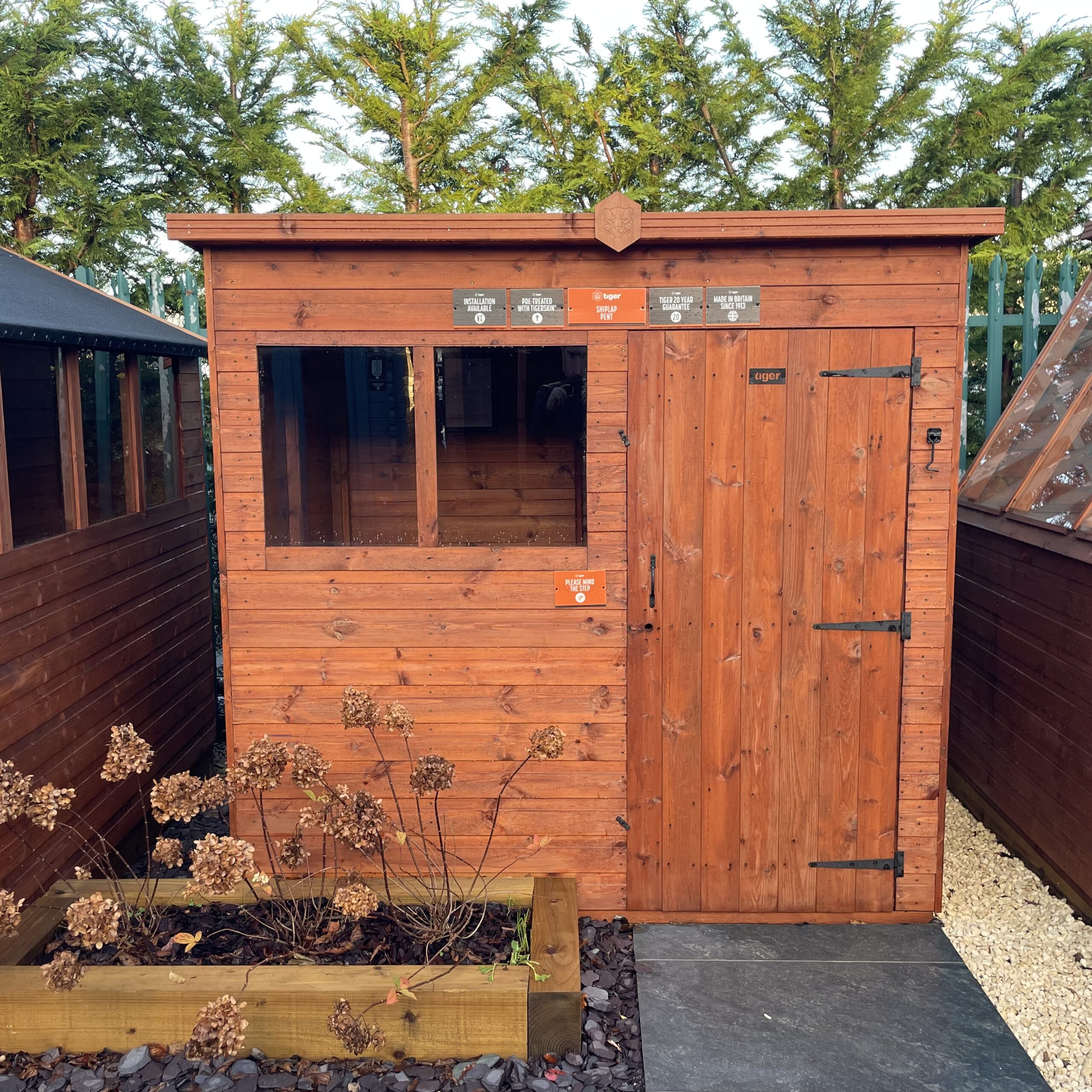
When people say they’re “buying a shed”, there are usually two images that come to mind. One is the classic apex roof shed — the traditional silhouette you see in your head when someone says garden shed. The other is a shiplap pent shed like this one: lower, neater, a bit more discreet, and often the smarter option when you’re working with real gardens rather than fantasy ones.
And in many ways, the Tiger Shiplap Pent Shed sits right at the heart of what most people actually want from a garden building.
This is very much one of Tiger’s bread-and-butter sheds. It comes in a huge range of sizes — in fact, the only shed in their entire lineup with more size options is the apex version of this same building. You can go as small as 5×4, right up to 12×8, which is a substantial size for a pent shed and gives you a lot of flexibility depending on your garden, your storage needs, and how you plan to use the space.
We’ve physically inspected this shed at both the Tong and Otley show sites, and it impressed us on both occasions. The Otley visit, in particular, stuck with me — not just because of the shed itself, but because of how it was positioned, which accidentally revealed exactly who this shed is really for.

A shed designed to fit in, not show off
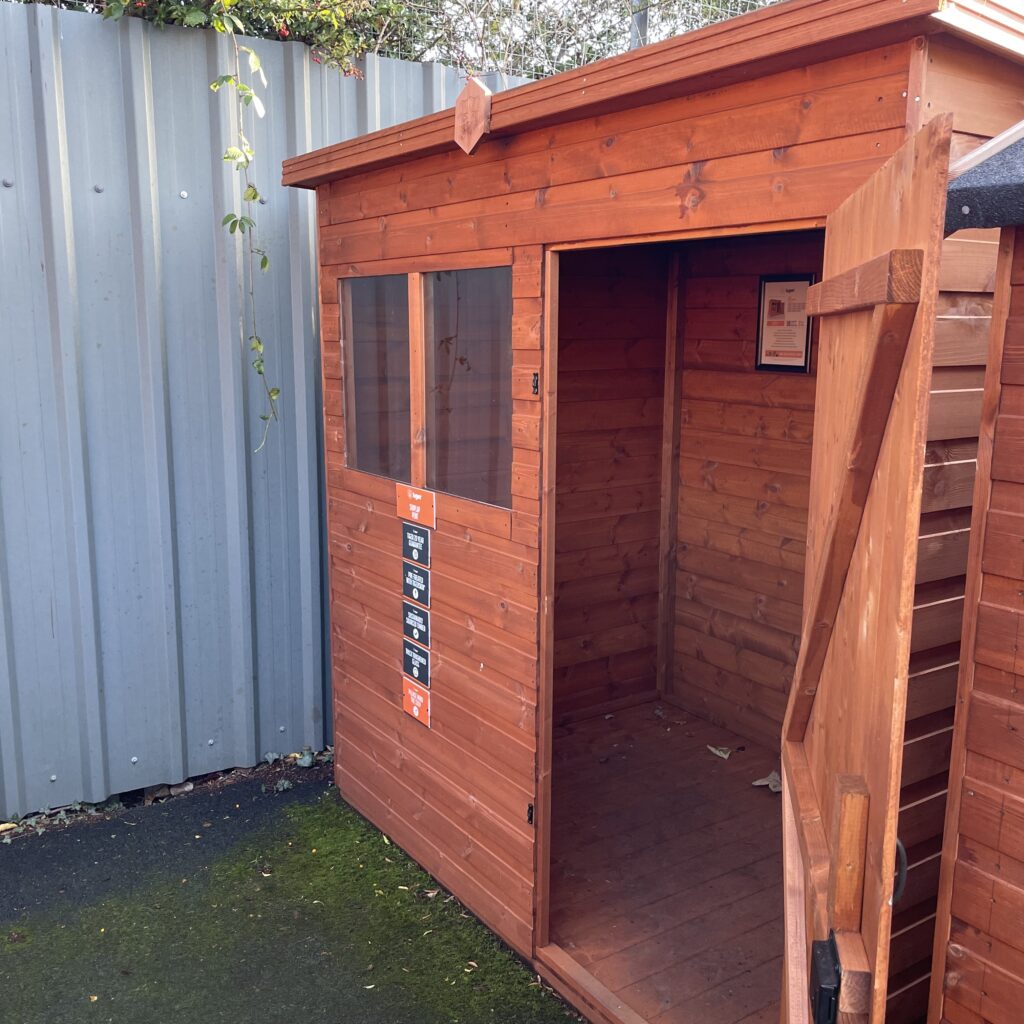
At the Otley show site, the Tiger Shiplap Pent Shed was tucked away down one of those narrow “alleyways” between other buildings. It actually made taking photos quite difficult because we couldn’t step back far enough to get the usual clean, marketing-style angles.
At the time, that felt like a frustration.
But when I later looked through the photos properly, it clicked: that awkward positioning was a perfect real-world example of how people actually use sheds like this.
If you’re buying a pent shed, chances are it isn’t going in the middle of the lawn as a feature. It’s going against a fence, along a wall, down a side passage, or into a tight corner where you want something functional, discreet, and space-efficient. Pent sheds excel at that. They sit flush, they don’t dominate the garden visually, and they feel more architectural and understated than a traditional apex.
That’s exactly how this one felt at Otley. On the outside, it was tidy, practical, and unobtrusive. But once I stepped inside, it left a much stronger impression than I expected — and that’s where the spec sheet starts to matter, because the numbers back up the feel.
What you actually get – and why the spec matters
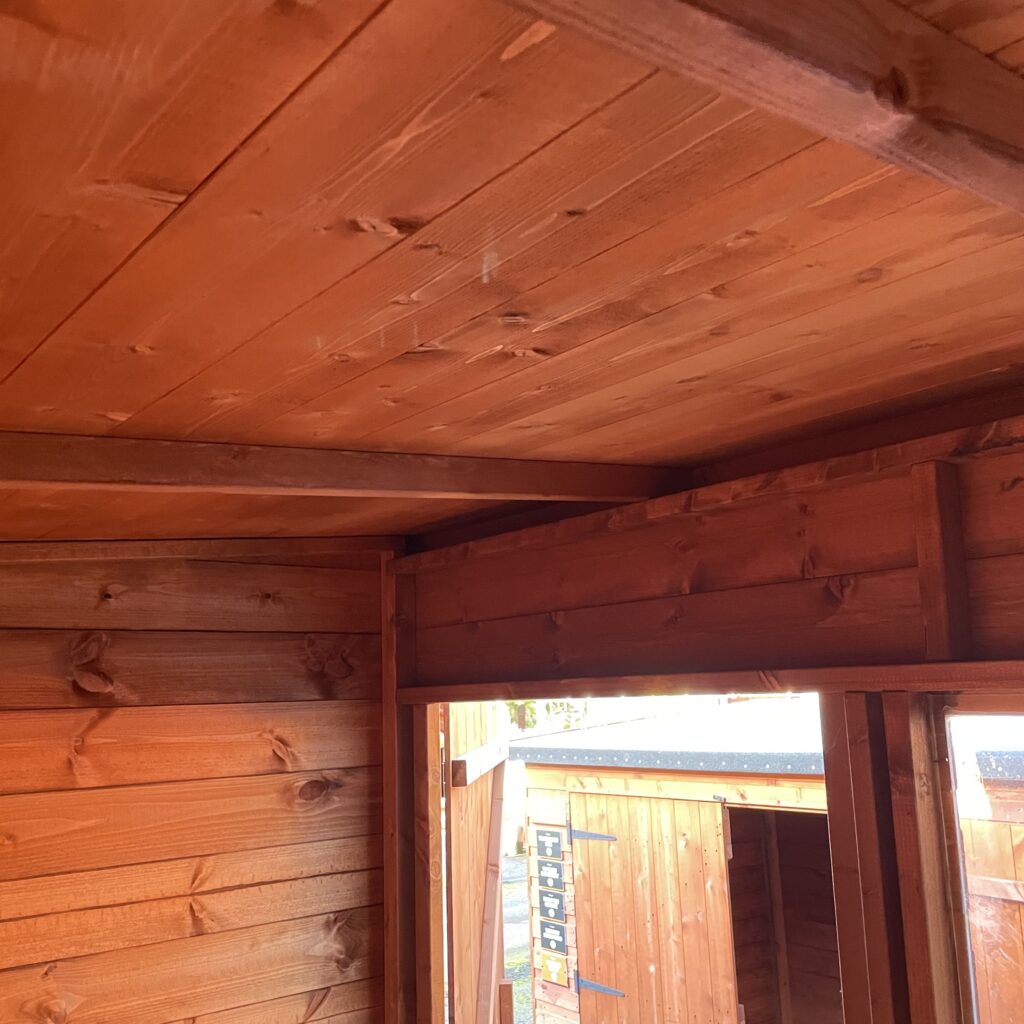
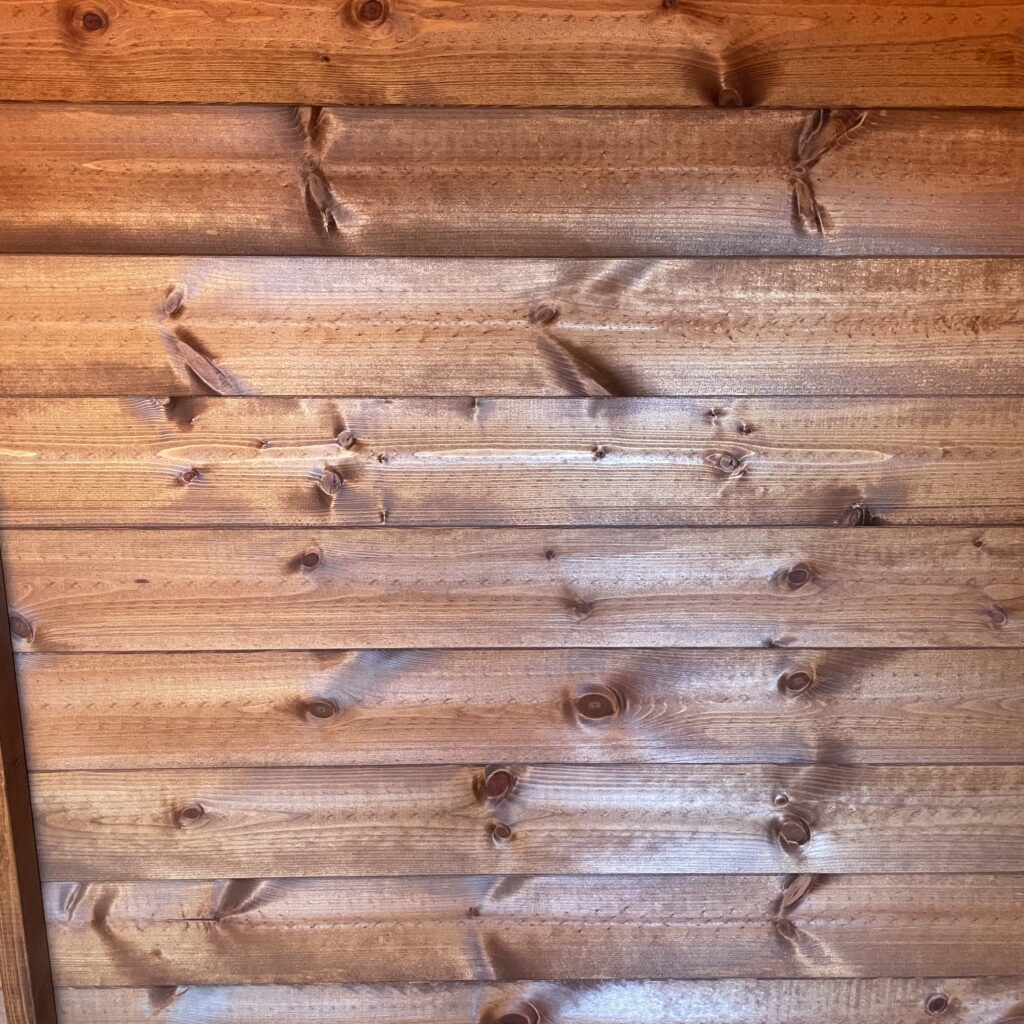
This shed is built using 12mm shiplap tongue-and-groove cladding on the walls. The floor is also 12mm tongue and groove, and the roof is 12mm tongue and groove as well.
That combination matters more than most people realise.
You’d be surprised how many sheds — even at higher prices — quietly downgrade the roof or floor to OSB. Tiger haven’t done that here, and it’s one of the reasons this shed immediately feels more substantial than many alternatives.
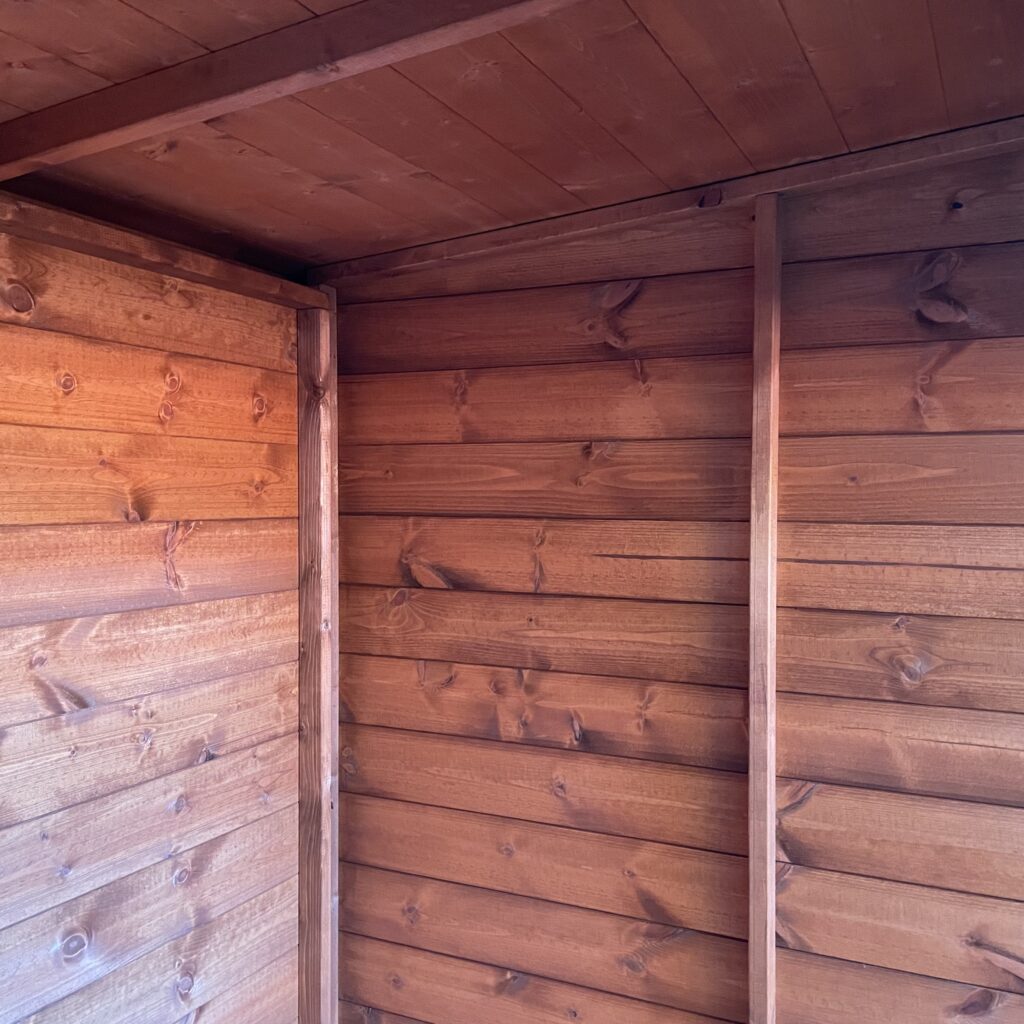
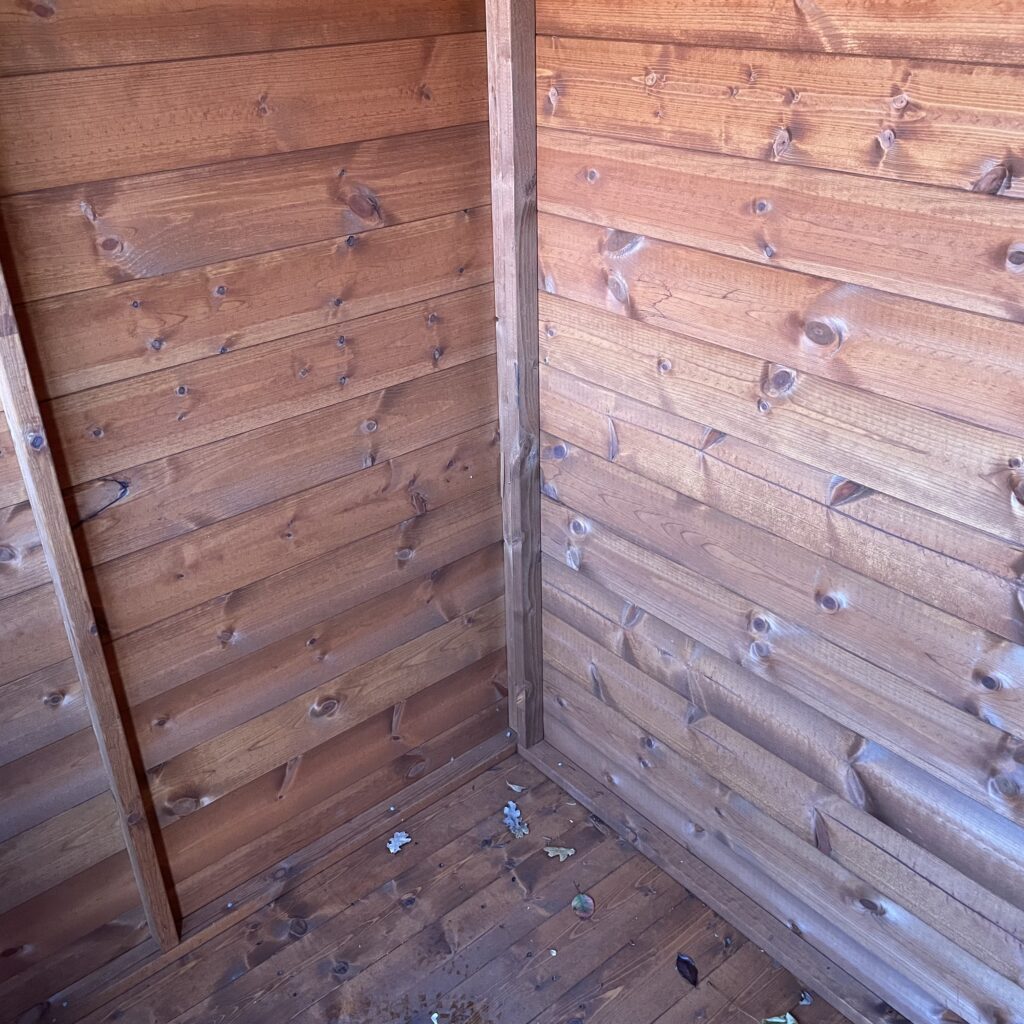
Internally, Tiger list the framing as 28mm x 44mm rounded four-corner framing, and when you’re inside the shed, that shows. The framing is closely spaced, neatly finished, and properly aligned. Nothing feels flimsy or under-supported.
It’s one of those sheds where the bones of it — the stuff you don’t see on the website photos — are quietly doing a lot of work.
And then you’ve got the door, which is a proper quality tell.
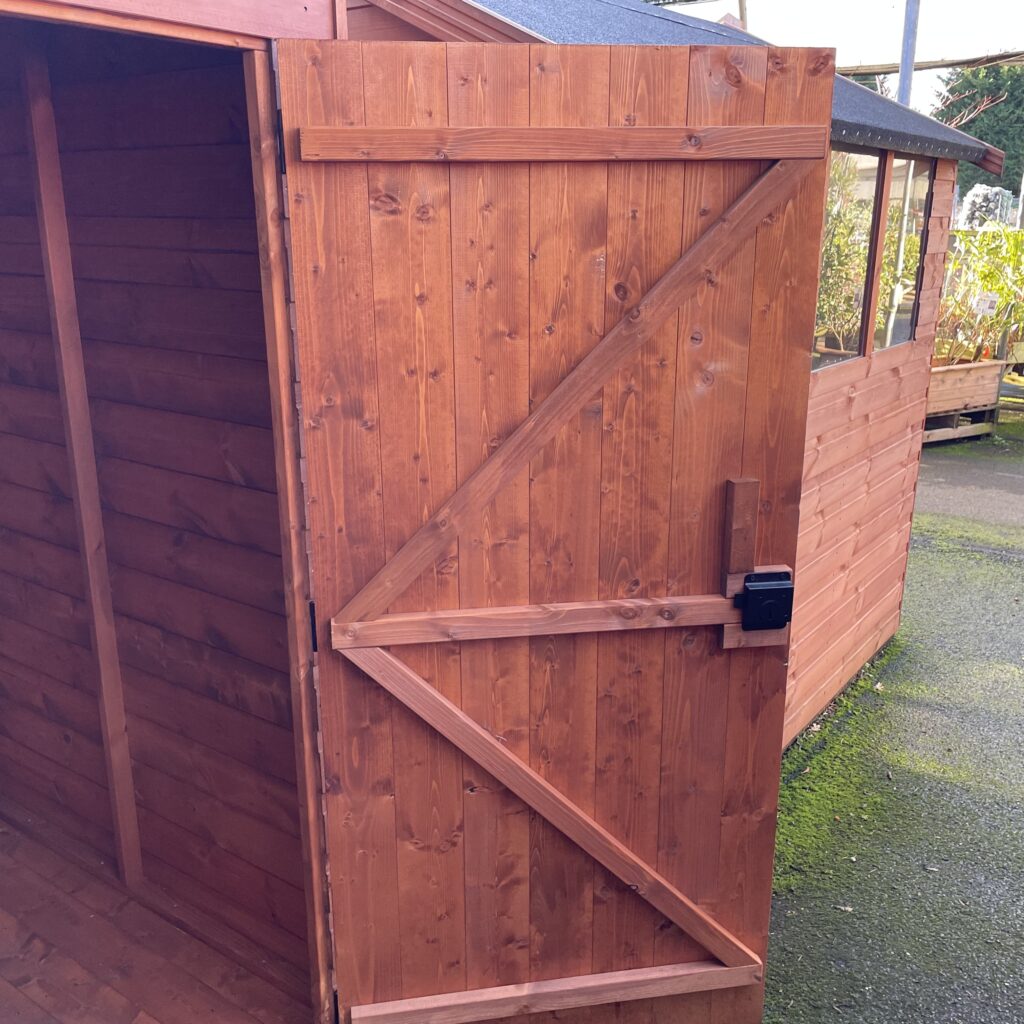
Tiger specify a single fully boarded tongue-and-groove door, and they supply a lock and key as standard. On paper, that’s just a line of text. In person, it’s one of the first things that tells you whether a shed is a decent one or a “shed-shaped object”.

The door and lock – a real quality tell
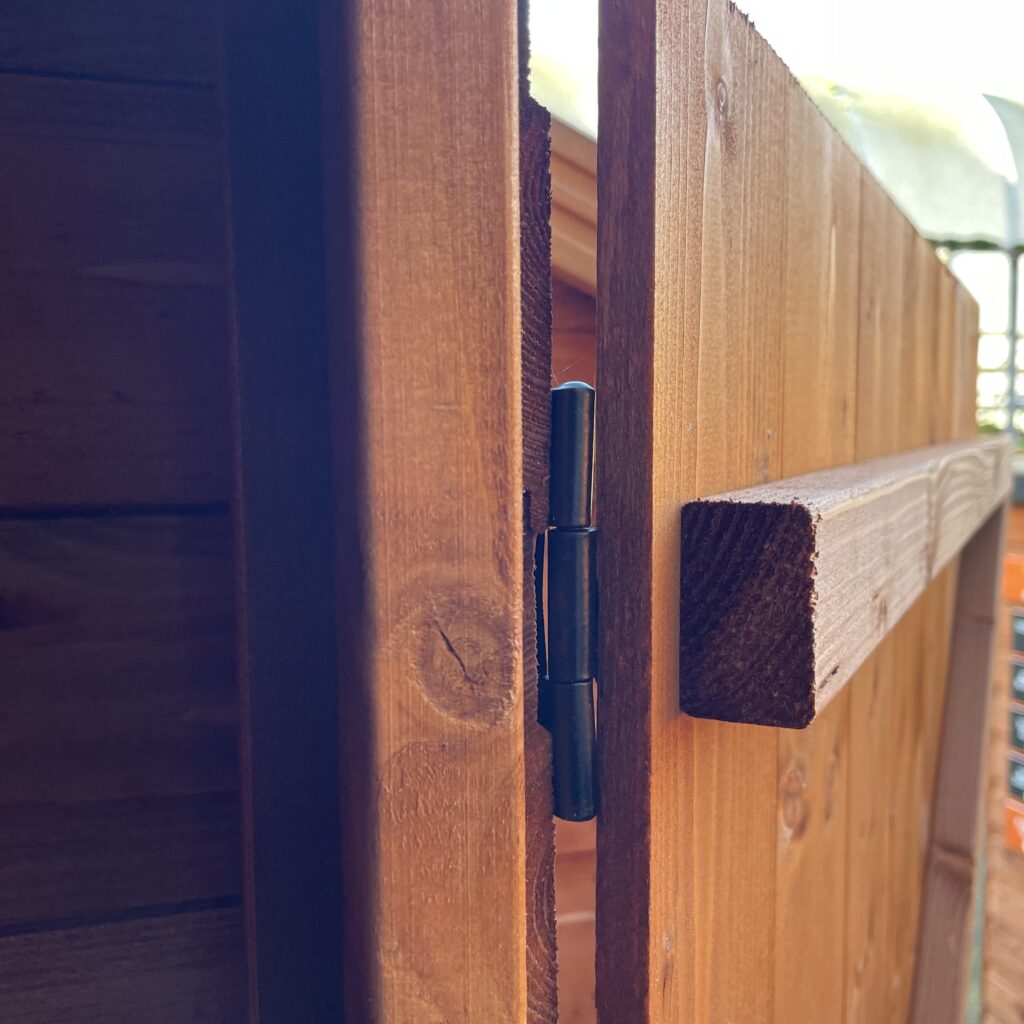
At show sites, doors often reveal problems. Buildings get opened and closed constantly, they get moved around, and any weakness in framing or bracing shows up quickly as sagging, sticking, or scraping.
We didn’t get any of that here.
Unlocking the door felt smooth and precise — not gritty, not stiff, not something you have to fight with. Once open, the door didn’t feel like a loose panel. It felt like a solid, properly framed unit.
Tiger list the door size at 785mm x 1692mm, which is a practical, sensible opening for the size range this shed covers. It’s the sort of door that makes sense for real life — mower access, garden tools, cushions, bags of compost, kids’ outdoor stuff — the usual slow accumulation that happens over the years.
We’ve been reviewing Tiger sheds since 2014, and one thing that’s been consistent over time is that their shiplap pent shed doors just don’t sag. We’ve seen steady improvements across the range, but we’ve never had issues with these doors — and that was true here too.
Windows – solid, professional, but fit them properly
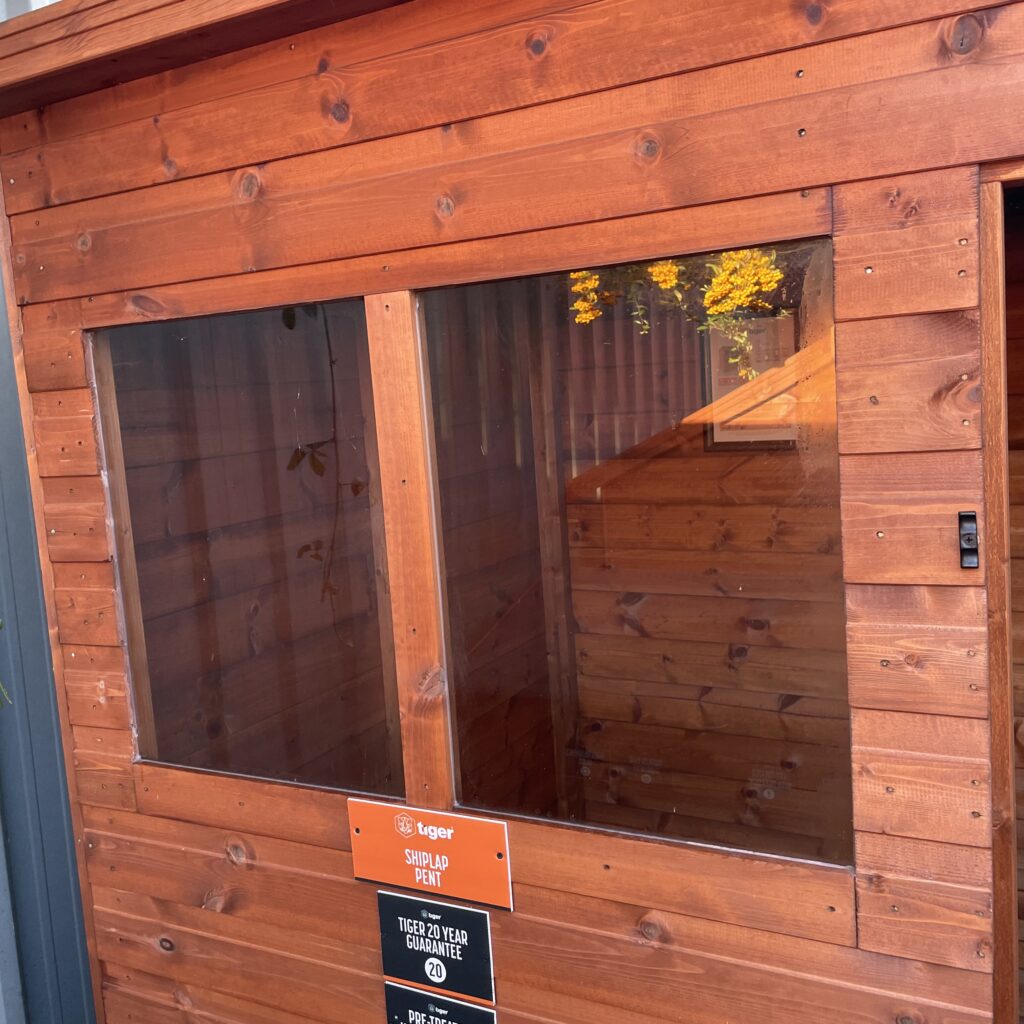
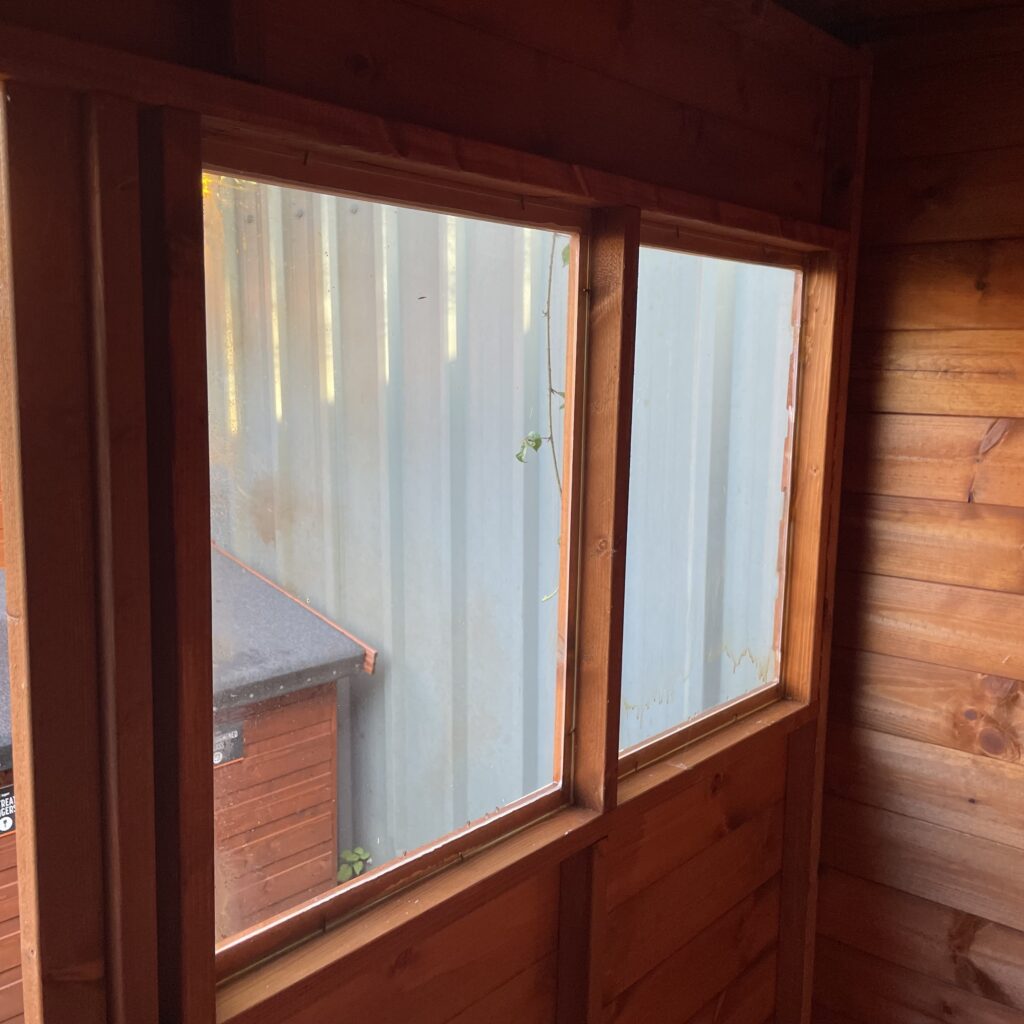
This is the windowed version of the shed, fitted with 3mm toughened glass. Tiger specify the windows as fixed, and the typical pane size is 457mm x 610mm.
On the outside, the windows look clean, flush, and professional. There are no obvious pry points, no flimsy external framing, and nothing that immediately raises security concerns.
When you press on the glass, there’s no rattling, no flex, and none of that tinny, hollow feeling you get with plastic glazing. We’ve seen sheds where you can actually bend the window with your hand. Not here.
That said, this is where real-world experience matters — and where the fitting guidance is genuinely useful.
These panes are pinned in from the inside and must be sealed properly. Tiger’s own guidance is clear: seal the glazing inside and out using silicone, mastic, or putty. If you want an even cleaner internal finish, you can also add beading — and Tiger even offer a glazing kit option, which is useful for people who want that tidy “finished” feel rather than visible pins.
This isn’t a flaw — it’s just part of fitting a proper timber shed correctly. But it’s worth saying plainly, because forgetting to seal windows is one of the easiest ways people accidentally cause water ingress and then blame the shed.
The Otley “dry test” – real conditions, not showroom conditions
One of the reasons the Otley inspection stood out was the timing. We inspected this shed on 2 December, right after stormy weather. The ground outside was visibly wet, and the area where the shed was erected was damp enough that you could see moss growing nearby.
This shed had been standing there for around 12 months, and it was still in its standard Tiger pre-treatment rather than being painted up and perfected.
That’s actually ideal from a review perspective.
Inside, the shed felt completely dry. The air felt fresh. There was no damp smell. No dark patches in corners. No signs of water tracking around joints, windows, or roof edges. We deliberately checked all the usual problem areas — the corners, the roof joins, the window edges — and there was nothing to report.
And that matters because we’ve reviewed plenty of buildings at show sites where you walk in and you immediately get that stale, damp feeling — and then you start looking and you find water sitting in corners or black marks creeping in where the felt has failed.
We didn’t see any of that here.
Tiger do make it clear in their documentation that the shed comes with their TigerSkin® water-based treatment, but that you should treat it internally and externally after assembly and then annually to keep everything in good condition and maintain the guarantee requirements. But what I like about the Otley inspection is that it gave us a proper baseline: even sitting there in damp conditions, with only the factory pre-treatment, it was still dry inside.
That’s a good sign.
Floor strength and structural rigidity
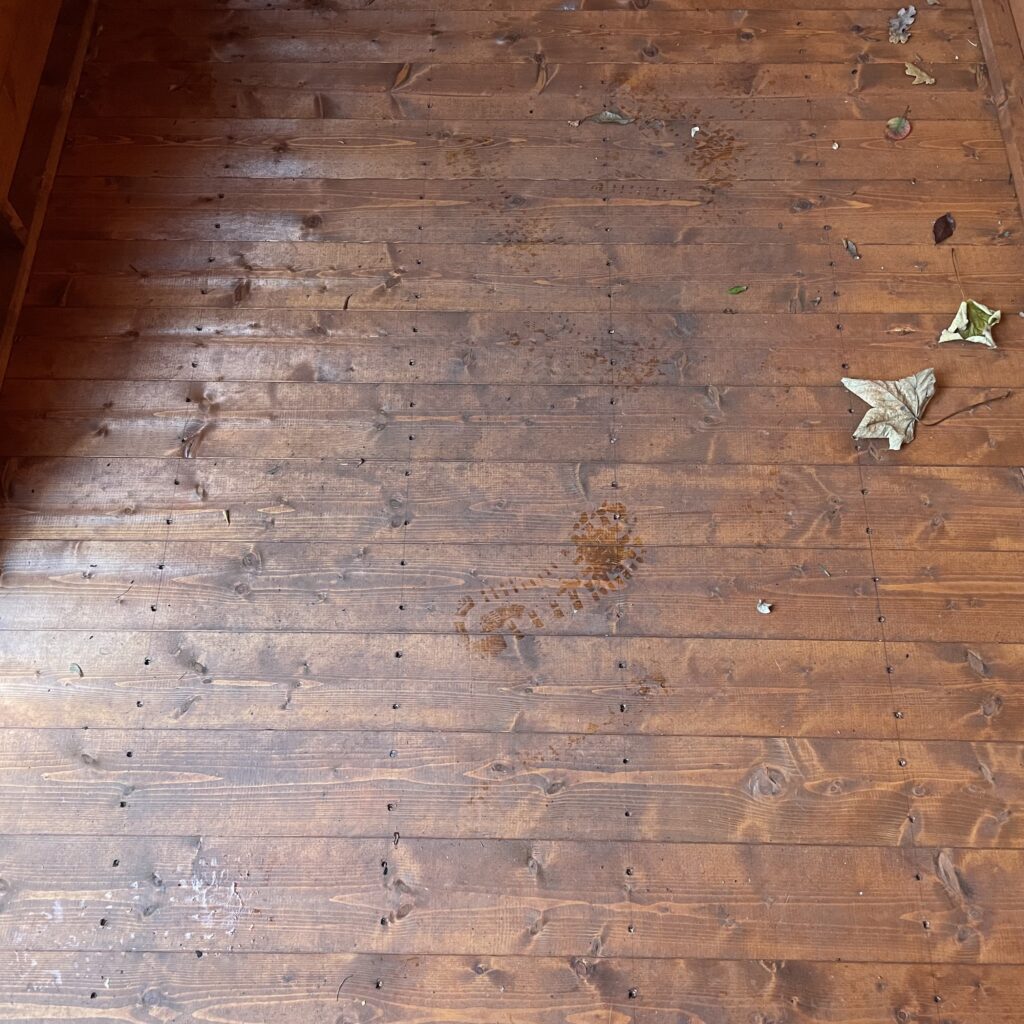
I always pay close attention to floors, because they’re one of the easiest places for manufacturers to cut corners. Cheap sheds often feel bouncy or spongy underfoot, especially as the footprint gets larger.
That wasn’t the case here.
We carried out our usual 75kg load test and measured deflection using a laser. The result was around 2mm of deflection, which is excellent.
What’s particularly interesting is that we’ve seen similar results even on larger versions of this shed, because Tiger keep the bearer spacing and floor construction consistent rather than cheapening it as size increases. Cheaper manufacturers often do the opposite: the bigger the shed, the more they quietly stretch the support spacing, and that’s when you get that trampoline feeling.
When walking around inside, the floor had that tight, crisp feel underfoot — not a dull, hollow thud, but a firm, slightly echoey sound that tells you the structure underneath is doing its job.
We also carried out a wall test, again with a 75kg load, and saw around 2mm of deflection on the rear wall, which confirms what you can already feel: this is a rigid structure with closely spaced framing.
It’s the sort of shed where you can lean against the wall with a cup of tea and not feel like you’re flexing the entire building — something I have absolutely felt in cheaper timber sheds, plastic sheds, and even some metal sheds from major retailers.
The small human details that matter
One thing I always notice with Tiger sheds is the human element in how they’re made.
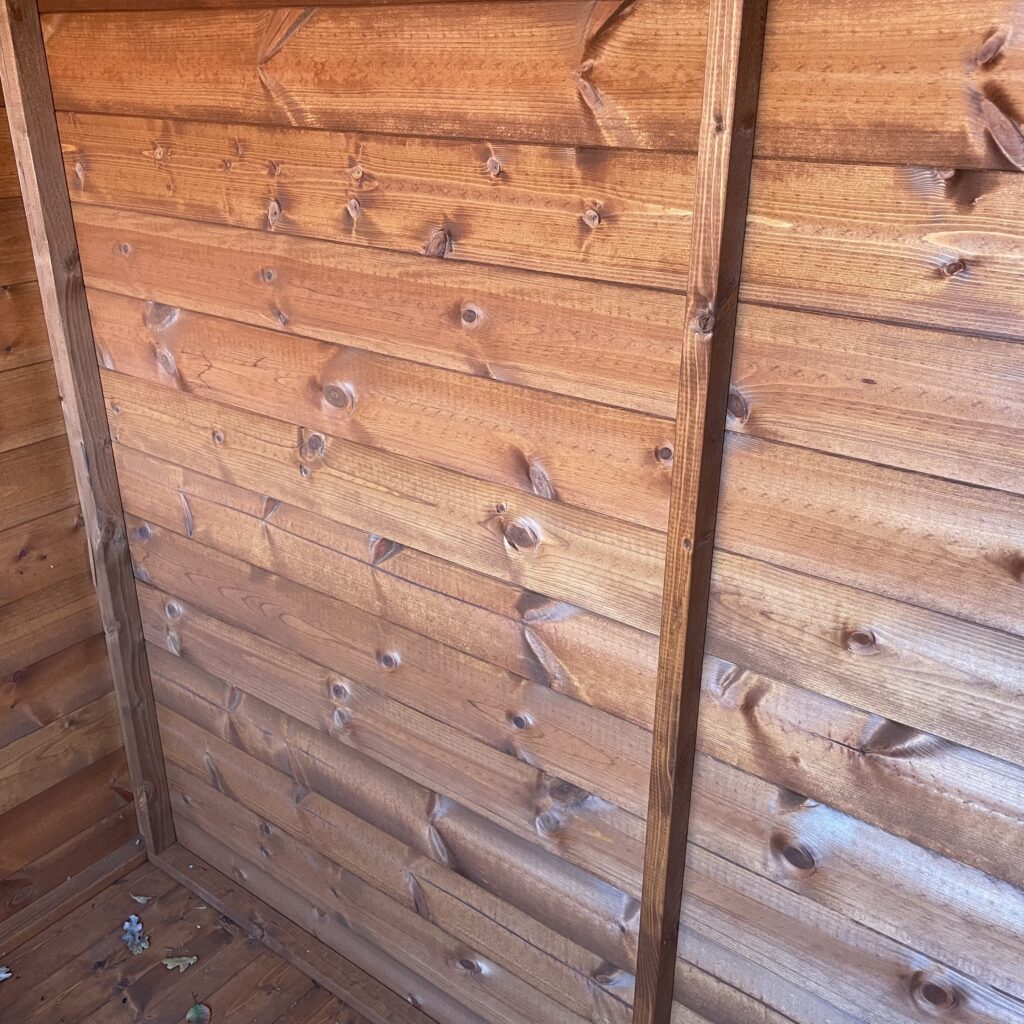
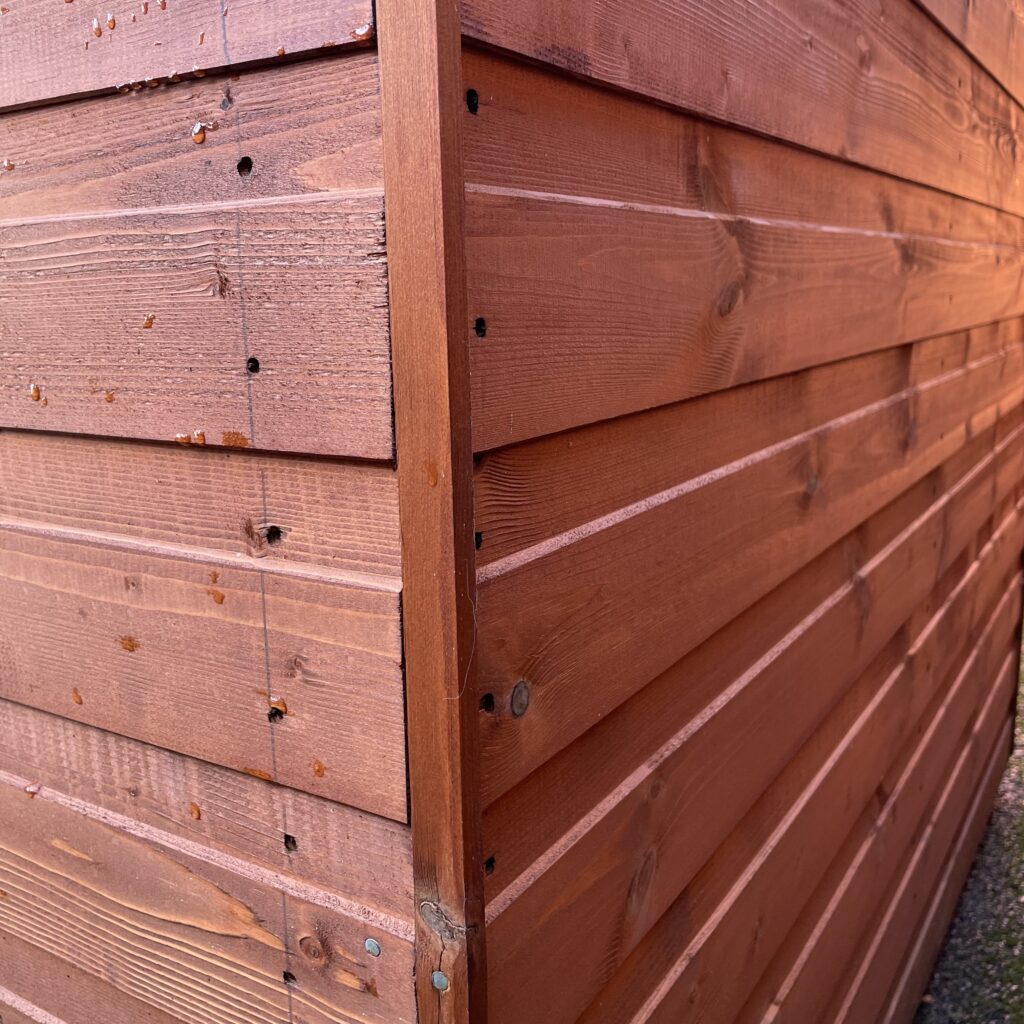
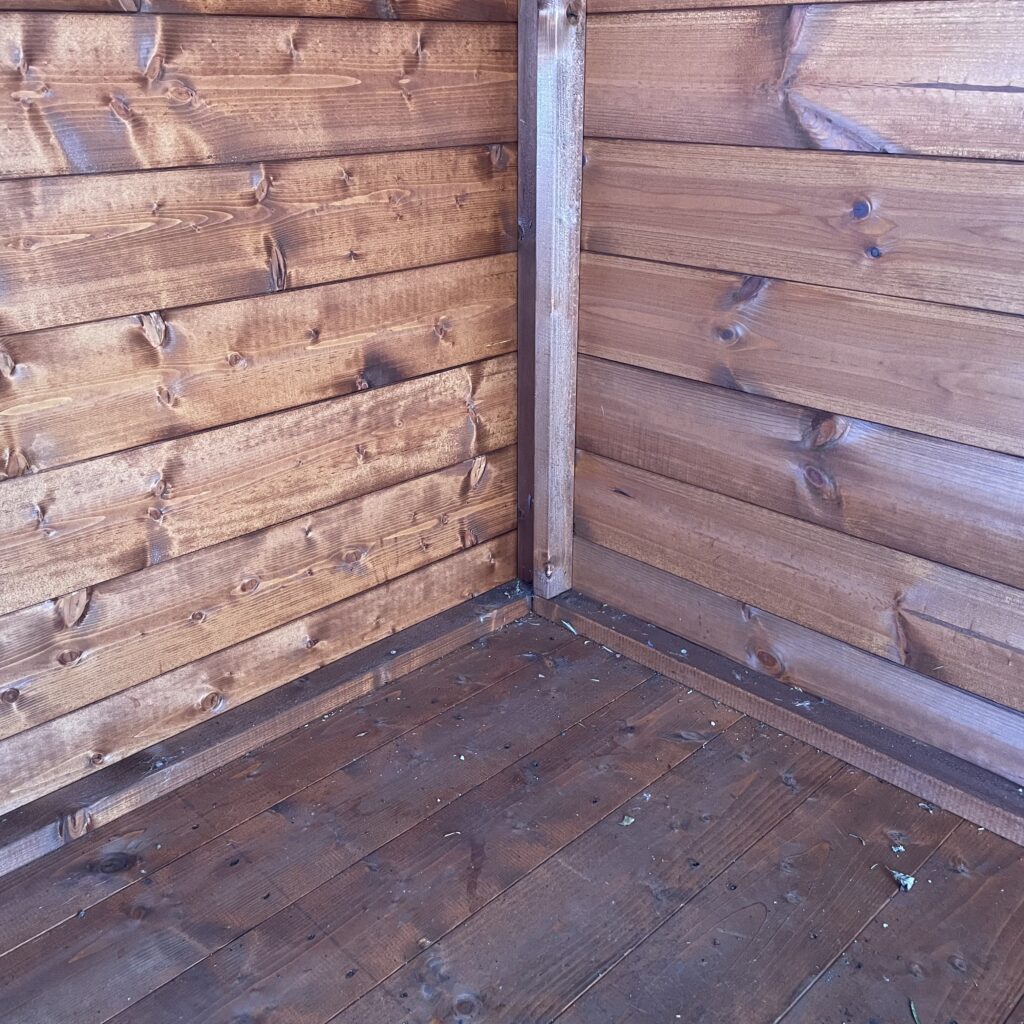
You can see it in the pencil marks — not messy scribbles, but deliberate, careful markings where joints have been aligned and nails positioned. It’s one of those small details that doesn’t show up on a product page, but in person it gives you confidence that somebody has actually cared enough to line things up properly.
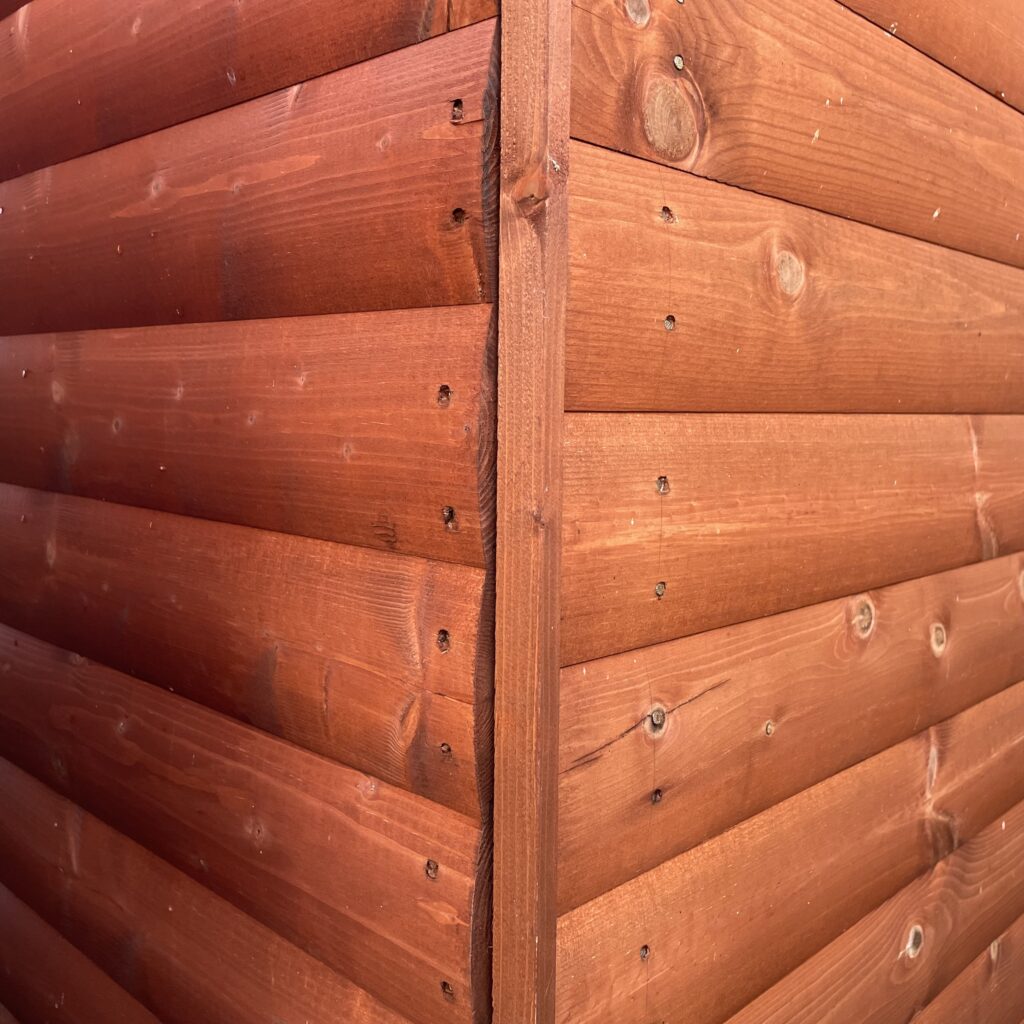
You see it in the corners too. The way panels meet is neat and precise. There are no ugly gaps, no rushed cuts. It gives the shed a quiet sense of professionalism and care.
That might sound like a small thing, but in our experience, sheds that get the visible details right usually get the hidden ones right as well.
Sensible upgrade paths
The standard version of this shed is already highly usable. But Tiger do offer sensible upgrade options if your needs change.
You can opt for heavy-duty framing, which effectively doubles the thickness of the internal frame. If you’re planning to hang shelving, mount tools, or use the shed more like a light workshop, that upgrade makes sense.
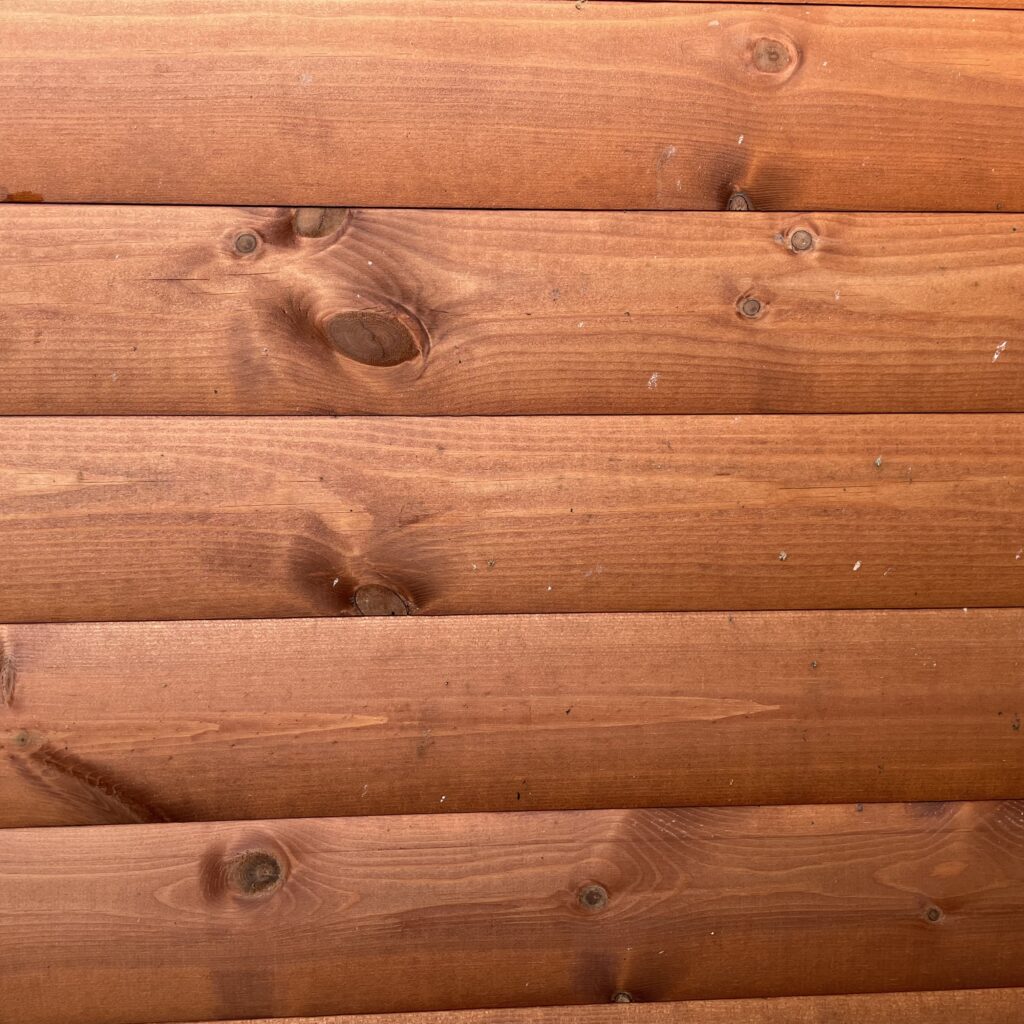
You can also upgrade to loglap cladding, which we’ve seen many times across Tiger’s range. Loglap looks fantastic, feels incredibly solid, and gives the shed a more premium aesthetic without compromising practicality.
Importantly, these upgrades feel like options, not necessities. The standard shed doesn’t feel lacking — the upgrades just tailor it to heavier or more specific use.
Headroom and the extra-height option
Headroom inside the standard Tiger Shiplap Pent Shed was good. Even towards the back, I didn’t feel cramped or like I was about to bump my head.
Tiger do also offer an extra-height version, which we’ll review separately. If you’ve got very specific requirements — tall shelving, ladders, or you simply want as much vertical space as possible — it’s worth knowing that option exists.
For most people, though, the standard version is more than adequate, and it already feels like a proper usable space rather than a cramped storage box.
Final thoughts
The Tiger Shiplap Pent Shed is a textbook example of a classic shed done properly.
It’s discreet and space-efficient on the outside — exactly what you want from a pent shed — but inside it feels brighter, taller, and more solid than you might expect. The materials are right where they matter: 12mm tongue-and-groove walls, floor, and roof, 28x44mm framing, 3mm toughened glass, and a lock and key as standard.
We inspected it in real conditions, after bad weather, in a damp area — and it was dry, solid, and reassuringly well built.
If you’re looking for a shed that fits neatly into a tight space, doesn’t dominate your garden, and quietly does its job year after year, this is an excellent choice. It’s not trying to be a centrepiece. It’s trying to be dependable.
And in my experience, that’s exactly what most people actually want.