EXPERT REVIEWED
  FREE DELIVERY
  INSTALATION AVAILABLE
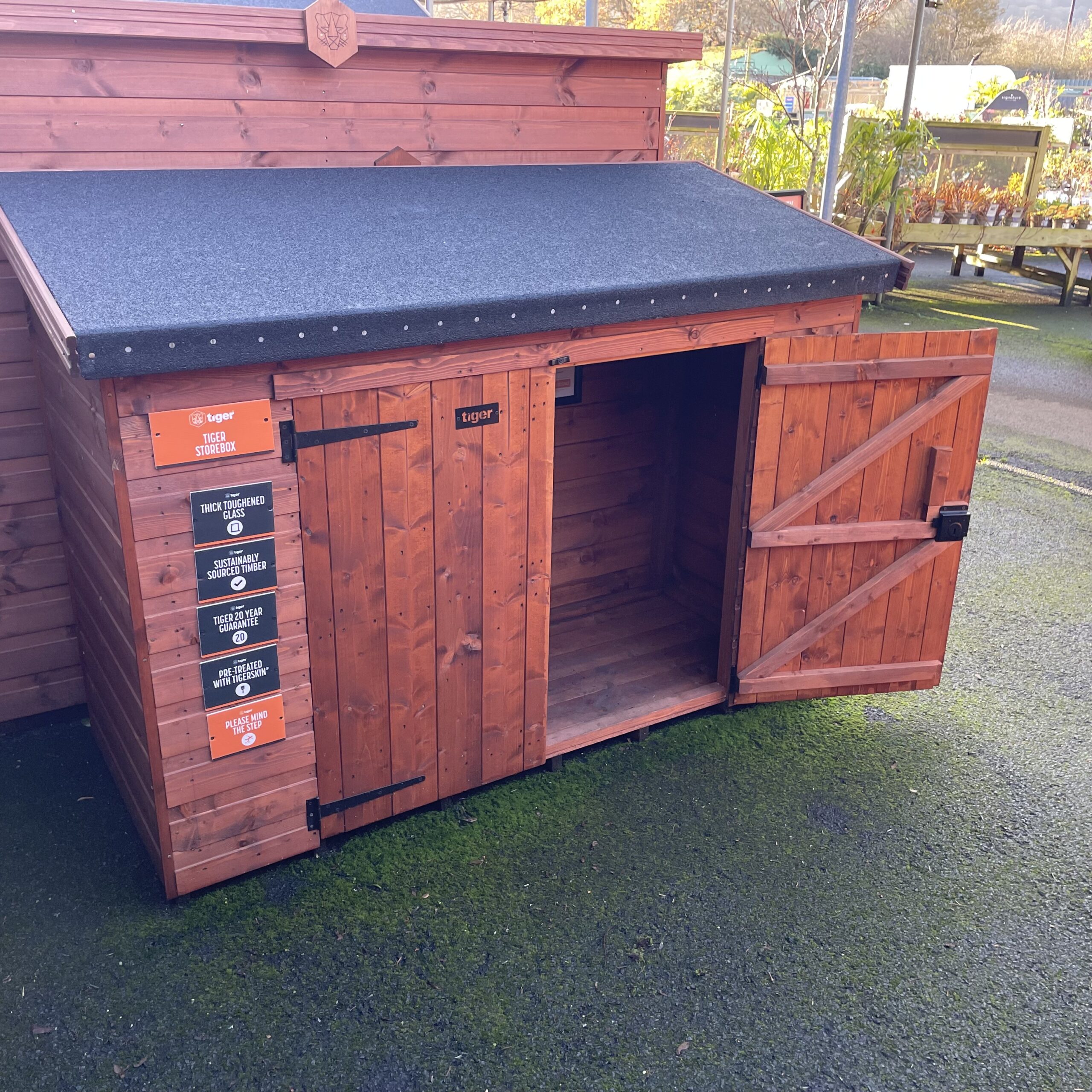
 Tiger Storebox – Show Site Review
First Added - November 28 2025
Last Updated - November 28 2025 - 0 Data Points Updated - 0 Data Points Added
Reviewed & curated by a panel of garden building experts. Using methodology 1.1
Product ID: tiger-sheds-tiger-storebox
Size: 6x2
Merchants Checked: 10
Available From: 1
Support WhatShed: by making a purchase after clicking a link above, a portion of the sale supports this site.
There is a particular type of product that reveals more about a manufacturer than any flagship model ever could. It is not the largest log cabin or the most expensive garden room. It is the small, utilitarian building—the one that exists to solve a basic problem, carries a modest price tag, and operates in a fiercely competitive corner of the market.
The Tiger Storebox sits squarely in that category.
When I inspected this model at Tiger’s Otley show site, I approached it with a healthy degree of scepticism. Storage boxes, especially wooden ones, are usually where corners are cut. Thin overlap boards, lightweight framing, OSB roofs and floors, minimal fixings, and hardware that feels more decorative than structural are the norm rather than the exception.
This is not a glamorous product. It is not tall, it is not deep, and it is not trying to be anything other than what it is: a compact, low-profile outdoor storage solution designed to tuck neatly into a garden without dominating it.
And that is precisely why it is so revealing.
First Impressions: A Compact Building That Feels Serious
The first thing that struck me when standing in front of the Tiger Storebox was not its size, but its presence.
For a building measuring roughly 1750mm wide by 675mm deep, it feels unexpectedly substantial. There is no sense of flimsiness, no visual cues that suggest compromise, and no immediate giveaways that this sits at the lower end of a manufacturer’s range.
The proportions are sensible. The lean-to style roofline keeps the overall height modest, making it suitable for positioning against a wall, fence, or boundary without causing overshadowing issues. This design choice is practical rather than aesthetic—and it works.
Importantly, the Storebox doesn’t try to pretend it’s something it isn’t. This is not a mini-shed or a scaled-down workshop. It is a purpose-built storage unit, and it wears that identity honestly.
Construction: Where Expectations Are Quietly Exceeded
If there is one area where the Tiger Storebox genuinely surprised me, it is in the construction materials.
Most storage boxes in this category rely heavily on OSB or sheet board—particularly in the roof and floor—paired with thin overlap cladding on the walls. It’s cheaper, quicker to manufacture, and broadly accepted by the market.
Tiger have taken a very different approach.
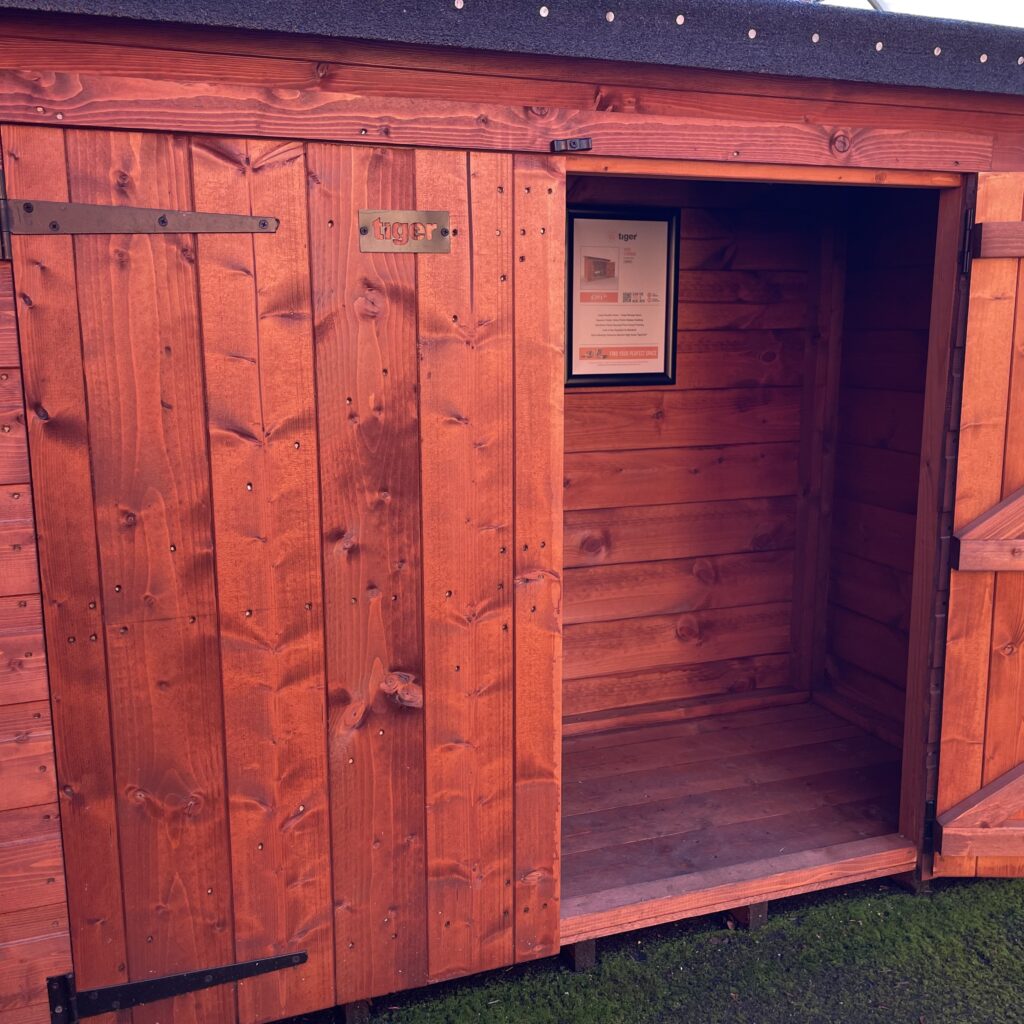
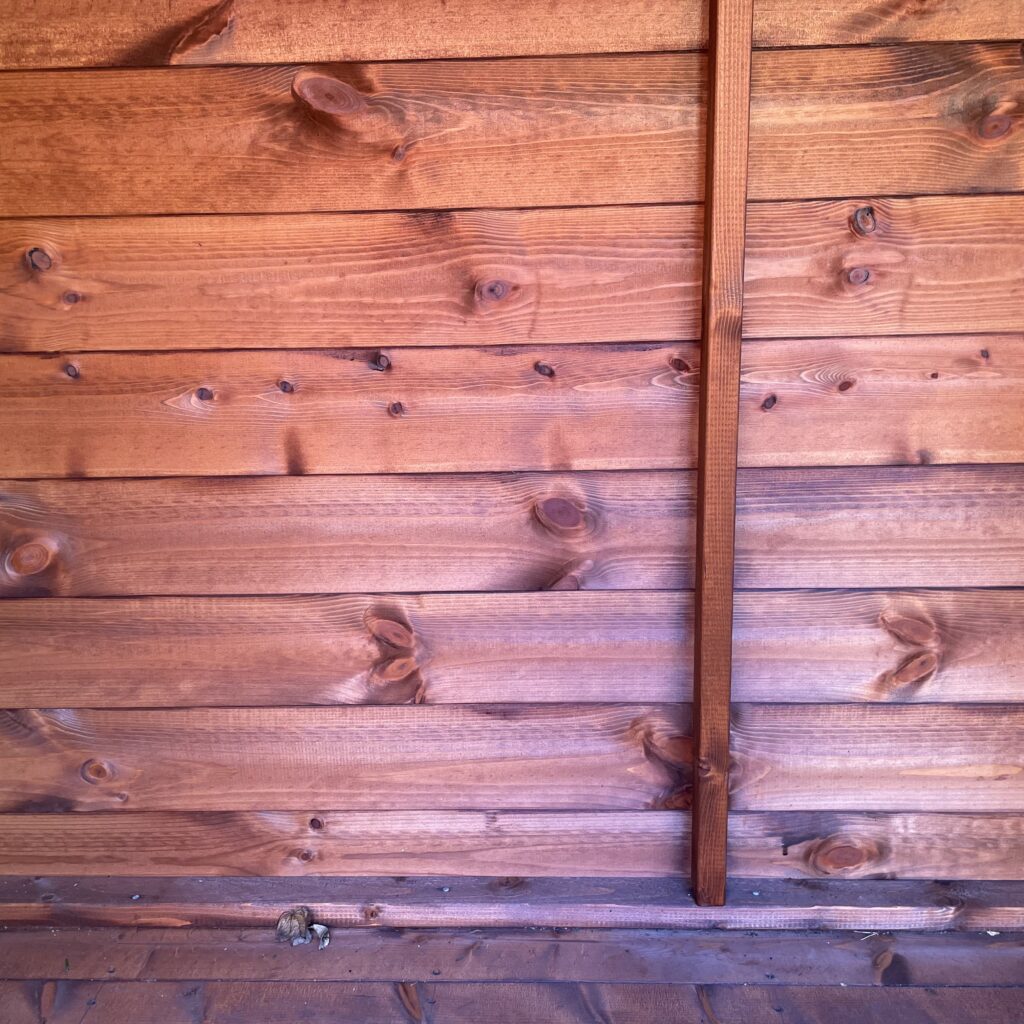
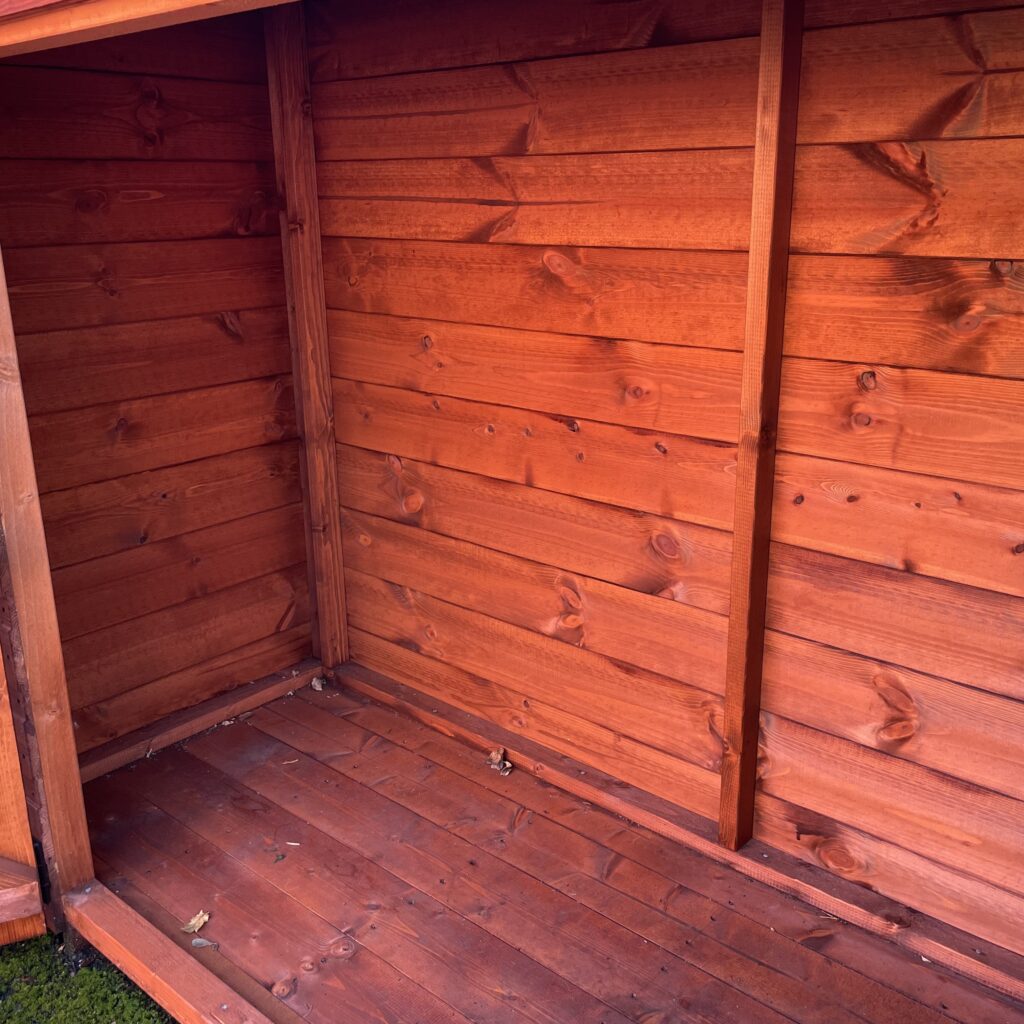
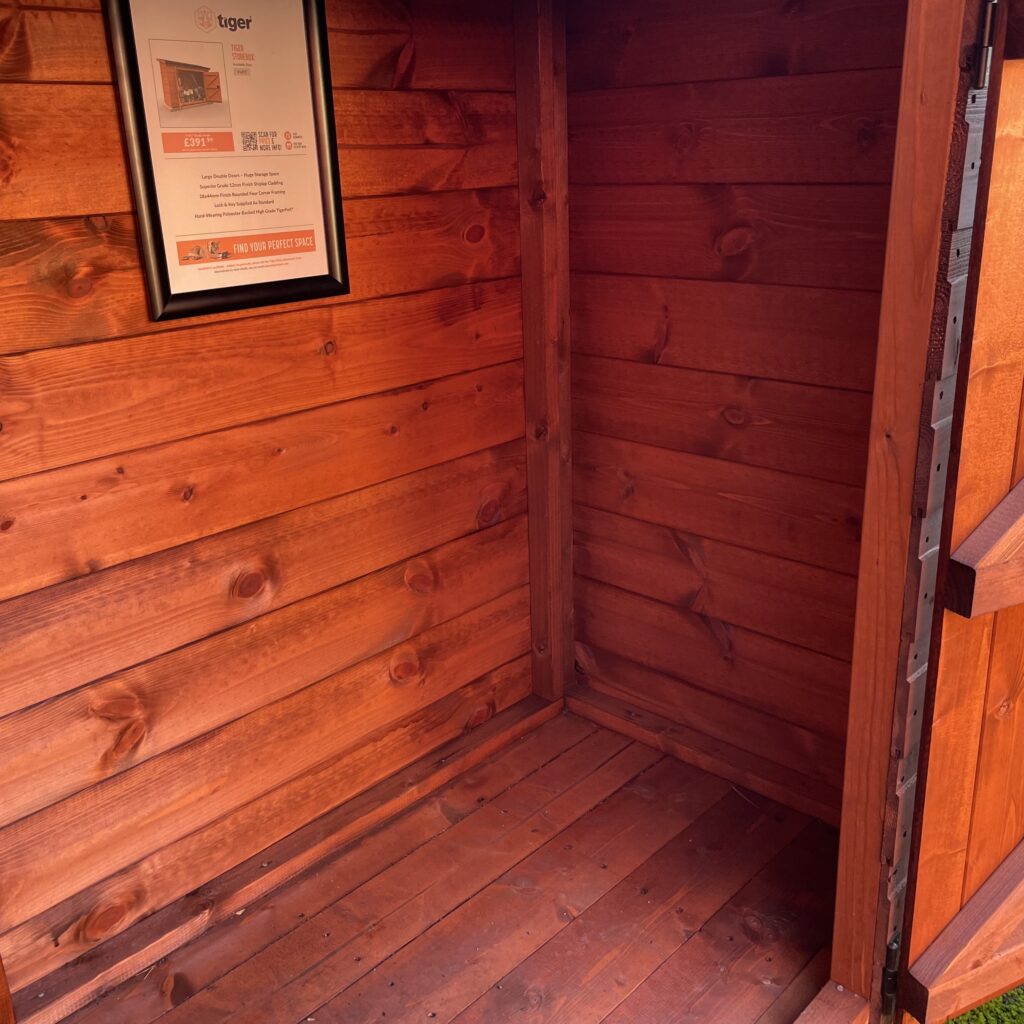
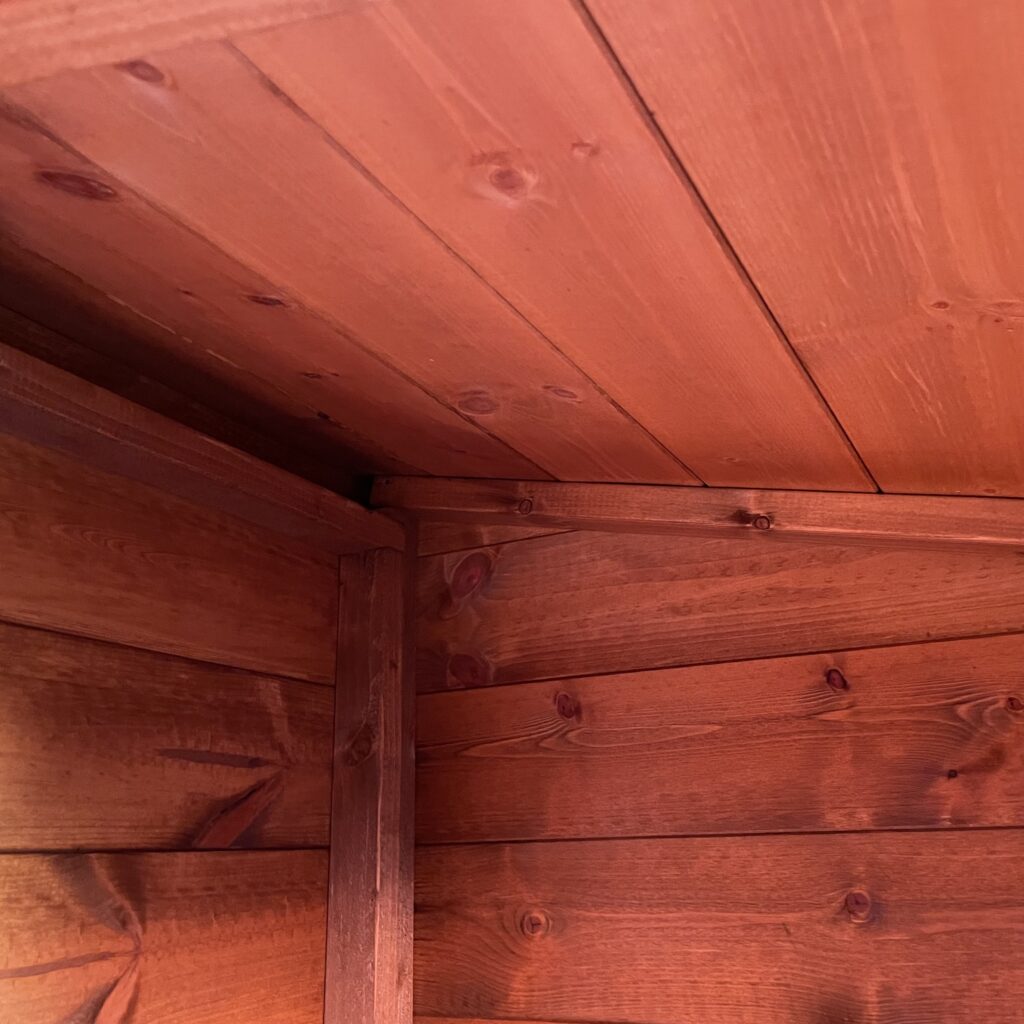
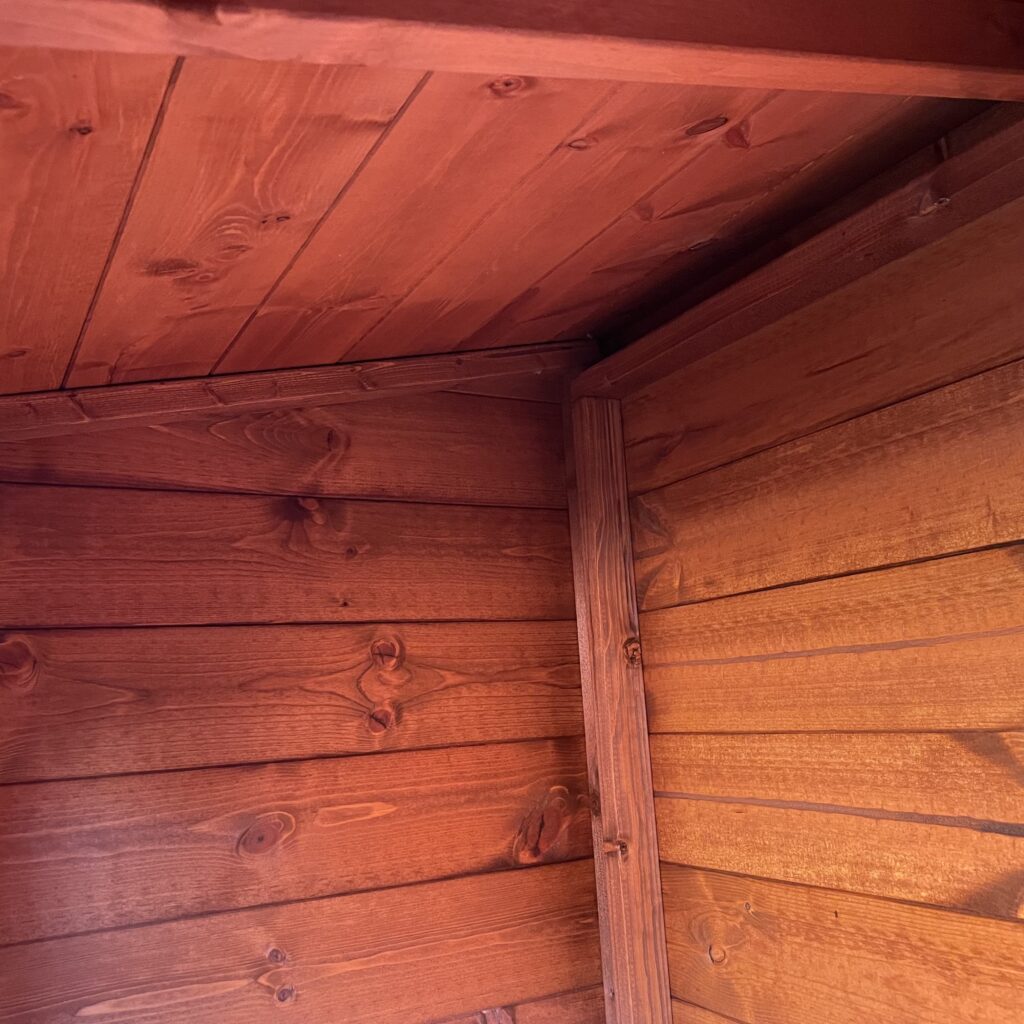
The Storebox uses 12mm shiplap tongue-and-groove boards throughout—on the walls, roof, and floor . That specification alone places it well above the norm for compact storage units.
Tongue-and-groove construction matters. Properly interlocking boards distribute loads more evenly, resist movement over time, and dramatically reduce the risk of sagging—particularly in the roof and floor, where cheaper materials tend to fail first.
Running a hand across the timber at the Otley site, the machining felt clean and consistent. The boards sat tightly together, with no visible gaps or rough edges. This is slow-grown softwood that has been worked properly, not rushed through production.
Structurally, the Storebox is built around Tiger’s 28 × 44mm rounded framing, the same profile used across much of their shed range . For a building of this size, that is arguably over-engineered—but in the best possible way.
Roof Design and Weather Protection
The roof construction is another area where expectations are quietly exceeded.
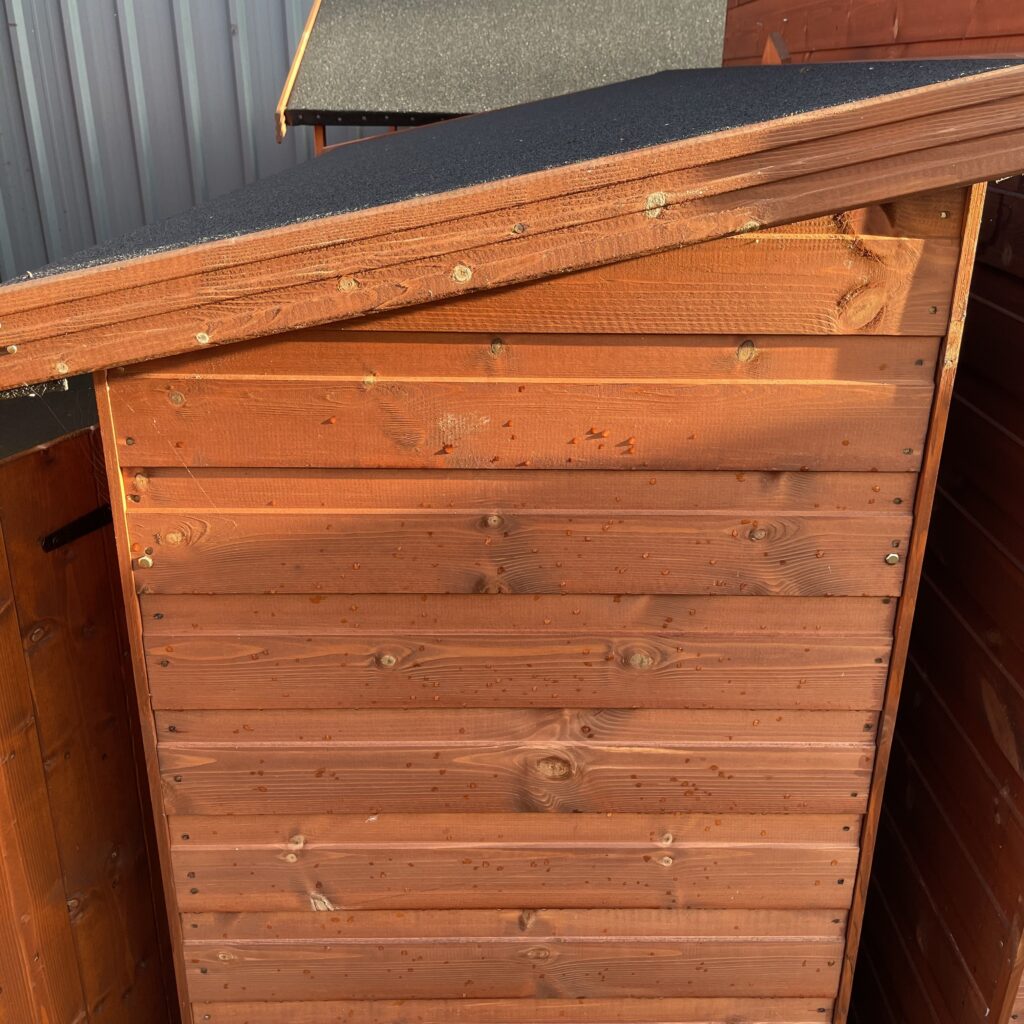
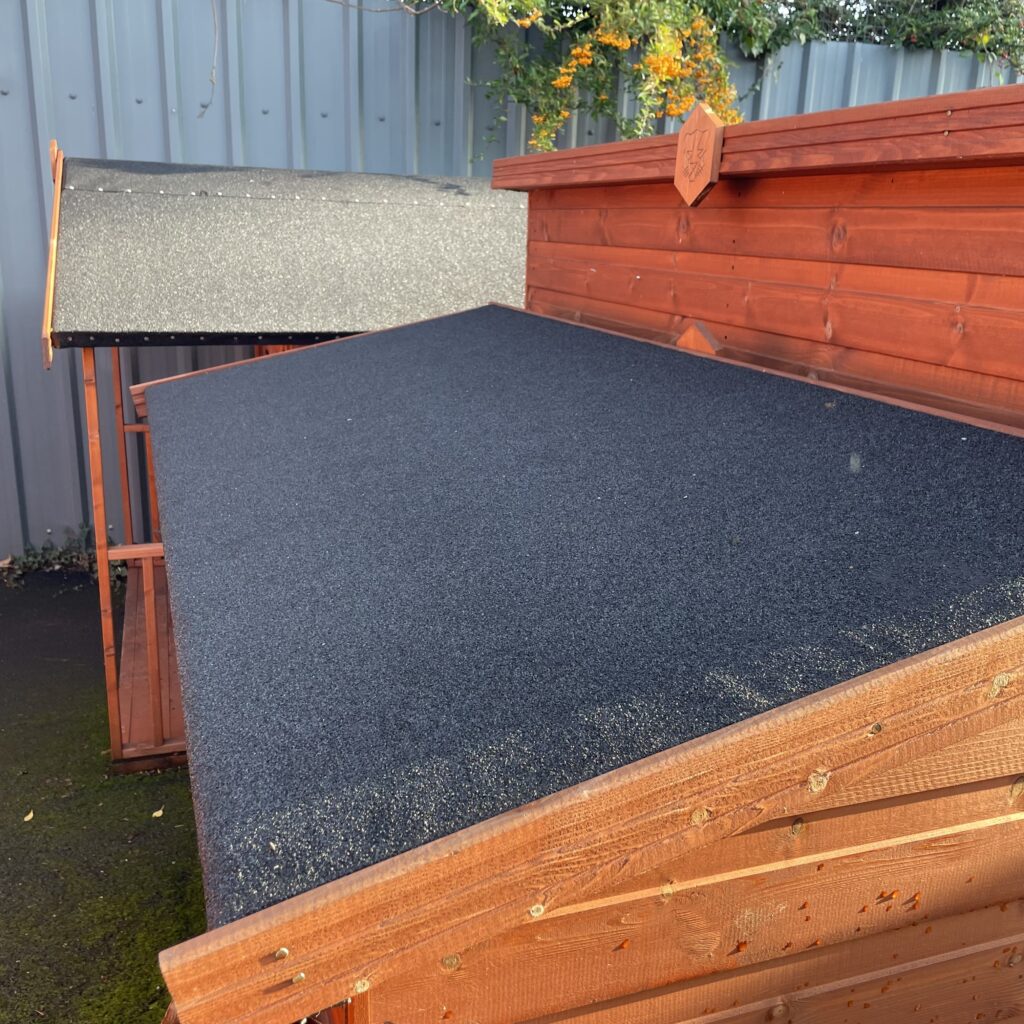
The Storebox uses 12mm tongue-and-groove roof boards, topped with heavy-duty black mineral felt . Crucially, the felt is fixed using galvanised clout nails, not staples—a detail that may sound minor, but makes a tangible difference to longevity.
Staples have a habit of working loose over time, particularly in felt exposed to temperature fluctuations. Galvanised nails, properly spaced, hold far more reliably and resist corrosion.
The lean-to roof profile encourages water runoff rather than pooling, and there is clear thought given to edge finishing. At Otley, the felt sat flat and taut, with no rippling or lifting at the corners—often an early warning sign on lower-quality buildings.
From a weatherproofing perspective, this roof is doing exactly what it should, without relying on gimmicks or unnecessary complexity.
Floor Strength: A Rare Feature in This Category
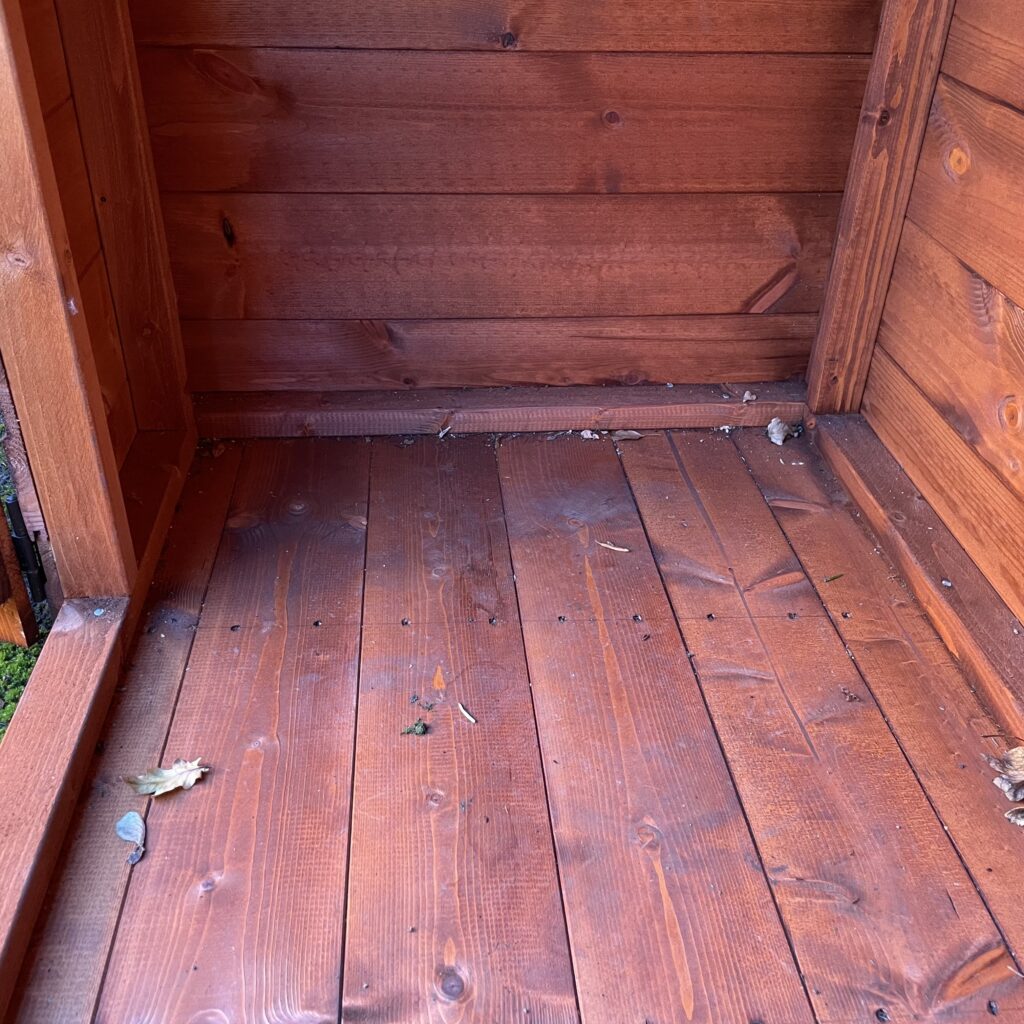
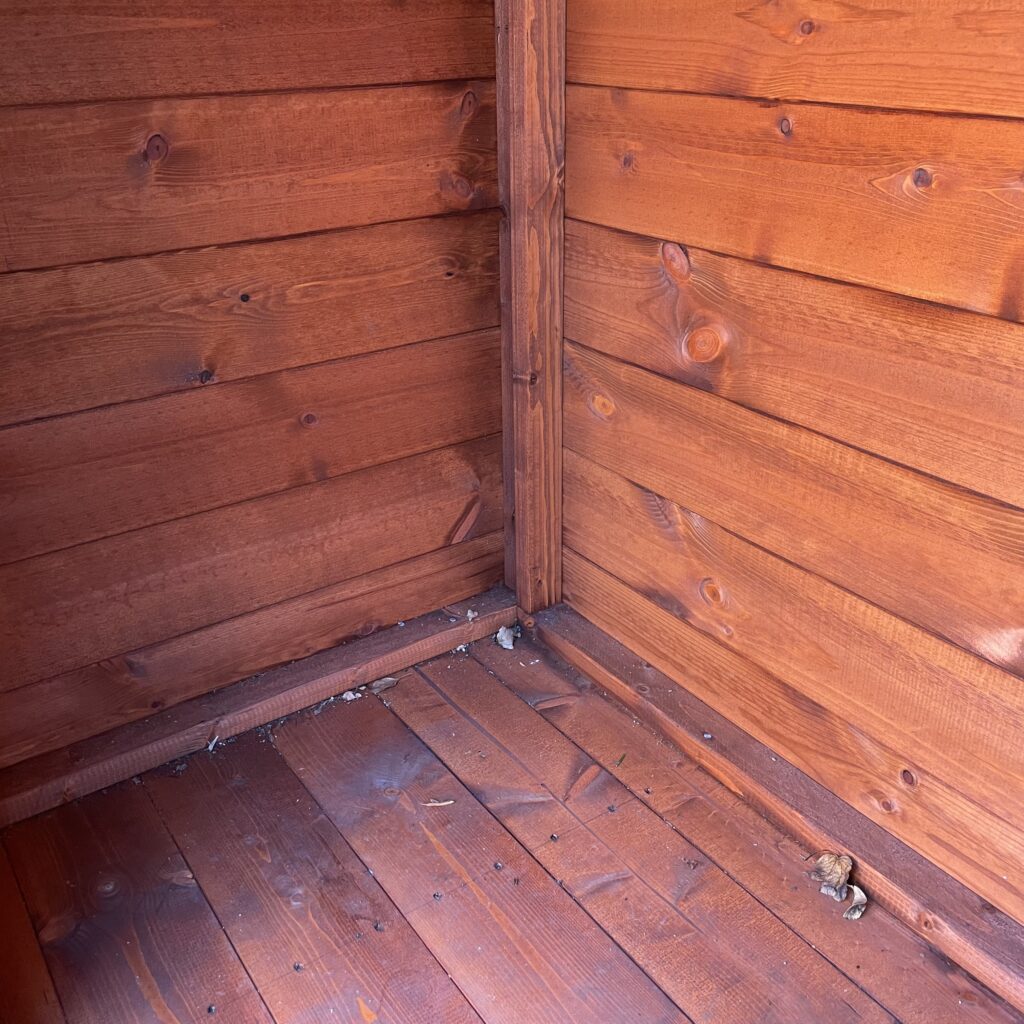
One of the most unusual—and genuinely commendable—features of the Tiger Storebox is the 12mm tongue-and-groove floor.
Many storage boxes dispense with a floor altogether, assuming they will sit directly on paving or concrete. Others use thin sheet material that offers little resistance to point loads.
Here, Tiger have provided a proper floor, designed to carry real weight.
This matters if you are storing heavier items: lawnmowers, pressure washers, bags of compost, power tools, or stacked garden furniture. The floor feels rigid underfoot, with no flex or spring. Combined with the solid framing beneath, it inspires confidence rather than caution.
The installation guidance reinforces the importance of a firm, level base, with the floor raised slightly above ground level to prevent standing water . Follow that advice, and there is no reason this floor shouldn’t last for many years.
Doors, Hinges, and Hardware
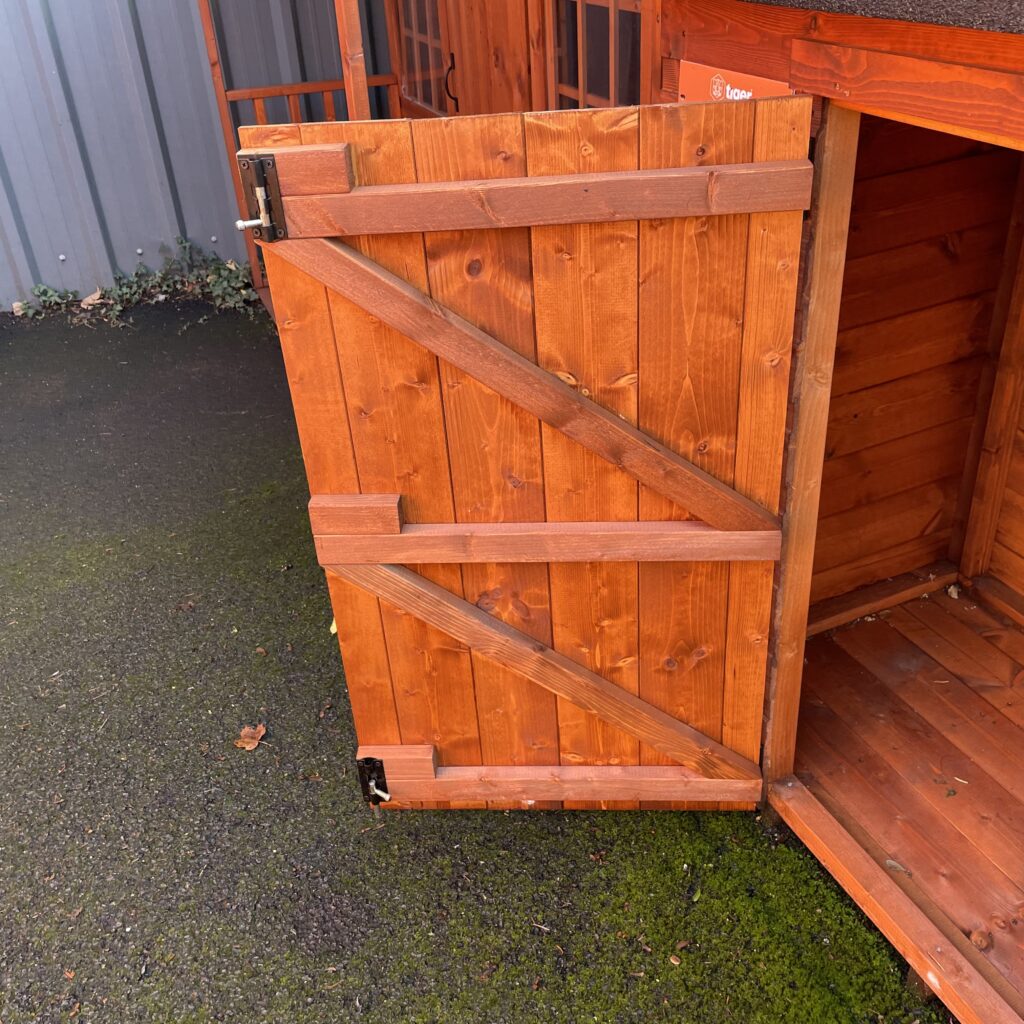
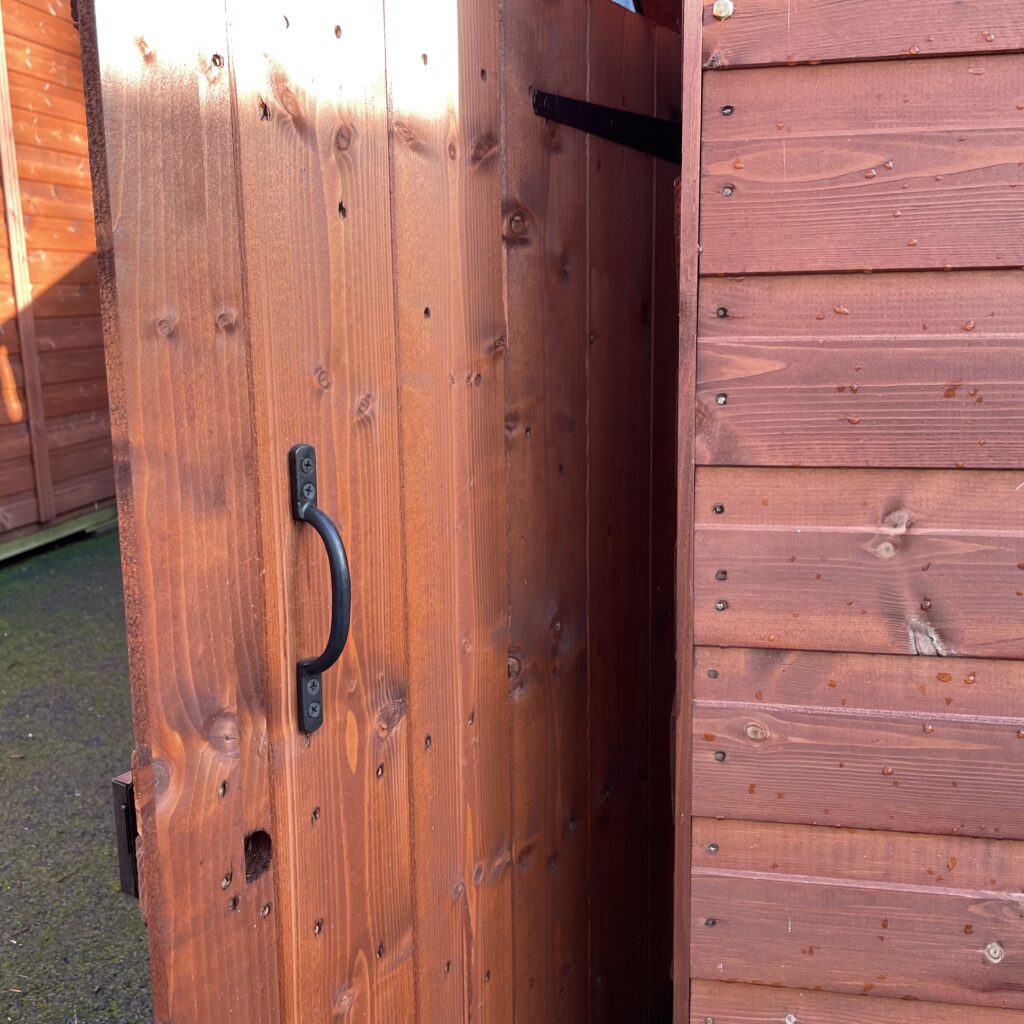
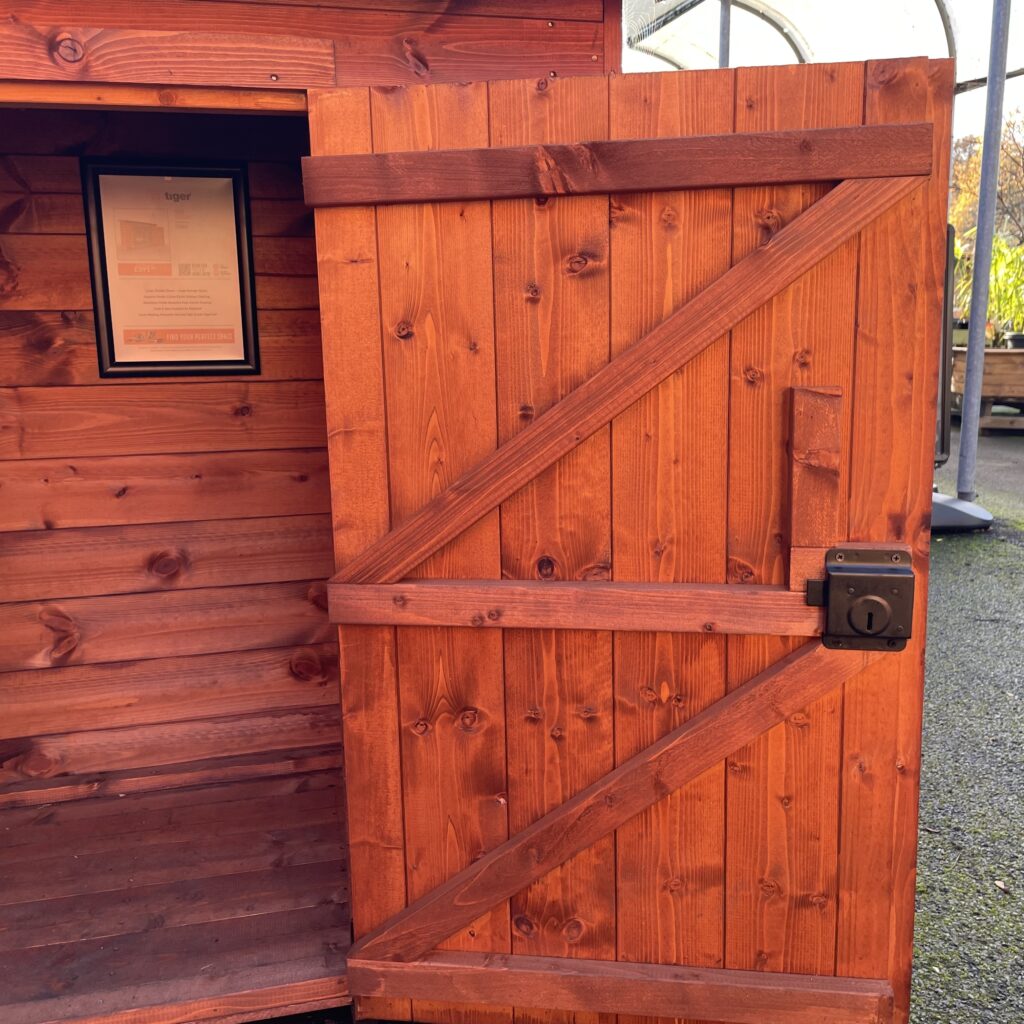
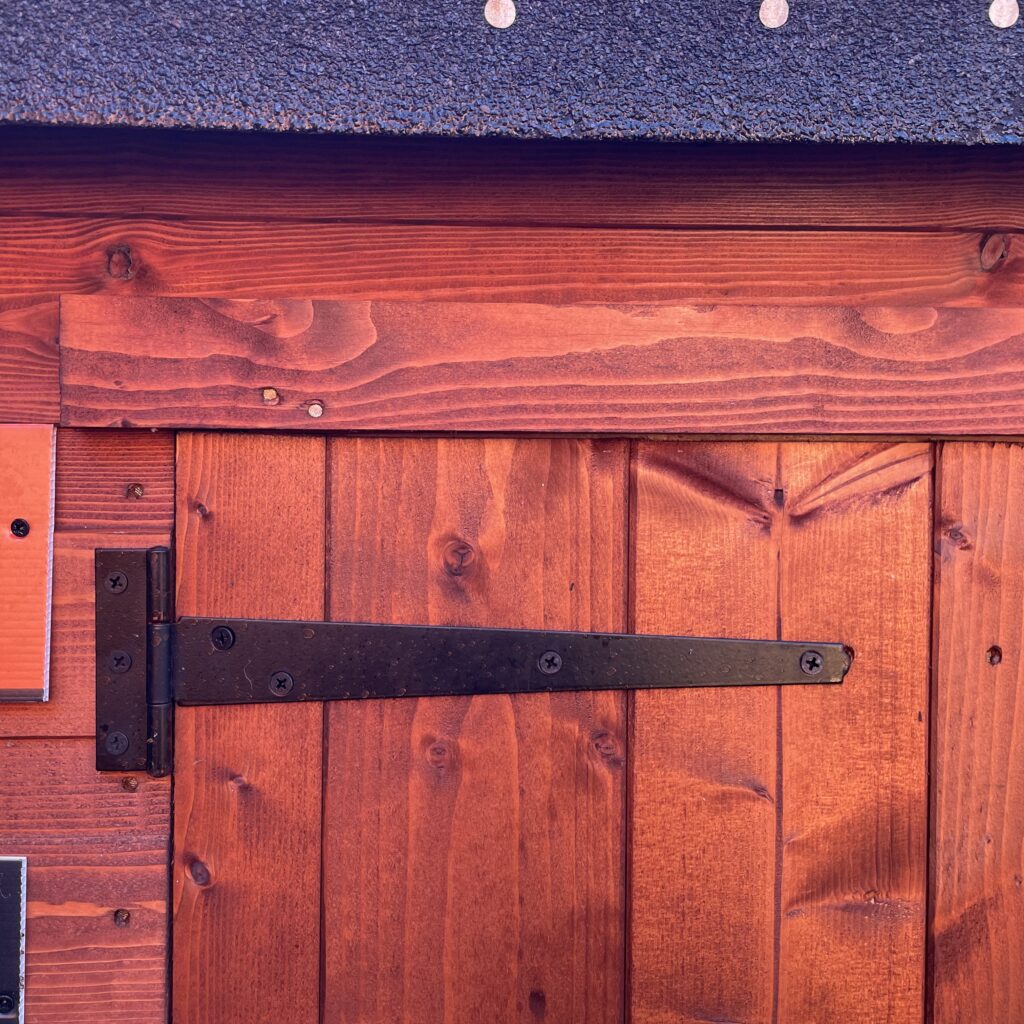
The Storebox is fitted with large double doors, fully boarded and braced, using the same hinge hardware found on Tiger’s full-size sheds .
This is not scaled-down ironmongery. The hinges feel substantial, the doors hang square, and opening and closing them is smooth and reassuringly solid. There is no rattle, no twist, and no sense that the doors are a weak point.
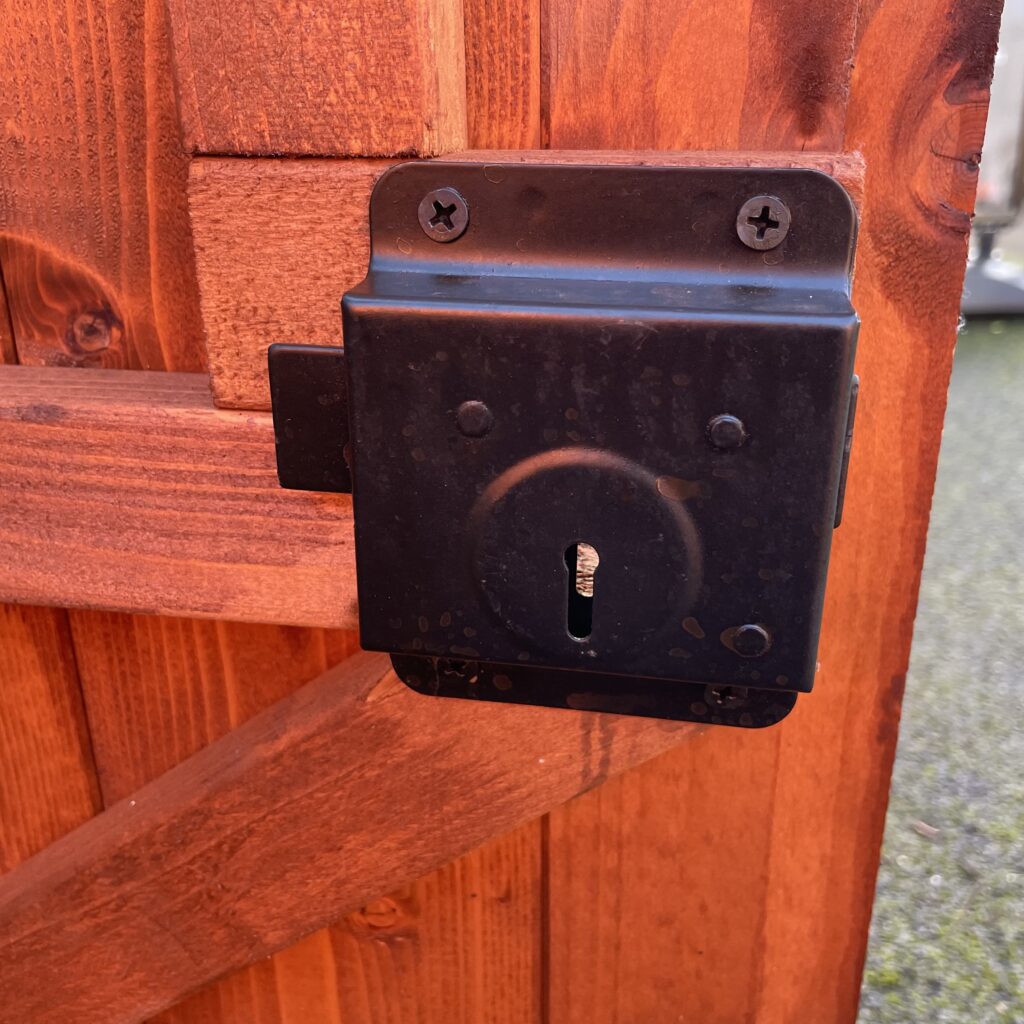
Security is handled via a lock and key system, supplemented by heavy-duty shoot bolts . While no wooden storage box is ever going to rival a steel unit for outright security, this is more than adequate for its intended purpose—and certainly stronger than most alternatives in this class.
Treatment and Longevity
The Storebox is supplied pre-treated with TigerSkin® Burnt Orange, Tiger’s water-based factory treatment .
This is a transport and handling treatment rather than a long-term preservative, and Tiger are very clear—both in their data sheet and installation instructions—that additional treatment is essential after assembly, and annually thereafter, to validate the guarantee .
That guarantee is a market-leading 20 years, which is unusually generous for a product of this size. Guarantees are only meaningful if the construction supports them, and based on what I saw at Otley, this one does not feel optimistic.
Maintain it properly, site it sensibly, and keep it off saturated ground, and this Storebox should comfortably outlast most plastic or metal alternatives.
Assembly: Straightforward, But Not Casual
Assembly follows Tiger’s standard panel-based approach, with clear step-by-step guidance provided .
This is not a throw-together job. It requires care, alignment, and at least two competent adults. Panels must be squared properly, fixings driven cleanly, and the base prepared correctly.
The instructions are comprehensive and well-illustrated, covering everything from base preparation to felt installation. For those who prefer not to assemble it themselves, Tiger’s professional installation service is available, though many confident DIYers will have no trouble following the guide.
Use Cases: Who Is This Actually For?
The Tiger Storebox makes the most sense for:
- Gardeners needing secure, dry storage for tools and equipment
- Homeowners short on space who want a low-profile solution
- Households storing children’s outdoor toys
- Anyone wanting timber storage without committing to a full shed
It is not intended as a workshop. It is not tall enough for racking systems. And it is not designed to be accessed daily by someone standing inside it.
What it does exceptionally well is provide reliable, weather-resistant storage in a compact footprint—without feeling disposable.
Final Verdict: A Small Product That Speaks Volumes
The Tiger Storebox is quietly impressive.
It does not shout for attention, and it does not rely on marketing tricks. Instead, it demonstrates a level of build quality and material choice that is rare in this category.
By using 12mm tongue-and-groove construction throughout, solid framing, proper roofing felt, and full-size hardware, Tiger have built a storage box that feels engineered rather than assembled.
For me, this is exactly the kind of product that justifies Tiger’s reputation. If a manufacturer is willing to build something this small to this standard, it tells you a great deal about how seriously they take everything else they make.
In a market full of compromises, the Tiger Storebox is refreshingly uncompromising.