EXPERT REVIEWED
  FREE DELIVERY
  INSTALATION AVAILABLE
 Tiger Vista Corner Summerhouse – Show Site Review
First Added - November 28 2025
Last Updated - November 28 2025 - 0 Data Points Updated - 0 Data Points Added
Reviewed & curated by a panel of garden building experts. Using methodology 1.1
Product ID: tiger-sheds-tiger-vista-corner-summerhouse
Size: Multiple sizes available
Merchants Checked: 10
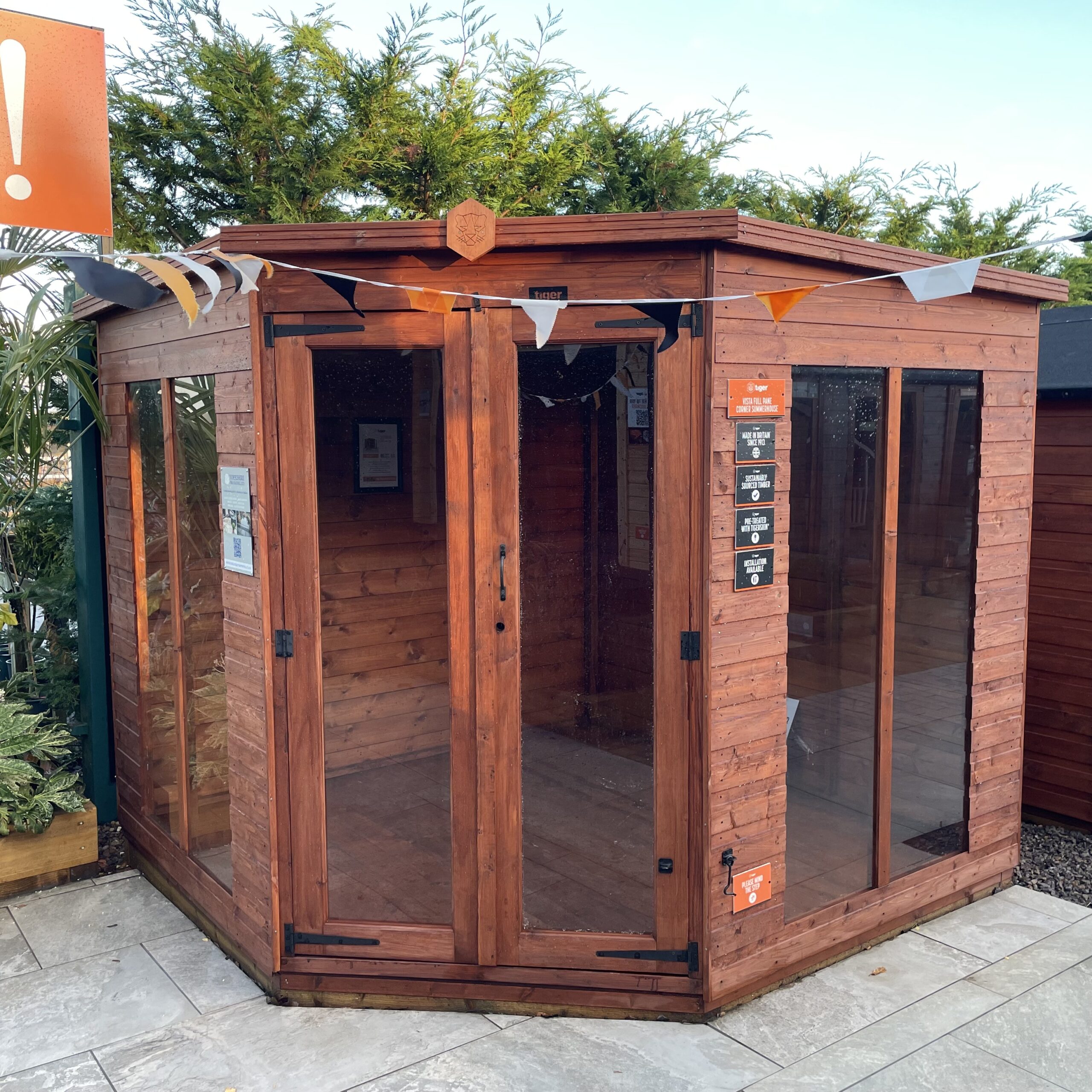
This is one of the Tiger summerhouses we’ve been able to inspect particularly thoroughly, because it’s been on display at both the Tong and Otley show sites. When we inspected it at Otley in particular, the timing couldn’t really have been better — it was December, and it was immediately after a heavy storm.
From our point of view, those are the conditions that actually matter. If you’re spending this sort of money, the building isn’t just for warm summer afternoons. It’s going to sit outside all year, exposed to wind, rain, and cold. And if you’re storing anything inside — or planning to spend time there yourself — you want to know it’s going to stay dry, stable, and usable when the weather isn’t kind.
Seeing how the Vista Corner behaved after heavy weather told us far more than seeing it on a perfect day ever could.
First Impressions — Visual Solidity That Matches the Specification
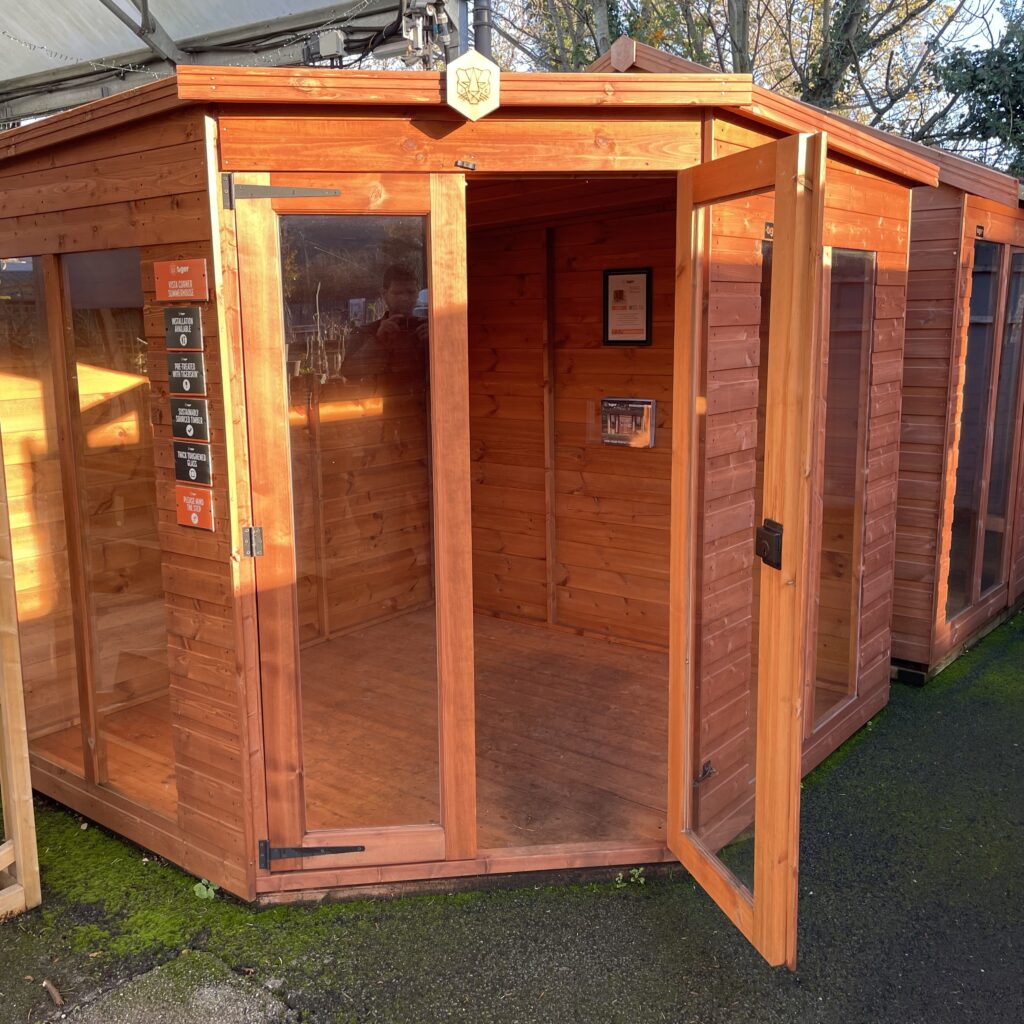
Our first impression, at both show sites, was very simple: this looks solid.
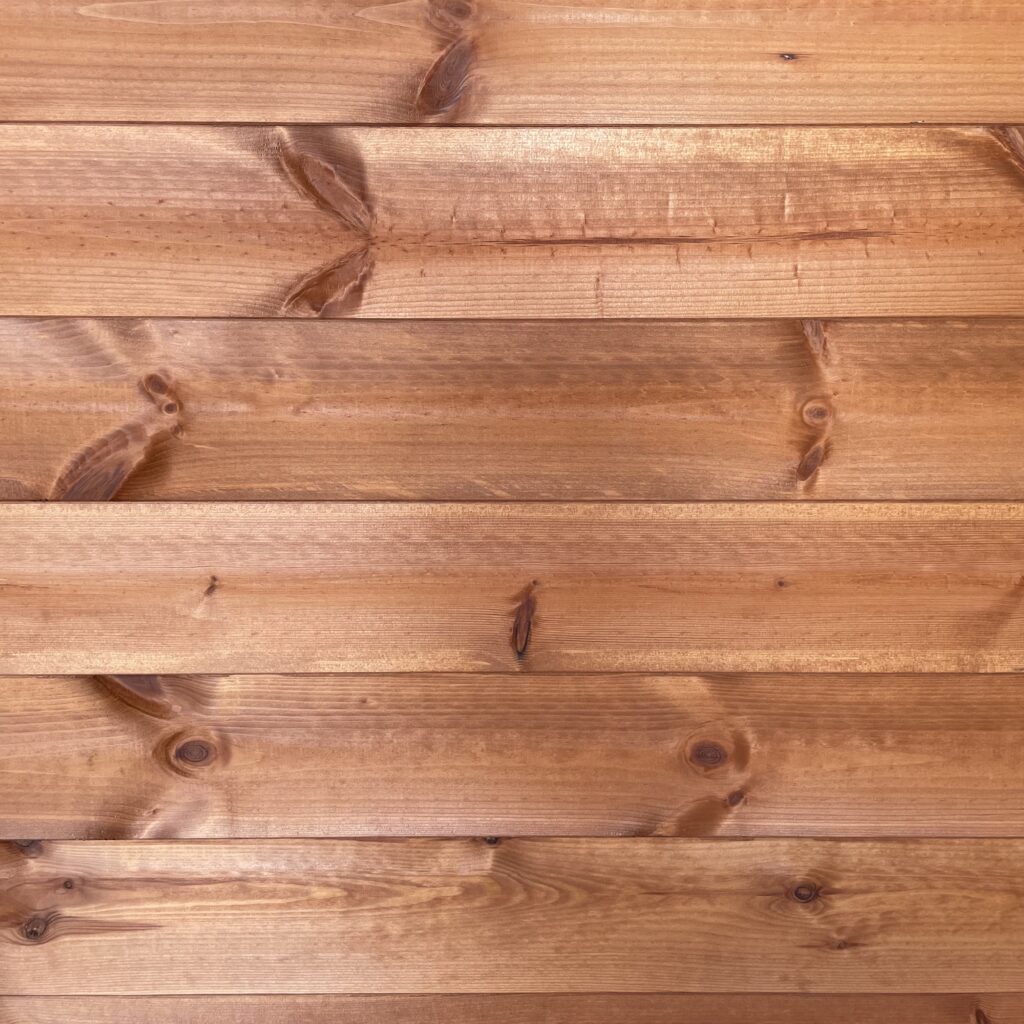
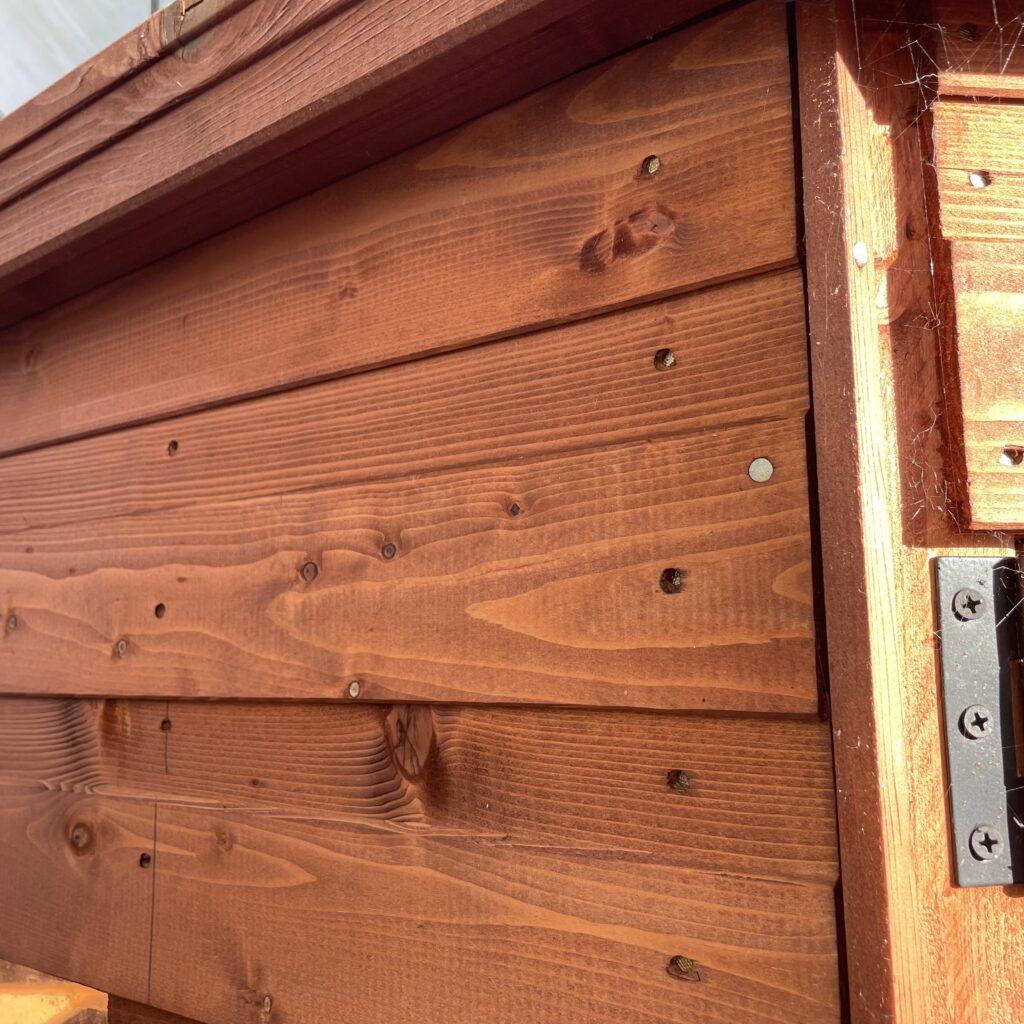
That instinct wasn’t accidental. The Vista Corner uses 12mm shiplap tongue-and-groove cladding, supported by 28 × 44mm framing throughout, which is a noticeably more substantial structure than the thin overlap cladding and lightweight frames used on cheaper corner summerhouses .
On our regular commute we pass a corner summerhouse of a very similar design — full-pane glazing, similar footprint — and even from the road you can tell it’s cheaper. The windows are styrene and already yellowing. The timber looks pale and underweight. The panels feel thin. The framing is minimal.
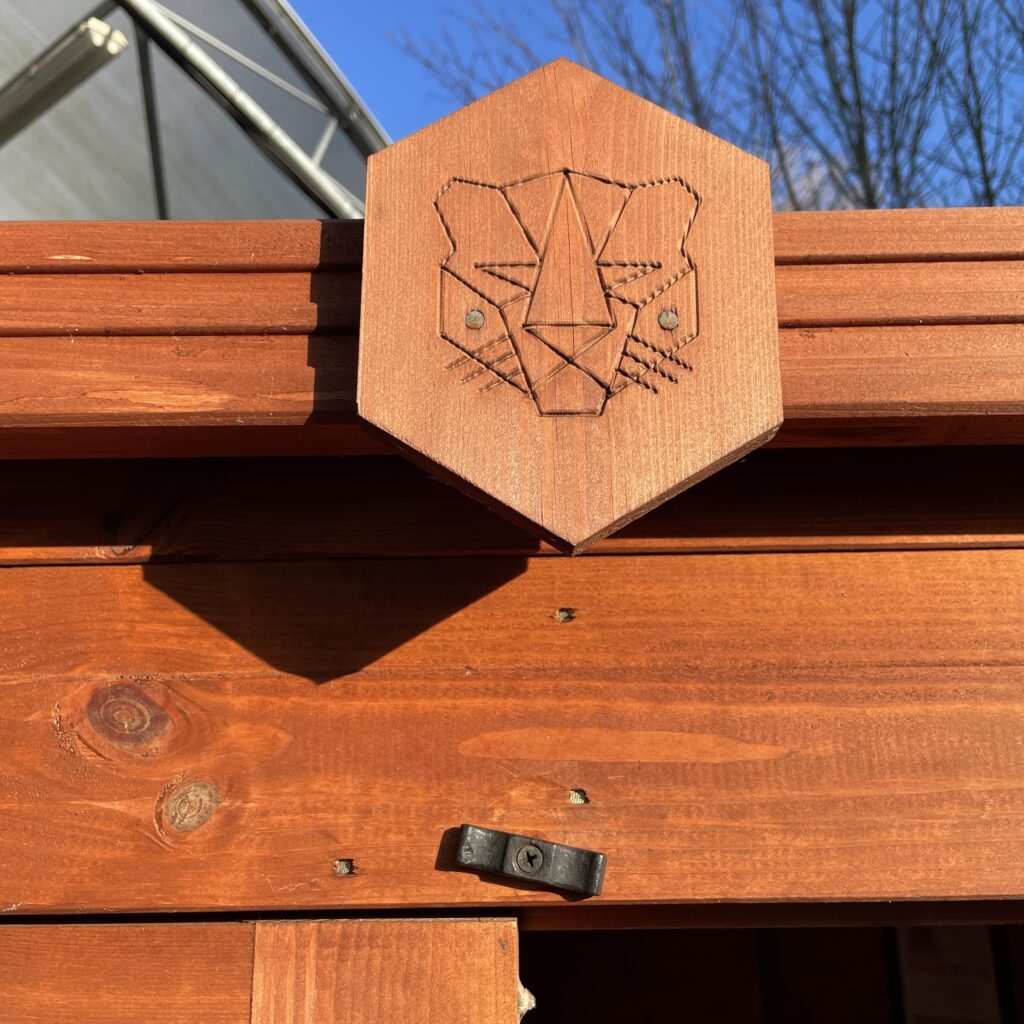
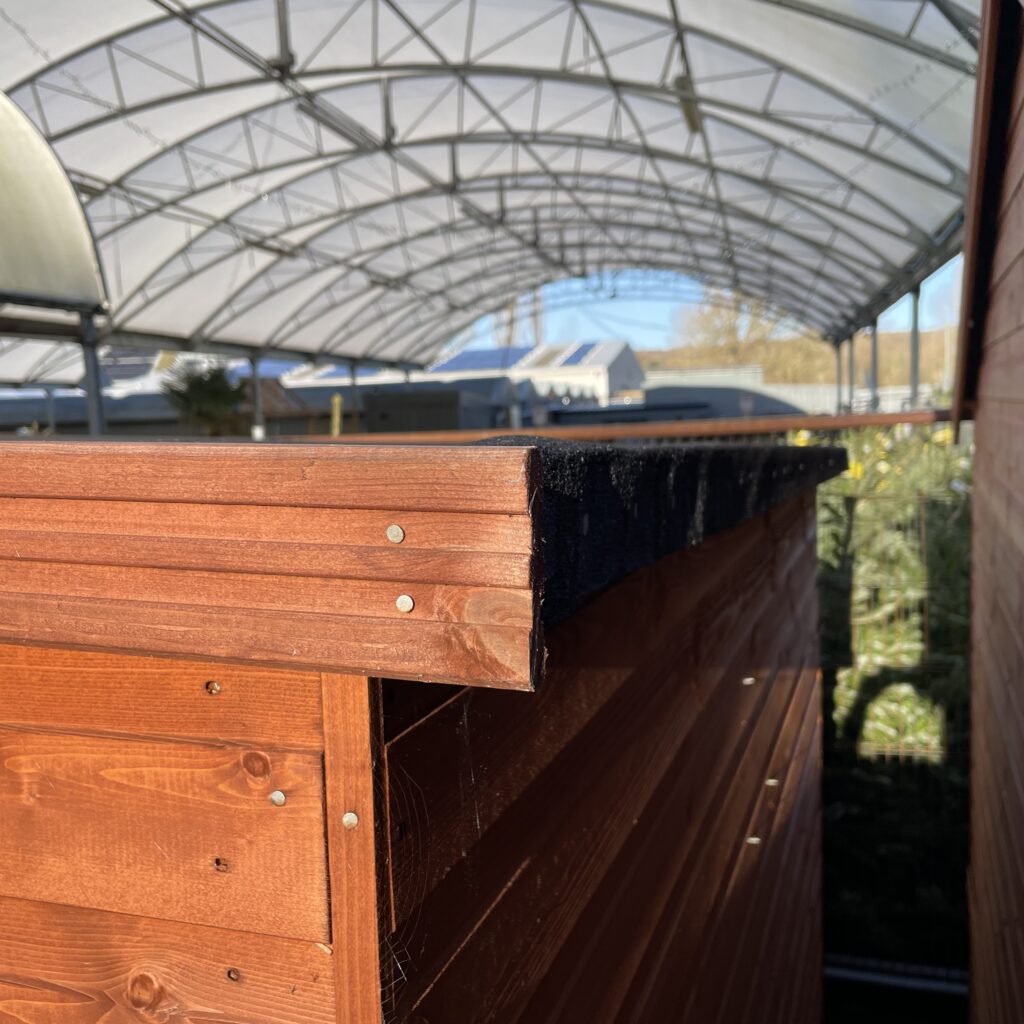
By contrast, the Vista Corner has visual mass. The thickness of the cladding near the roofline is immediately apparent, as is the more substantial timber between the door and the side panels. It doesn’t look like a building that’s been shaved down to meet a minimum price point.
That visual confidence matches what the data tells us: depending on size, the Vista Corner weighs between 181kg and 255kg, which is heavy for a corner summerhouse and strongly indicative of material volume rather than cosmetic bulk .
Doors, Hardware, and the First Practical Test
The building is fully glazed, so light is always going to be a major feature. But before that, the doors tell you a lot.
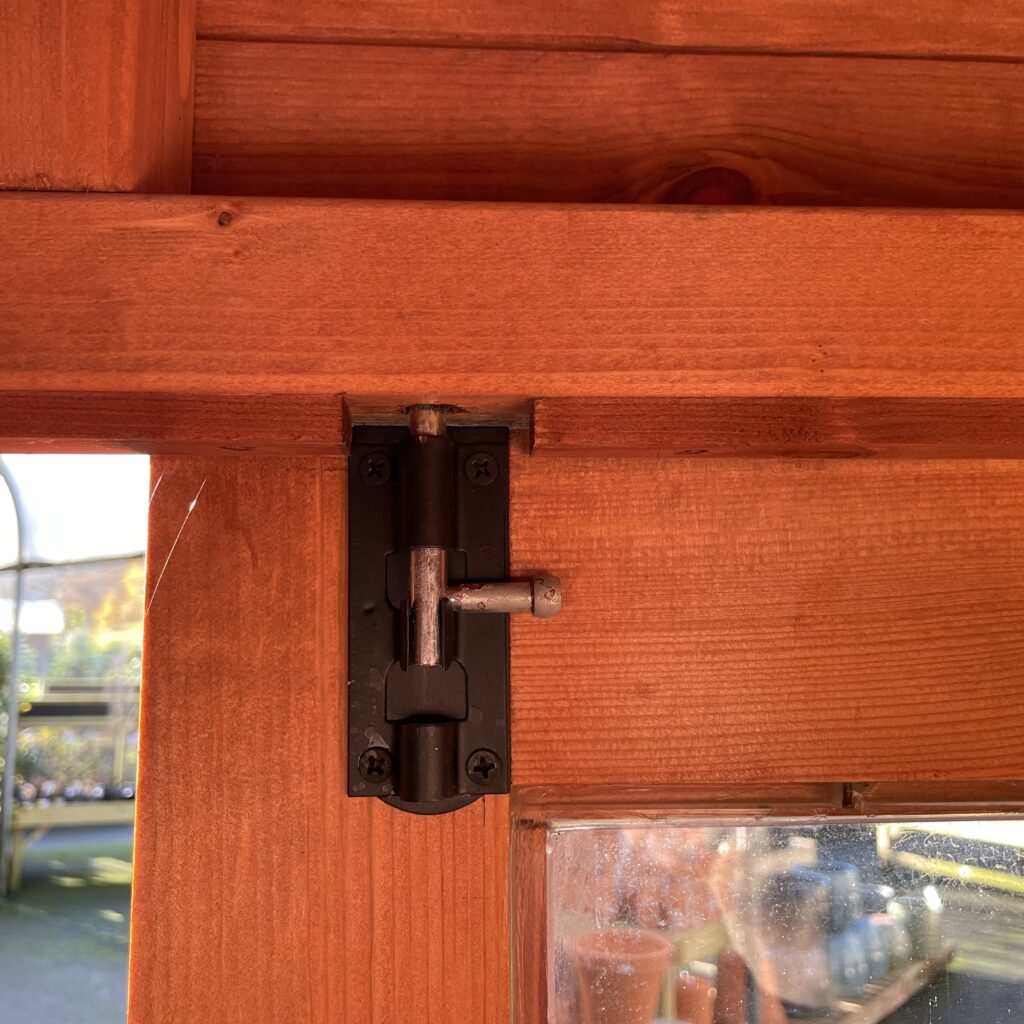
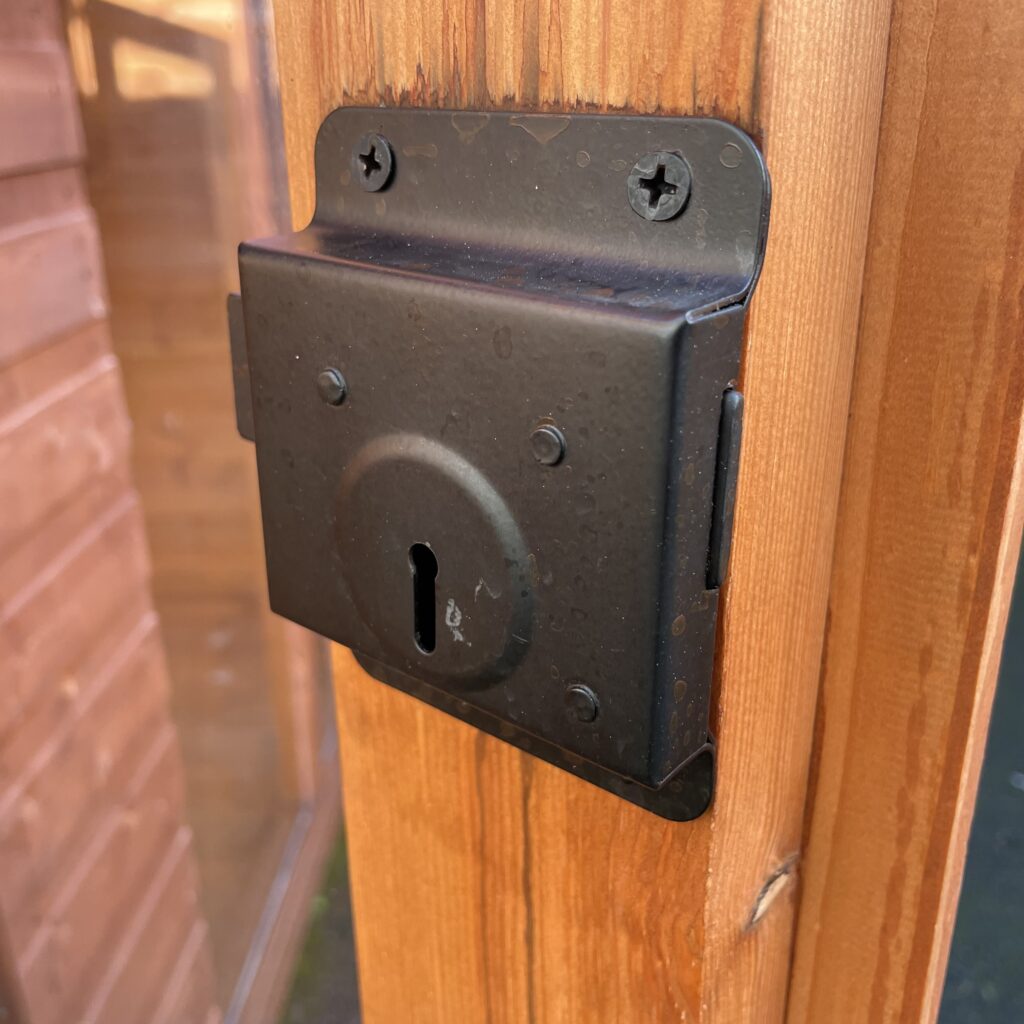
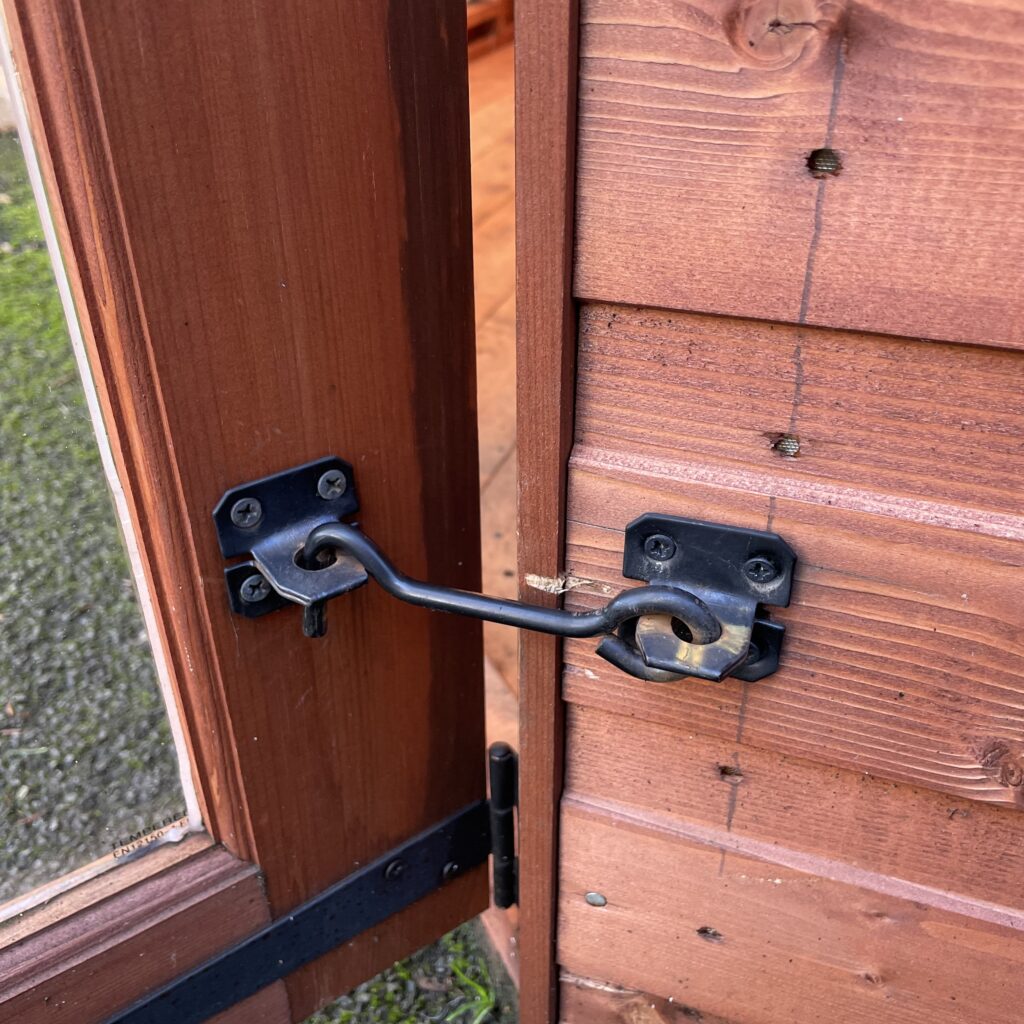
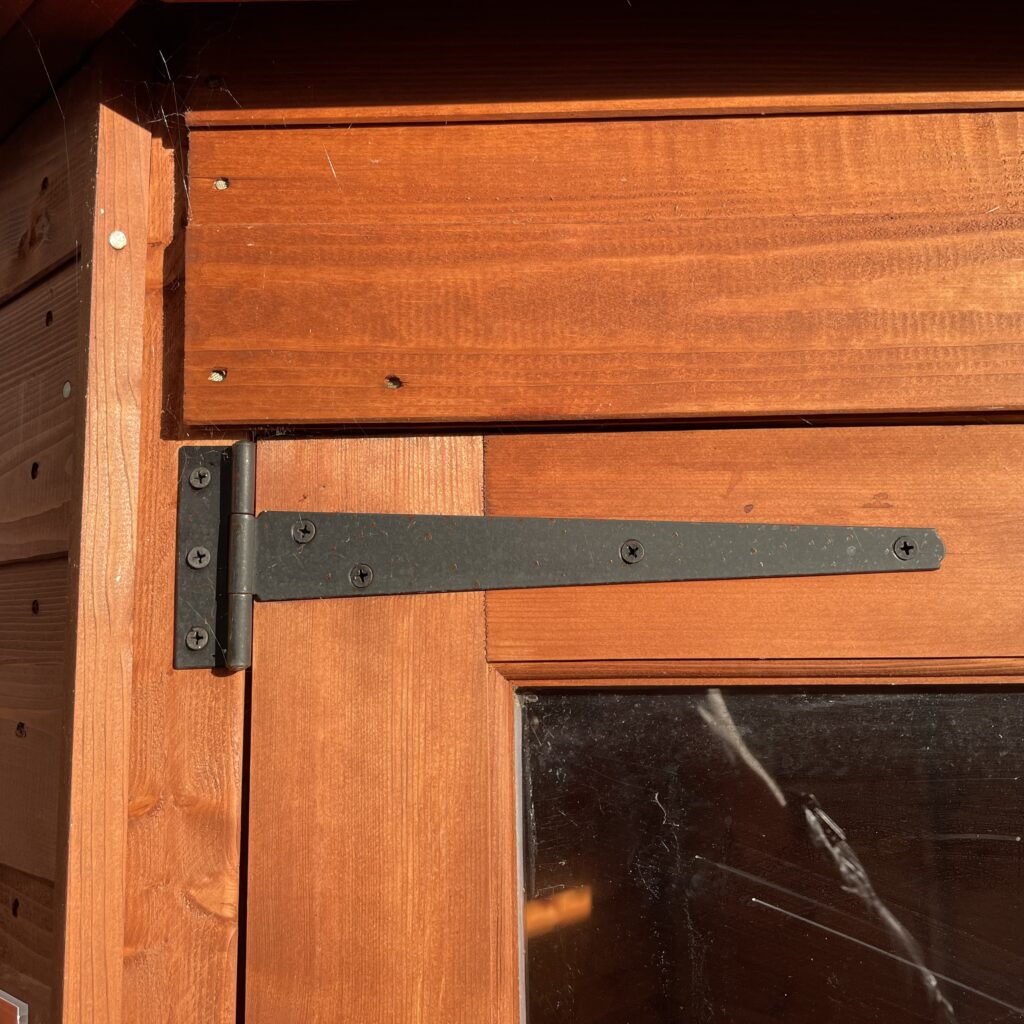
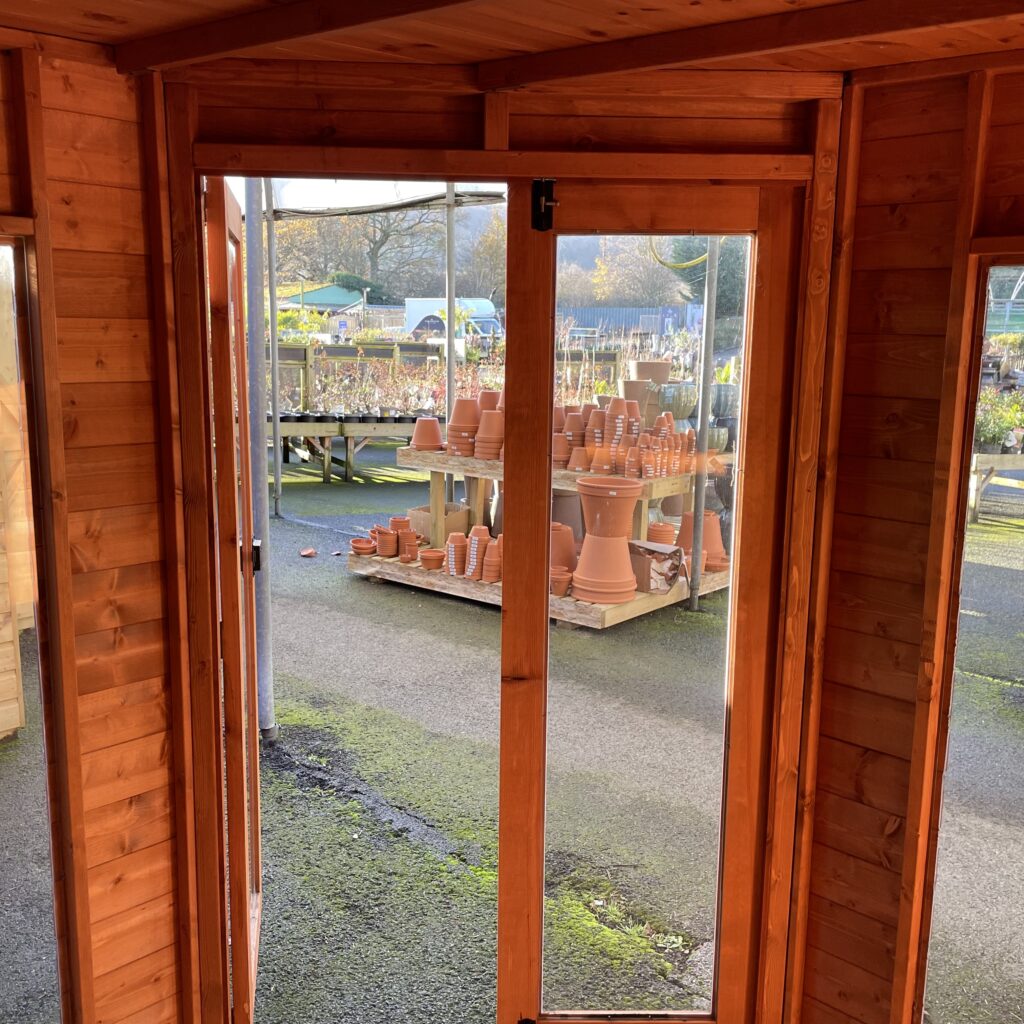
The full-pane double doors measure 1092mm × 1792mm, which gives a wide, usable opening and immediately makes the building feel like a room rather than a shed . The doors are fitted with galvanised hinges and a proper lock-and-key system, not lightweight latches.
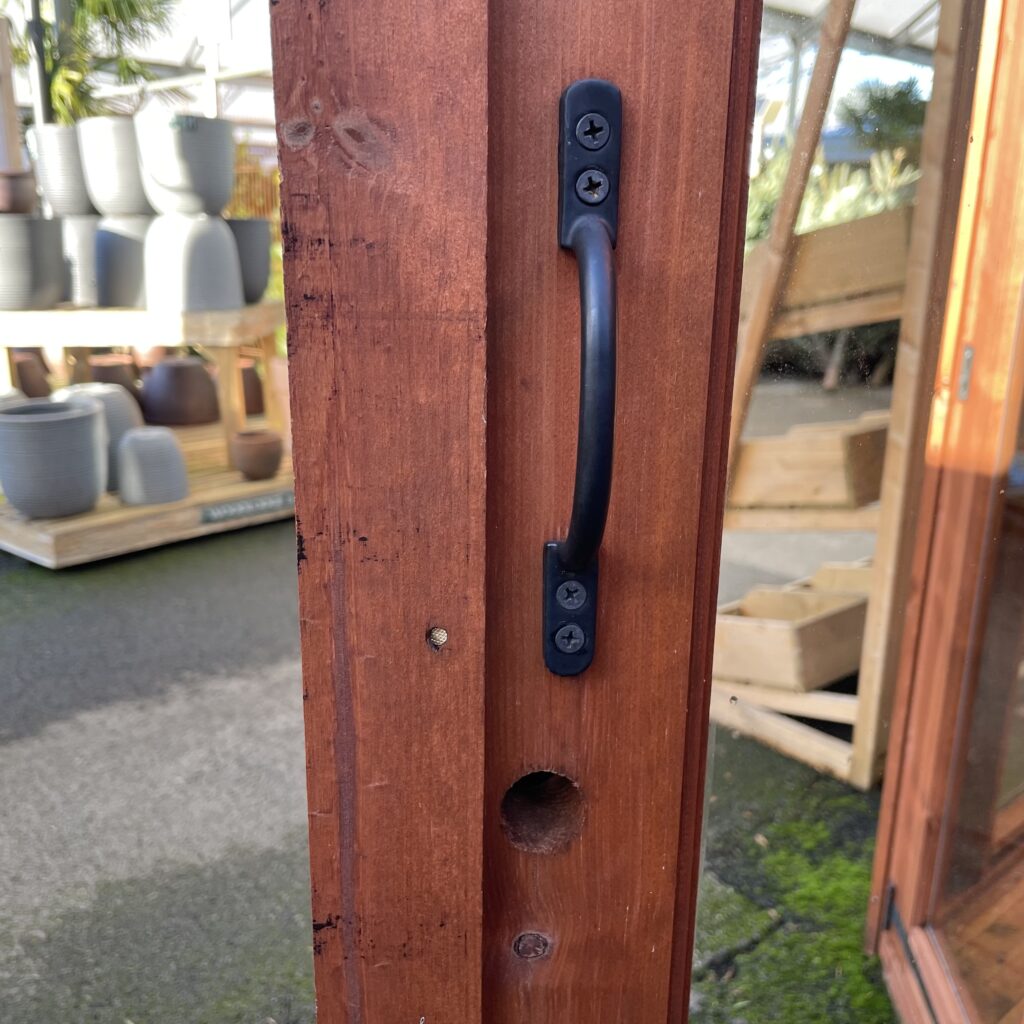
Grabbing the handle, the ironwork feels solid. The doors open smoothly, with no creaking or sticking. They’re hung on three hinges, which helps maintain alignment over time — particularly important on glazed doors that carry more weight.
Stepping inside, the contrast with the outside conditions was immediate.
Outside, the air was cold and damp. Inside, it felt noticeably drier. We shut the doors and measured sound levels inside and out — it was clearly quieter inside. It also felt warmer, even though it wasn’t a particularly sunny day.
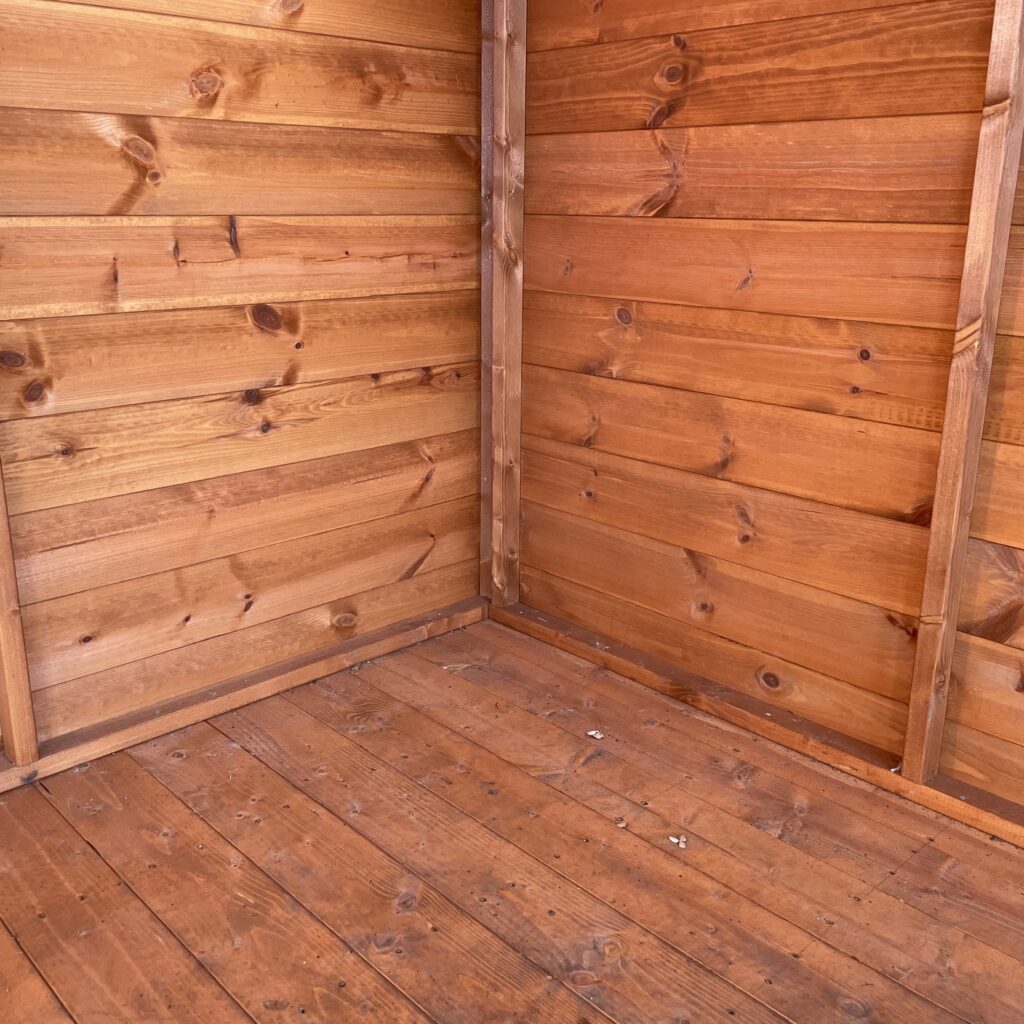
That aligns with the construction: 12mm tongue-and-groove boards are used consistently across walls, roof, and floor, rather than mixing in sheet materials that allow more air movement and temperature fluctuation .
The light itself was strong enough that photography became awkward because of glare. That’s bad for documentation, but excellent from a real-world point of view. On a cold but bright day, this building is going to trap warmth effectively.
The Floor — Why It Feels So Solid
One of the last things you want in a summerhouse is a weak floor.
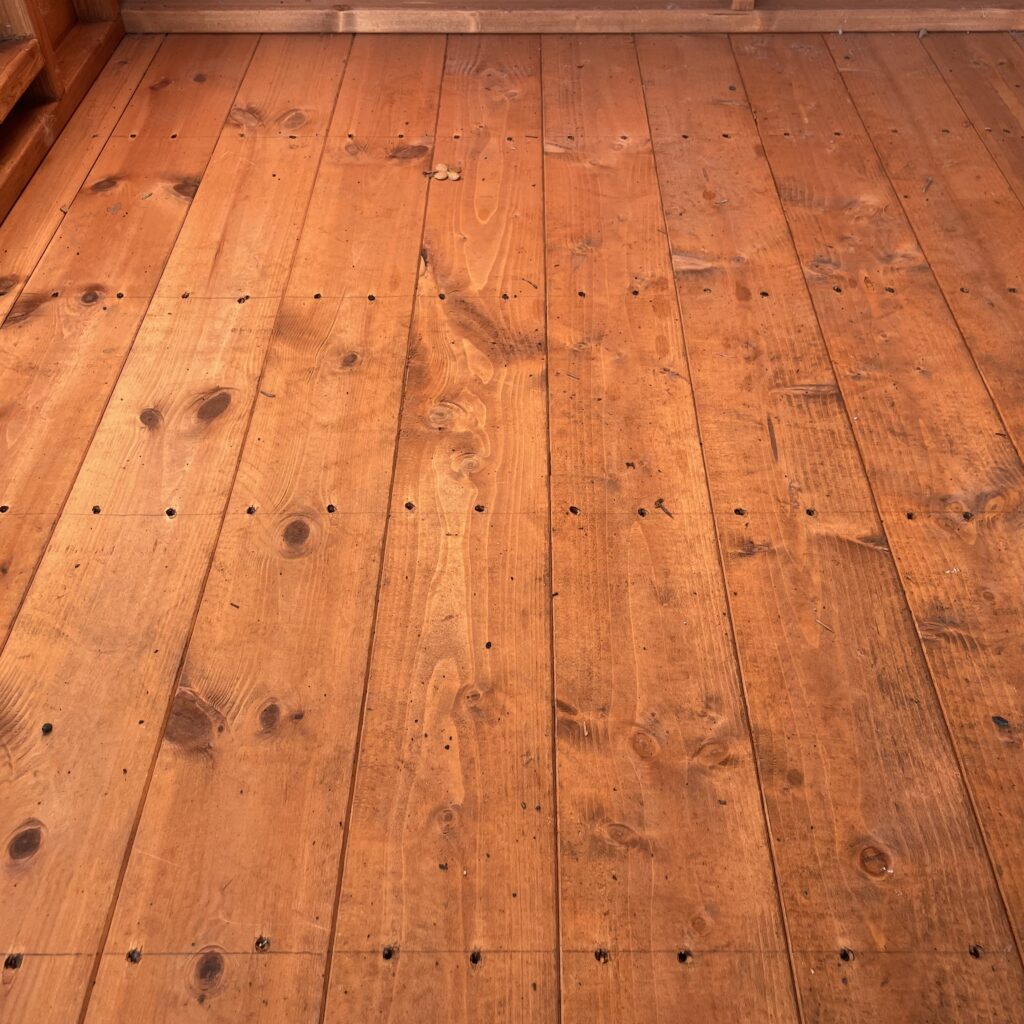
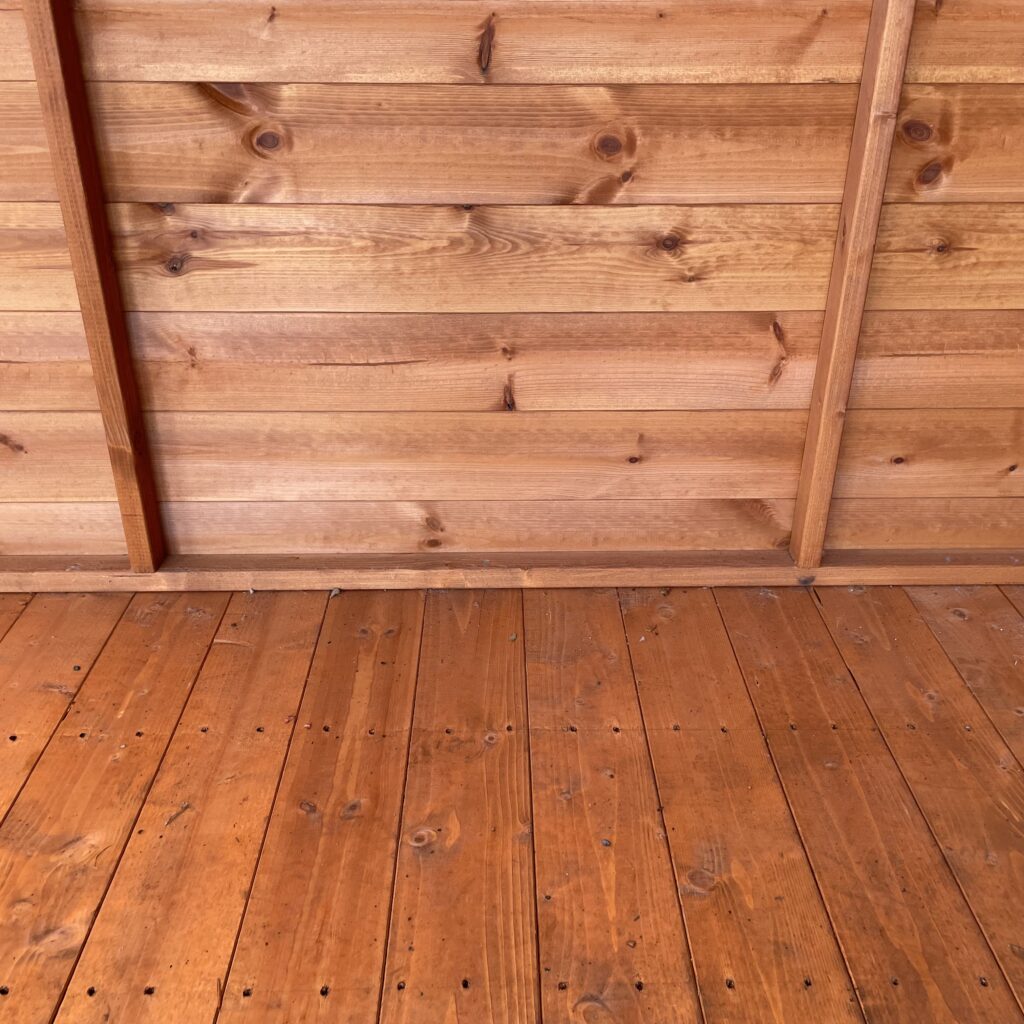
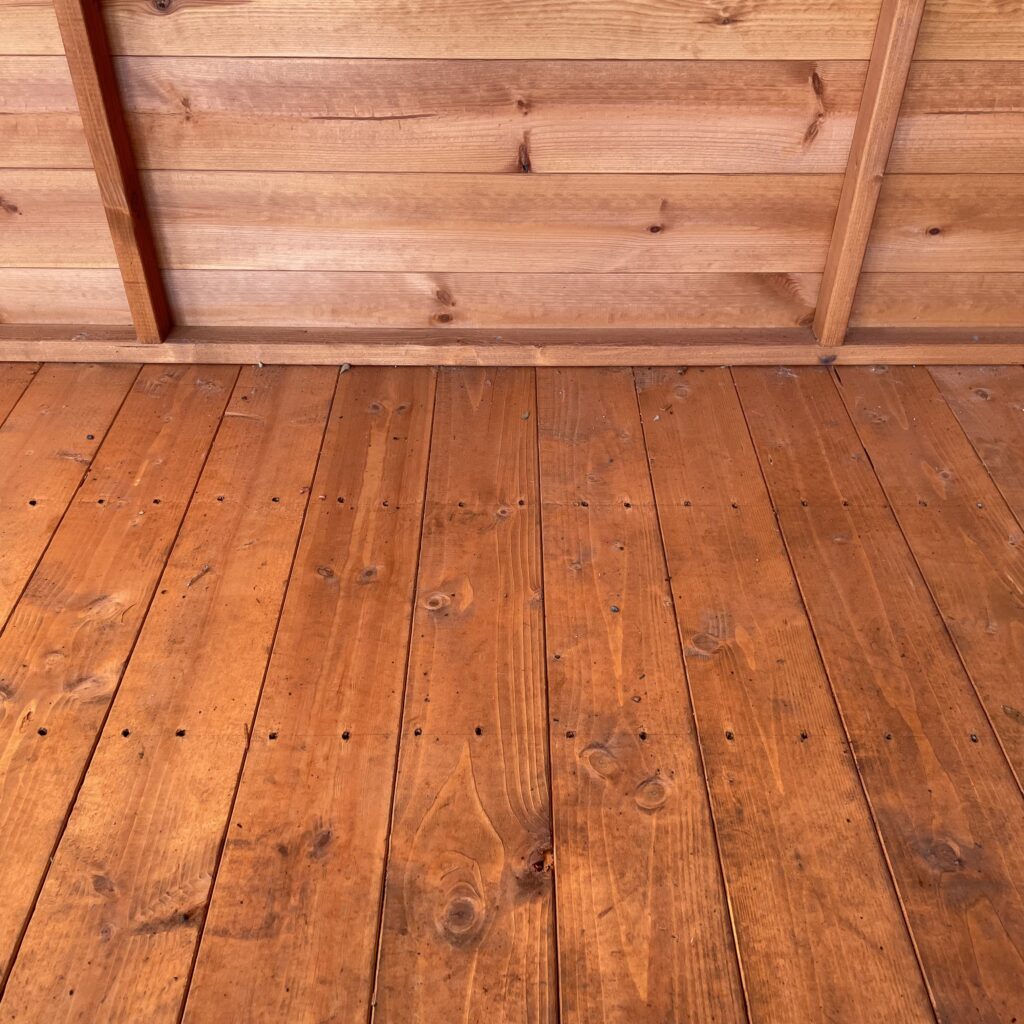
The Vista Corner uses a 12mm tongue-and-groove floor, supported by floor bearers and fixed with proper nail spacing rather than minimal fixings . Underfoot, there was no sponginess, no flex, and no sense of movement.
That matches what we see consistently on Tiger’s 12mm floors. When we perform basic load tests — placing a 75kg weight centrally and measuring deflection with a laser — movement is typically only a couple of millimetres. Walking the footprint, there’s no creaking or springiness.
This is exactly what you want if you plan to furnish the space or spend longer periods inside it.
Walls, Bracing, and Corner Rigidity
Corner buildings are structurally demanding. The geometry makes them more prone to twisting if corners aren’t properly tied together.
Here, the Vista Corner feels confident.
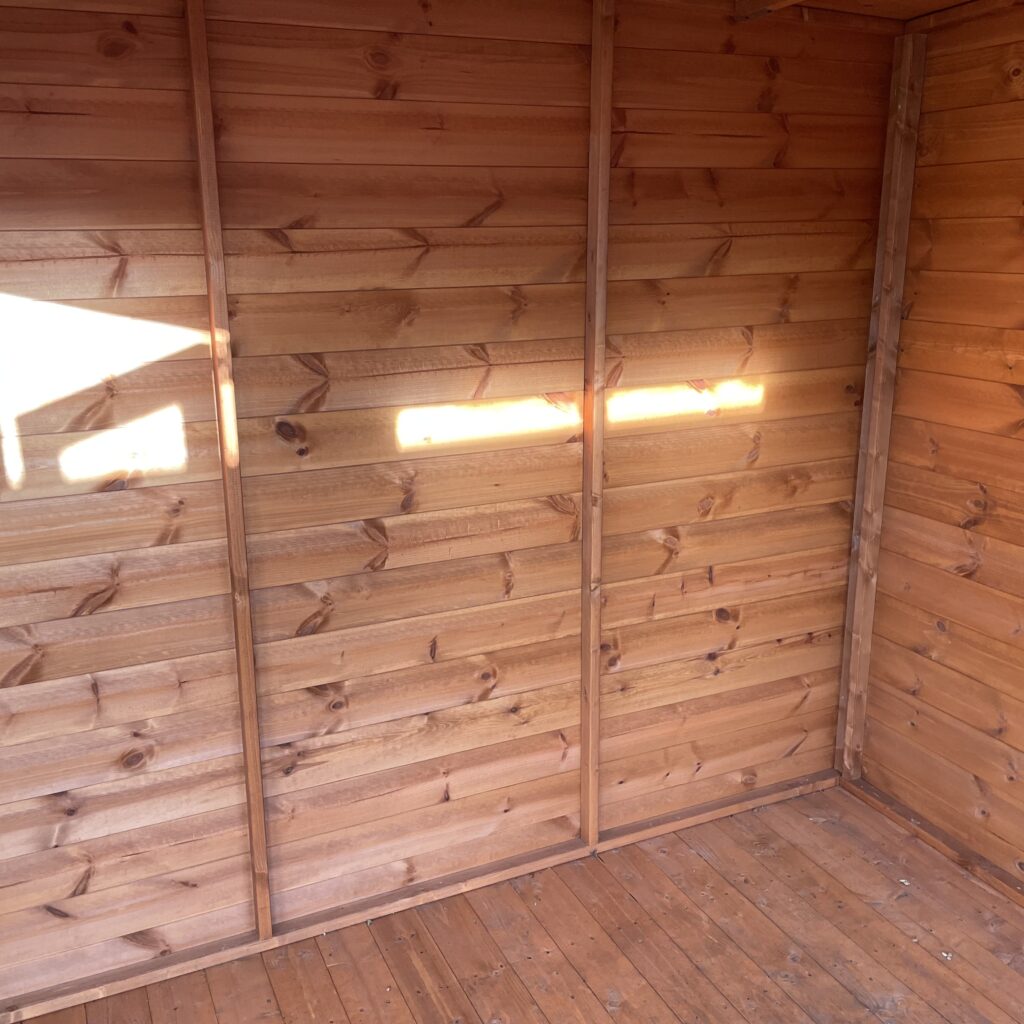
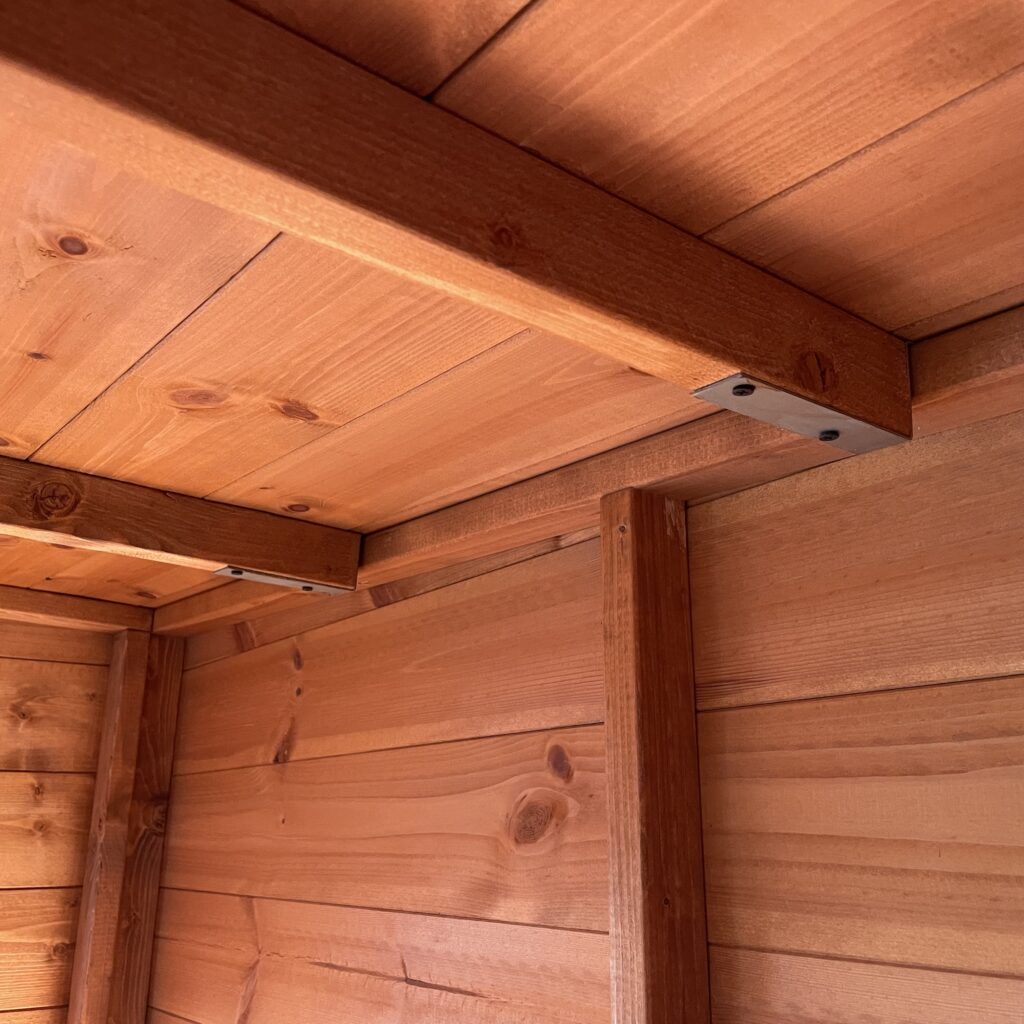
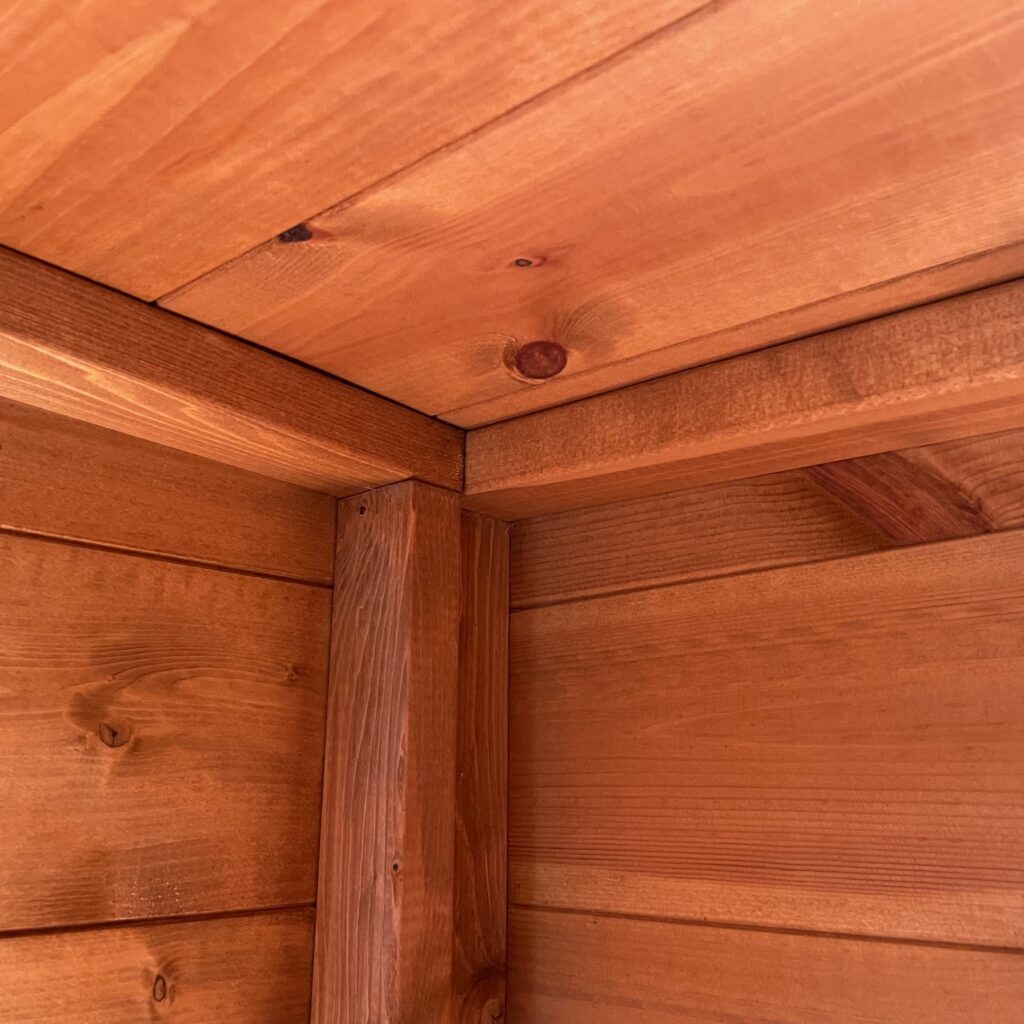
Internally, the 28 × 44mm framing is exactly what you want to see on a building of this type . The corner joints are tight, and the bracing is present where it needs to be without being excessive.
The installation guide shows that the corner panels are tied together using coach bolts (CB80) through the gables, not just nailed together, which explains why the structure feels locked together rather than loosely assembled .
You can lean against the back walls without any sense of movement. It doesn’t feel like something that’s going to loosen over time from everyday use.
Roof Construction — A Key Long-Term Decision
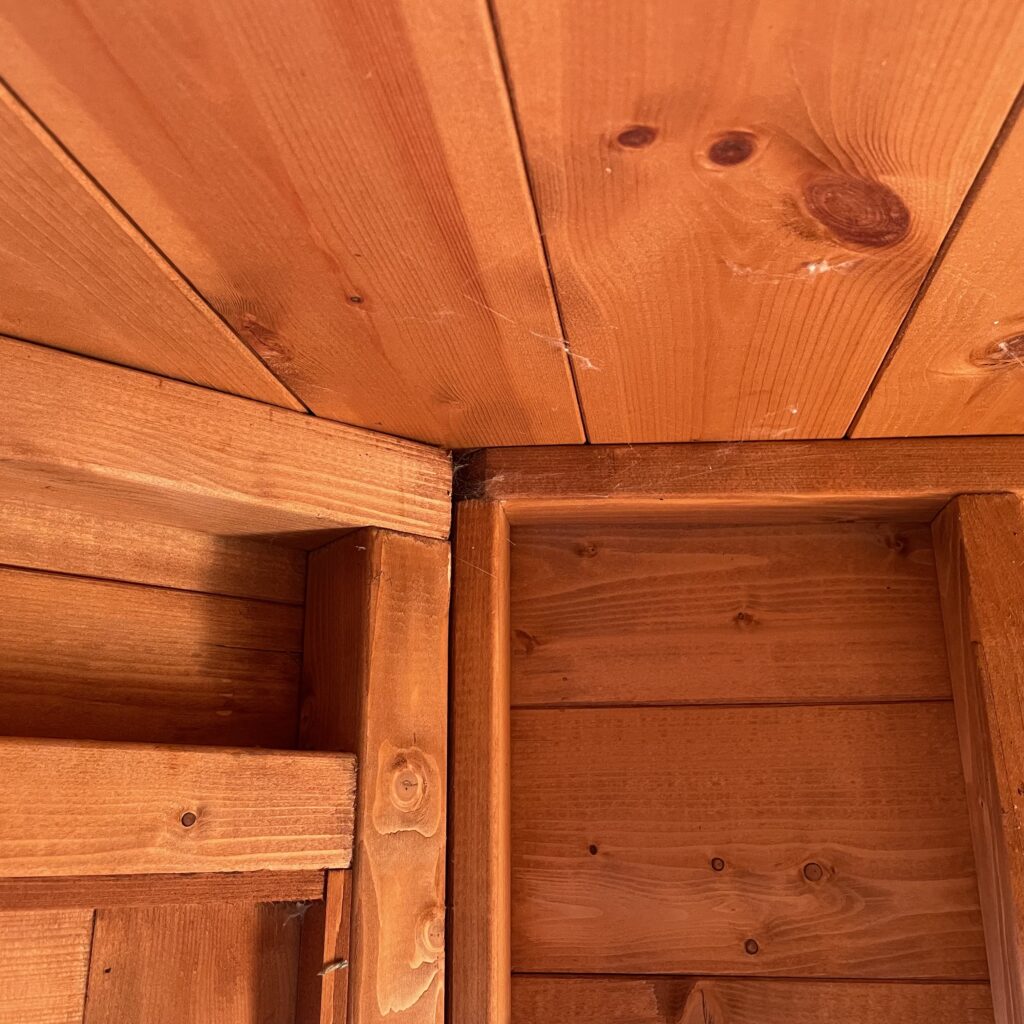
The roof is 12mm tongue-and-groove, covered with black mineral felt as standard .
This matters. Cheaper buildings often use OSB for the roof, which can swell and degrade once it gets wet. Tongue-and-groove boards behave far more predictably over time, especially when paired with proper felting and annual maintenance.
The installation guide shows the roof panels are fixed into the framing and supported by internal purlins with pre-fitted clips, helping maintain alignment and load distribution — another reason the roof feels solid rather than flimsy .
It’s one of the reasons Tiger are confident offering a 20-year guarantee, provided the building is treated annually as specified .
Interior Finish and Timber Quality
Inside, the finish is excellent.
The timber is selected European softwood, slow-grown, with tight grain and very few knots . Running a hand across the walls, there’s no fear of splinters. The milling quality is high, and we didn’t see any gaps between boards.
The tolerances are tight. There were no drafts. Everything felt properly fitted.
One detail we liked was the light layer of dust on the floor — a good indicator that the interior is genuinely dry. We confirmed this with a moisture tester, and readings showed no dampness in the timber.
The building smelled dry and stable, which is exactly what you want to experience after a storm.
Windows — Strong Materials, One Assembly Sensitivity
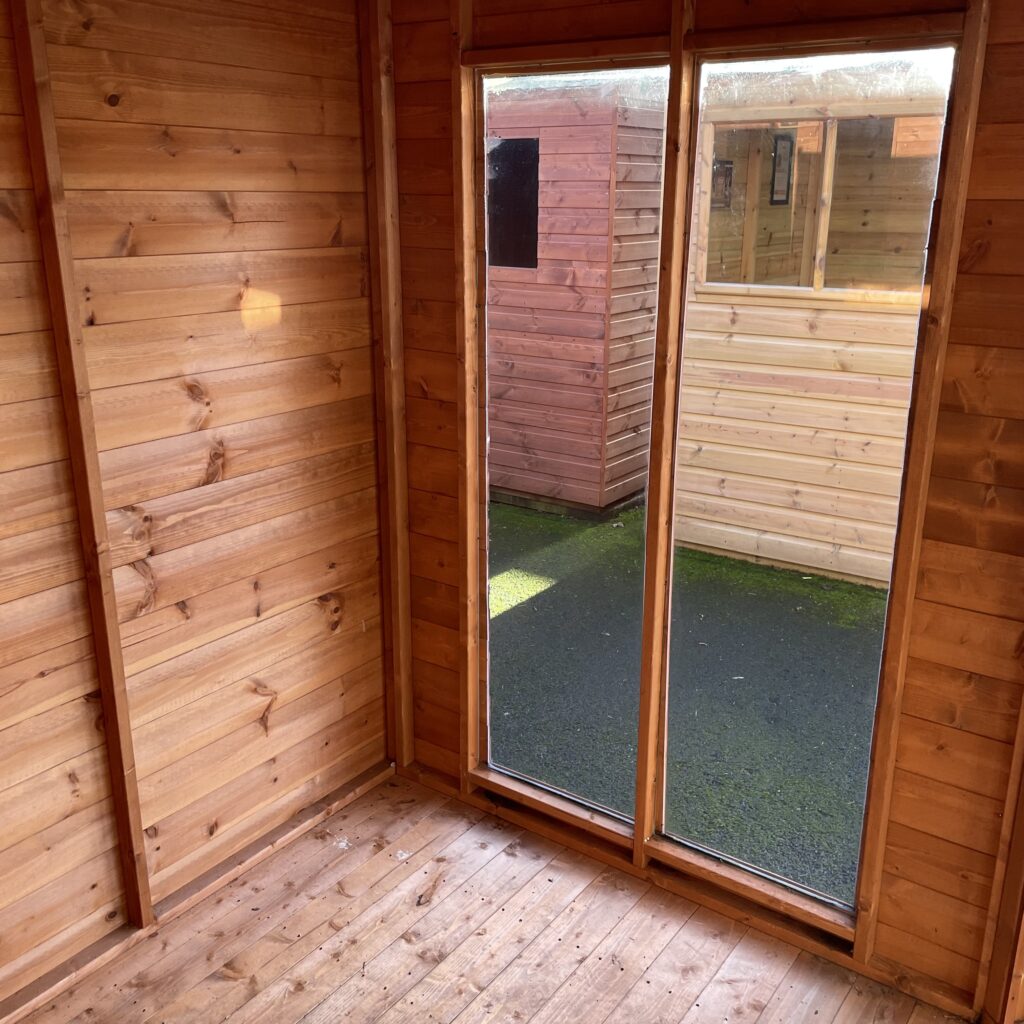
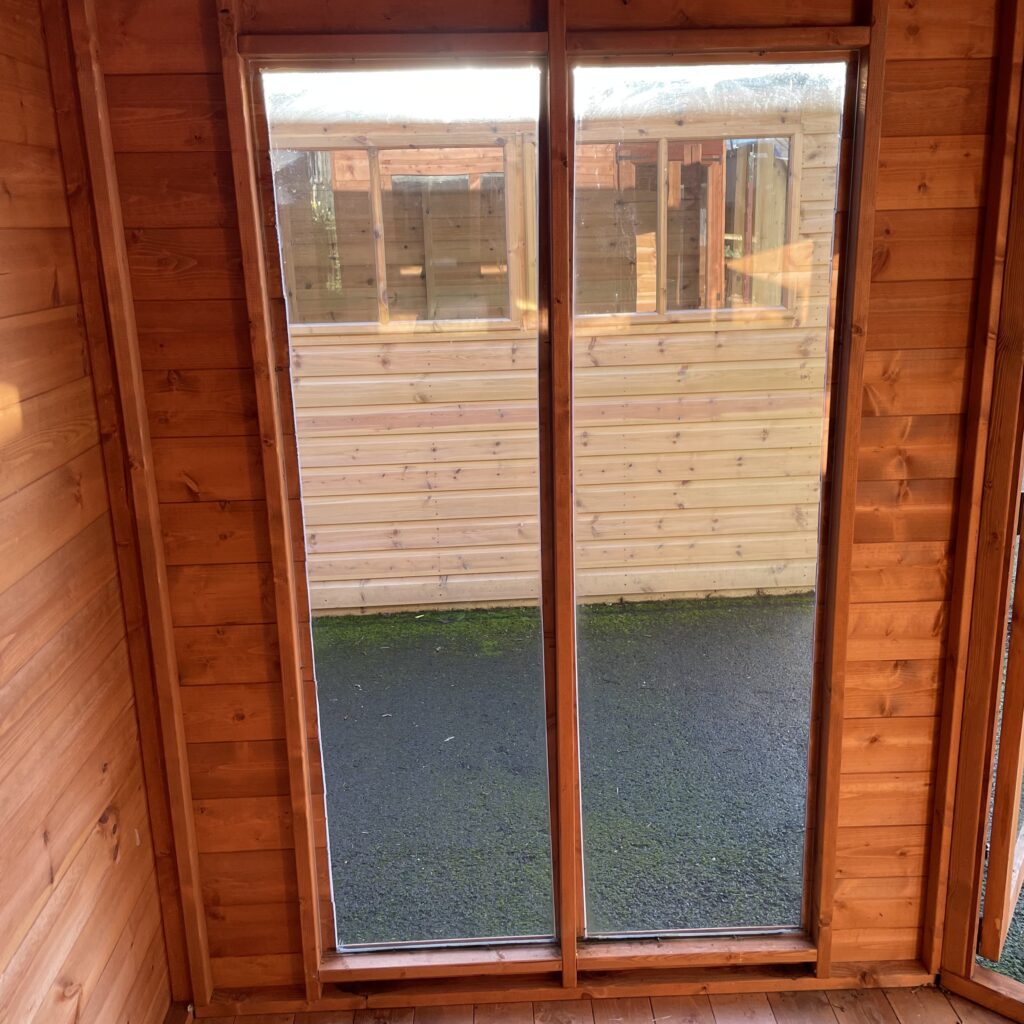
The windows are full-length toughened glass, 3mm thick, supplied as standard — not styrene or acrylic .
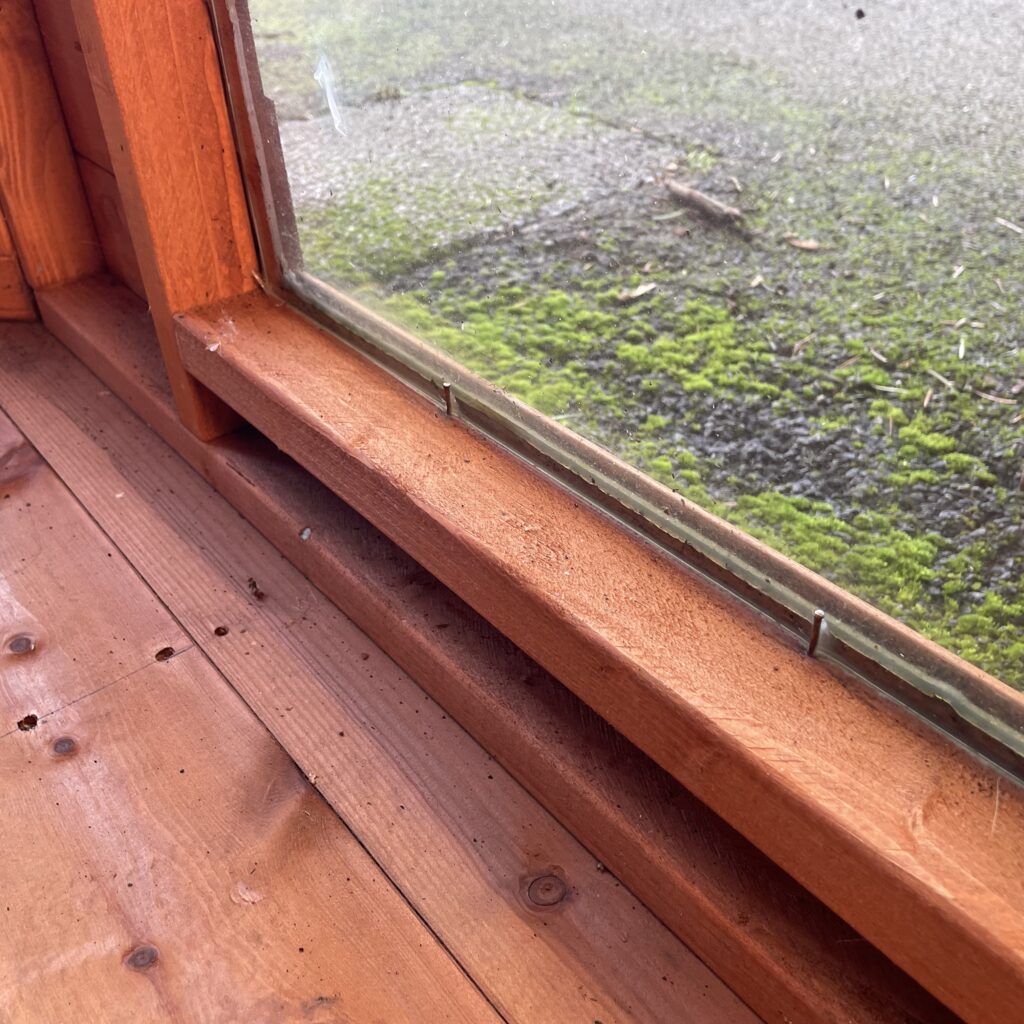
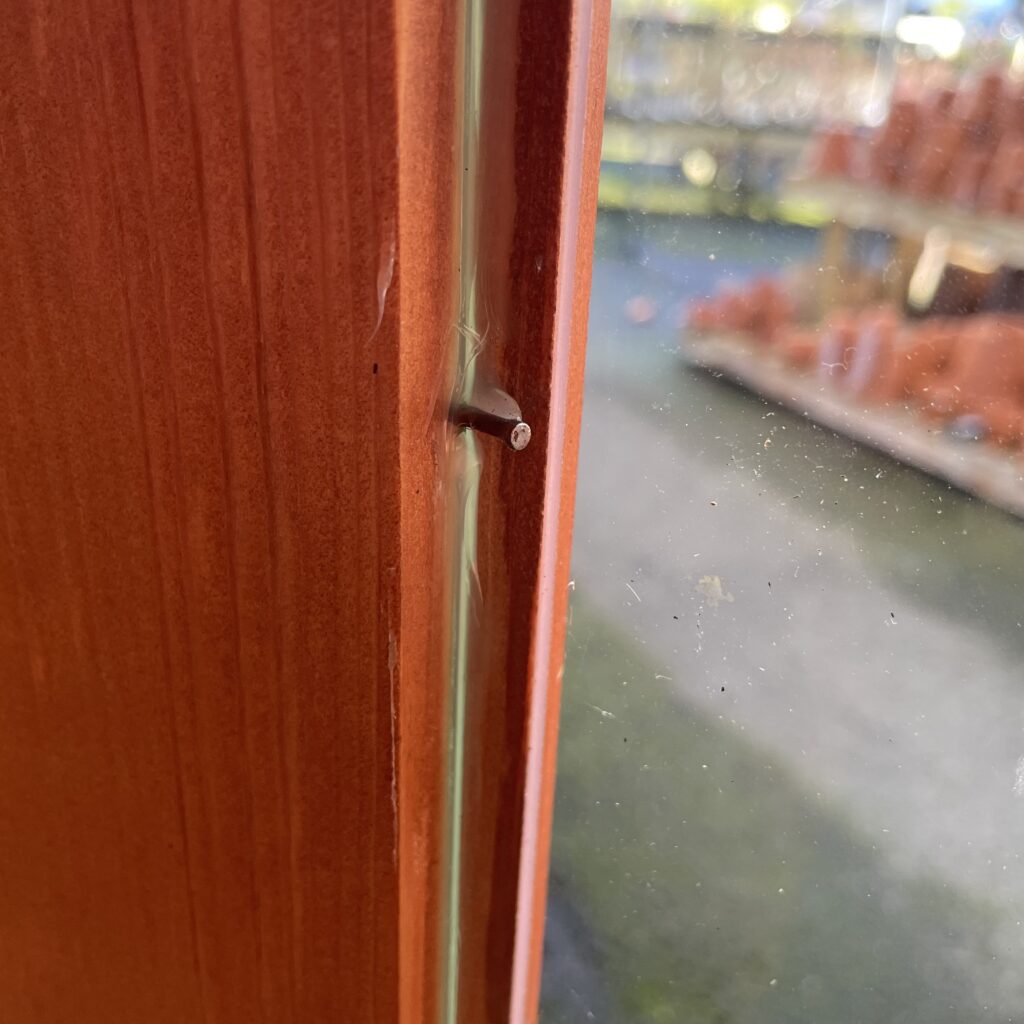
The only area where we pause slightly is the glazing installation method. According to the installation guide, the glass is sealed with silicone and then secured internally using panel pins, with all glazing requiring sealing internally and externally to remain watertight .
On the unit we inspected, we noticed a small pool of water at the base of one window, with early moss growth — simply where a small section of silicone hadn’t been applied perfectly.
This wasn’t structural and is easily fixed, but it does underline the importance of careful assembly. Take your time sealing the windows and you’ll avoid this entirely.
If you’re not confident assembling it yourself, Tiger’s Pro Installation service is worth considering, as they assume responsibility for correct fitting under their terms .
Final Thoughts — Confidence Earned, Not Claimed
Overall, we really enjoyed inspecting the Tiger Vista Corner Summerhouse.
The 12mm shiplap tongue-and-groove construction, solid framing, proper roof build, and high-quality timber all back up what you feel when you’re inside it. The attention to detail — right down to the roof finishing boards and corner fixings — is there for anyone who knows what to look for.
Seen after heavy weather, it inspired confidence. And that’s exactly what you want from a building that’s going to live in your garden year-round.
With a bit of care during assembly — particularly around the glazing — this is a summerhouse you can buy with real confidence, knowing the structure, materials, and long-term design decisions are all working in your favour.