EXPERT REVIEWED
  FREE DELIVERY
  INSTALATION AVAILABLE
 Tiger Windowless Corner Shed – Expert Review
First Added - November 28 2025
Last Updated - November 28 2025 - 0 Data Points Updated - 0 Data Points Added
Reviewed & curated by a panel of garden building experts. Using methodology 1.1
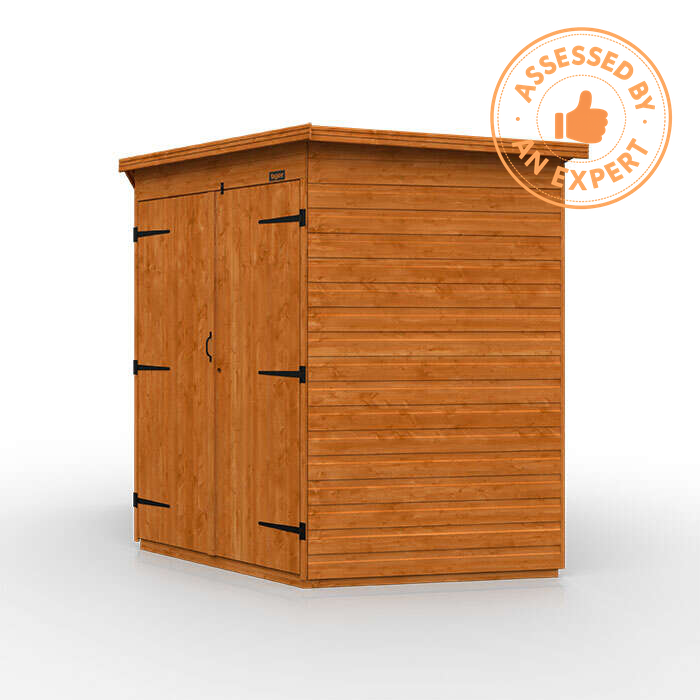
Product ID: tiger-sheds-tiger-windowless-corner-shed
Size: Multiple sizes available
Merchants Checked: 10
Corner sheds are one of those garden buildings that look deceptively simple on paper but are genuinely difficult to execute well in reality. Over the years, I’ve inspected more poorly built corner structures than I can count — especially corner summerhouses — and they nearly all fail in the same ways: weak angled joins, flimsy framing, sagging roofs, and floors that feel unsettled the moment you step inside.
There’s one particular corner building I pass almost daily, and I can identify the manufacturer without even slowing the car down. The yellowed styrene glazing, wafer-thin cladding, bowed roof line and general “tired” look tell the whole story. It’s a perfect example of what happens when a company underestimates how demanding a corner footprint really is.
That context matters, because a corner shed is harder to engineer properly than a standard rectangular shed. You’re dealing with angled wall geometry, more complex load paths in the roof, and a footprint that naturally concentrates weight toward the rear. When a manufacturer cuts corners here, the building gives itself away very quickly.
Which is why inspecting Tiger’s corner buildings across multiple show sites has always been reassuring — and why the Tiger Windowless Corner Shed stands out as one of the better-engineered examples I’ve seen.
A corner shed that feels confident the moment you step inside
The first thing I always pay attention to in a corner building is the floor — particularly where the angled sections meet. This is where cheaper corner sheds often feel unsettled or “springy”, because the bearers haven’t been thought through properly.
That simply wasn’t the case here.
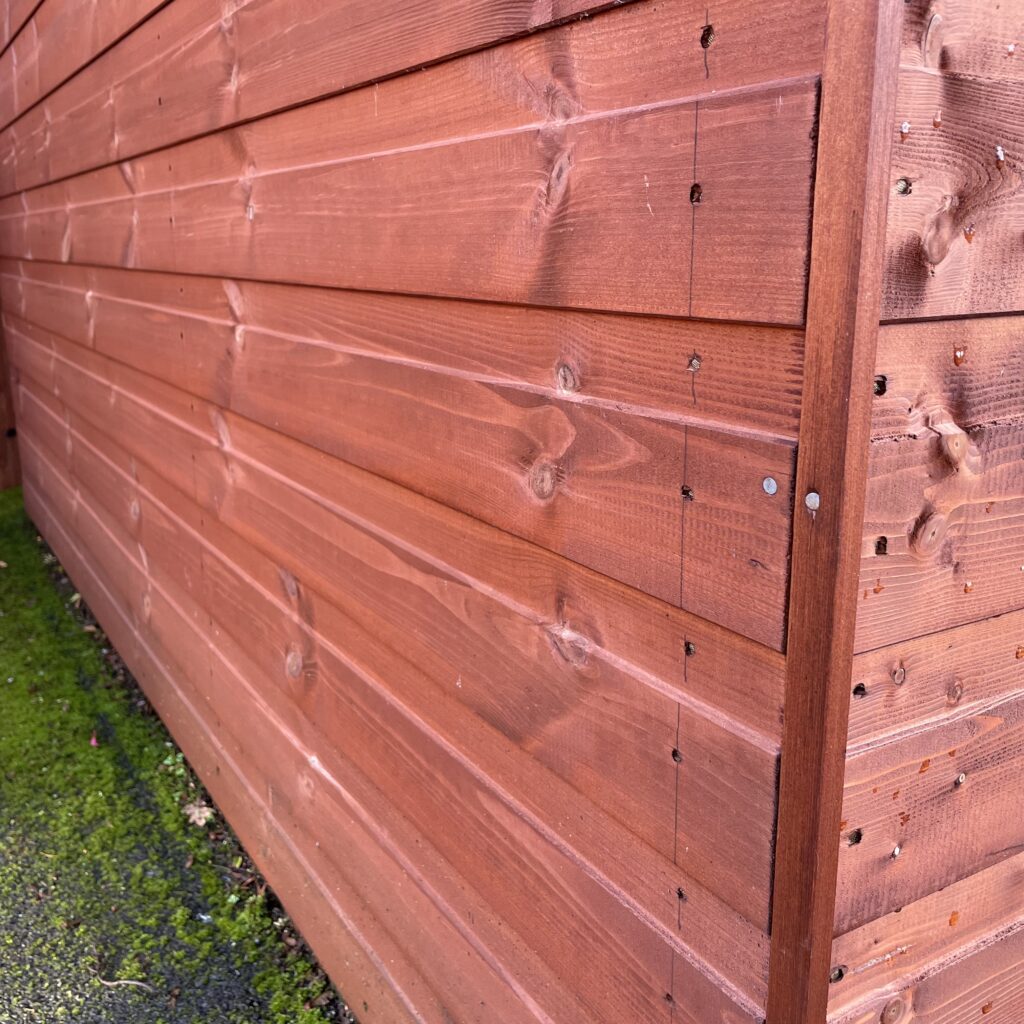
On the Tiger Windowless Corner Shed, the floor felt rock solid underfoot. No bounce. No hollow OSB sensation. No sense that weight was being unevenly distributed. Stepping along the angled rear sections felt just as stable as standing near the doors, which is exactly what you want in a corner structure.
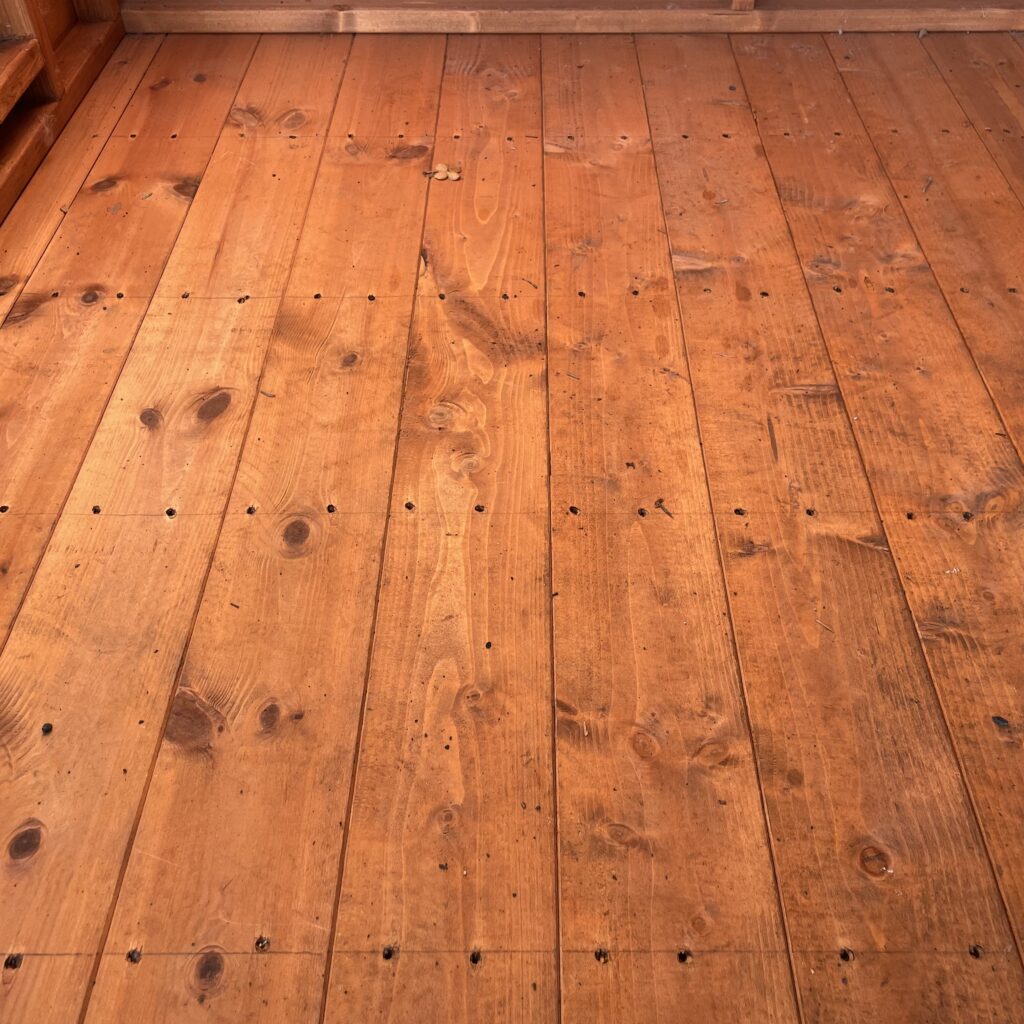
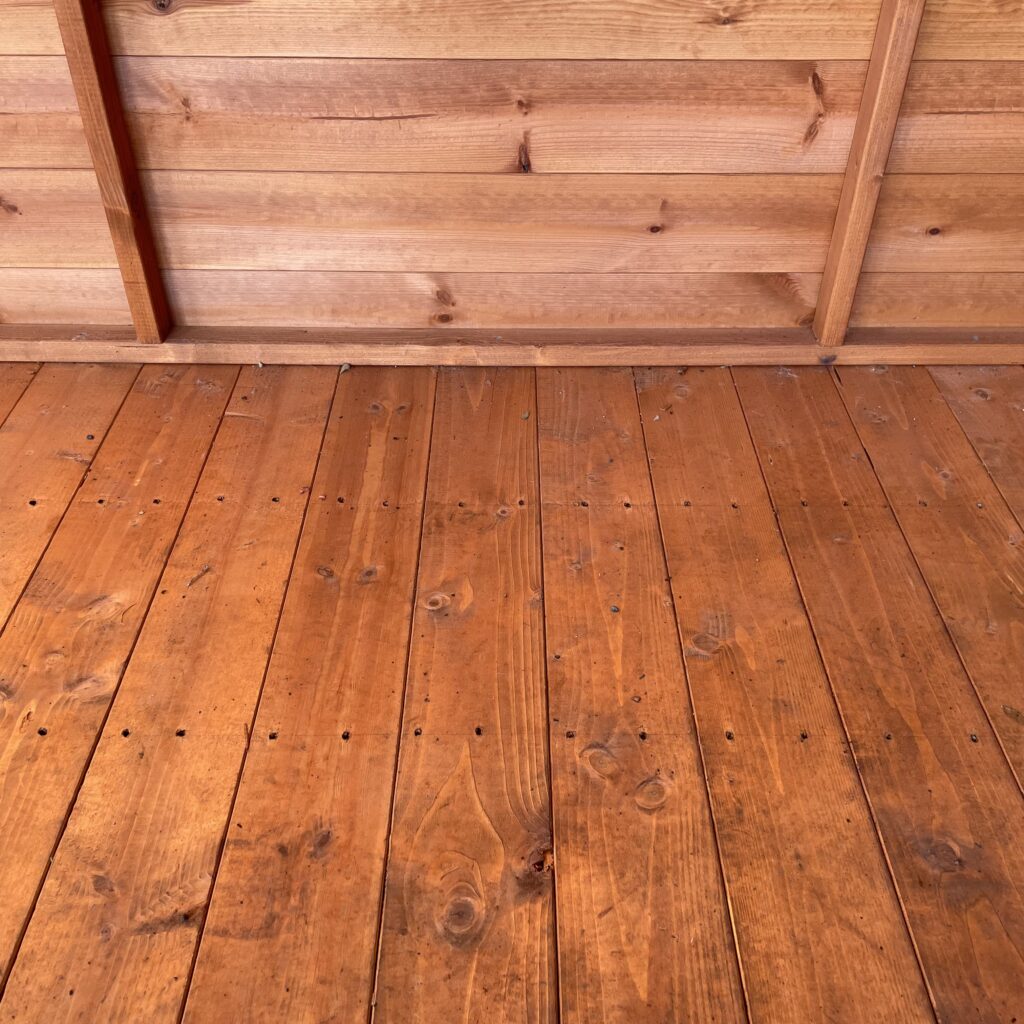
That stability is backed up by the specification: the floor is built from 12 mm tongue-and-groove boards, supported by proper framing rather than sheet material . Tiger could have saved money by switching to OSB here — many manufacturers do, especially on corner models — but they haven’t. And you can feel that decision immediately.
Walls, framing and why Tiger’s corner geometry works
The rear walls of a corner shed are where structural shortcuts usually reveal themselves. Press in the wrong place on a poorly made corner building and you’ll often feel movement at the joins, or hear creaking as the structure shifts.
Pressing into the walls here produced almost no movement at all.
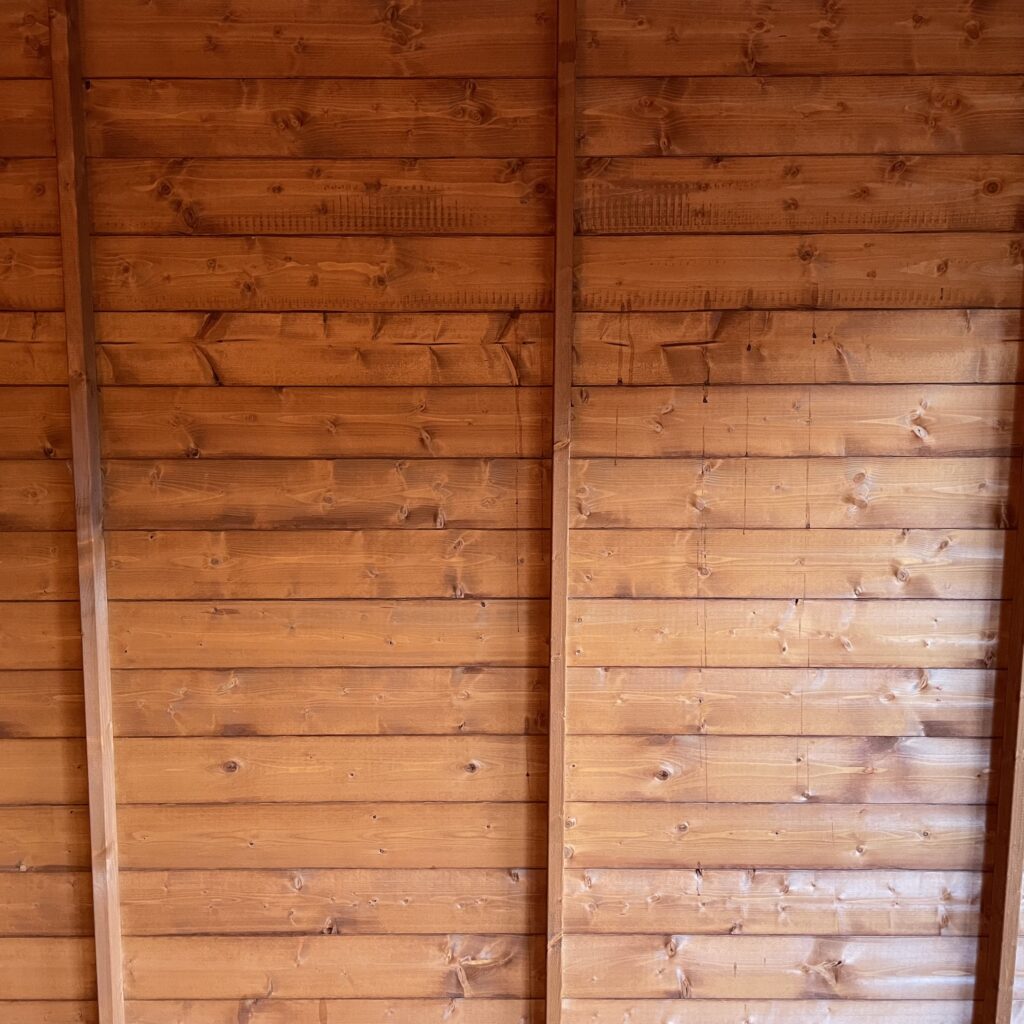
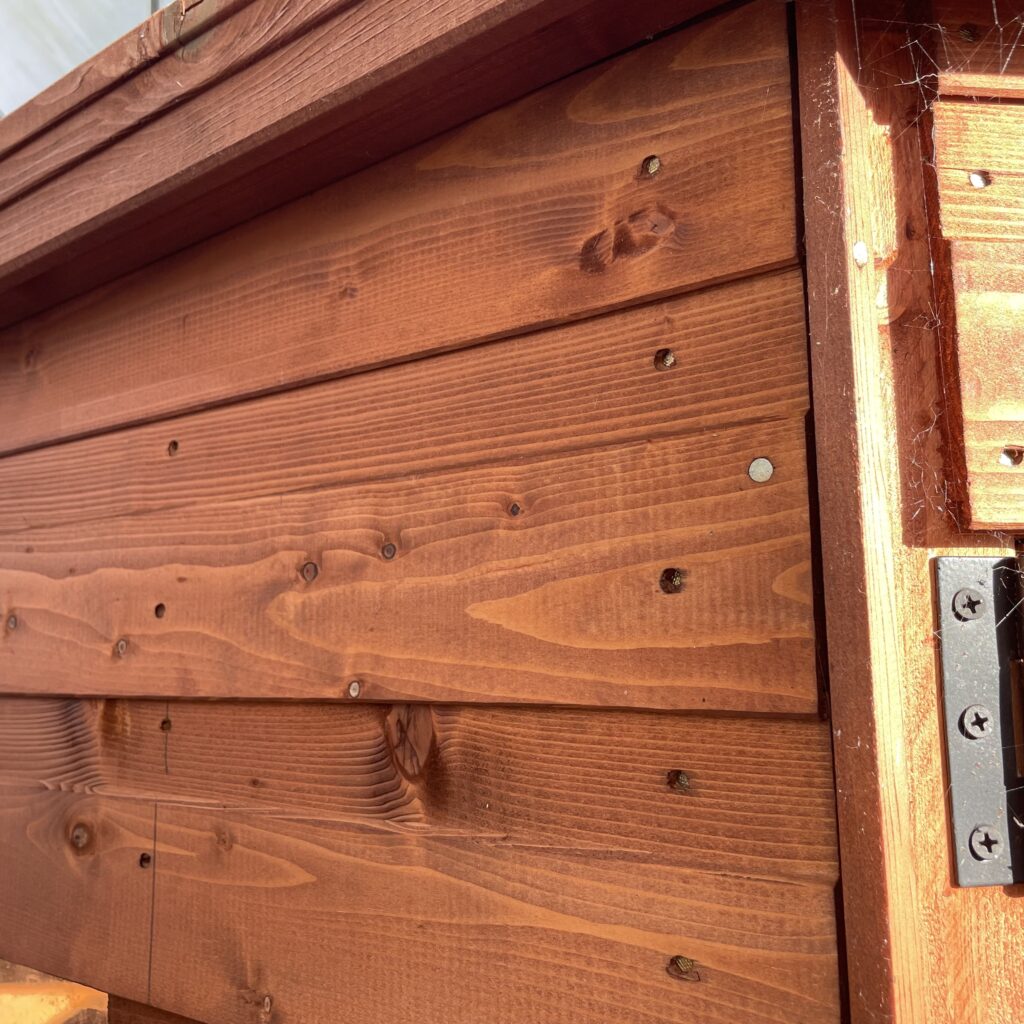
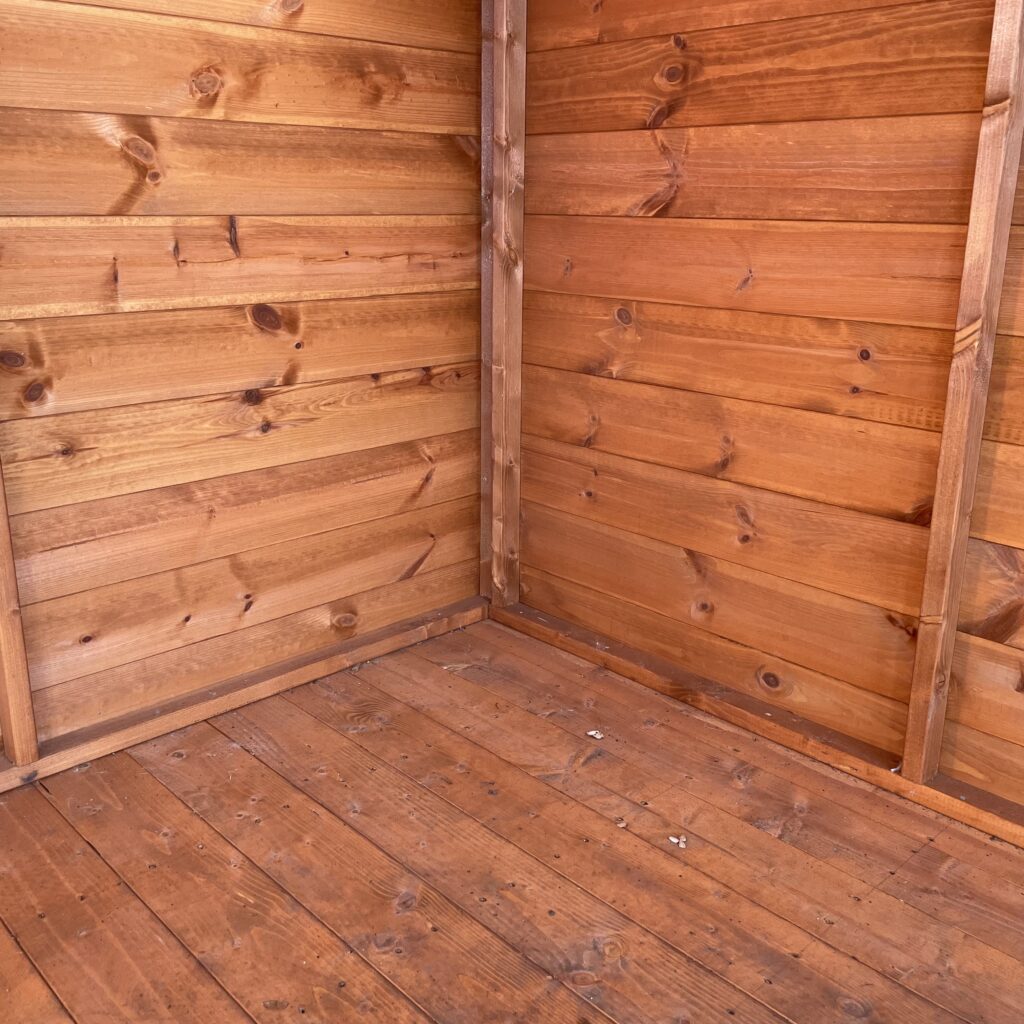
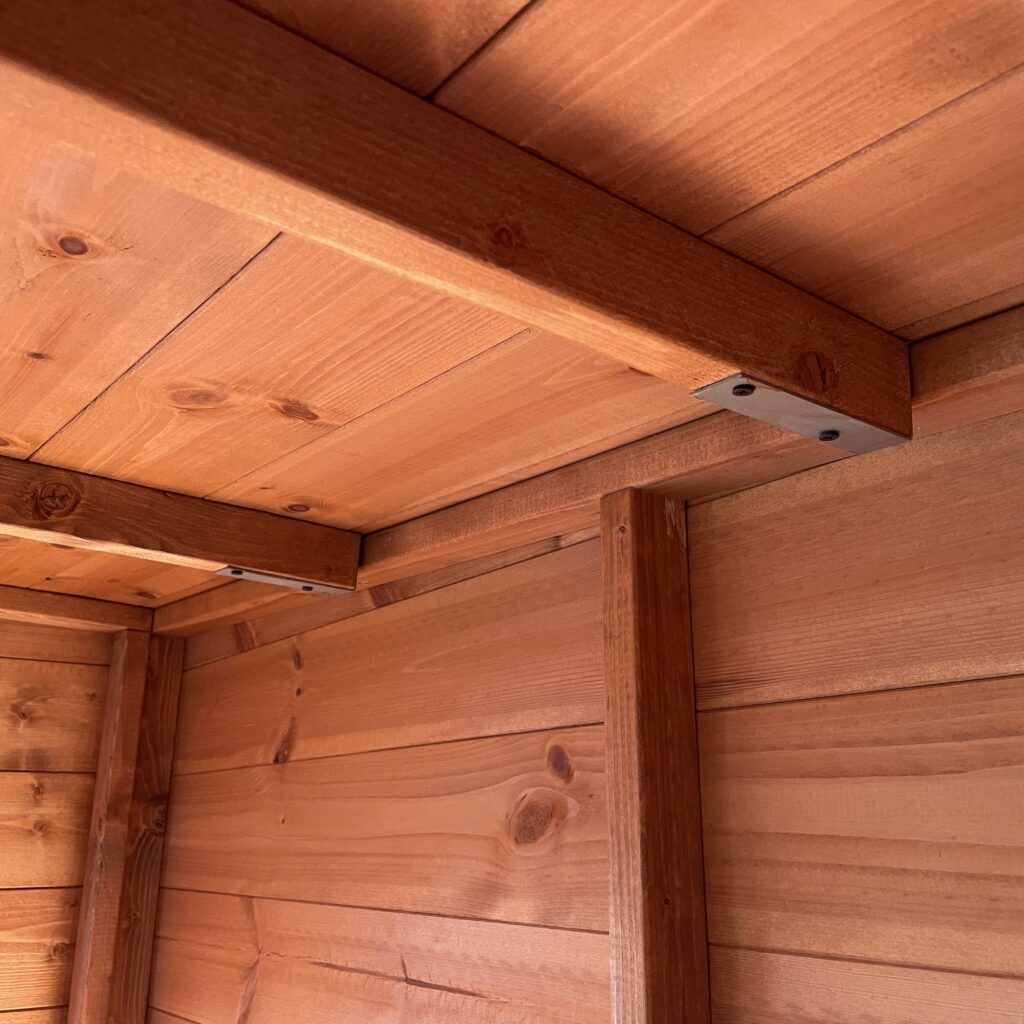
Tiger use 28 × 44 mm framing throughout the structure, and crucially, they’ve thought carefully about how that framing is arranged around the angled rear section . The result is a building that feels cohesive rather than stitched together from awkward panels.
Running my hand along the internal framing and cladding, the finish felt smooth and consistent — no splintering, no rough cut marks, no patchy boards. The machining quality is very good, and it gives the interior a clean, almost workshop-like feel rather than something crude or temporary.
Roof structure – where many corner sheds quietly fail
Roof loads are another weak point in cheap corner buildings. The geometry is more complex, and if the manufacturer hasn’t allowed for that, you often see sagging develop over time.
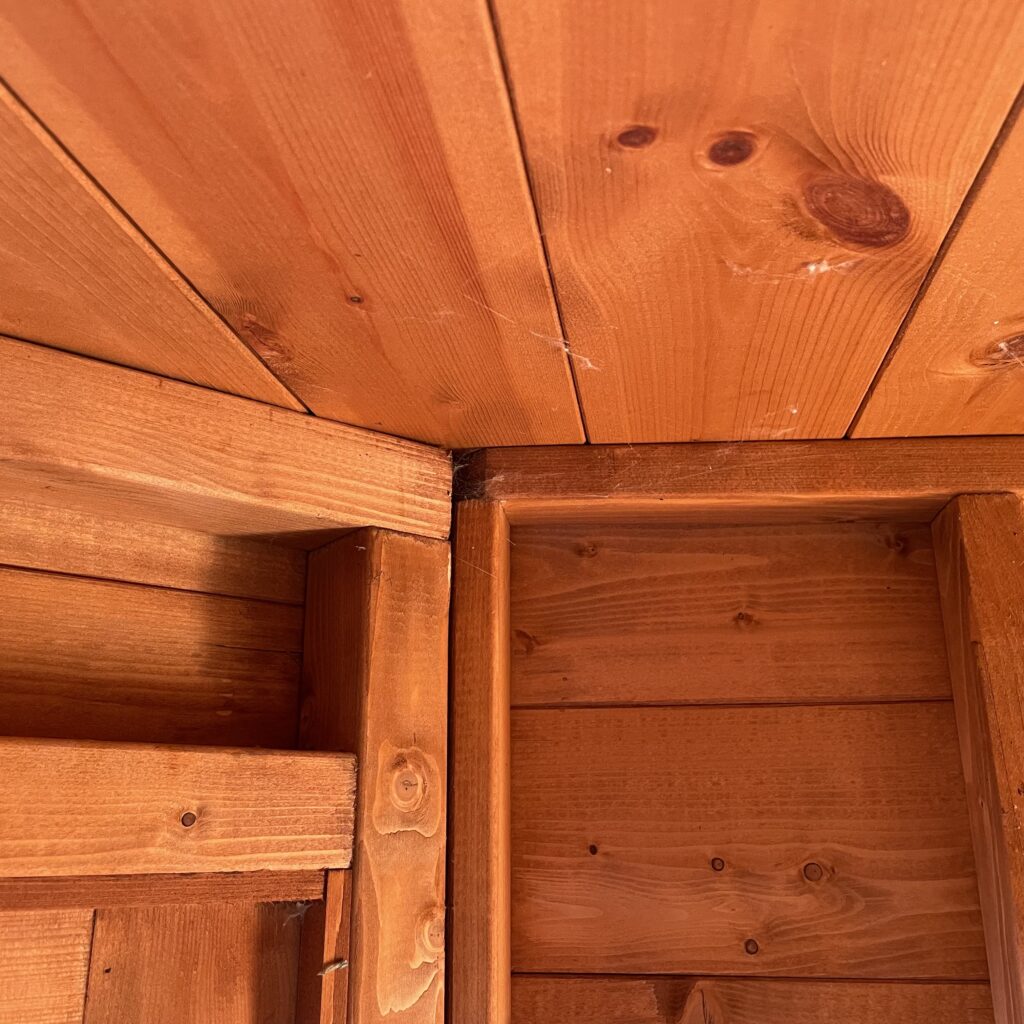
Here, the roof is again 12 mm tongue-and-groove, not OSB, and it makes a noticeable difference to rigidity . When I pressed upward from inside — something I always do instinctively — there was very little flex. The roof felt tight, confident, and well supported.
The mineral felt is properly fixed rather than lightly stapled, and the roof detailing — including bargeboards and corner trims — is handled neatly rather than as an afterthought, as confirmed in Tiger’s own assembly guidance .
All of this contributes to a building that feels settled rather than stressed.
Double doors – a genuine practical advantage
One of the biggest usability wins on this shed is the full-height double doors.
The technical data lists the door opening at 1132 mm wide × 1800 mm high , and that’s not just a nice number on paper — it has very real implications for day-to-day use.
In practical terms, that width means you can:
- walk bikes straight in without twisting handlebars
- wheel in lawnmowers without angling
- move bulky garden equipment without fighting the doorway
- use the shed as a genuine access point rather than a narrow opening
Even though this is a windowless shed, opening both doors floods the interior with light. It feels far less enclosed than you might expect, and far more usable than many single-door corner designs.
Living with a corner footprint – the honest trade-offs
A corner shed always asks you to think slightly differently about storage. The angled rear walls mean you don’t get the same simple rectangular layout as a standard shed, and long shelving runs need a bit more planning.
But what you gain in return is space efficiency.
In gardens where every square metre matters — especially smaller or awkwardly shaped plots — a corner shed like this makes far better use of dead space. It sits neatly where a rectangular shed would feel intrusive, and visually it’s much quieter.
This is exactly why corner sheds appeal to the right kind of buyer — and exactly why they frustrate people who buy them without understanding the format.
If you know what you want, this shed delivers it extremely well.
Windowless by design, not compromise
Removing windows isn’t a downgrade here — it’s a deliberate design choice.
Without glazing:
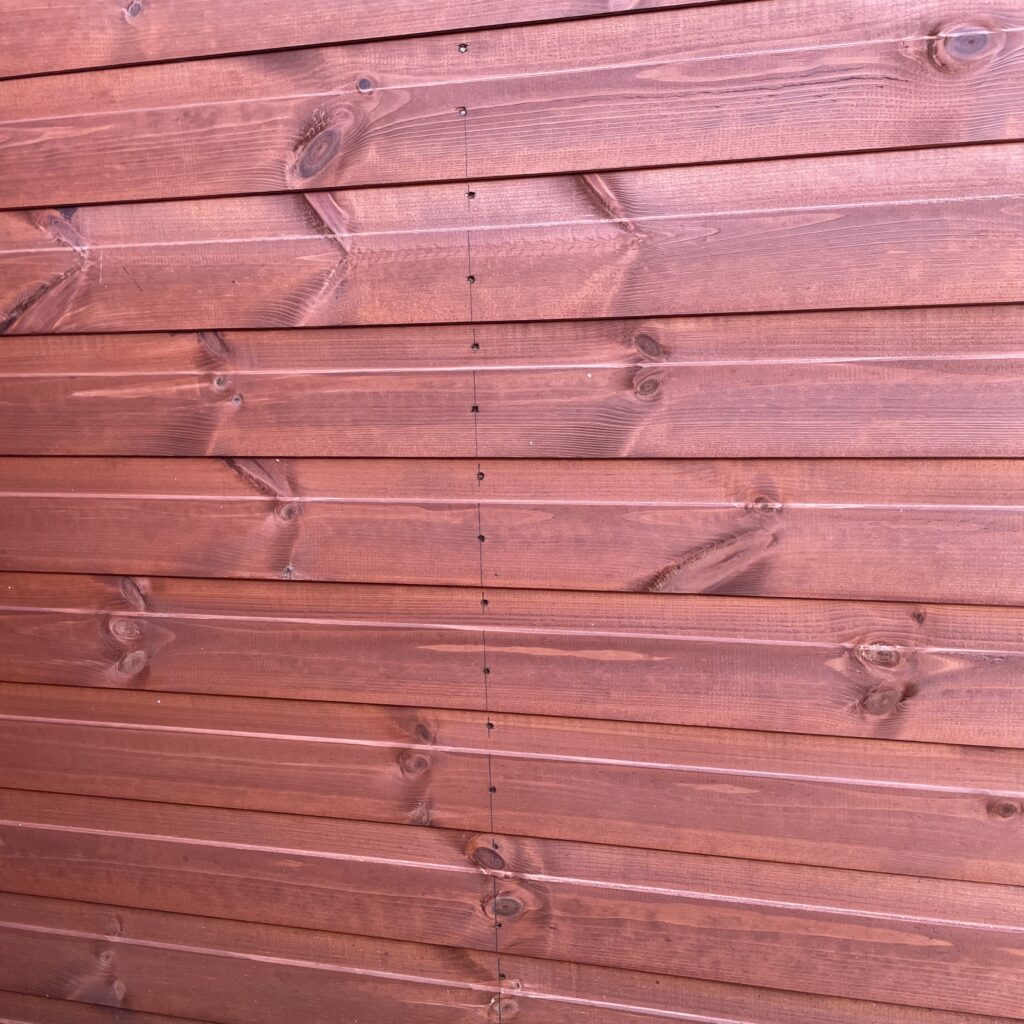
- the 12mm thick walls remain structurally uninterrupted
- there are fewer long-term maintenance points
- privacy and discretion improve significantly
For storing tools, bikes, machinery, or general household items, this is often the more sensible option. Nothing is on display, and there’s no glazing to worry about sealing or replacing over time.
The result is a shed that feels purpose-built for storage, not adapted from a summerhouse design.
Sizes, proportions and internal feel
Tiger offer this shed in 6×6, 7×7, and 8×8 footprints, and across the range the proportions remain well judged.
For example, the 8×8 model has:
- an external footprint of roughly 2350 × 2350 mm
- an internal usable space of around 2262 × 2262 mm
- an internal ridge height just under 2 m
That gives you enough headroom to work comfortably inside without the building feeling top-heavy or visually dominant outside.
Even the smaller sizes feel usable rather than cramped — something that can’t be said for many corner sheds on the market.
Security – fine for most users, easy to upgrade if needed
As with most Tiger sheds outside the dedicated security range, the standard lock-and-key system is perfectly adequate for general garden use .
The hinge screws are externally accessible, which is common at this level. For most people, that’s not an issue. If you’re storing higher-value items, adding hinge bolts or tamper-proof fixings is a simple, inexpensive upgrade that significantly improves resistance.
Assembly – methodical, not fiddly
Corner sheds are rarely “quick builds”, and Tiger don’t pretend this one is. Their assembly guide is clear, methodical, and emphasises squaring the structure carefully before fully tightening fixings — which is exactly what you want on a building with angled geometry .
Take your time, follow the steps, and the result is a structure that feels properly put together rather than rushed.
Final verdict – one of the best corner sheds we’ve inspected
The Tiger Windowless Corner Shed is a genuinely impressive piece of design.
Corner sheds are easy to get wrong — and Tiger haven’t.
This building is:
- structurally confident
- properly framed
- solid underfoot
- finished to a high standard
- thoughtfully designed for awkward spaces
Most importantly, it feels like a proper garden building, not a geometric compromise.
If you know you want a corner footprint, this is one of the strongest, most reliable options available in the UK market today. It’s engineered with care, built with quality materials, and designed by people who clearly understand the challenges of corner structures.
For the right garden and the right user, it’s an excellent buy.