EXPERT REVIEWED
  FREE DELIVERY
  INSTALATION AVAILABLE
 Tiger Workman Apex – Show Site Review
First Added - November 28 2025
Last Updated - November 28 2025 - 0 Data Points Updated - 0 Data Points Added
Reviewed & curated by a panel of garden building experts. Using methodology 1.1

Product ID: tiger-sheds-tiger-workman-apex
Size: Multiple sizes available
Merchants Checked: 10
A genuinely usable workshop shed with a premium feel inside — and a few small details worth knowing before you buy
First impressions: why its popularity makes sense immediately
The first thing to say about the Tiger Workman Apex is that Tiger’s claim that it’s one of their best-selling workshops makes immediate sense — first when you stand in front of it, and then again when you step inside.
We inspected this model in person at both the Tong and Otley show sites, and we came away quite impressed, because it ticks the boxes that a proper workshop shed needs to tick.
And when we say “workshop”, we don’t mean “a shed you occasionally step into to grab the mower.”
We mean something you can use regularly, without slowly resenting it.
That means enough headroom to move properly, enough rigidity that it doesn’t feel flimsy when you lean into it, a floor that doesn’t complain the moment you put weight where you actually stand, and doors that feel like a deliberate design choice rather than a weak point.
Size range and why the 10×10 tells you the truth
Tiger sells this building in a surprisingly broad spread of sizes.
You’re looking at options that run from relatively compact footprints all the way up to serious workshop territory — the range includes widths down to six feet, and stretches up into genuinely large buildings, including 20×10, where structural confidence matters even more.
What we really liked about the particular one we inspected was that it was a 10×10.
That size tells you a lot.
It gives you a full ten-foot depth, which means you can actually see how the roof structure is tied, how the bracing behaves over a meaningful span, and whether the internal framing looks like it’s been designed to scale — or whether it’s the sort of thing that feels fine when small, but starts to feel stretched as the building gets bigger.
Workshops need that scalability.
Why this isn’t “just another shed”
We’ve reviewed plenty of overlap sheds over the years and, to be blunt, overlap construction can make a perfectly acceptable storage shed — but it rarely makes the kind of building you want to use every day.
The Workman Apex is firmly not in that camp.
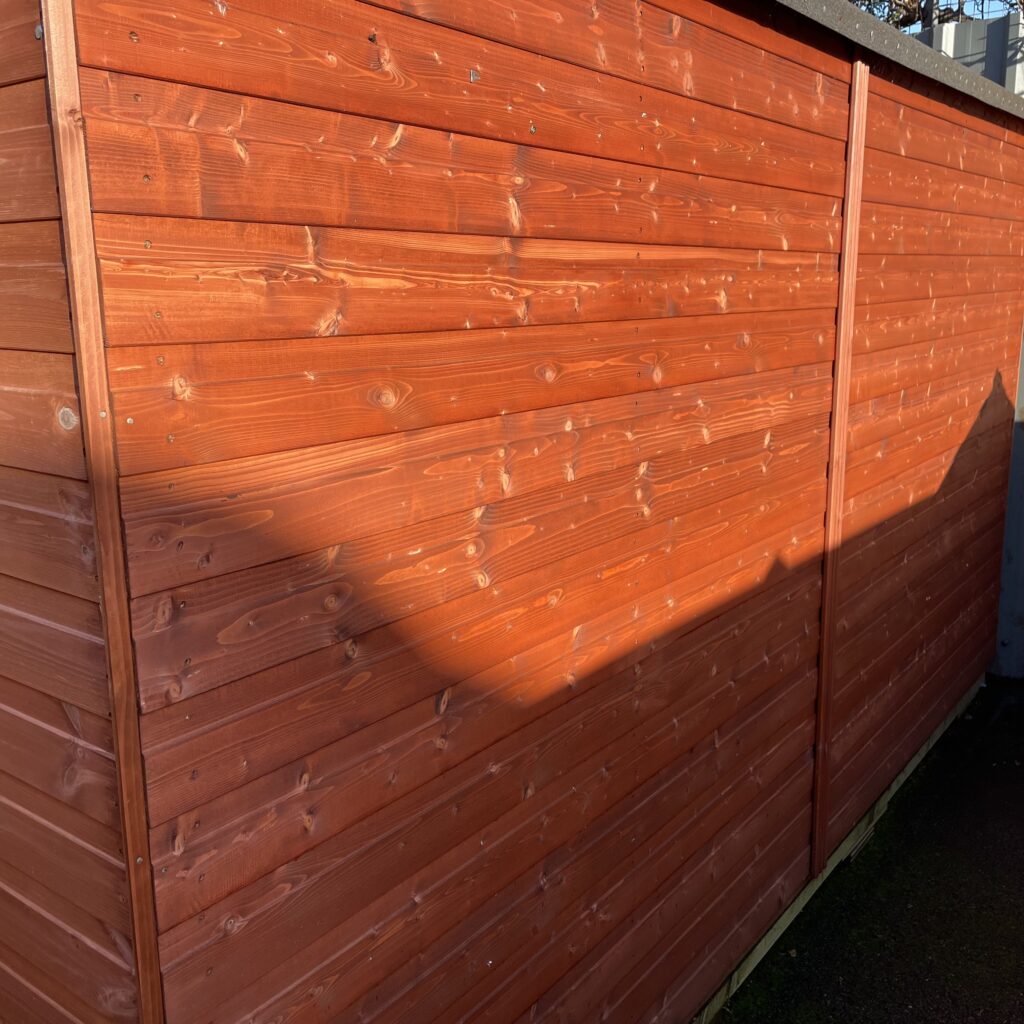
It’s built from Tiger’s superior-grade 12mm finish shiplap tongue & groove cladding, with 12mm tongue & groove roof and floor boards as standard.
That alone puts it in a different league to the stuff that feels disposable.

On site at Otley: it hides its size, then surprises you
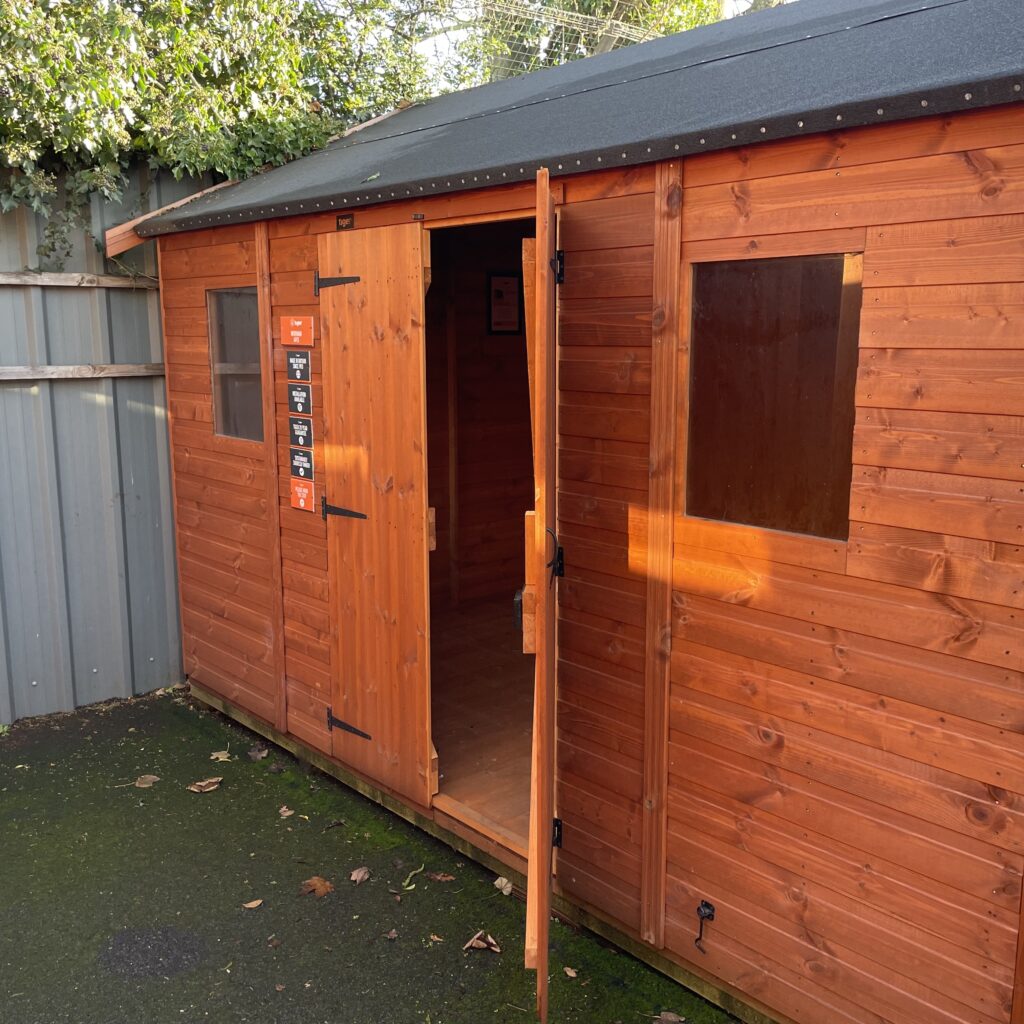
At Otley, the Workman Apex was tucked into one of the side corners of the show site, and that actually ended up being useful for judging it.
It was awkward to photograph properly because we couldn’t stand far enough back — but the building itself sat neatly into that tighter space, and it didn’t immediately shout “giant workshop.”
The doors being on the side helps with that. It’s easier to position a building like this snugly because you’re not forced into front-facing access the way some layouts demand.
And then you walk inside.
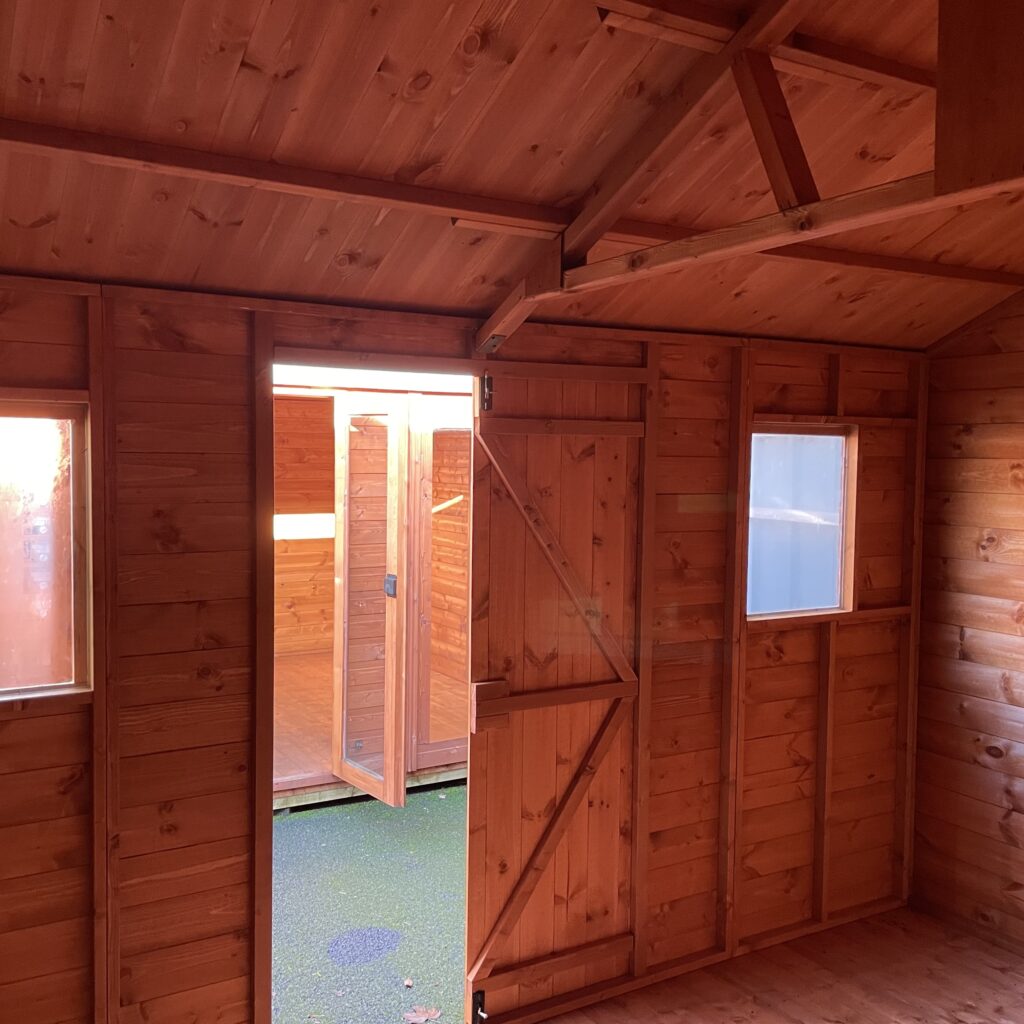
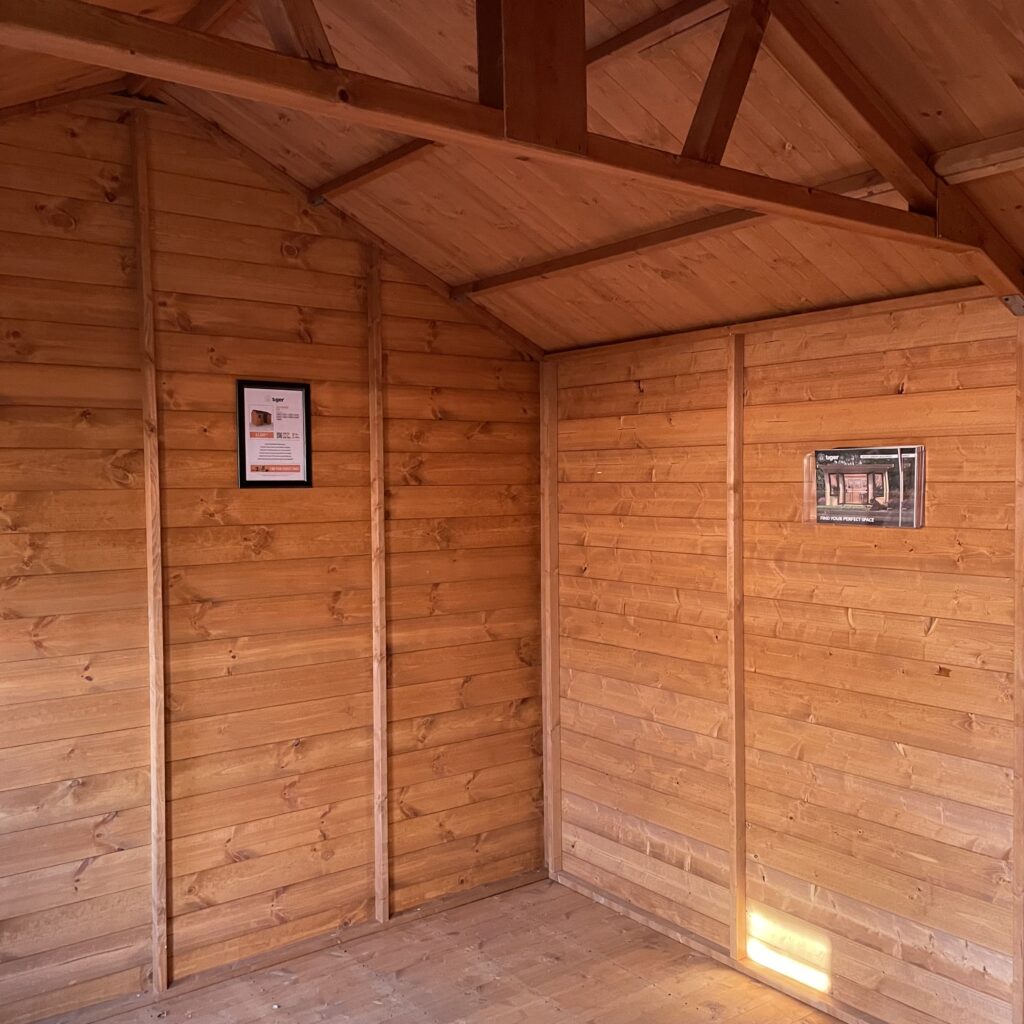
It feels cavernous.
That’s the thing people often miss when they’re browsing online: proportions.
From the outside, it looks tidy and contained. Inside, it feels like a space you could actually work in.
Not a gimmick.
Not “workshop” as a marketing word.
A real, usable interior footprint.
Tiger talks about the extra height, and to be fair to them, the technical sheet backs it up — internal ridge heights around 1929mm on several configurations, and higher again on deeper formats.
Light levels: adequate, honest, and not pretending to be a sunroom
One of the first things you notice from the outside is that the Workman Apex isn’t trying to be a glassy, light-flooded workshop.
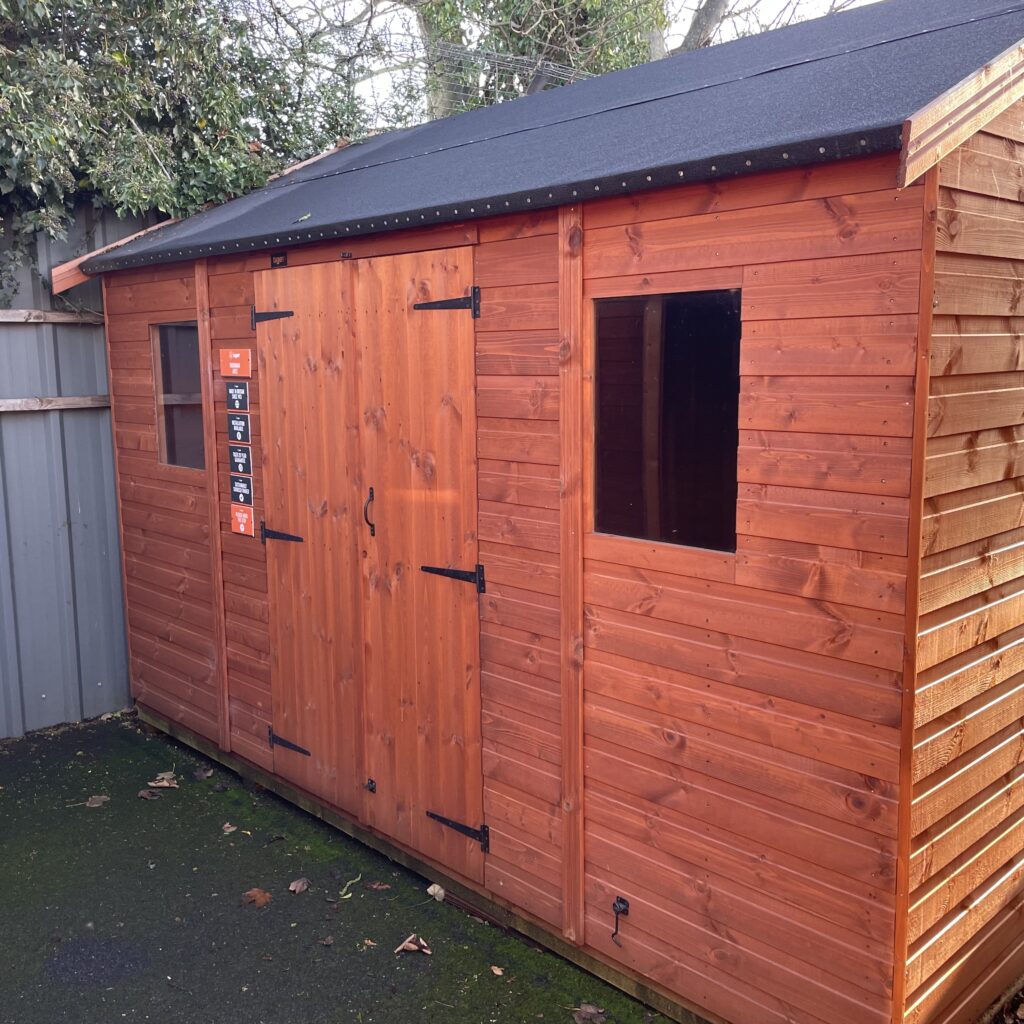
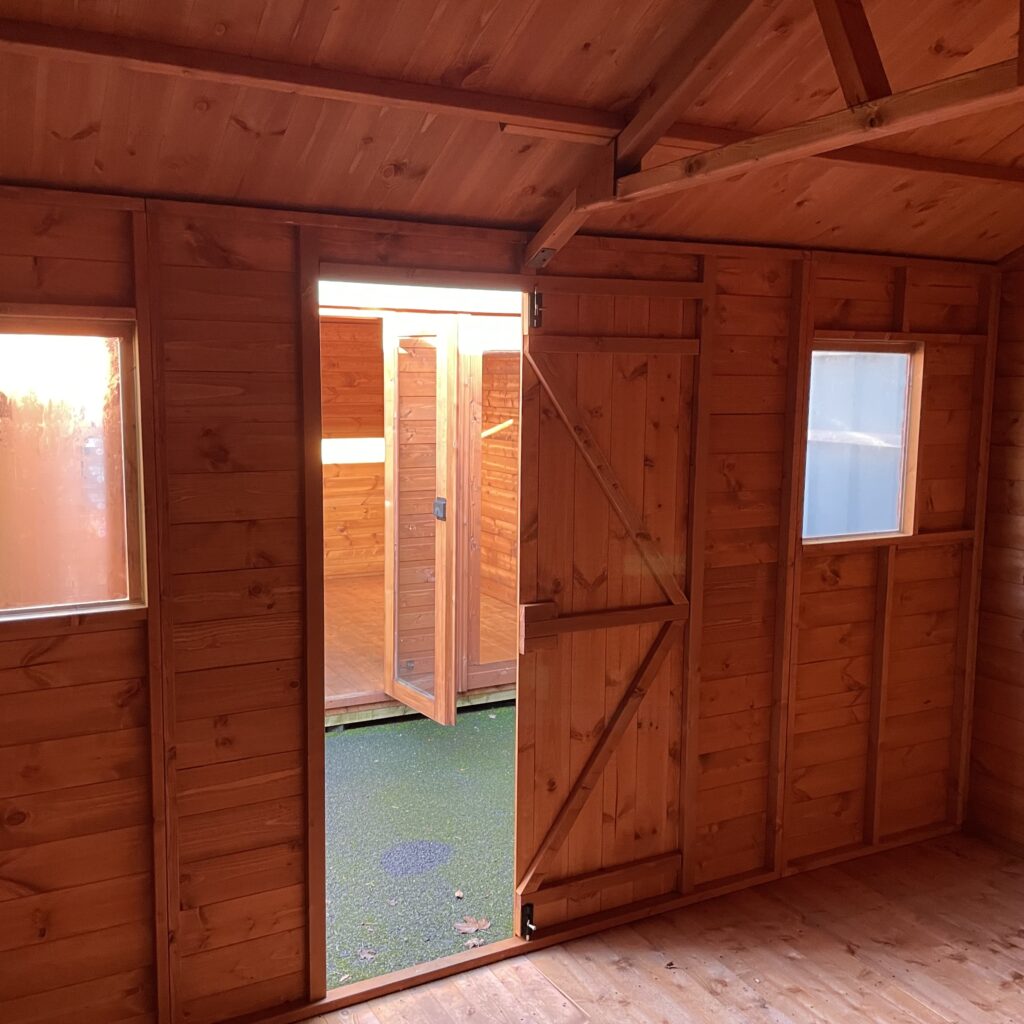
The model we inspected had two windows, flanking the double doors.
That’s not a lot of glazing for a building you might want to spend time in, and our first instinct was exactly that:
“Right — this isn’t going to be the lightest building.”
That instinct turned out to be accurate — and we’ll come back to it properly when we talk about our lux readings.
However, two things matter here.
First: the glazing itself is proper. Tiger uses 3mm toughened glass in all fixed windows. It looks professional, feels solid, and doesn’t give off that cheap plastic-window vibe that ruins so many sheds the moment you touch them.
Second: even with limited glazing, the building doesn’t feel gloomy when the doors are open. With those full-height double doors open, the space becomes instantly more inviting.
Closed? Different story — and we’ll come back to that honestly later.
The doors: a genuinely pleasant surprise
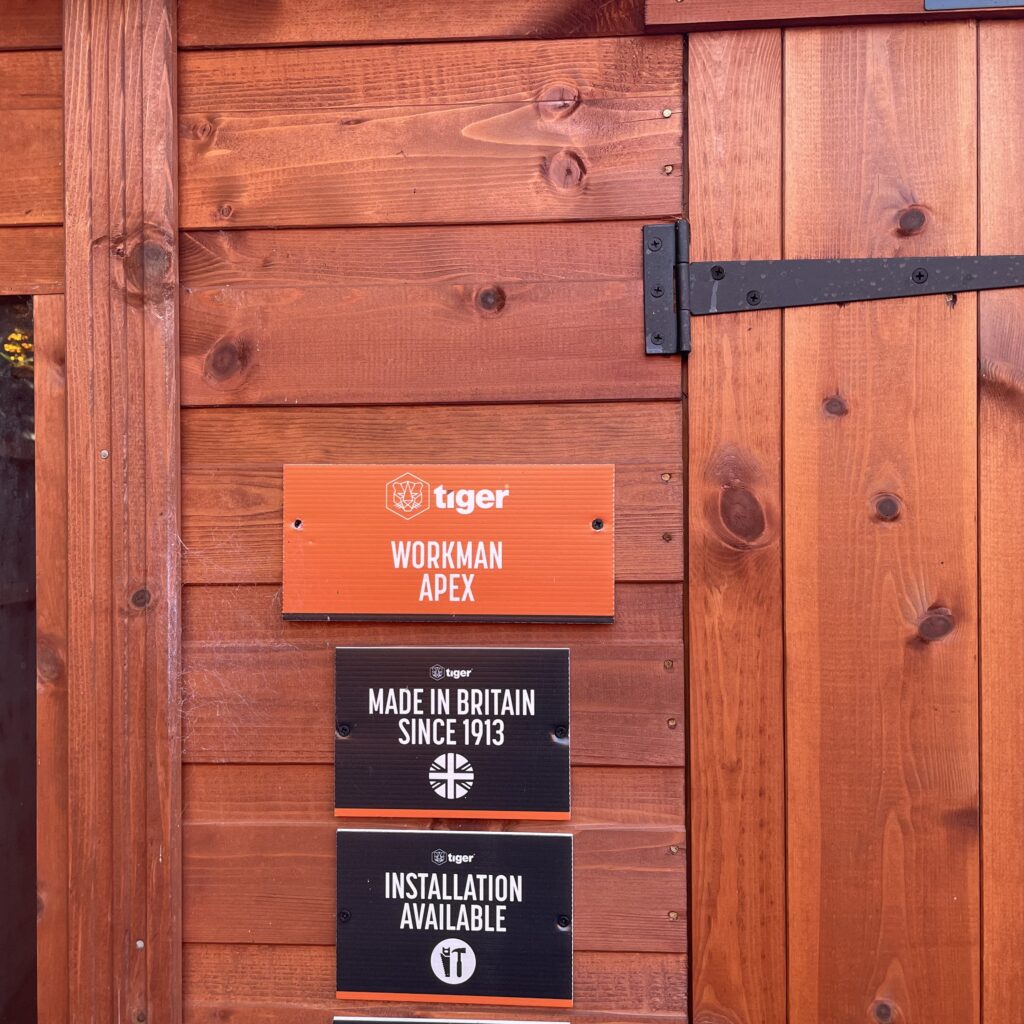
The double doors are a big deal on a workshop shed.
They’re the daily touch point — the part you interact with constantly — and they often tell you whether the whole building has been designed seriously.
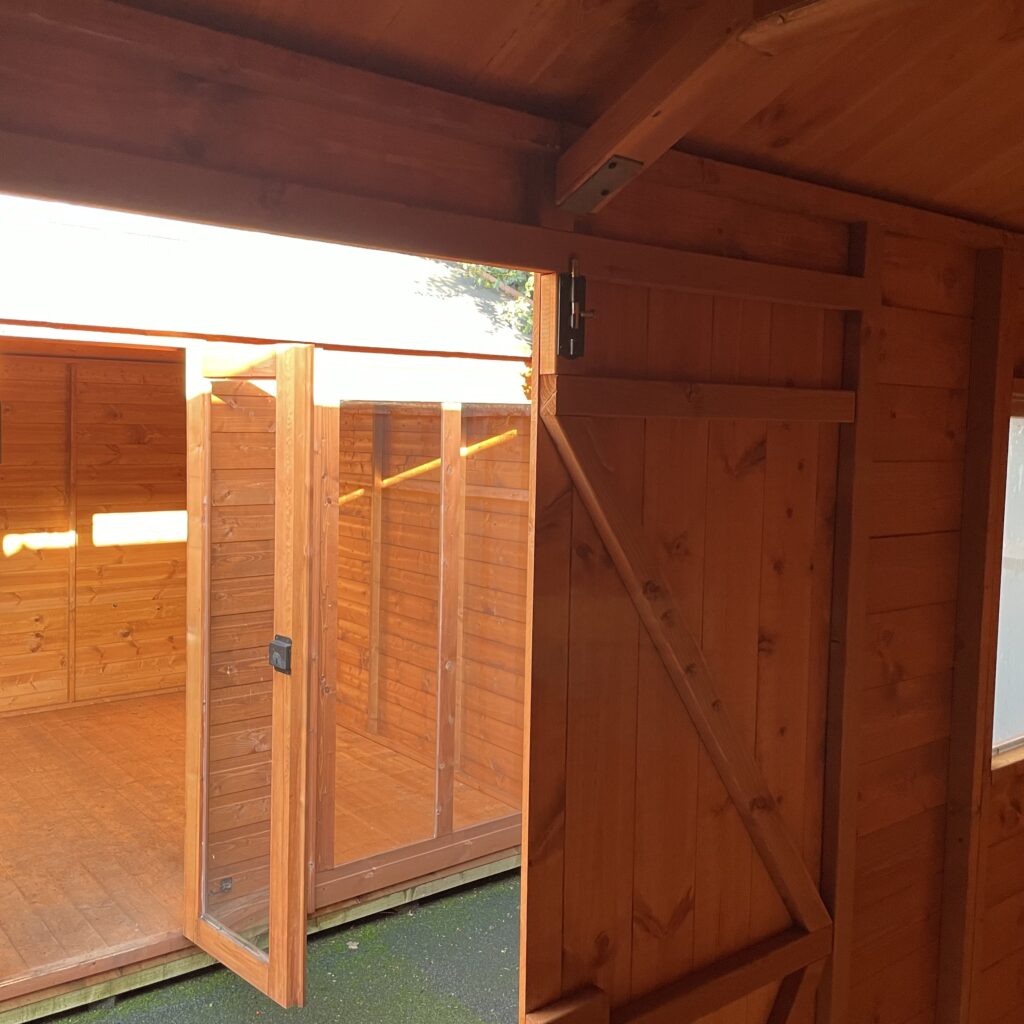
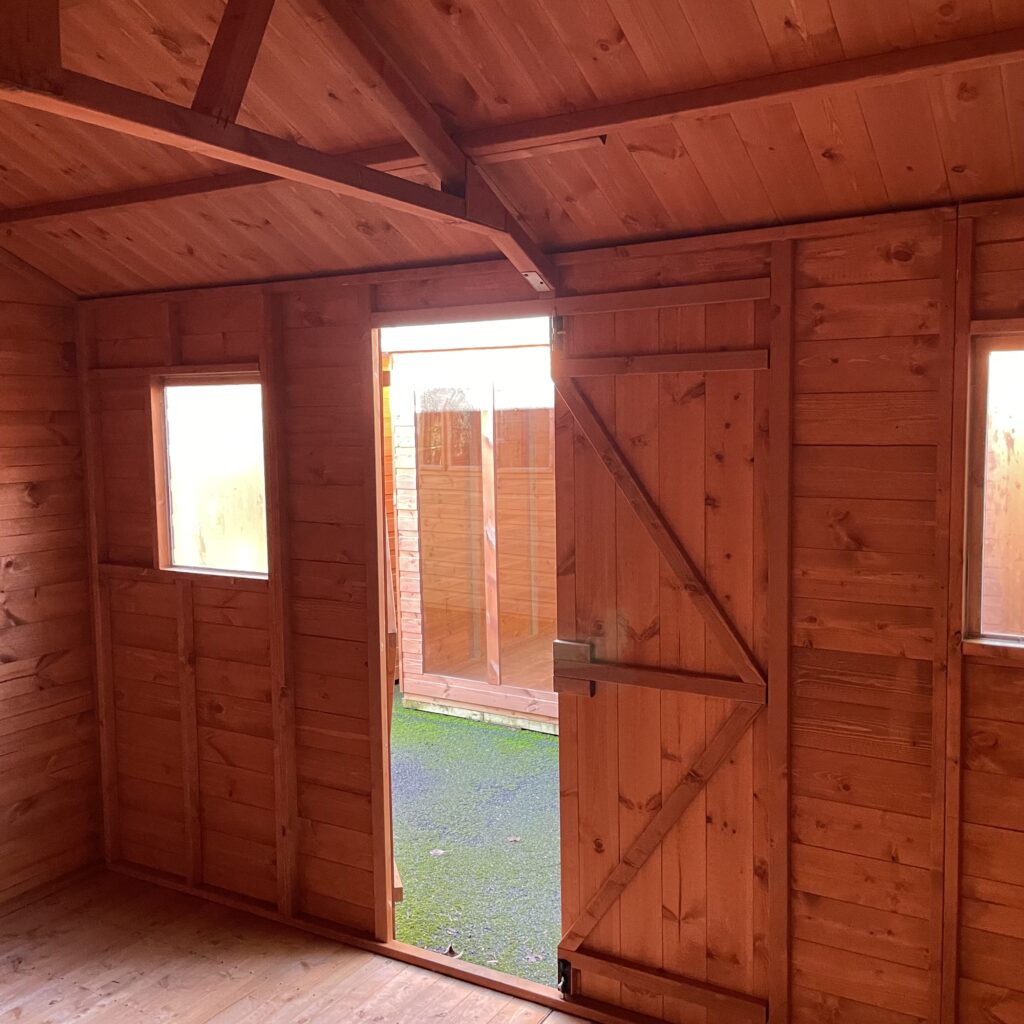
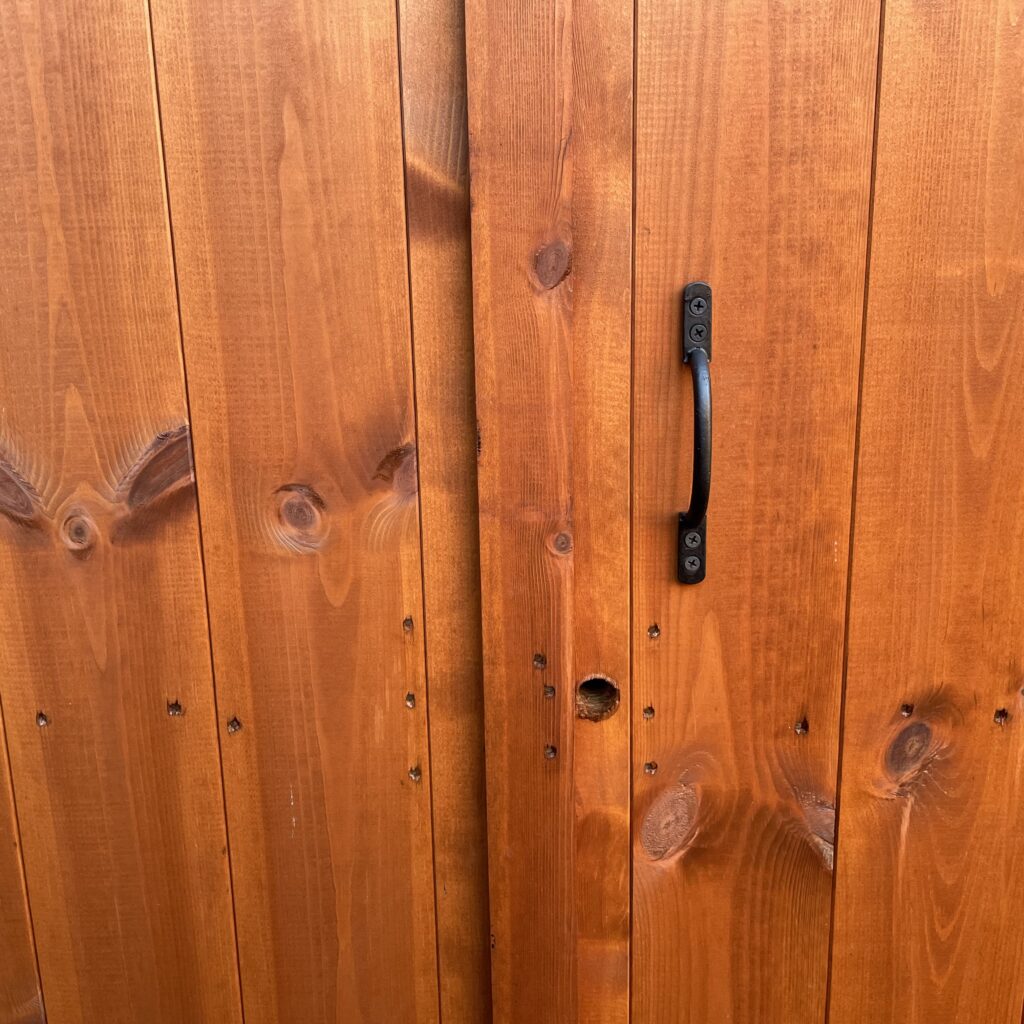
On this one, we had no sticking at all. At both sites, the doors opened smoothly and felt solid.
The best way we can describe it is this:
they didn’t feel “shed flimsy.”
Sometimes a shed door can feel almost cardboard-like — like it’s there because a door has to be there. These didn’t. They felt closer to an internal house door in terms of solidity, just a little lighter — which is exactly where you want to land for a workshop.
Tiger’s technical sheet lists them as double fully-boarded tongue & groove doors, measuring 1132mm × 1800mm, and that matches what you feel in use: tall, wide, and not cheap.
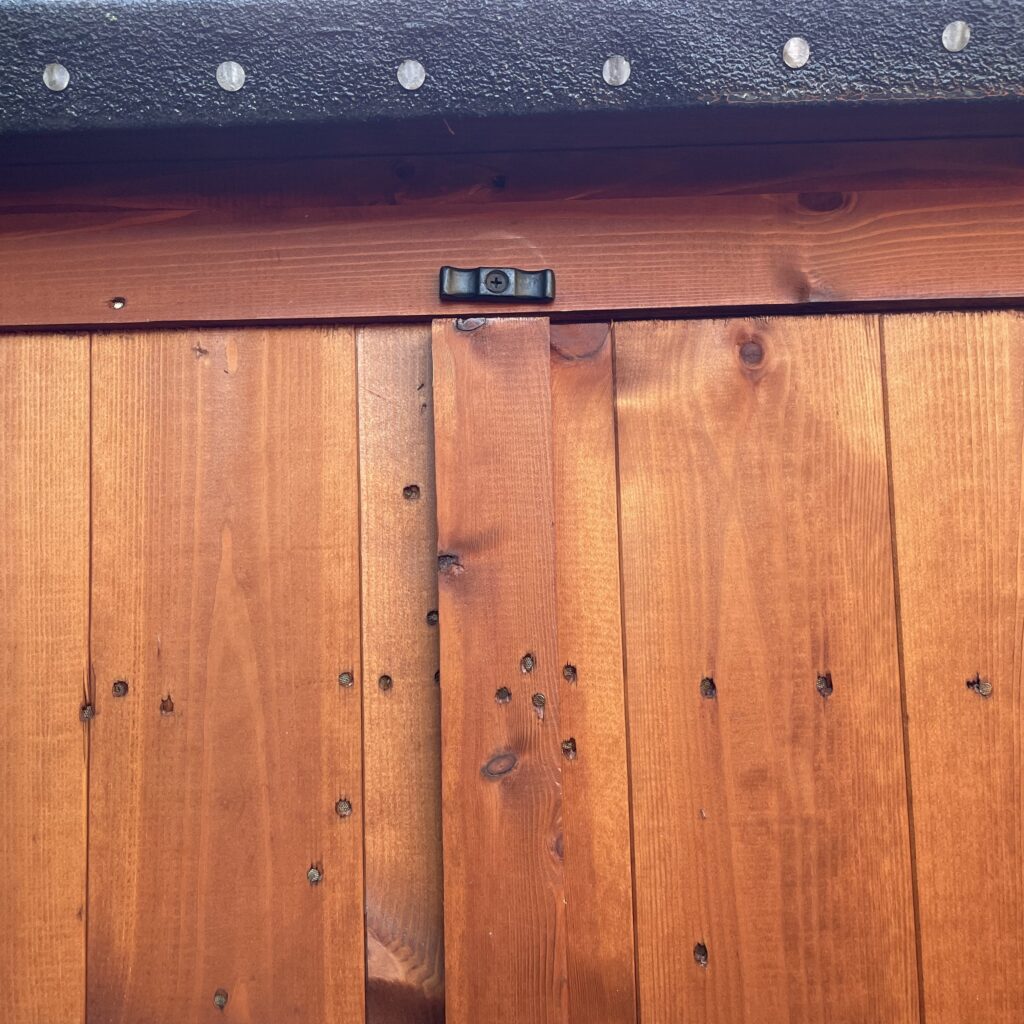
Security-wise, you get a lock-and-key system plus two pad bolts on the non-locking leaf — which matters more than people realise, because it stops one door doing all the work while the other flaps.

Cladding quality: excellent — with one honest anomaly
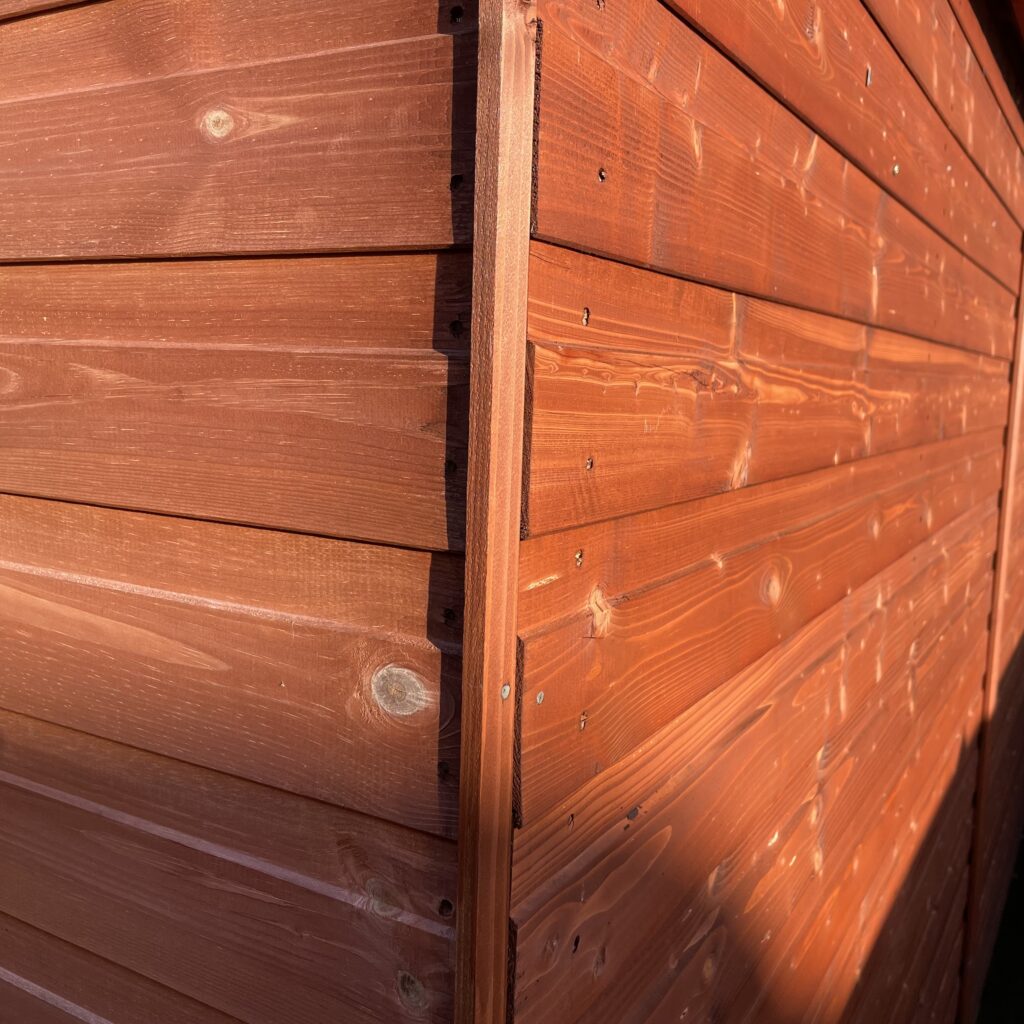
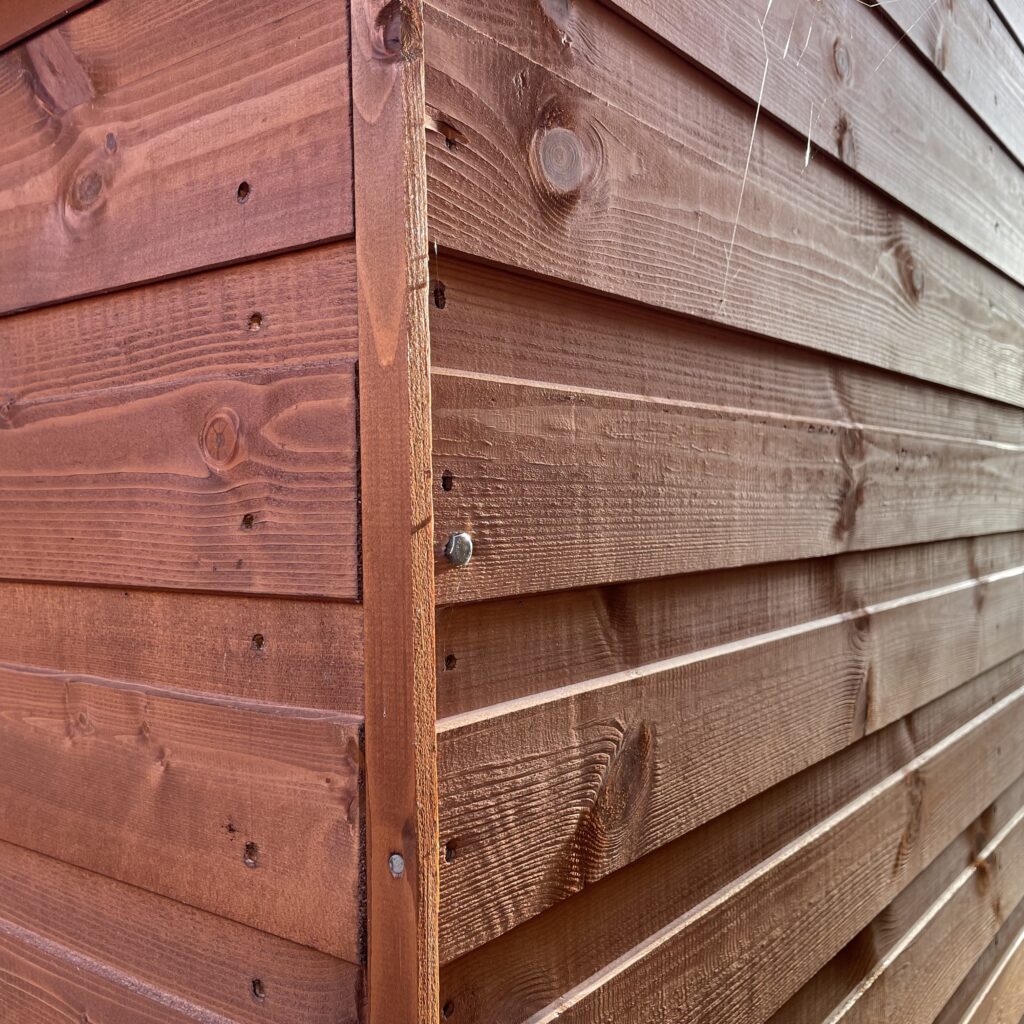
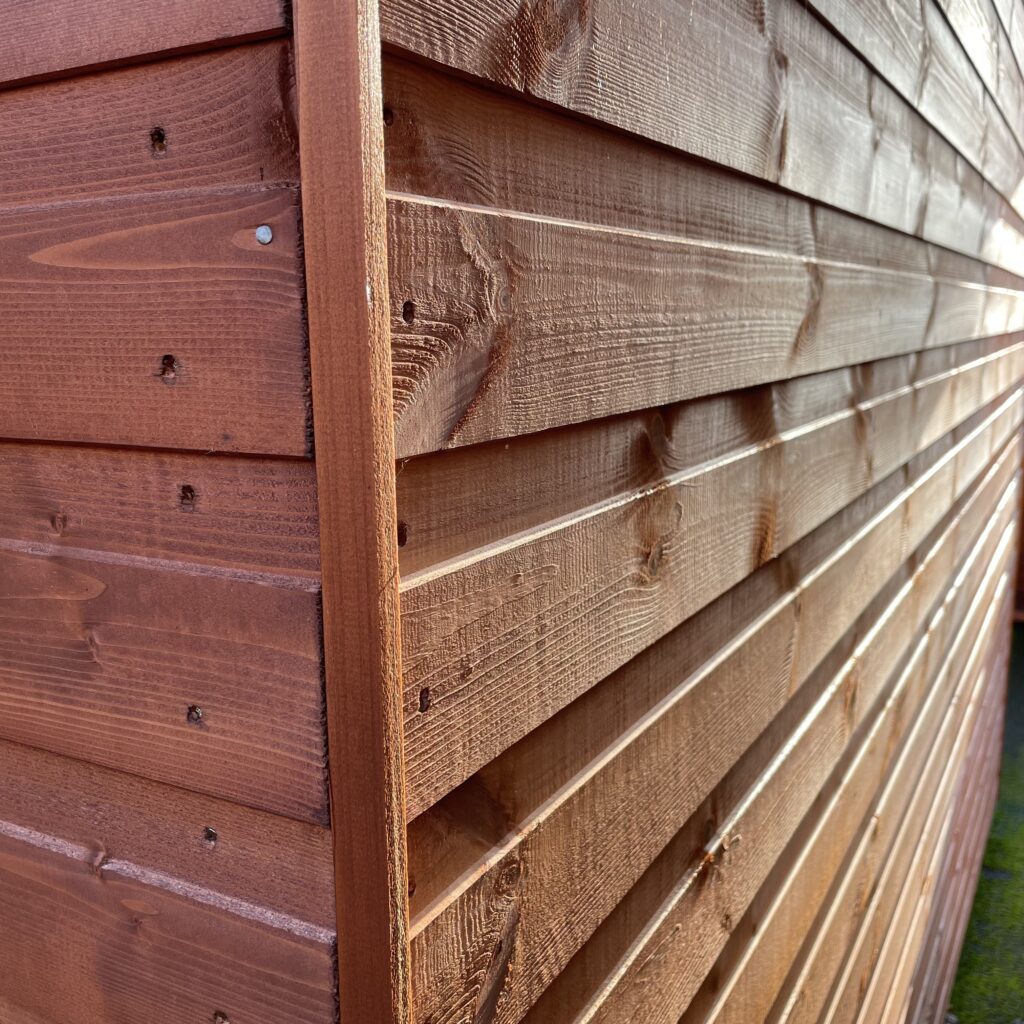
The external cladding is Tiger’s standard 12mm finish shiplap, which we’ve consistently rated highly because the milling is so clean.
You can run your hand down it without worrying about splinters. It has that straight, precise, well-aligned look when you sight along the boards — and crucially, we’ve never seen boards fighting the frame.
On this particular Workman Apex, however, we did notice something we don’t usually see with Tiger.
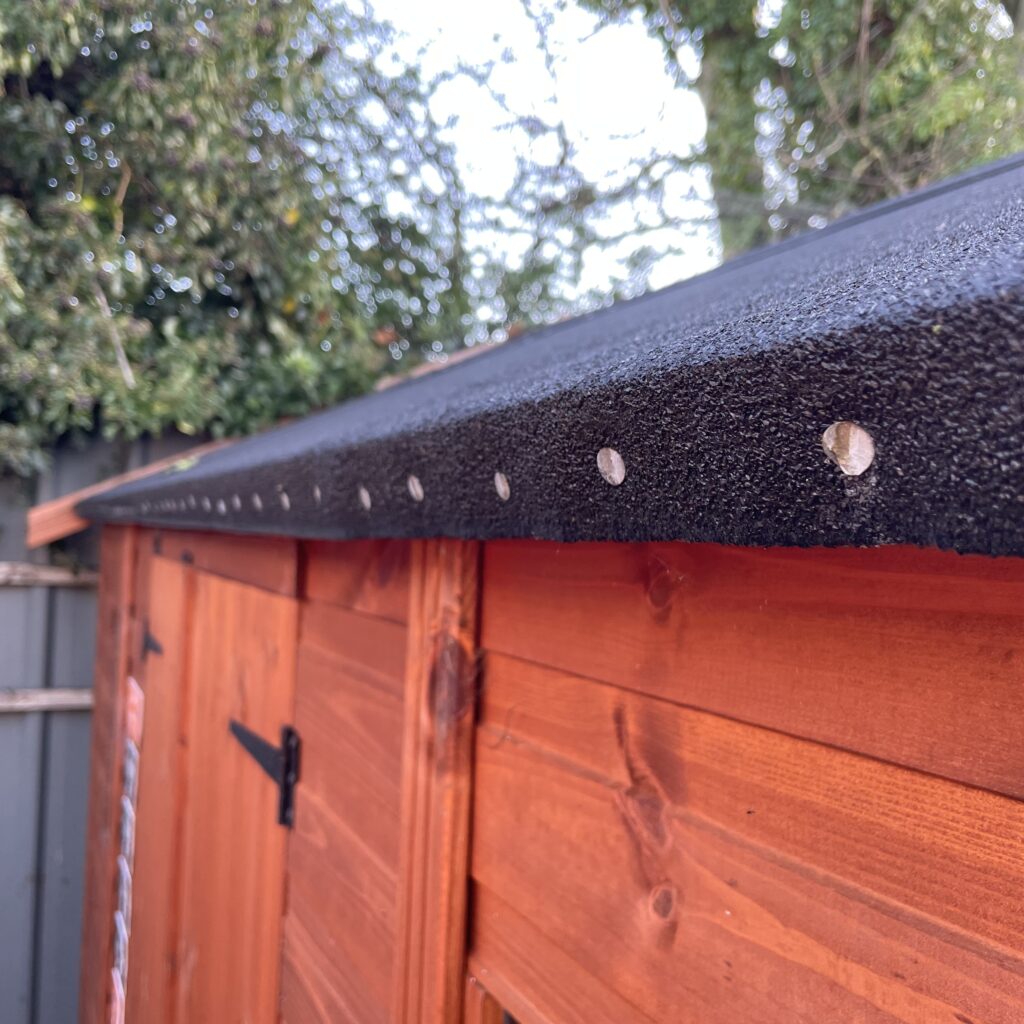
On one or two sides, wood filler had been applied to knots.
Now — and this matters — that’s better than leaving knots open and rough. It’s not structural. But it was more noticeable than we’re used to, and we’re saying it because it’s honest and useful, not because it’s a dramatic fault.
Out of all the Tiger buildings we’ve inspected, this felt like an anomaly, not a pattern.
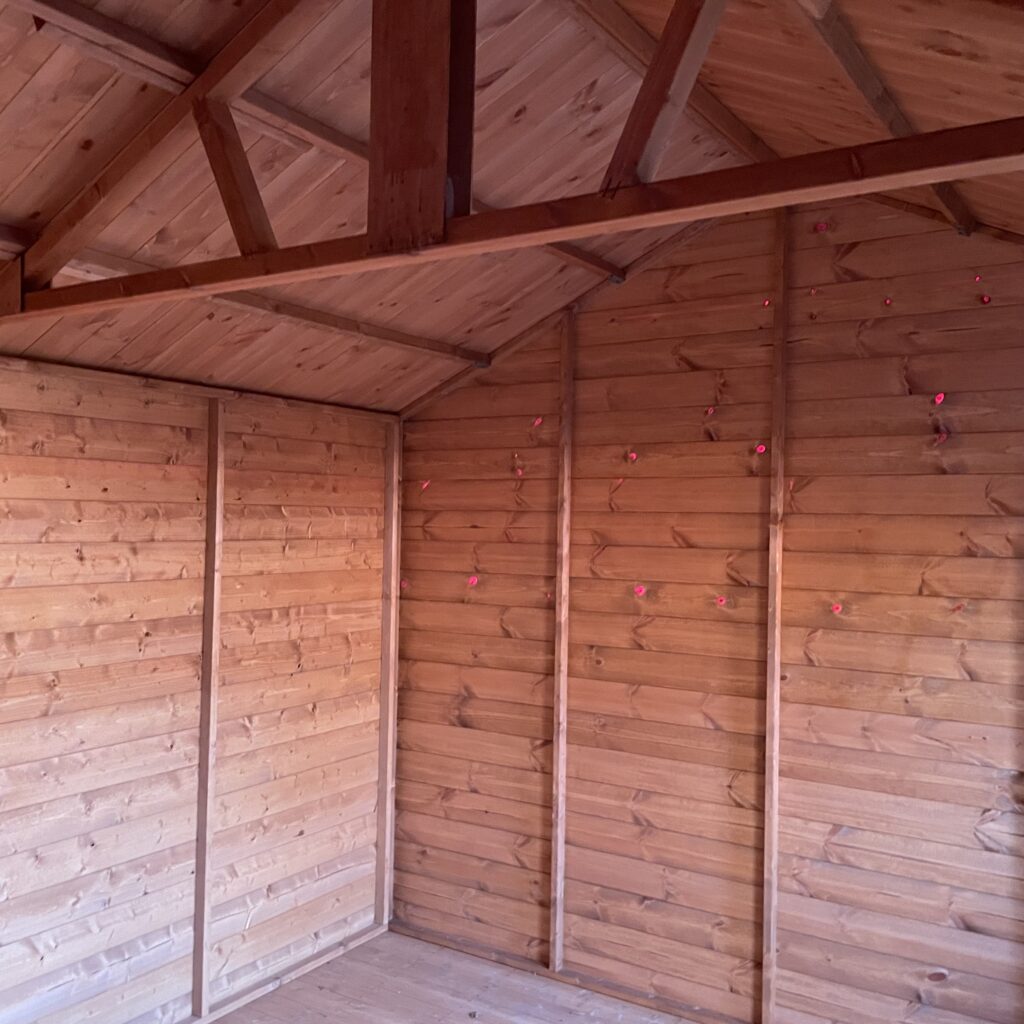
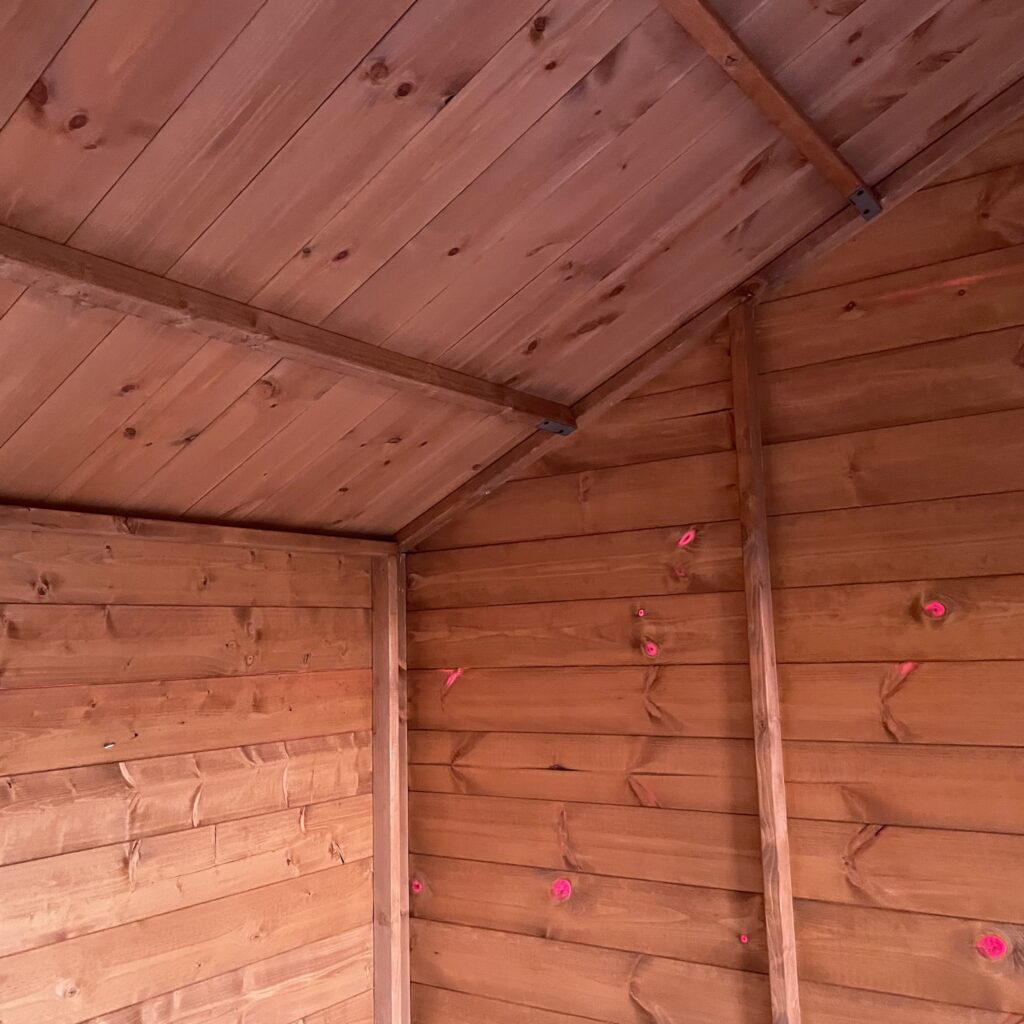
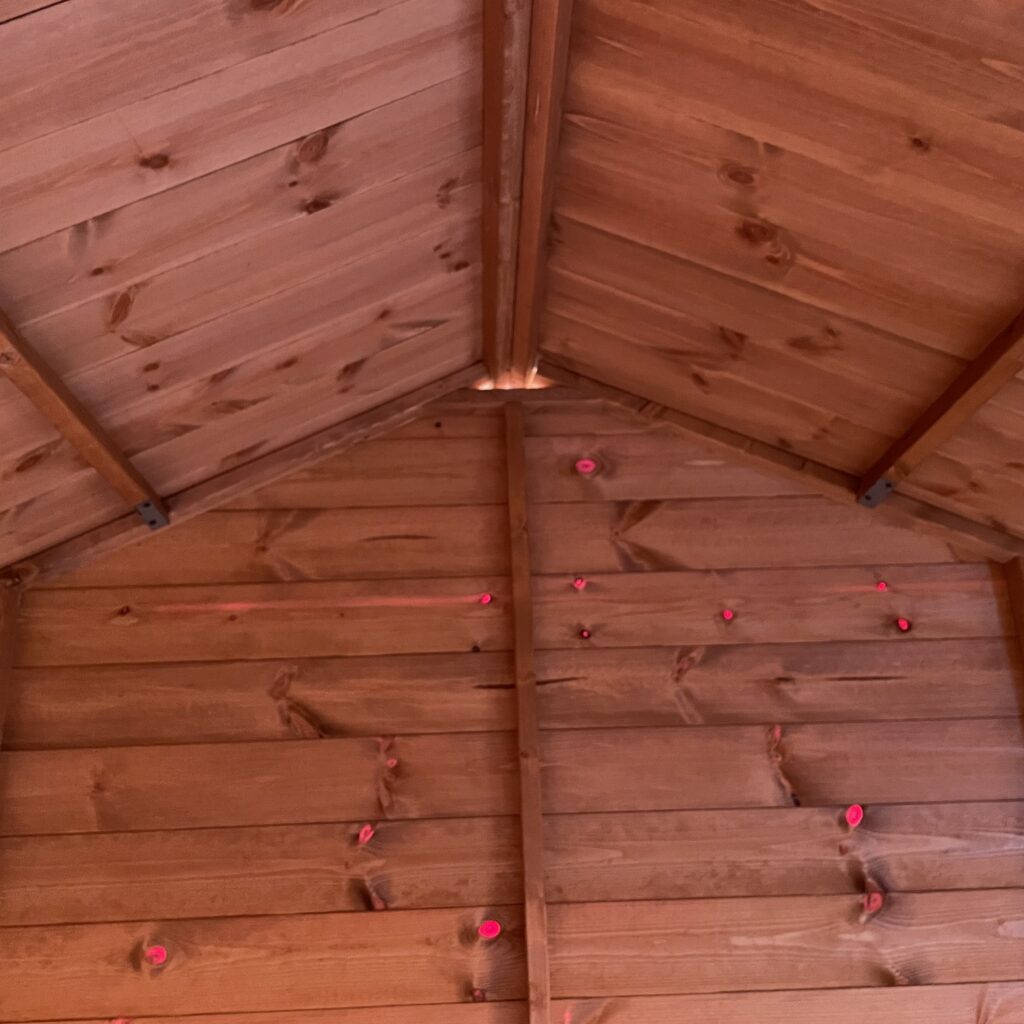
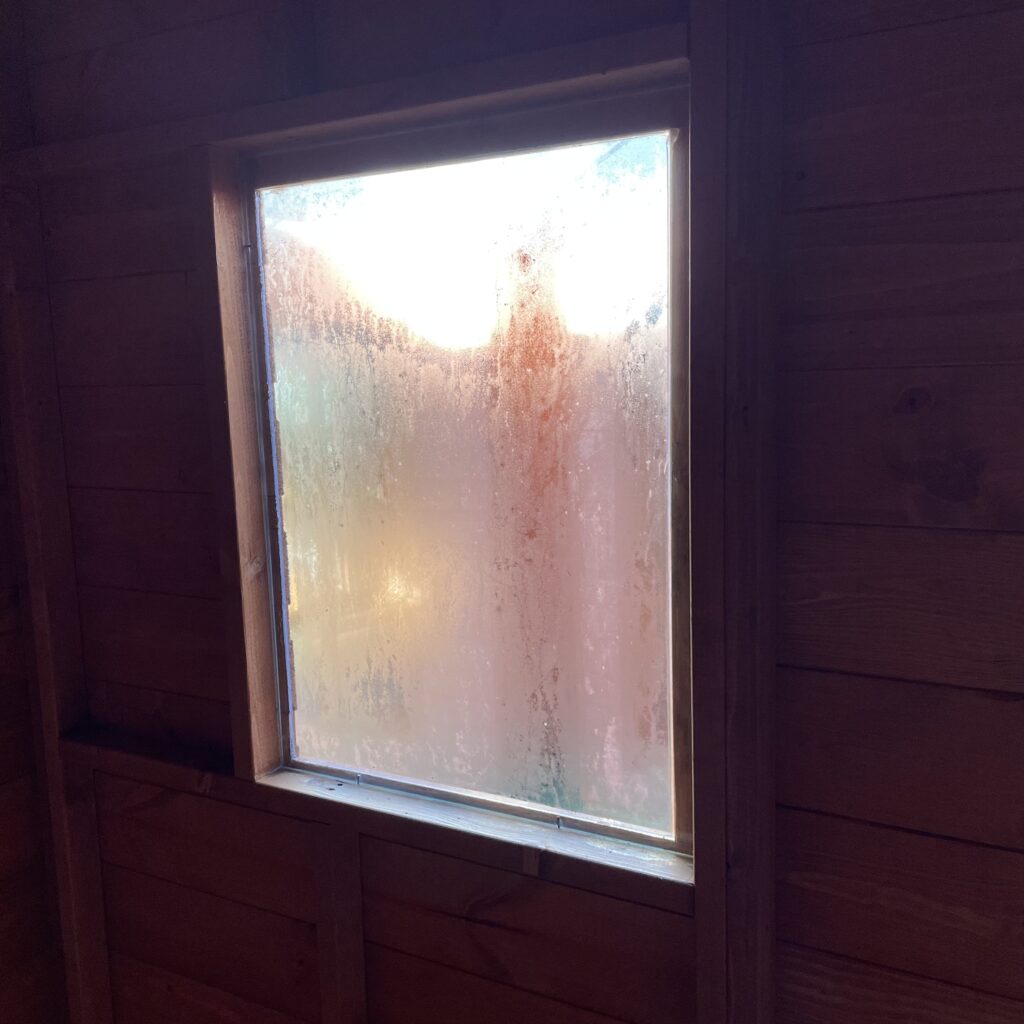
Inside, the same story appeared in bright sunlight — a slight reddish opacity where filler had been used. Again: cosmetic, not structural. But if you care deeply about that perfect clean timber look inside a workshop, it’s worth knowing.
Hinges and real-world security
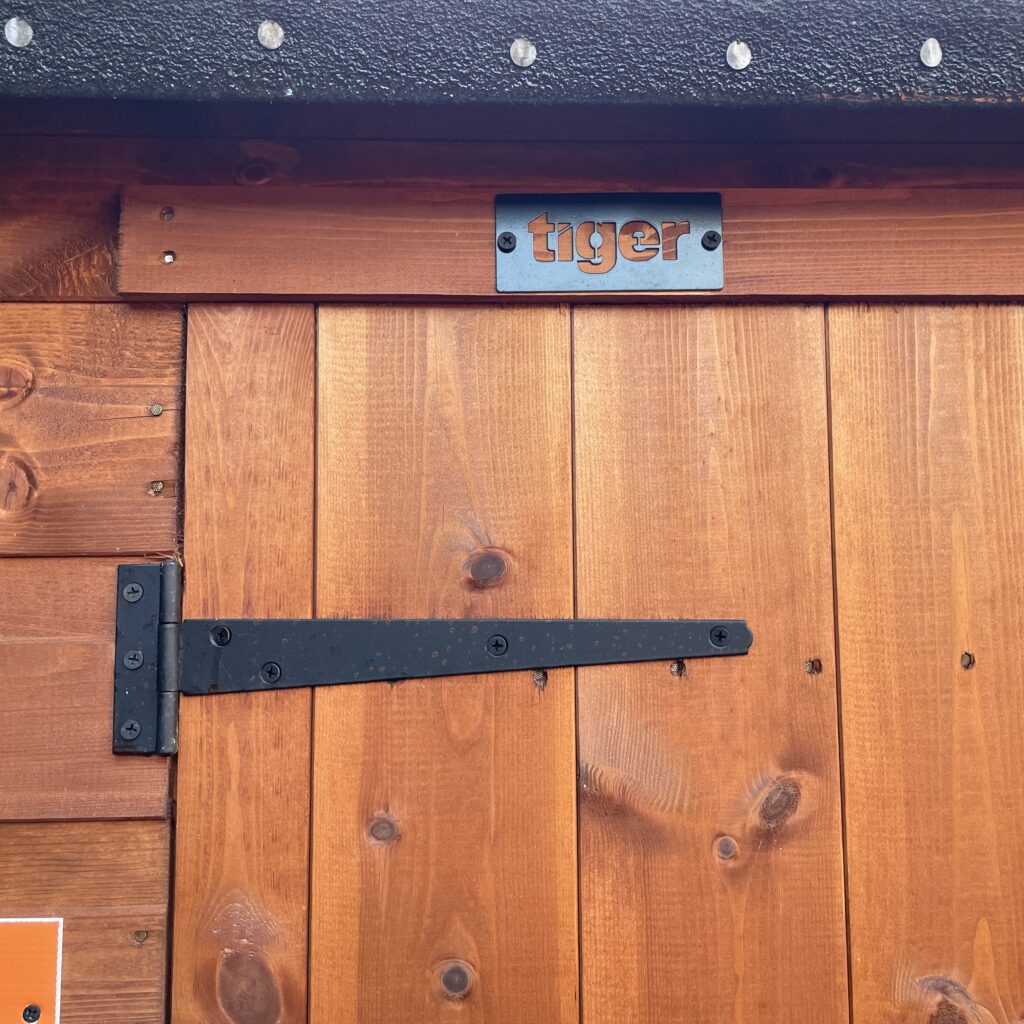
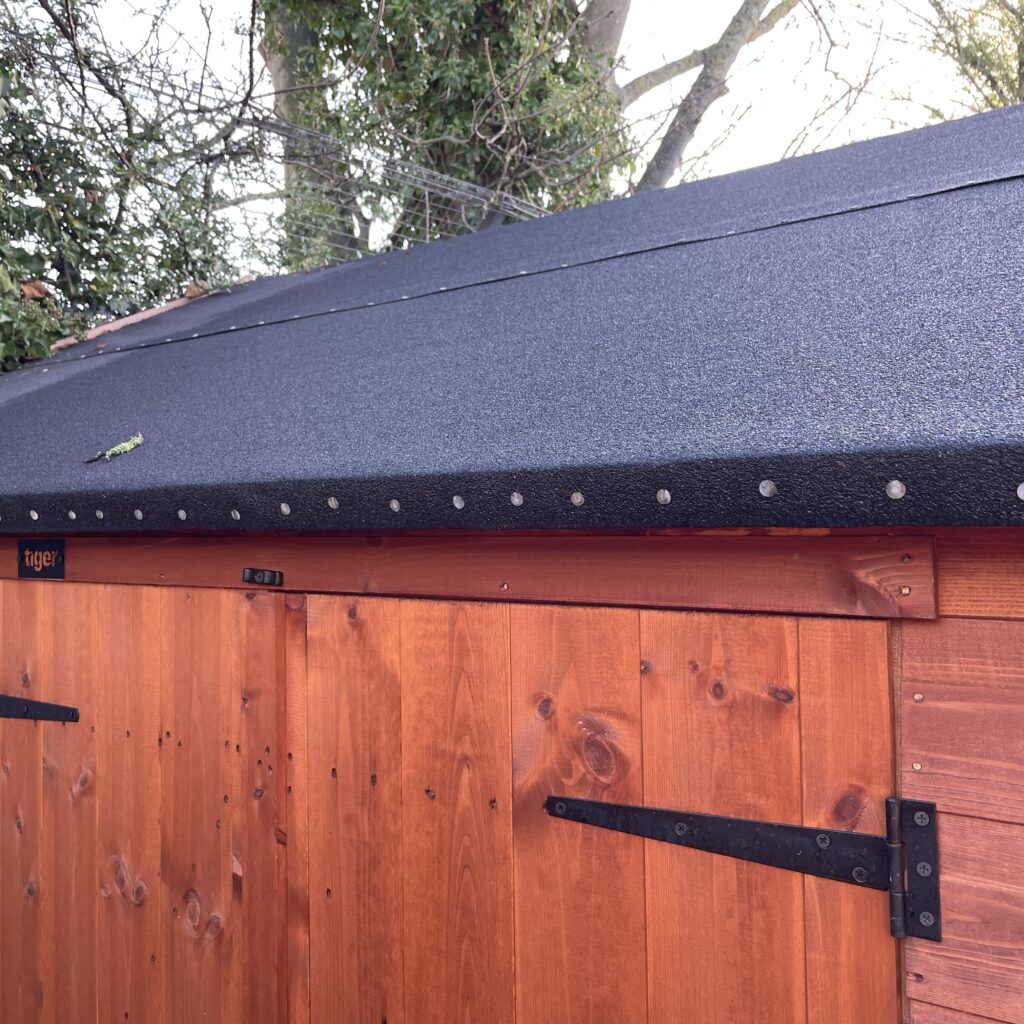
The hinges themselves are fine. You get three per door, well fixed, and the screws bite properly into the framing — unlike some overlap sheds where fixings barely grab.
But here’s the honest workshop reality.
They’re still held in with standard Pozidriv screws.
That means if someone has time and tools, screws can be undone. That’s not unique to Tiger — it’s extremely common across the shed market — but workshops are more likely to contain valuable tools.
Our view is simple:
if security matters, this is where you do a sensible upgrade.
A security bar, reinforced hinge fixings, or internal bracing gives peace of mind without changing the building itself.
Inside: dry, fresh, and reassuringly clean
One of the strongest impressions inside the Workman Apex wasn’t visual — it was sensory.
It smelled dry. Fresh. Clean.
These buildings had been on site for over 12 months. Show-site sheds often pick up damp smells — especially where grass is watered regularly.
We found none of that.
Corners, joins, risk points — all dry. No visible water ingress. That matters, because workshop users don’t just want “dry on day one.” They want long-term dryness.
Windows: strong glass, awkward fixing
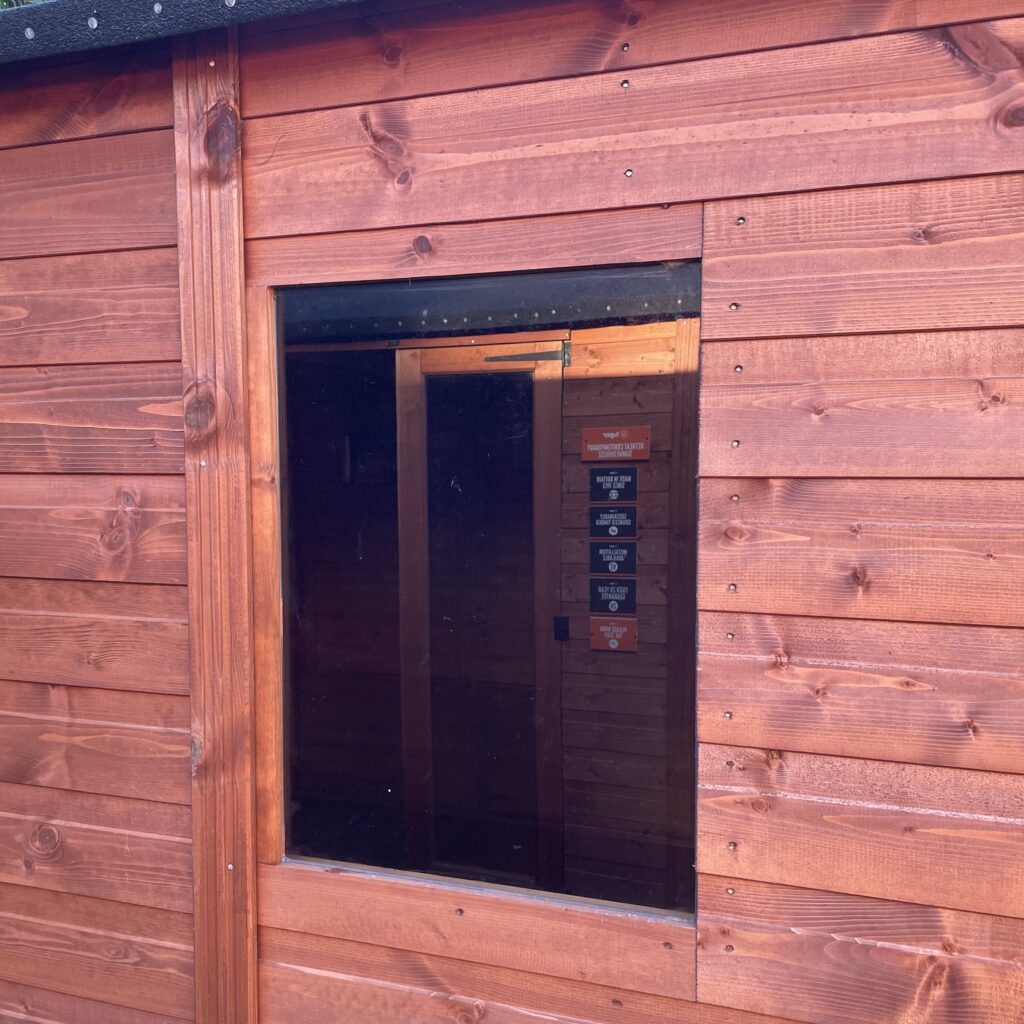
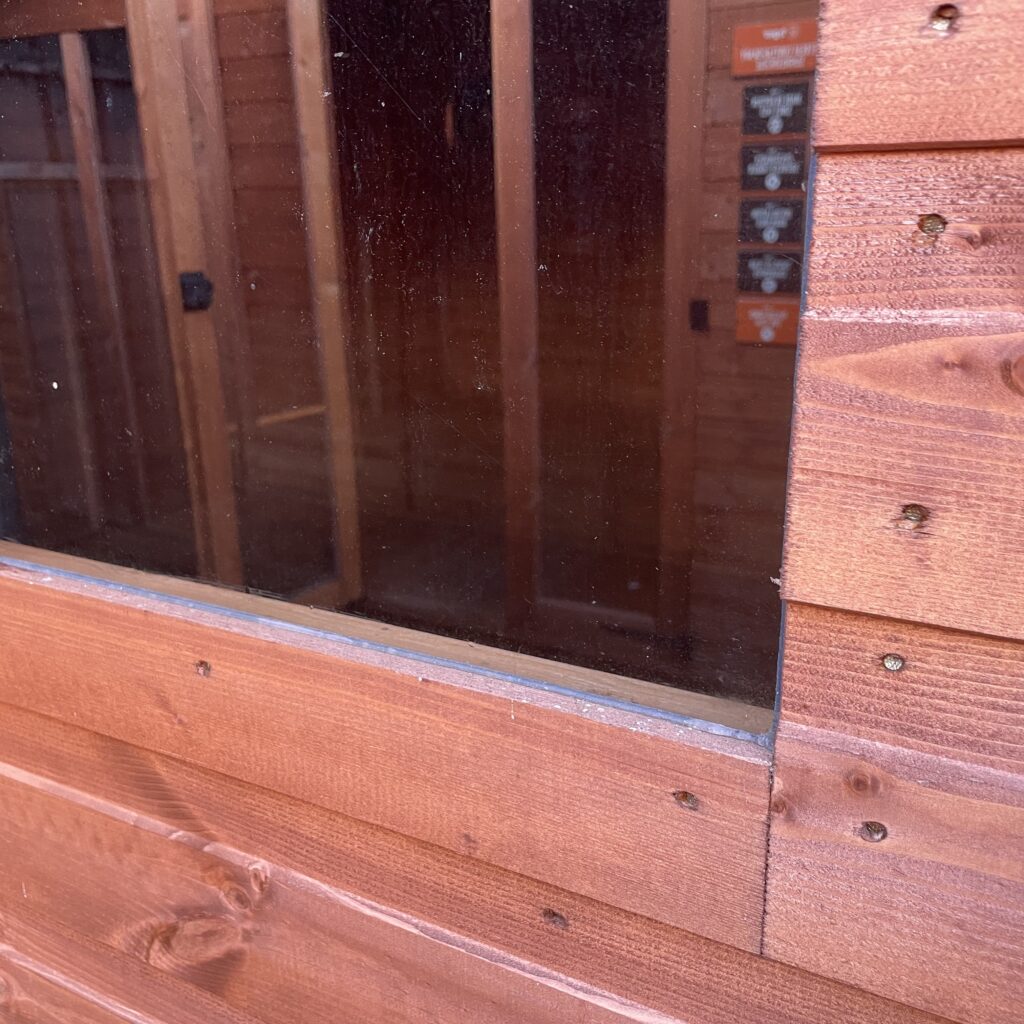
The windows are toughened glass and look professional from the outside. Installation matters, though.
You must apply silicone yourself — properly — or you create your own problems. The panes are then secured with nails.
From the outside: tidy.
From the inside: nail points can protrude slightly.
That creates a snag risk if you’re wearing a jacket or working close to the windows. We’d have preferred internal beading on a workshop like this.
It’s a small detail — but exactly the kind that separates good from polished.
Framing: clearly good timber, clearly well finished
Framing quality matters more in a bigger building.
Inside, the framing felt smooth and high quality. You can tell it’s properly planed and carefully selected. You can also see evidence of real workmanship — pencil marks, alignment cues, signs that this isn’t just churned out thoughtlessly.
Tiger lists the framing as 28mm × 44mm rounded four-corner timber, which is a respectable standard. They also offer heavier-duty framing upgrades on some models — and for a workshop like this, we still see that as a sensible option if you’re adding shelving.
Doubling framing thickness doesn’t just add rigidity — it changes how immovable the building feels over time.


The floor: that “taut twang” feeling
The floor is 12mm tongue & groove, and so is the roof — already a strong base for a workshop.
But what really stood out was how the floor felt underfoot.
Weak floors give a dull thud.
Good floors give a taut, drum-like twang.
This one did exactly that.
We tested it properly:
- 75kg load
- 2mm deflection
Wall tests came in at 3–4mm, which is excellent for a building in this class.
Roof structure: properly tied, properly braced
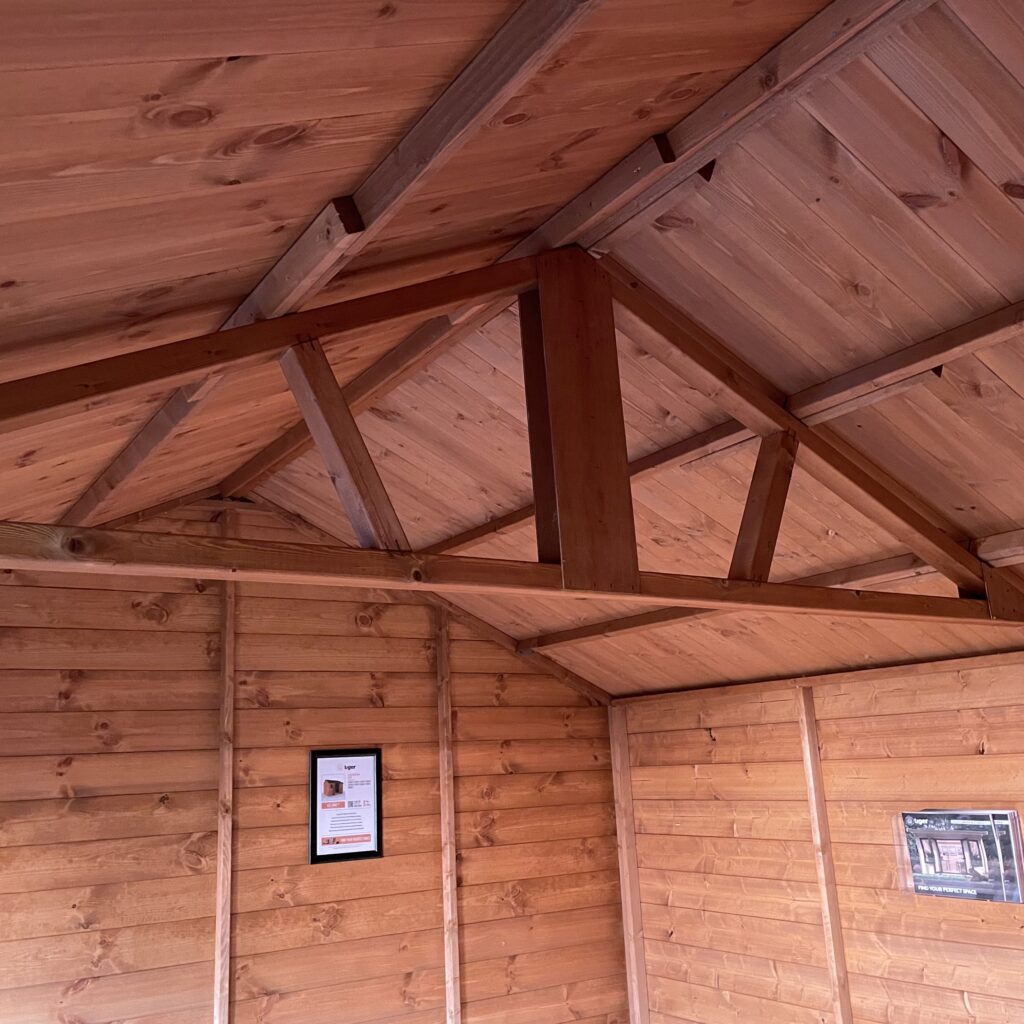
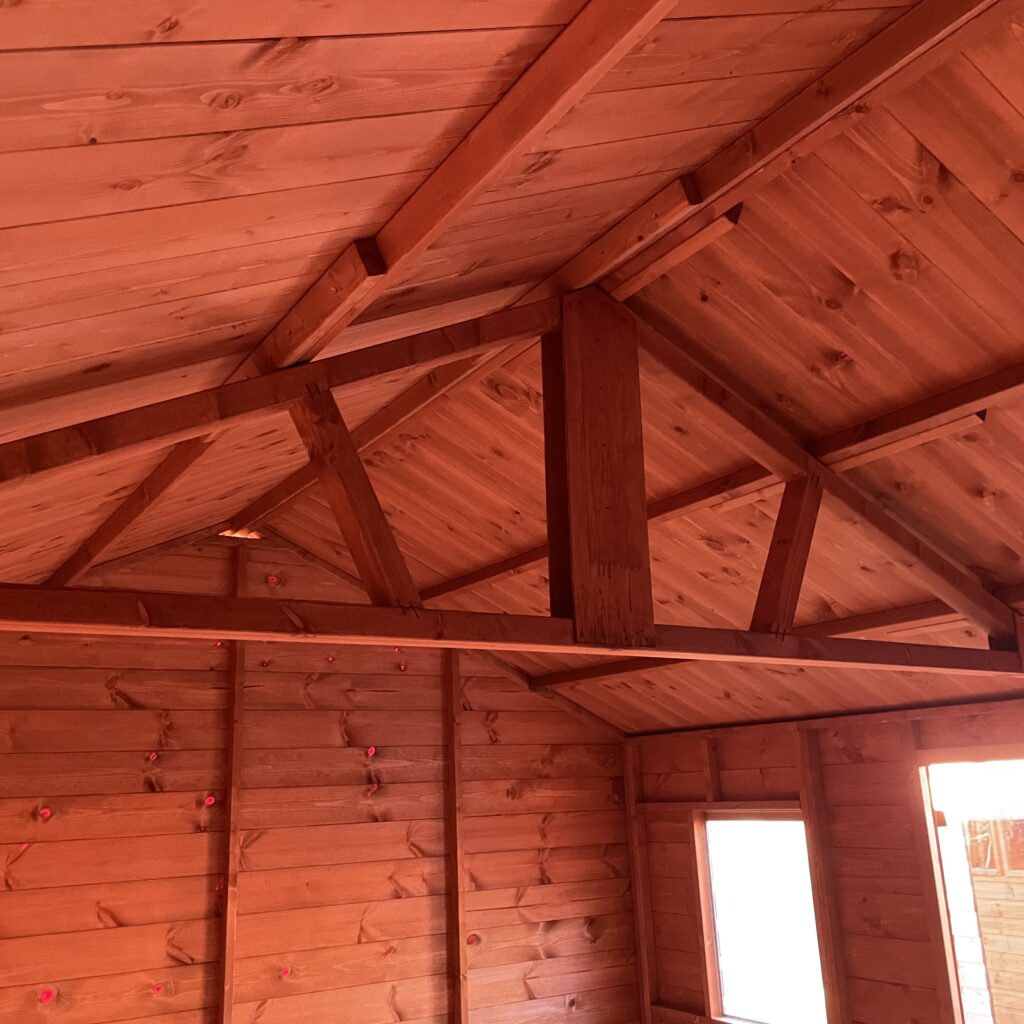
The roof structure is genuinely well done.
There’s a central A-frame support tying everything together, with multiple runs of bracing across the roof and end walls.
It’s airy — you still feel the height — but nothing feels under-braced.
Tiger could have cut this back and probably gotten away with it. They haven’t. That’s the difference between a workshop that feels good in year one and one that still feels good in year five.
Space and light: the honest trade-off
The space inside is big — genuinely big — and because it’s braced properly, it feels usable rather than flimsy.
However, with only two windows, lux readings drop noticeably when the doors are shut. This isn’t the brightest workshop shed internally.
But here’s the practical reality:
workshops can take electrics.
Add proper LED lighting and the problem disappears entirely. Because this building is dry, solid, and spacious, it’s an excellent candidate for doing exactly that.
Final judgement: a strong base that rewards sensible upgrades
The Tiger Workman Apex is already a good workshop shed at base spec.
It’s solid. It feels premium inside. The floor and walls test extremely well. The roof bracing is properly thought through. The doors are confidence-inspiring.
If you:
- Upgrade framing where needed
- Add sensible security
- Install lighting
…it becomes a genuinely excellent workshop.
And that’s why it sells so well. It’s a straightforward workshop concept, executed with more care, more bracing, and better materials than most of the market.