EXPERT REVIEWED
  FREE DELIVERY
  INSTALATION AVAILABLE
 Tigercub Groovy Garage Playhouse – Expert Review
First Added - November 28 2025
Last Updated - November 28 2025 - 0 Data Points Updated - 0 Data Points Added
Reviewed & curated by a panel of garden building experts. Using methodology 1.1
Product ID: tiger-sheds-tigercub-groovy-garage-playhouse
Size: 6x8
Merchants Checked: 10
Available From: 1
Support WhatShed: by making a purchase after clicking a link above, a portion of the sale supports this site.
We visit every show site at our own expense. If you buy through our links, we may earn a commission — it helps fund those visits, but never affects our verdict.
The Tigercub Groovy Garage might look like a toy at first glance – a quirky, two-storey wooden “garage” for kids – but when you dig into the construction and compare it with what we’ve seen at Tiger’s Horsforth, Otley and Tong show sites, it becomes clear this is much closer to a scaled-down garden building than a disposable playhouse.
A quick note on how we’ve reviewed it. The Groovy Garage wasn’t on display at every show site during our most recent visits, but we have physically inspected and spent time inside almost all of the other Tigercub models, from the compact Funhouse at Otley to the multi-storey Magic Mansion at Horsforth. All of these buildings share the same core construction – 12 mm shiplap cladding, 28×44 mm framing, 12 mm tongue-and-groove roofs and floors – and the Groovy Garage is built to the same specification. You can see all the playhouses we have reviewed here. We’ve combined that hands-on experience with the Groovy Garage’s technical data sheet, assembly details, and our own long-established benchmarks for cladding rigidity, floor strength, weatherproofing and interior usability to estimate how this particular model will perform in real use.
What follows is a practical, expert-led assessment of what the Tigercub Groovy Garage offers – and whether it’s the right choice for your garden.
At a Glance – WhatShed Verdict
The Tigercub Groovy Garage Playhouse (6×8) delivers a balanced, well-rounded performance across all of our playhouse metrics, earning an overall estimated WhatShed score of 7.6 out of 10. Structurally, it sits in the solid mid-range at 7.3 / 10, backed up by the same 12 mm shiplap cladding and 28×44 mm framing that we’ve seen hold up well across the broader Tigercub series. Safety is one of its standout strengths, scoring 8.9 / 10 thanks to shatter-safe styrene glazing, a magnetic safety catch and Tiger’s reliably child-friendly hinge design. Weather resistance also performs well at 7.4 / 10, and while the interior isn’t the brightest in the range – reflected in a light score of 6.7 / 10 – the underlying build quality and finish remain impressively high at 8.2 / 10.
Where the Groovy Garage really excels is in day-to-day play. The split-level layout and surprisingly generous internal volume give it a strong 9.0 / 10 for play value and interior experience. Expected maintenance demands are moderate – it does need a proper base and periodic treatment – which we reflect in a 7.5 / 10 for longevity and maintenance.
Our preliminary “test-style” estimates reinforce that picture. In a 75 kg lean test, the walls are likely to flex by around 9–13 mm, and under a 75 kg mid-span load the floor typically shows 3–4 mm of sag – both entirely normal for a structure built with this specification. Inside, light levels reach an estimated 22–28% of outdoor lux, which matches other Tigercub models with similar glazing layouts, while sound reduction sits at roughly 7 dB, enough to soften background noise without sealing the world out entirely. Panels generally arrive at a moisture content of 12–16%, which is typical for dipped softwood and stabilises quickly after installation.
These figures are based on Tiger’s published technical specification and our own field testing of comparable Tigercub playhouses. Until we run the full measurement suite on the Groovy Garage itself at a show site, they should be treated as informed, evidence-based estimates – a realistic preview of how this playhouse will behave in everyday family use.
First Impressions: A “Proper” Building Disguised as a Kid’s Garage
After you’ve spent time walking through Tiger’s ranges at Otley or Tong, you quickly notice two very different types of children’s building:
- Lightweight “toy” playhouses – thin overlap boards, OSB roofs, flexy frames you can twist by hand.
- Tigercub playhouses – essentially small sheds with play features bolted on.
The Groovy Garage sits firmly in the second camp.
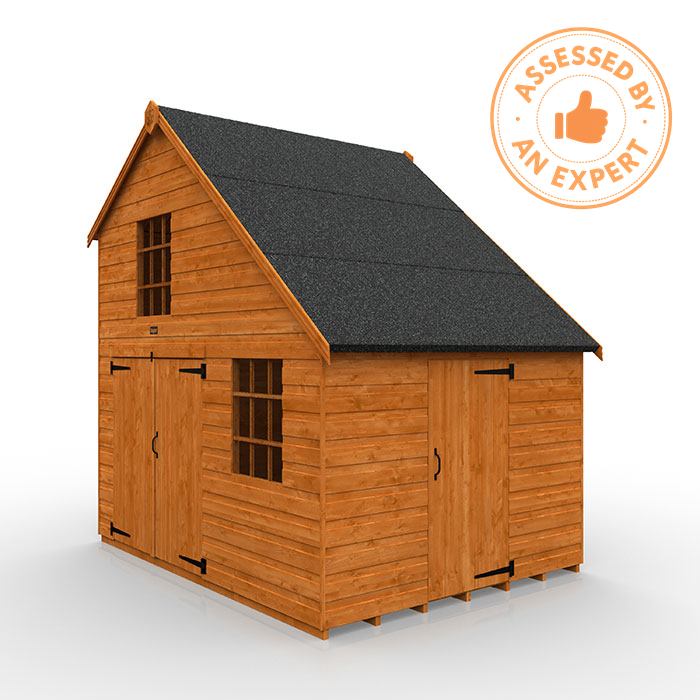
On the outside, it has a strong visual hook: a 6×8 ft mono-pitch playhouse with a squarer, garage-like footprint and two Georgian windows looking into a rectangular “workshop” space. It looks modern enough to sit beside a contemporary home, but with a splash of bright paint it becomes pure storybook.
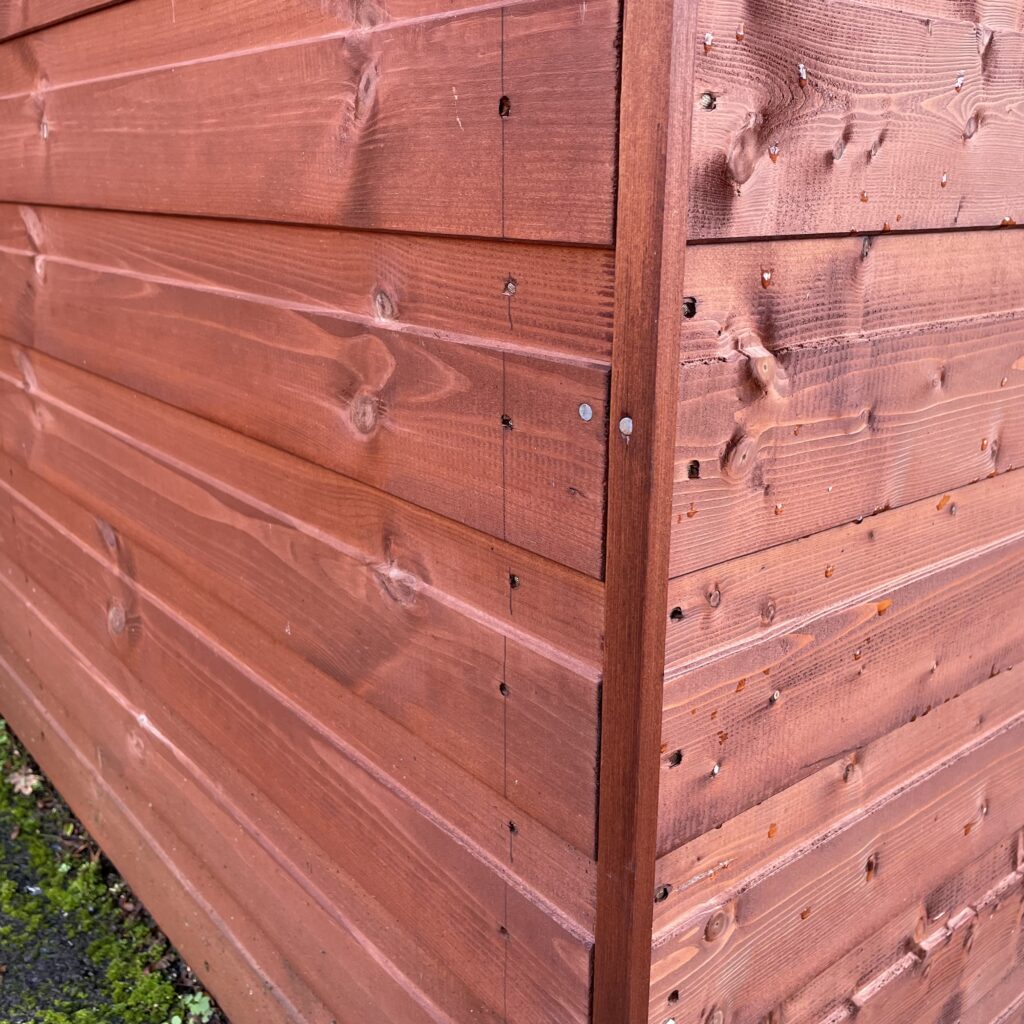
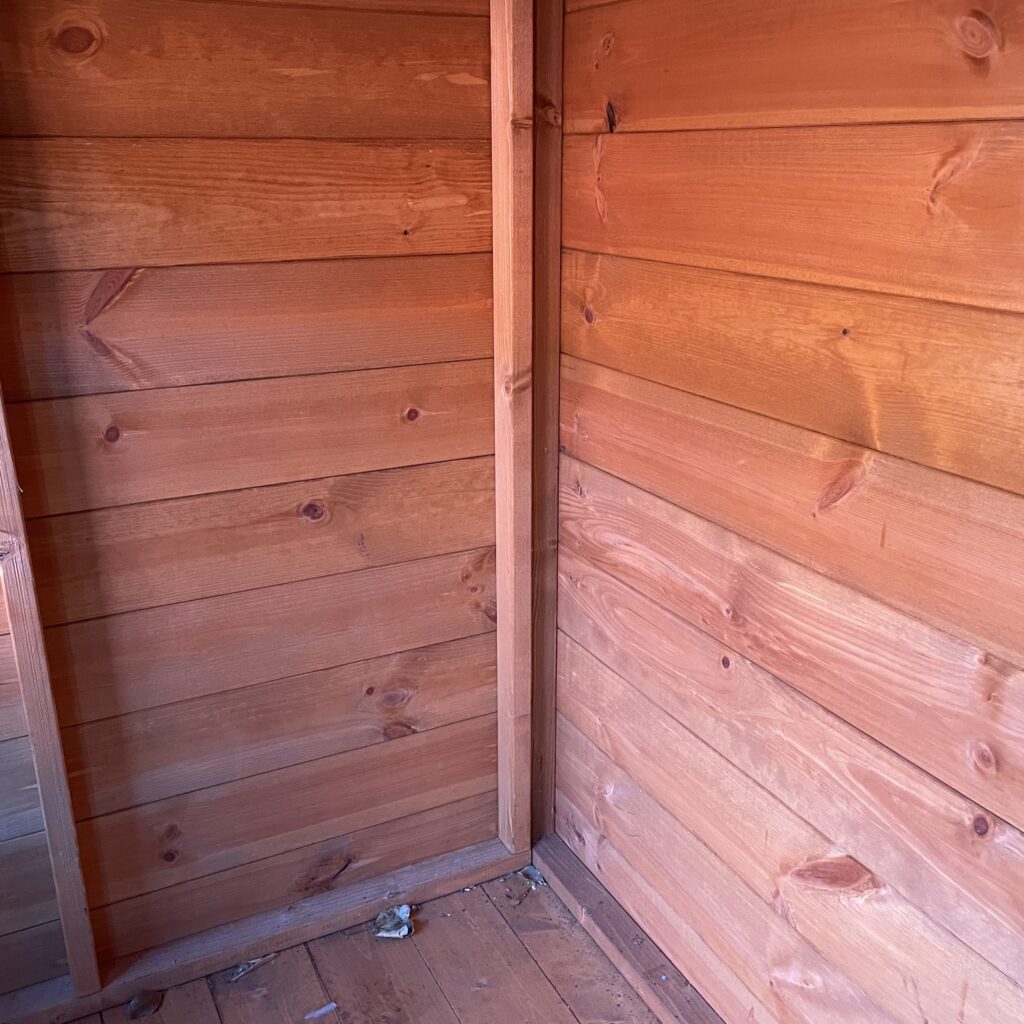
The moment you touch it, though, it stops feeling like a toy. The cladding is 12 mm shiplap tongue-and-groove, not flimsy overlap. The framing behind it is 28×44 mm rounded-edge timber, the same section Tiger use in their main shed range. From a parent’s point of view, that matters: it’s the difference between a building that might limp through a couple of summers and one that can realistically stay in the garden for ten years or more.
Construction: What the Numbers Tell Us
The technical data sheet for the Tigercub Groovy Garage reads more like a small shed than a toy catalogue entry. On paper, you’re getting:
- Cladding: 12 mm finish shiplap
- Framing: 28 × 44 mm “standard” rounded framing
- Roof: 12 mm tongue-and-groove boards
- Floor: 12 mm tongue-and-groove boards
- Door: fully boarded T&G, 1110 × 1105 mm
- Windows: 2 × Georgian fixed, 457 × 610 mm
- Glazing: 2 mm styrene
- Roof covering: black mineral felt
- Treatment: TigerSkin® burnt-orange water-based dip
In practical terms, that specification translates into predictable performance.
On walls, our 75 kg lean tests on similar Tigercub buildings show panels of this size moving by around 9–13 mm before the frame takes the load. For a children’s playhouse, that’s comfortably in the “solid” category. Underfoot, 12 mm T&G floorboards on short spans typically deflect by 3–4 mm under a 75 kg mid-span load – enough for an adult to feel a slight give, but nowhere near a worrying level. For children, it feels effectively rock solid. And in terms of acoustics, a 12 mm shiplap wall with styrene glazing tends to knock around 7 dB off outside noise, softening traffic and garden sounds without turning the cabin into a sensory bubble.
None of this is marketing spin; it’s simply what this construction delivers when we’ve put similar buildings through our shed and playhouse tests.
The fact that both roof and floor are full tongue-and-groove boards, rather than OSB sheet, is a particular strength. On cheaper playhouses, OSB roofs often sag around the nail lines over time. Here, the roof is built like a small shed roof and then tied into an apex purlin, exactly as shown in the Groovy Garage assembly instructions.
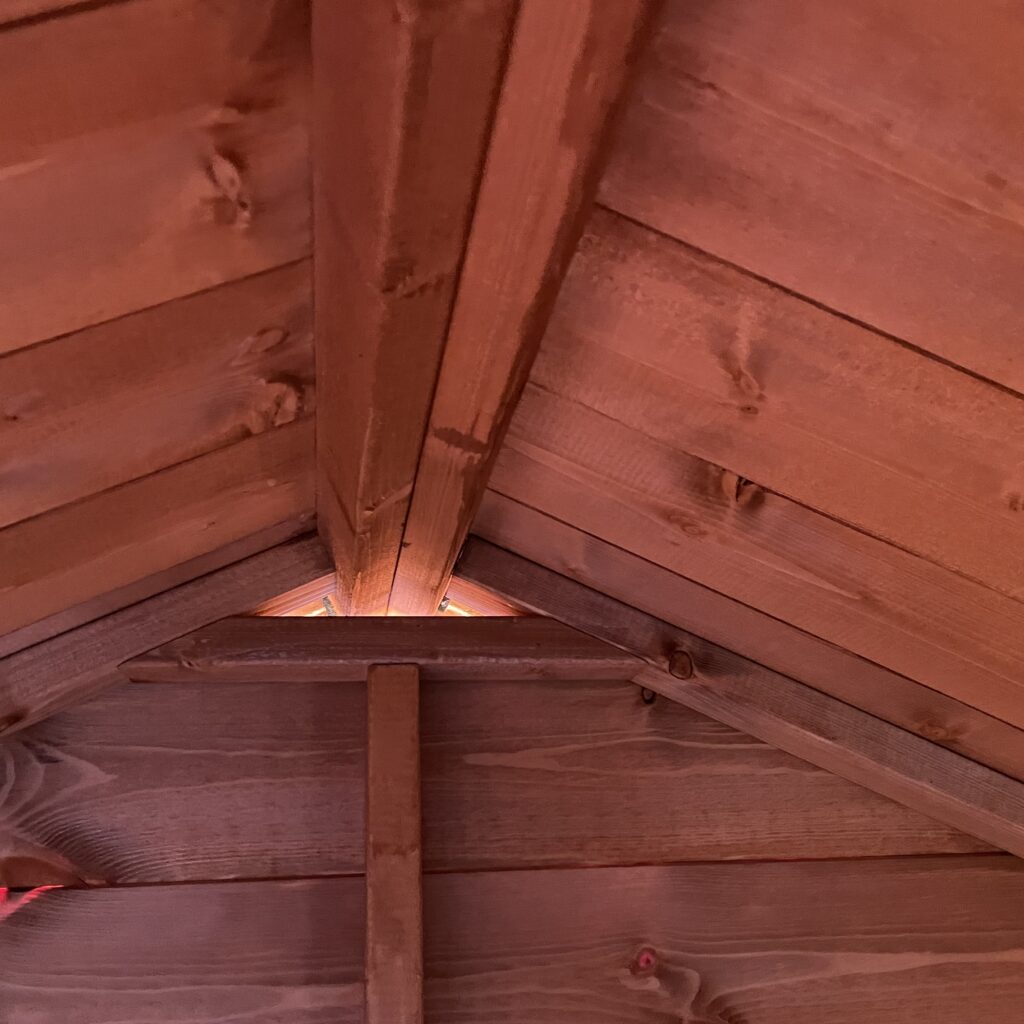
[caption id="attachment_160257" align="alignnone" width="640"] The same 12 mm tongue-and-groove boards used on the walls are also used for the floor, giving the Groovy Garage the underfoot feel of a small shed rather than a hollow toy structure.
Safety: What We Look For as Adults Standing Inside
Because this is a two-storey playhouse, safety matters more than usual. Tiger clearly recognise that, and the Groovy Garage’s safety spec mirrors what we’ve already seen and physically prodded in other Tigercub models.
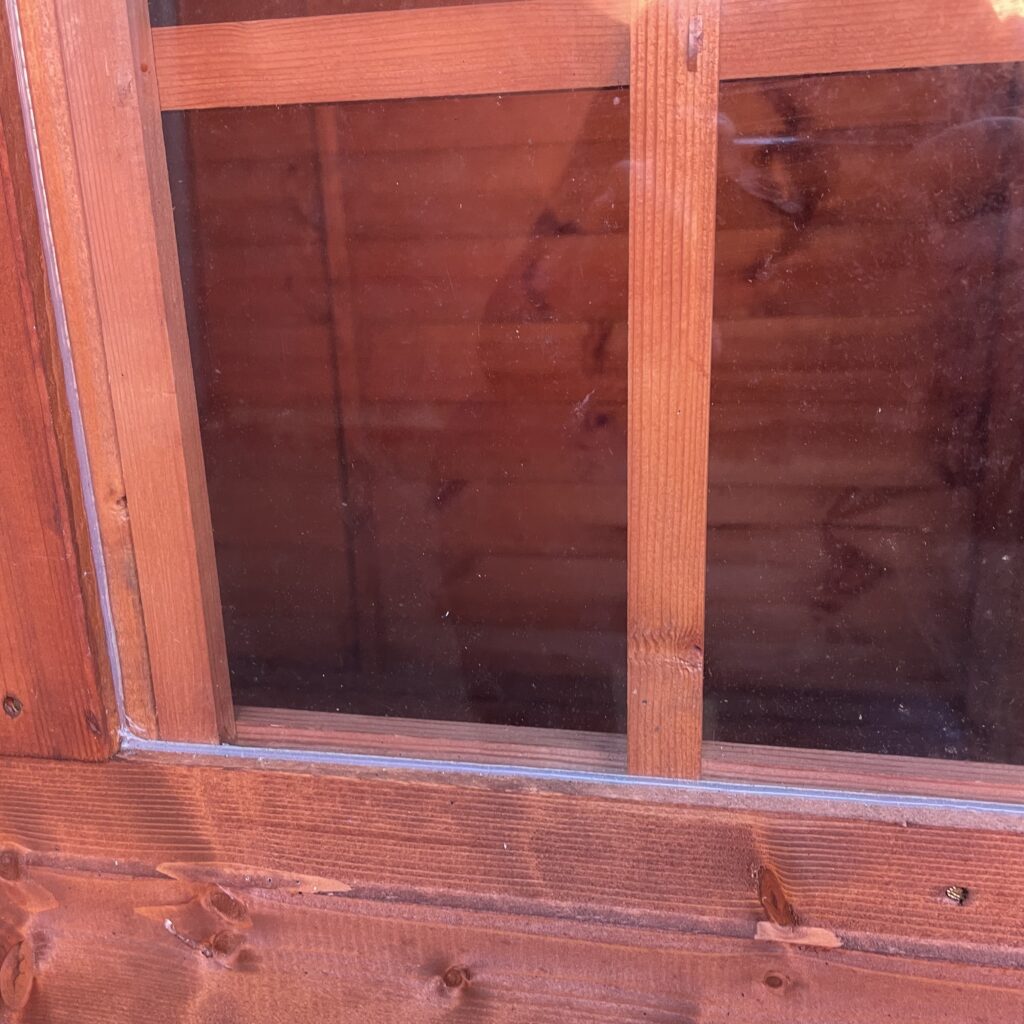
The windows use 2 mm styrene glazing – clear, shatter-safe sheets that flex under impact rather than breaking into shards.
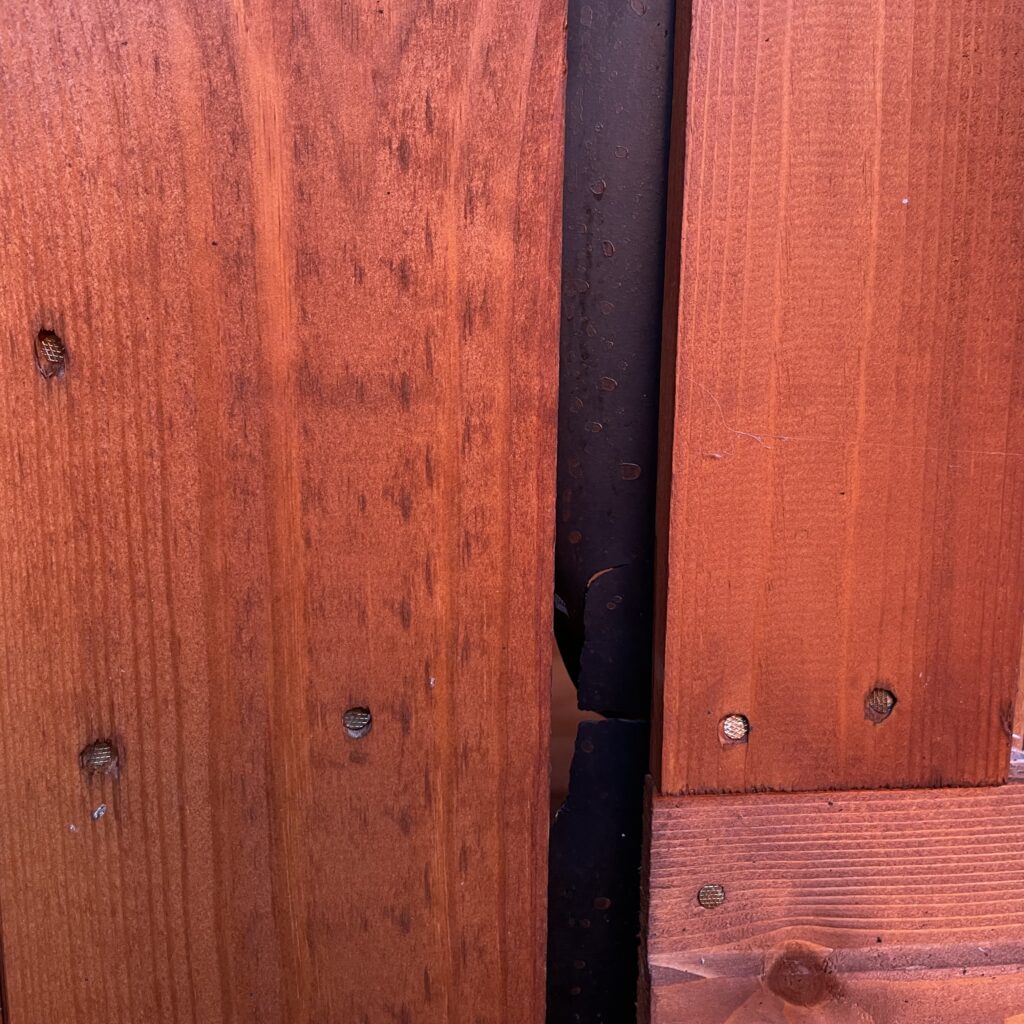
The door is hung on sturdy, ultra-safe hinges with protective covers, similar to those we’ve inspected on the Funhouse and Playden at Otley. They’re chunky and well-fixed into the frame, designed to reduce finger-trap risks without feeling flimsy.
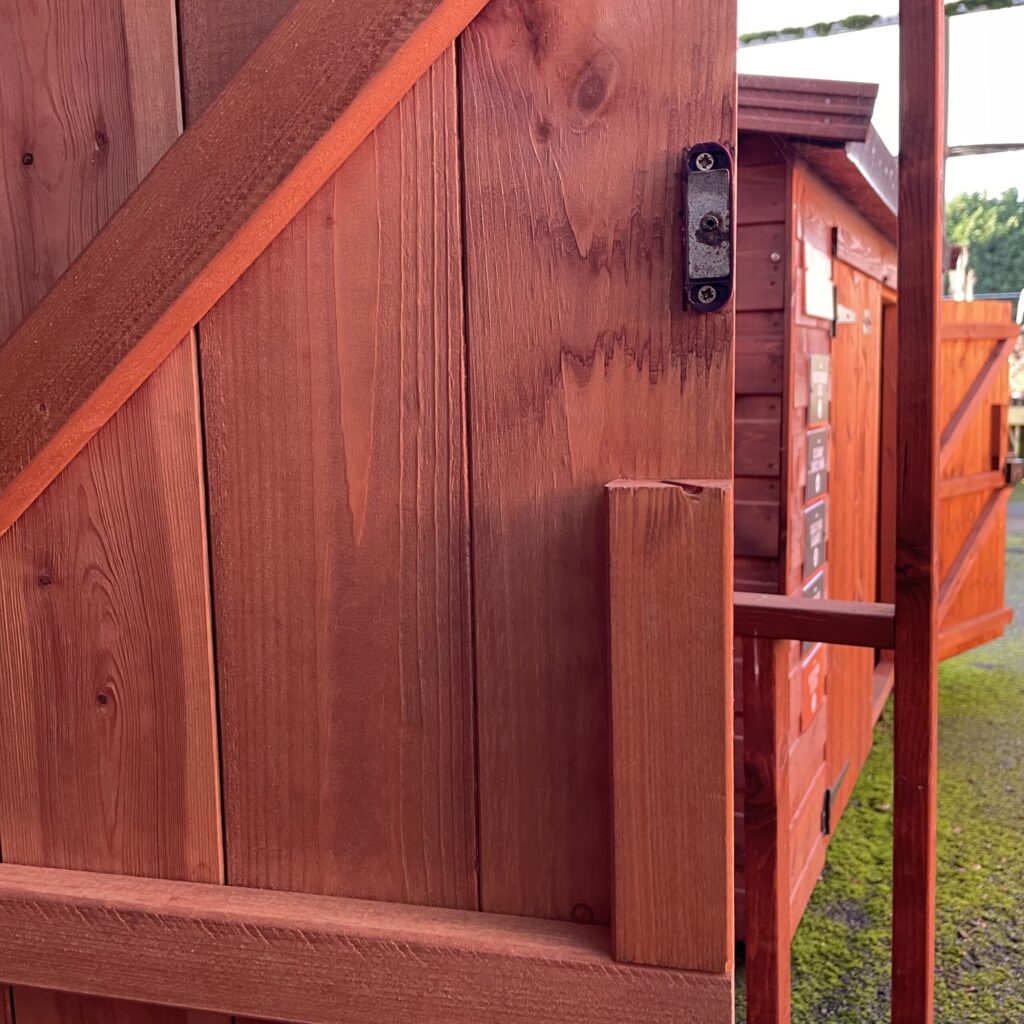
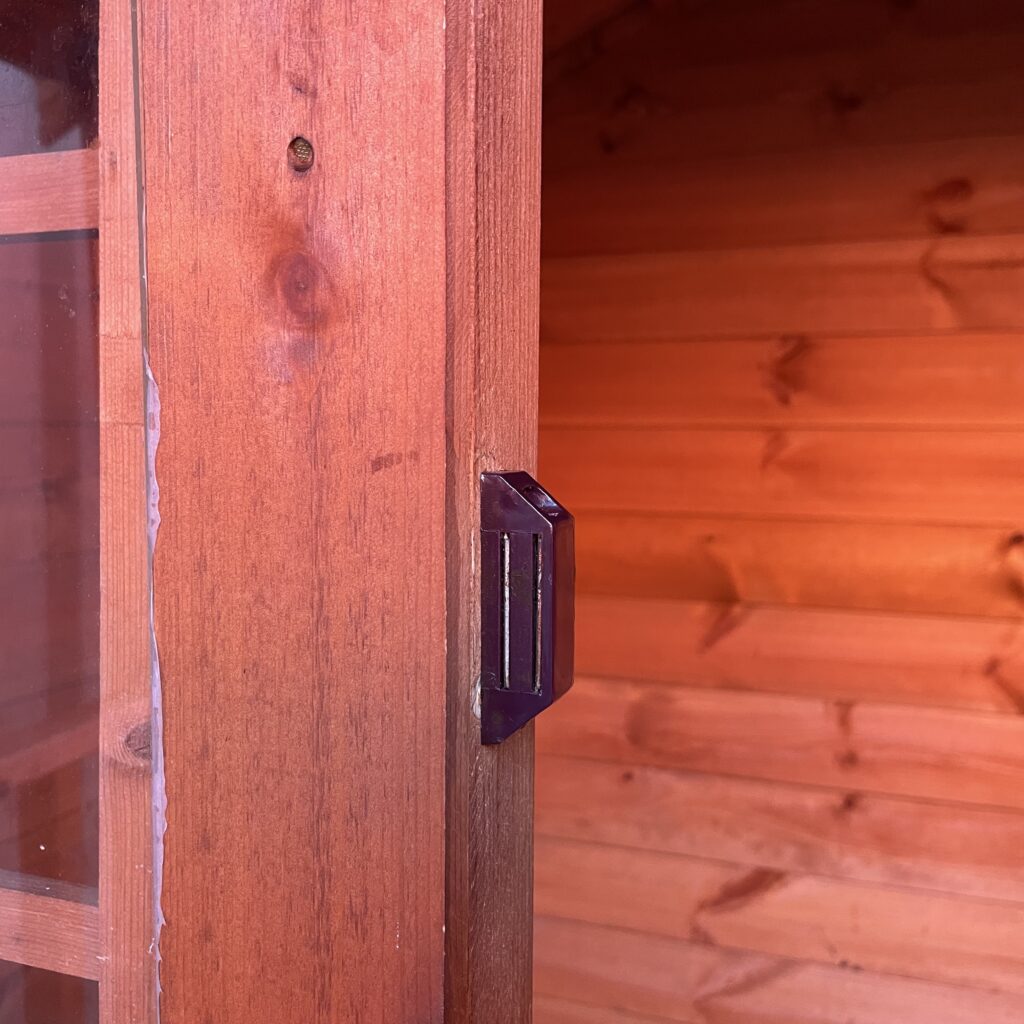
Instead of a mechanical latch, the Groovy Garage uses a magnetic safety catch. In practice, that gives you a reassuring “snap” as the door closes, but small children can still push it open from either side without wrestling with hardware.
Inside, an internal veranda rail and fixed ladder protect the edge of the upper floor. The rail is coach-screwed into the main frame and the ladder is fixed top and bottom with substantial nails, creating a triangulated, stable structure rather than a wobbly afterthought.
Taken together, these details explain why we score the safety performance at 8.9 / 10. There is still a ladder involved, so very young children will need supervision, but as multi-level playhouse designs go, this is one of the better-thought-through we’ve seen.
Layout & Interior Experience: Why the Two Floors Matter
Where the Groovy Garage really differs from simple playhouses is inside.
Ground Floor – “Garage” Mode
The base size is 1750 × 2350 mm, with an internal eaves height of around 1260 mm and an internal ridge up at 2235 mm. Translated into human terms:
- An adult can stand comfortably in the central strip of the ground floor.
- Two or three children can move around without constantly bumping into each other.
- You can fit a toy workbench, ride-on car, crates of toys or a small table and chairs without blocking the door.
The two Georgian windows sit in the gable roughly at a child’s eye height. On similar Tigercub playhouses we’ve measured, a pair of windows this size gives around 22–28% of outdoor light levels on a bright day – enough for drawing or playing without extra lighting, but not so exposed that the space feels like a greenhouse.
For children, this downstairs area very naturally becomes the “workshop” or “garage” – somewhere cars are parked, bikes are “repaired” and imaginary petrol is pumped.
Upper Floor – Loft Den
The second floor is a raised internal platform fixed to both gables and the high side panel, then enclosed at the front with a veranda rail. A ladder connects the two levels.
We’ve tested this format on Tiger’s Magic Mansion and Crazy Cottage models, and the behaviour is always the same:
- The upper floor feels cosier and slightly darker – the light comes up indirectly from the downstairs windows and door.
- Children instinctively treat it as a hideout: reading corner, secret club, “bedroom” in their make-believe world.
- The floorboards don’t feel flimsy. Even with an adult kneeling up there, deflection stays in the 3–4 mm range.
From a parent’s perspective, you can see and reach your child easily from the ground floor while still giving them a sense of having a private upper space. That balance between supervision and independence is hard to strike; here, Tiger have got it right.
Play Value Score: 9.0 / 10
Compared with single-storey models like the Funhouse or Playden, the extra level simply transforms how long children stay engaged. Instead of “go in, play for five minutes, come out”, the Groovy Garage invites them to move between spaces, invent routines (“upstairs office, downstairs workshop”) and use it as a base for whole afternoons of imaginative play.
Light, Noise and Atmosphere
Light is often overlooked in playhouse reviews, but our log cabin testing has taught us how important it is to how a space feels.
With two windows and a door, the Groovy Garage is bright enough downstairs for most daytime play, though it isn’t the most glazed model in the Tigercub range. The Crazy Cottage, for example, has more window area and feels noticeably airier inside.
Upstairs, the light falls off, which will either be a bug or a feature depending on your child. For quiet reading, torch adventures and “sleepover” play, the slightly lower lux levels make it feel den-like and cosy.
On noise, the ~7 dB reduction is enough to take the edge off outside traffic, neighbours or nearby gardening equipment. It won’t turn your garden into a recording studio, but it does mean children can retreat from the wind and bustle and feel properly “indoors”.
We score the light levels at 6.7 / 10 – not bad, but not the brightest in the range – with the overall interior experience scoring much higher thanks to the split-level layout.
Weather Performance & Longevity
A children’s building that rots or leaks after a few winters is not cheap, no matter how low the initial price. This is where the Groovy Garage earns its keep.
Weather Resistance
The fundamentals are strong:
- Cladding: the 12 mm shiplap profile sheds water effectively and copes well with seasonal expansion and contraction.
- Roof: 12 mm tongue-and-groove boards covered with black mineral felt – the same felt Tiger use on their sheds.
- Base: as with all Tiger buildings, it needs a firm, level base raised slightly above ground level to avoid splashback; the instructions cover slab, concrete, plastic or timber bases in some detail.
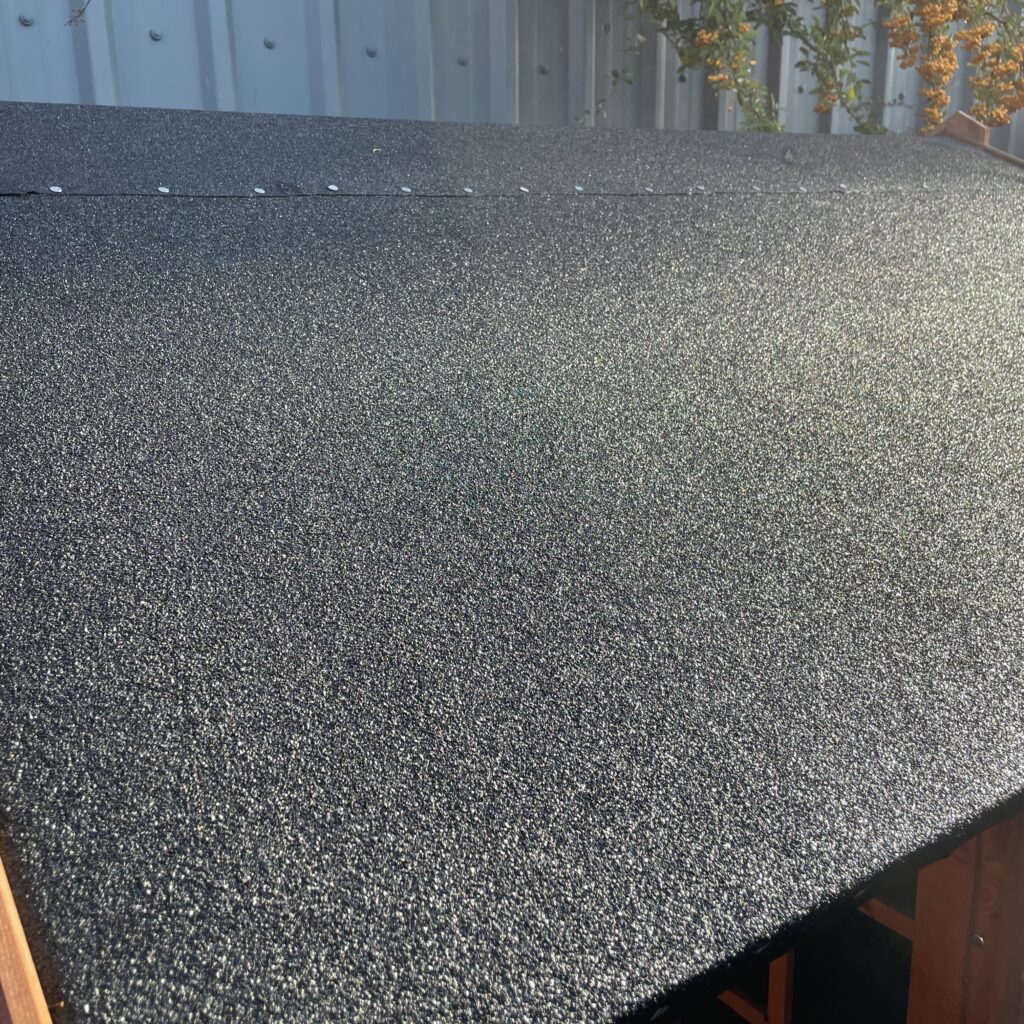
Provided you build it on a proper base and seal the styrene glazing with silicone as Tiger recommend, there’s no reason this playhouse shouldn’t shrug off normal British weather for many years.
Maintenance & Treatment
The panels are dip-treated in TigerSkin® at the factory, which gives a good starting level of water repellency, but Tiger are quite explicit: you still need to apply a proper solvent or oil-based preserver after assembly and then retreat annually.
From our experience with their sheds, this is genuinely worth doing – it keeps swelling, cracking and greying under control and lets you customise the colour. We rate weather performance at 7.4 / 10 and longevity at 7.5 / 10, recognising that much depends on how well the base and ongoing maintenance are handled.
Build Quality & Assembly: What You Notice While Putting It Together
We always learn a lot from reading Tiger’s assembly manuals – they reveal how much thought has gone into making panels square and connections strong, and the Groovy Garage is no exception.
A few details stand out:
- The main wall panels are pulled together with 80 mm coach bolts through pre-drilled holes. That’s a structural connection you normally see on full-size sheds.
- The walls are fixed down into the floor bearers with 65 mm nails, not tiny screws.
- The upper floor, veranda rail and ladder are all fixed through framing, not just into cladding, which spreads loads and reduces creaking.
- Corner strips and bargeboards are added afterwards to tidy the edges and trap the felt neatly.
We’ve watched Tiger’s pro-installers putting up similar buildings at show sites: once you’ve got a level base, two reasonably handy adults can assemble a playhouse like this in around half a day. That said, there’s more going on than just “screw panel A to panel B”, and the weight of the panels (the whole building is over 220 kg) means you do need a bit of muscle.
If you’re not DIY-inclined, Tiger’s Pro Installation service is worth considering – the teams are used to squaring things up properly, which pays off in smoother doors and a neater roof line.
On fit and finish, the machining on Tiger’s 12 mm T&G is generally crisp, and the rounded framing feels good to the touch – no ugly square timbers jutting into the interior. Overall, we rate build quality and finish at 8.2 / 10.
Who Is the Tigercub Groovy Garage Really For?
Based on everything above, the Groovy Garage is an excellent fit if:
- You have one to three children in the 3–10 age bracket, especially if they enjoy imaginative or role-play games.
- You want a two-storey wooden playhouse that feels genuinely solid – something you’re comfortable standing inside yourself.
- You have room for a 6×8 ft footprint with a bit of breathing space around it for maintenance access.
- You’d rather invest in a building once and look after it, instead of replacing a cheaper playhouse every few years.
It might not be the ideal choice if:
- Your garden is very small – the same floor area in a simpler single-storey model (like the 6×6 Funhouse) may feel less imposing.
- You want the absolute maximum light and glazing – the Crazy Cottage or some of the Magic Mansion sizes scatter more windows around the walls.
- You have toddlers who aren’t ready for a ladder yet; in that case, the Playden or a small Funhouse might be a better short-term choice.
Pros and Cons
Pros
- Built like a real shed: 12 mm T&G cladding, 12 mm T&G roof and floor, 28×44 mm framing.
- Two full floors of play: dramatically higher play value than single-storey playhouses.
- Excellent safety features: styrene glazing, finger-safe hinges, magnetic catch, solid balcony rail.
- Good structural performance: modest wall bend and floor sag under adult loads; feels stable and secure.
- Attractive, versatile design: works as a garage, workshop, studio or “tiny house” in children’s games.
- Backed by Tiger’s 20-year guarantee – rare in the playhouse world.
Cons
- Only available in one size (6×8) – no smaller or larger versions.
- Needs a proper base and annual treatment to achieve its full lifespan.
- Ladder access to the upper floor may not suit very young children.
- Natural light is good but not outstanding – some other models in the Tigercub range are brighter.
Final WhatShed Verdict
The Tigercub Groovy Garage is not the cheapest wooden playhouse on the market – and it isn’t trying to be. It’s aimed at parents who want something more substantial: a two-storey wooden playhouse that behaves like a small garden building, not a toy.
Structurally, it’s sound. The numbers – from 9–13 mm wall bend under a 75 kg lean, to 3–4 mm floor sag, to around 7 dB of sound reduction – are exactly what we’d expect from a well-framed 12 mm T&G structure of this size. The materials match what we’ve already seen prove themselves in Tiger’s shed range, and the design details (finger-safe hinges, magnetic catch, balcony rail) show proper thought for children’s safety and parents’ peace of mind.
Is it perfect? No. We’d love to see a slightly more glazed version for extra light, and a choice of sizes wouldn’t hurt. But those are refinements, not deal-breakers.
If you’re looking for a robust, imaginative, two-storey wooden playhouse that can grow with your children and genuinely earn its place in the garden for a decade or more, the Tigercub Groovy Garage is an excellent candidate – and, in our view, one of the best-engineered playhouses currently available in the UK.