EXPERT REVIEWED
  FREE DELIVERY
  INSTALATION AVAILABLE
 Tigerflex Shiplap Apex Full Pane Summerhouse – Expert Review
First Added - November 28 2025
Last Updated - November 28 2025 - 0 Data Points Updated - 0 Data Points Added
Reviewed & curated by a panel of garden building experts. Using methodology 1.1
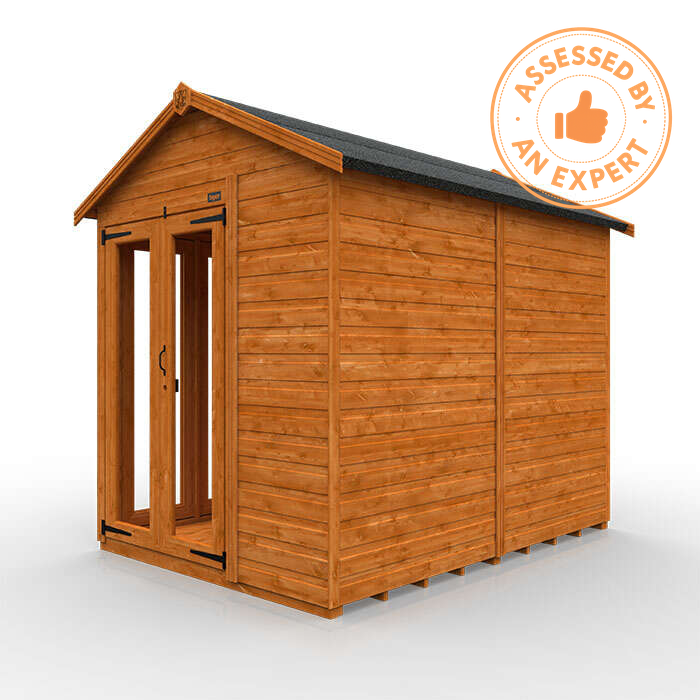
Product ID: tiger-sheds-tigerflex-shiplap-apex-full-pane-summerhouse
Size: Multiple sizes available
Merchants Checked: 10
Expert System-Based Review with Physical Inspection Context
The TigerFlex Shiplap Apex Full Pane Summer House sits in an interesting position within Tiger’s wider summer house range. It isn’t trying to be the most elegant or traditional option, and it doesn’t pretend to be a fully bespoke garden room either. Instead, it offers something more specific: light, flexibility, and adaptability, delivered through Tiger’s modular TigerFlex system.
This is a building that makes the most sense once you understand why it exists — and just as importantly, who it’s actually for.
Inspection Transparency (What We’ve Seen and What We Haven’t)
We haven’t physically inspected the apex full pane version of this summer house at the Tiger show sites we’ve visited. However, we have physically inspected the TigerFlex Shiplap Pent Summer House at the Otley show site, along with a wide range of other TigerFlex buildings including sheds, storage units, and log cabins.
That distinction matters — but less than you might think.
Aside from the roof design, the apex and pent versions are constructed in exactly the same way:
- Same wall panels
- Same floor system
- Same doors and glazing
- Same modular joining method
We’ve also inspected Tiger’s apex roof construction extensively across their sheds and traditional summer houses, and we discussed roof integration directly with Tiger’s manufacturing team.
So while we haven’t stood inside this exact configuration, everything in this review is grounded in how this building is actually made, not assumptions.
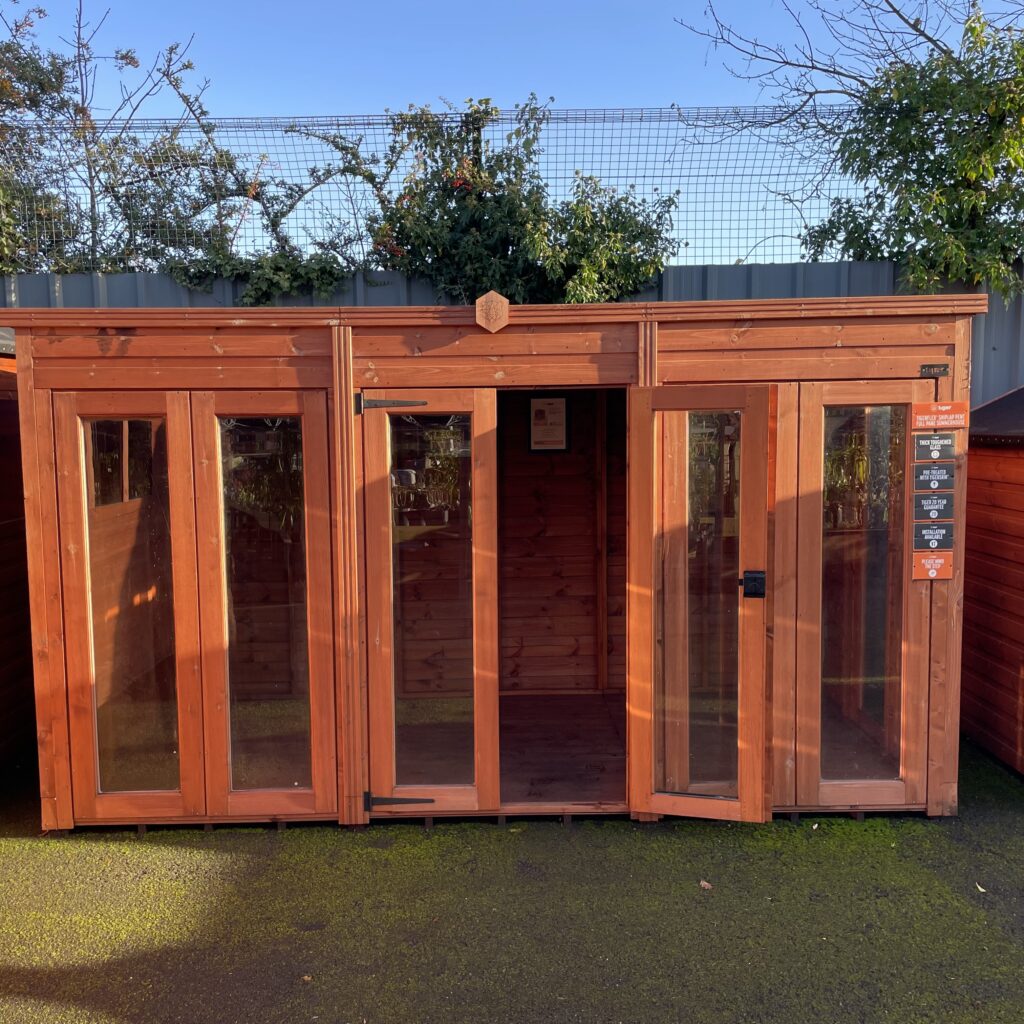
Why We Were Particularly Interested in the TigerFlex Summer Houses
We’ve spent years inspecting TigerFlex buildings, particularly their storage sheds and log cabins, and overall we’ve grown to like the concept. The ability to reposition doors and panels genuinely solves problems for people with awkward or constrained gardens.
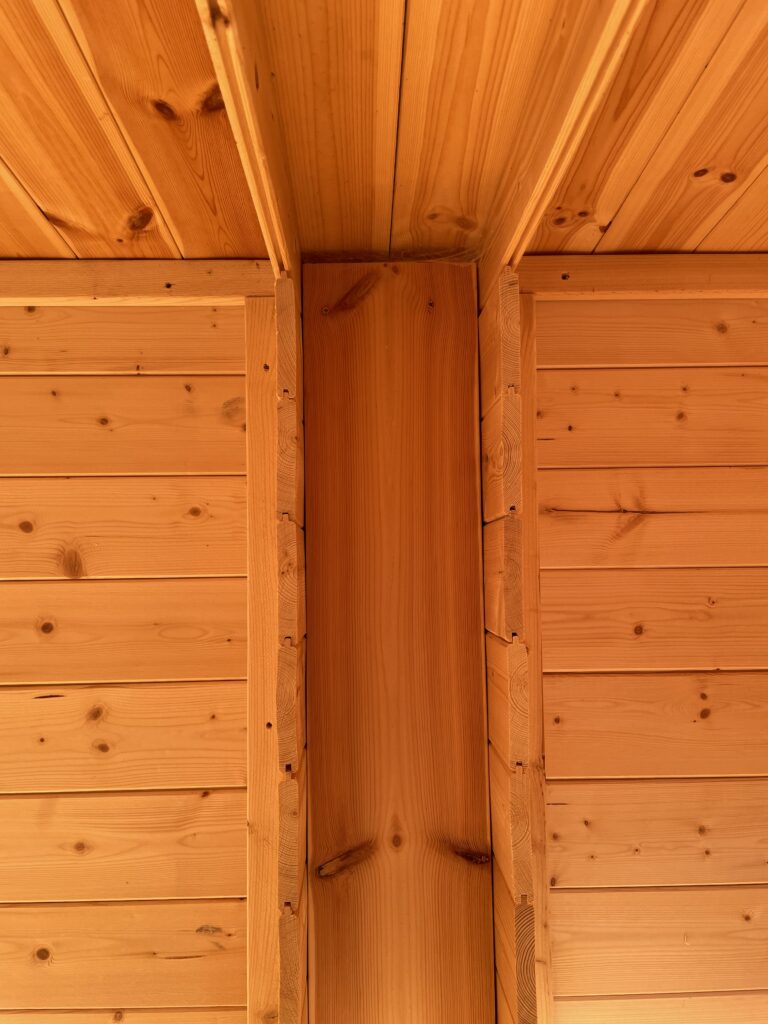
However, our first encounter with a TigerFlex 19mm log cabin did raise a concern: internally, the modular joins were quite pronounced. That’s fine in a storage or workshop context, but with a summer house, internal flow, openness, and visual cohesion matter much more.
So when we came to the TigerFlex summer houses, the question was simple:
Has the modular system been refined enough to work properly in a light-focused, people-oriented space?
Based on what we’ve inspected in person, the answer is yes.

Layout Flexibility: The Core Strength of This Building
The defining advantage of the TigerFlex system is layout freedom.
Traditional summer houses lock you into fixed door and window positions. If that layout doesn’t suit your garden, you compromise. With TigerFlex, you don’t have to.
You can adapt the building to:
- Pathways
- Boundaries
- Sun direction
- Existing structures
For non-standard plots, this is a genuine advantage rather than a marketing extra.
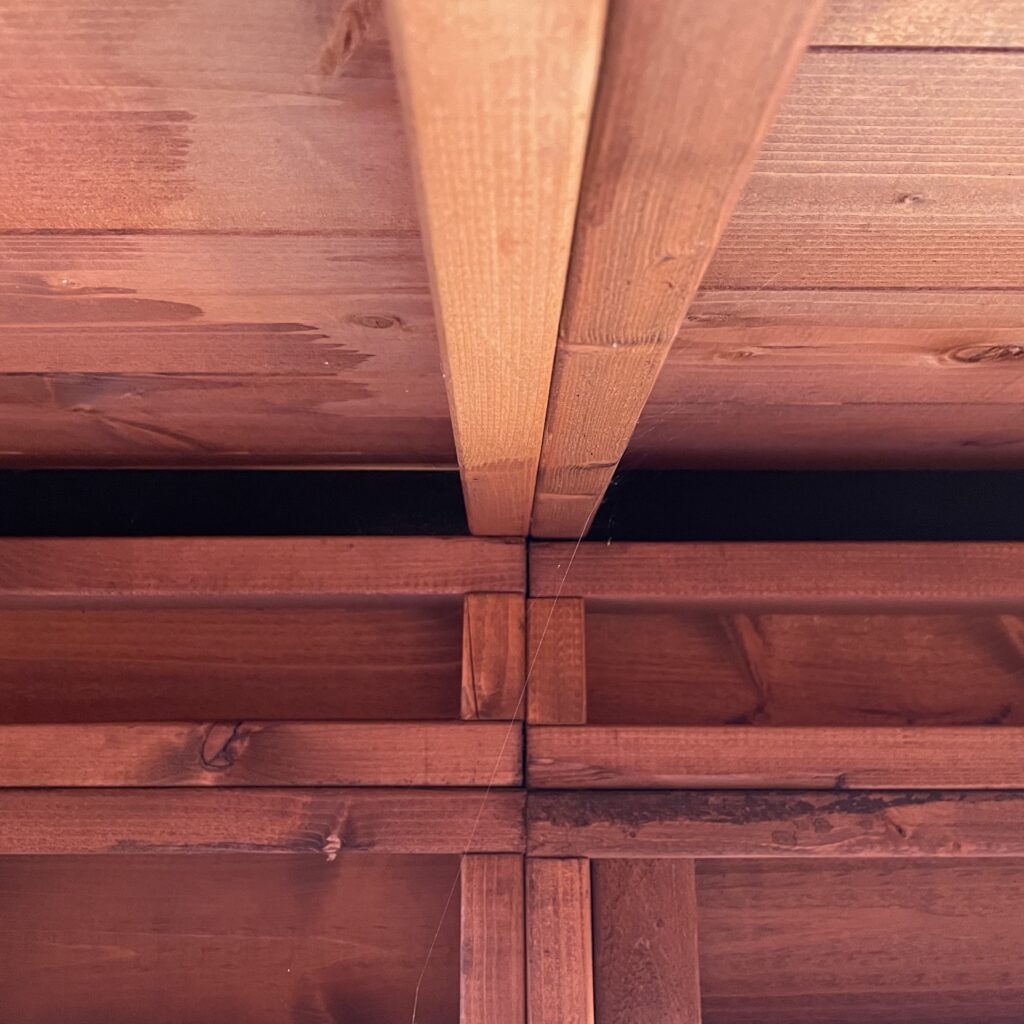
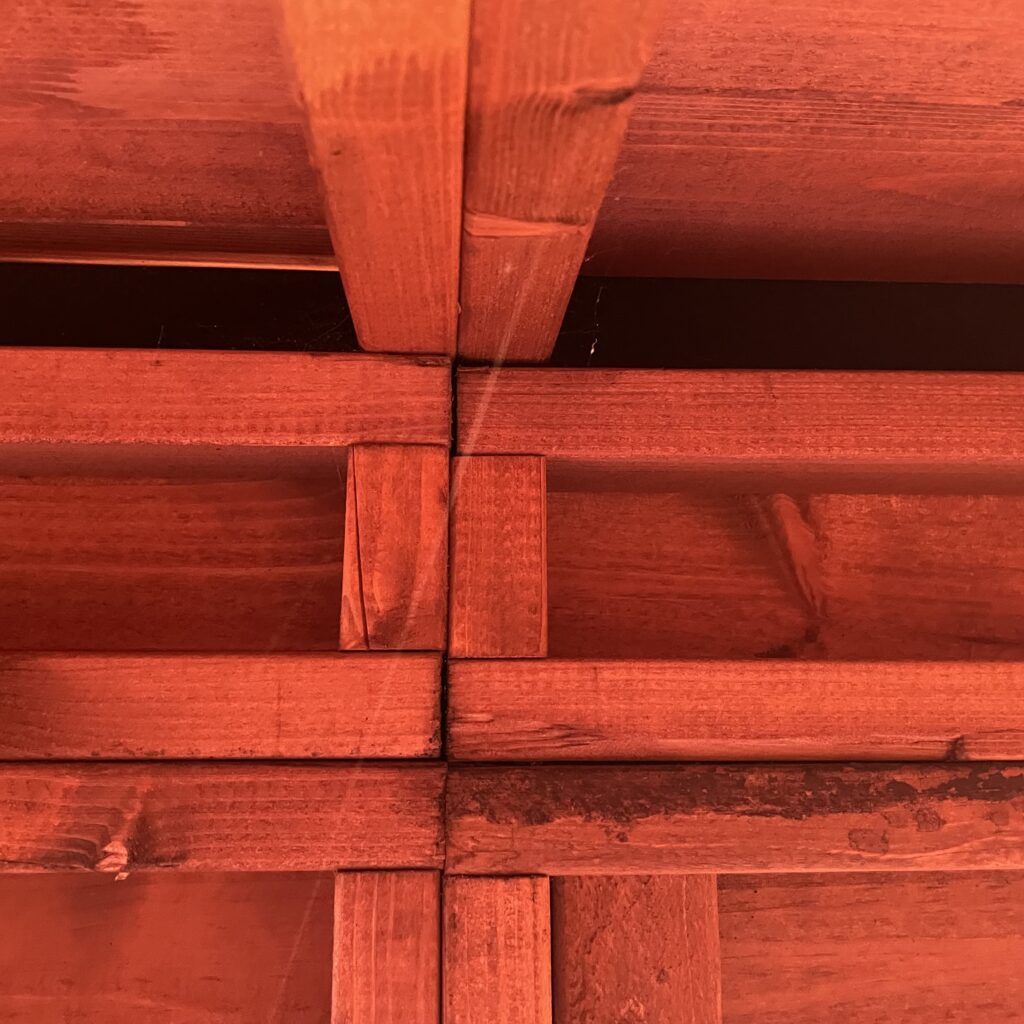
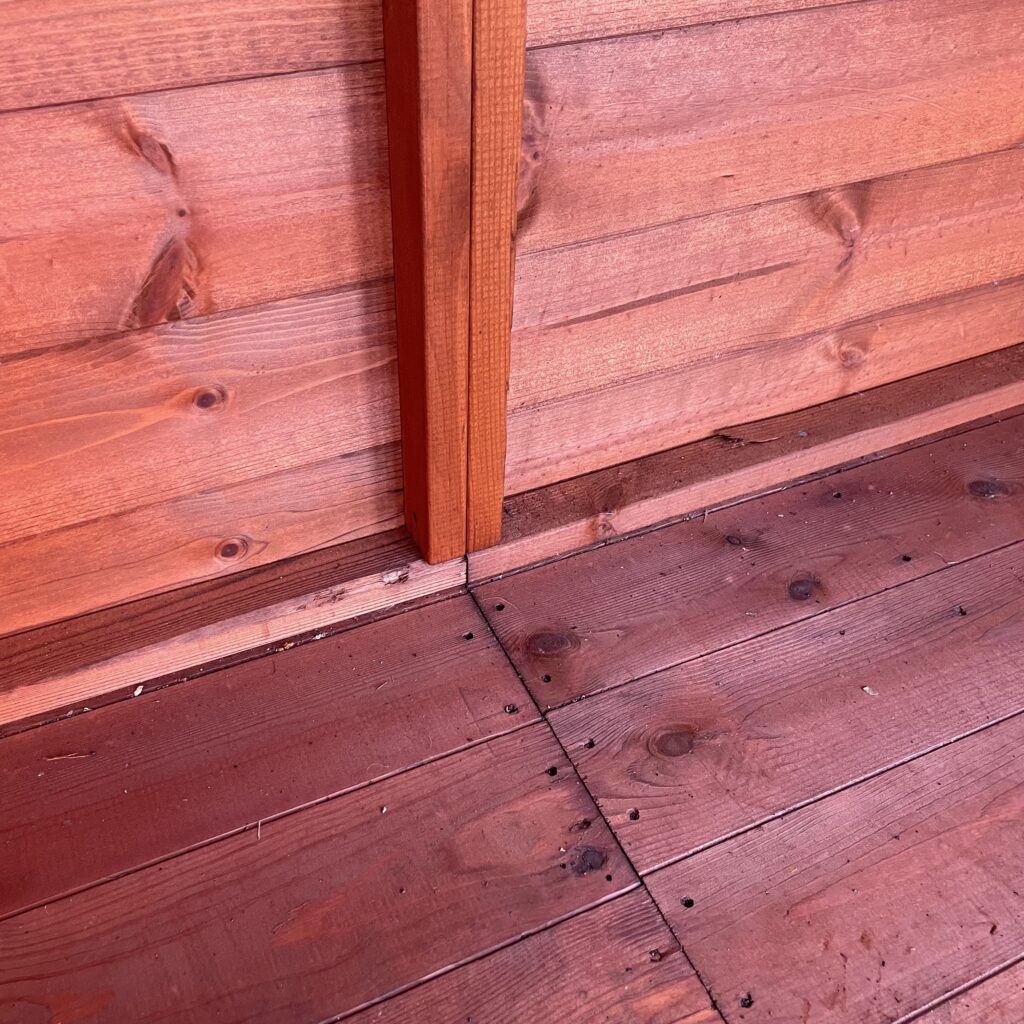
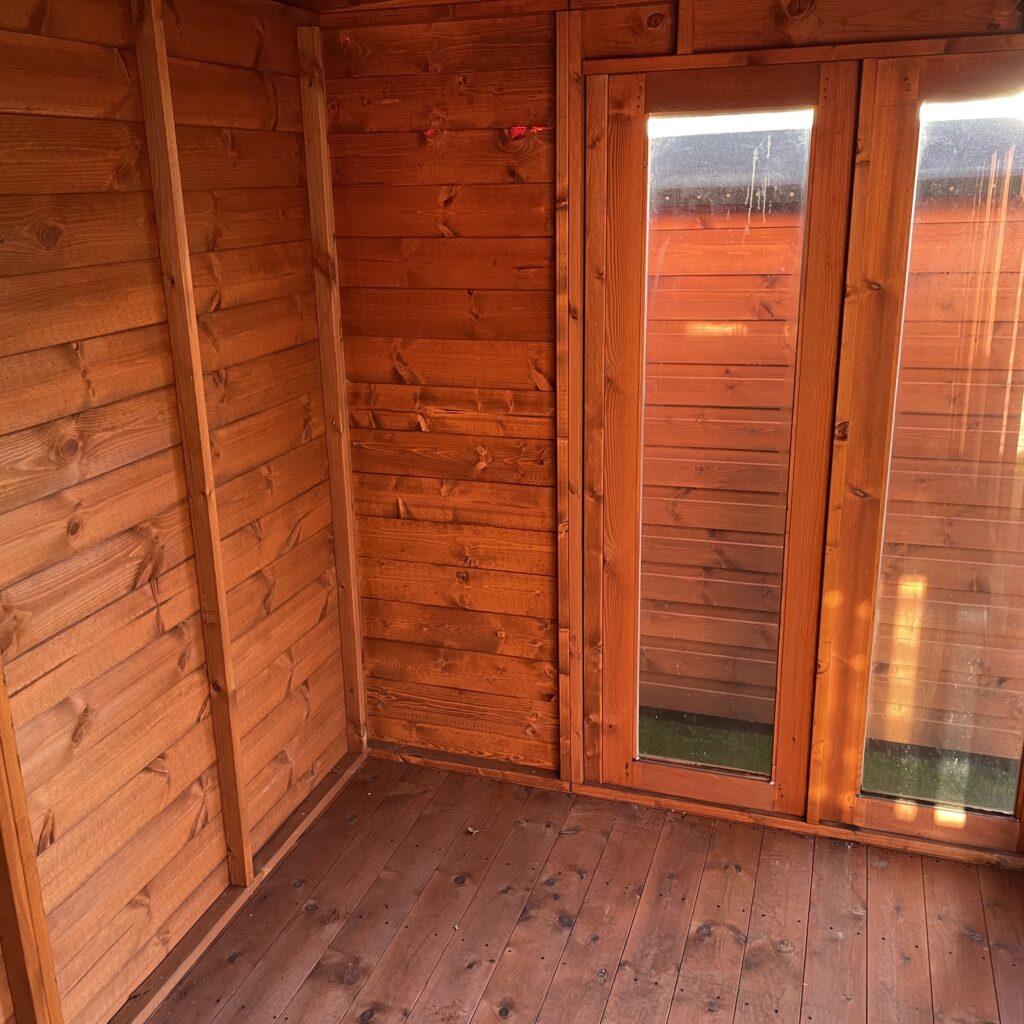
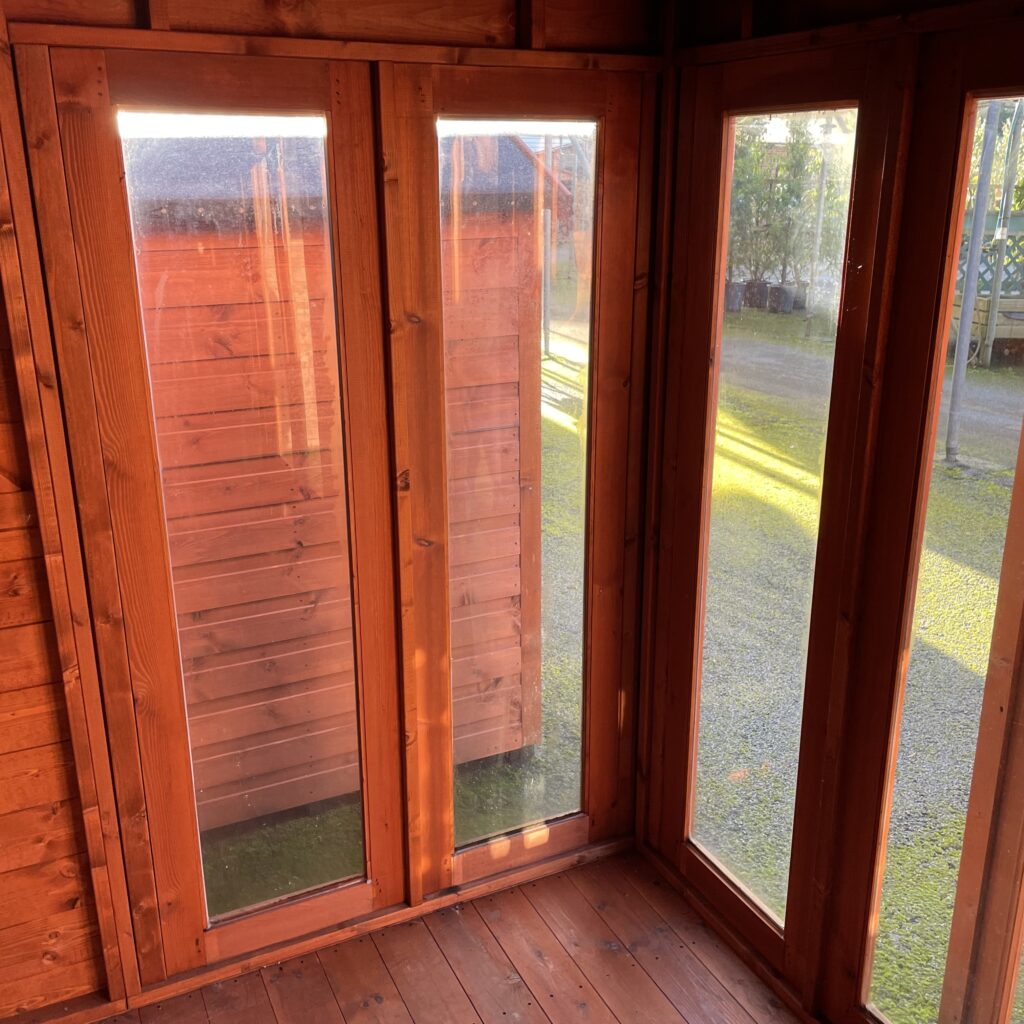
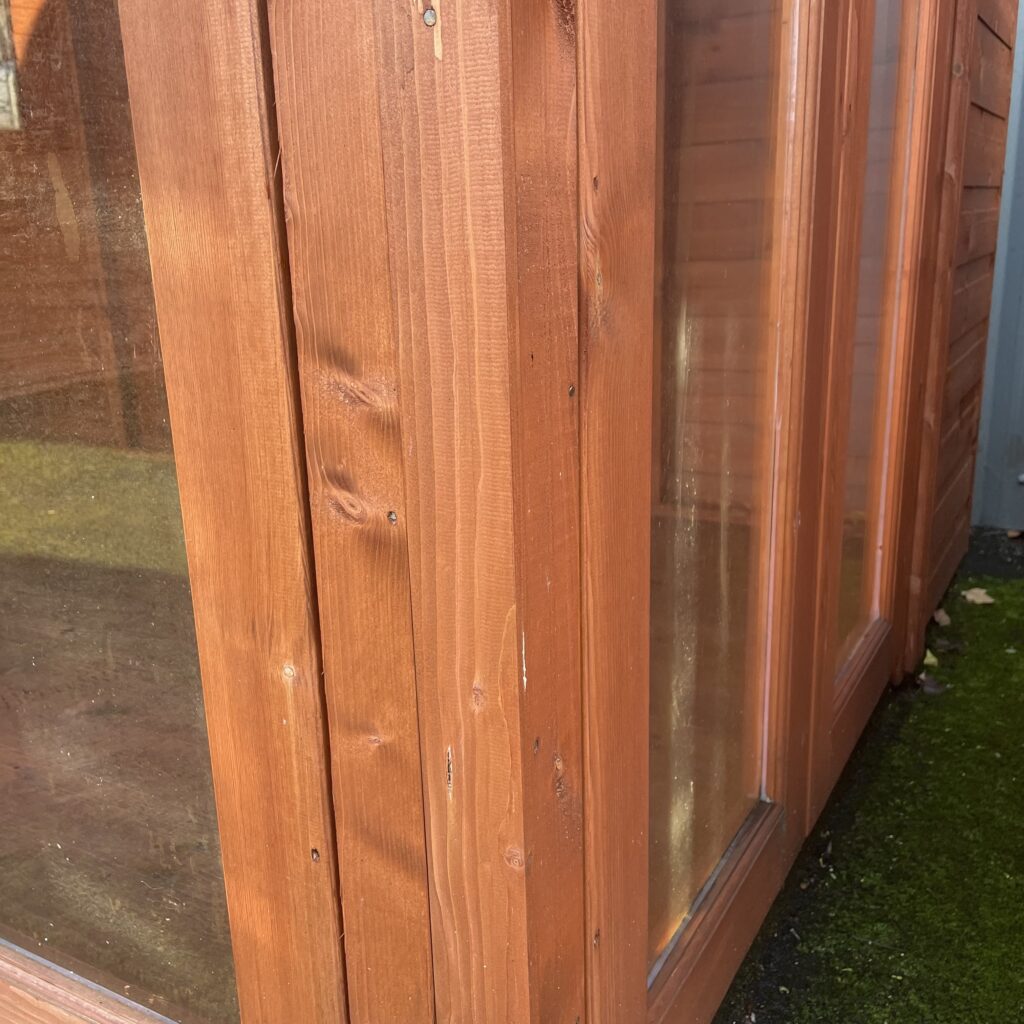
We’ve seen this system assembled across multiple TigerFlex models, and one thing that consistently stands out is how cleanly the panels marry together. Internally, the joins are far less intrusive than we initially expected when we first encountered the TigerFlex range.
Internal Feel: Our Biggest Concern — and How It Played Out
Our main concern going in was whether modular joins would disrupt the internal flow.
On the pent version we inspected, they didn’t.
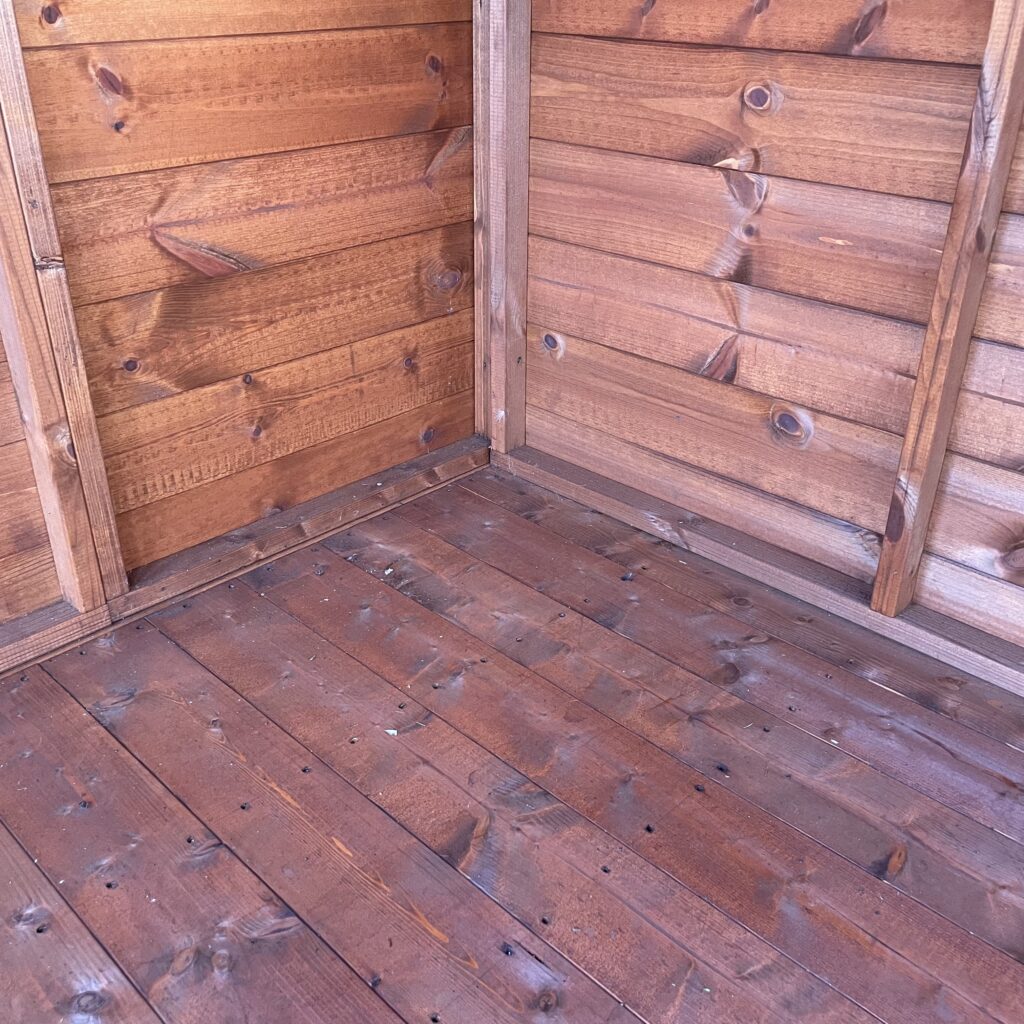
The joins were neat, well integrated, and unobtrusive, and they actually introduce an unexpected benefit: structural strength.
Where panels meet, you effectively get double framing. Add the framing around the roof line, and you end up with a structure that feels stiffer and more solid than most modular buildings, particularly in smaller and mid-size footprints.
It’s genuinely clever engineering rather than a compromise.
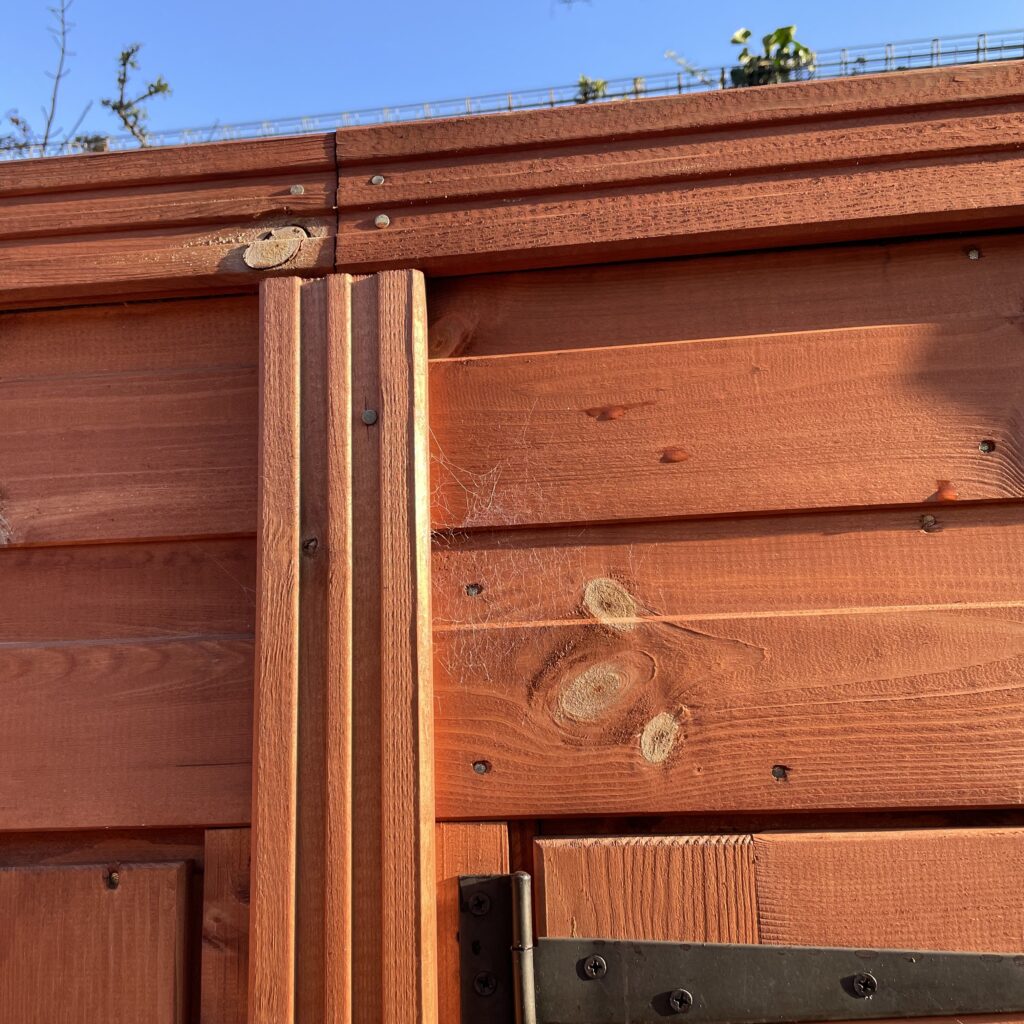
Build Quality and Real-World Performance (Hands-On Data)
Construction is exactly what we expect from TigerFlex at this level:
- 12mm shiplap tongue & groove cladding
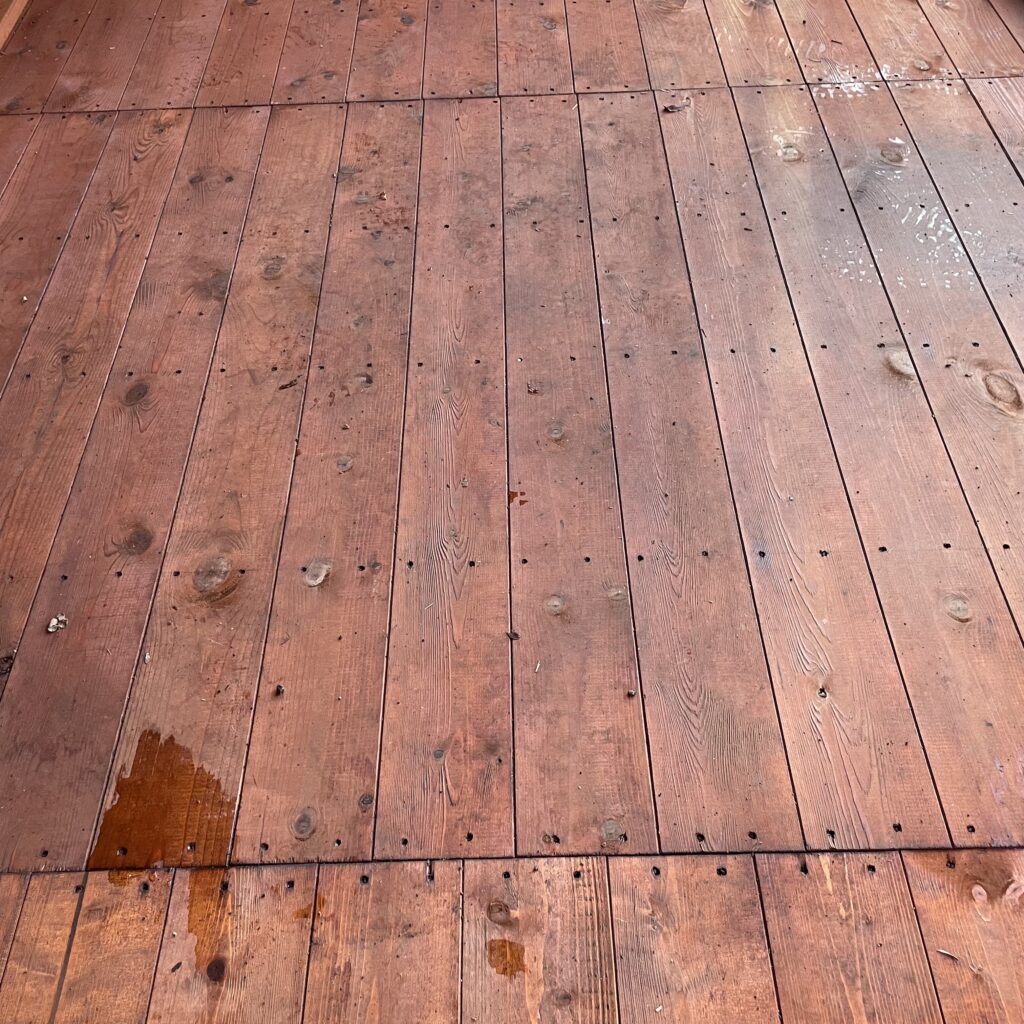
- 12mm tongue & groove floor
- 12mm tongue & groove roof
- Apex roof design
- Toughened glass throughout
On the pent version we physically inspected, we carried out our standard tests:
- Floor deflection (75kg load):
Around 2–3mm, depending on position — roughly the thickness of a pound coin. - Wall deflection (75kg lean):
Approximately 4mm of movement, which is very low for a modular structure.
Underfoot, the floor felt solid and quiet. The walls showed no noticeable flex in normal use. Based on identical construction methods, this is exactly the performance we’d expect from the apex version as well.
Doors, Windows, and Light
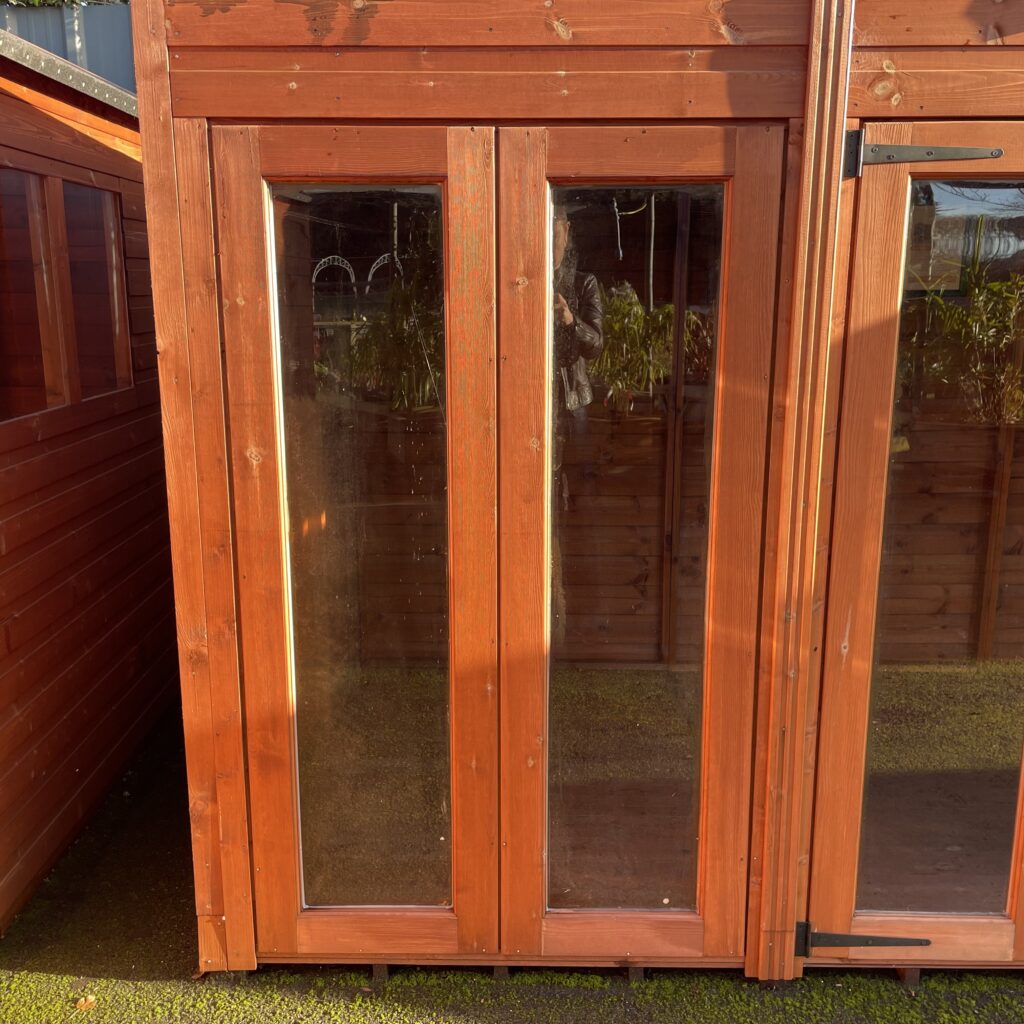
The doors are properly hung on three hinges, and the locking system feels solid and well aligned.
The full pane glazing is where this building really differentiates itself. Combined with the apex roof, it creates a noticeably airier and more uplifting internal feel than the pent version. The additional height draws the eye upward and makes the space feel larger than the footprint suggests.
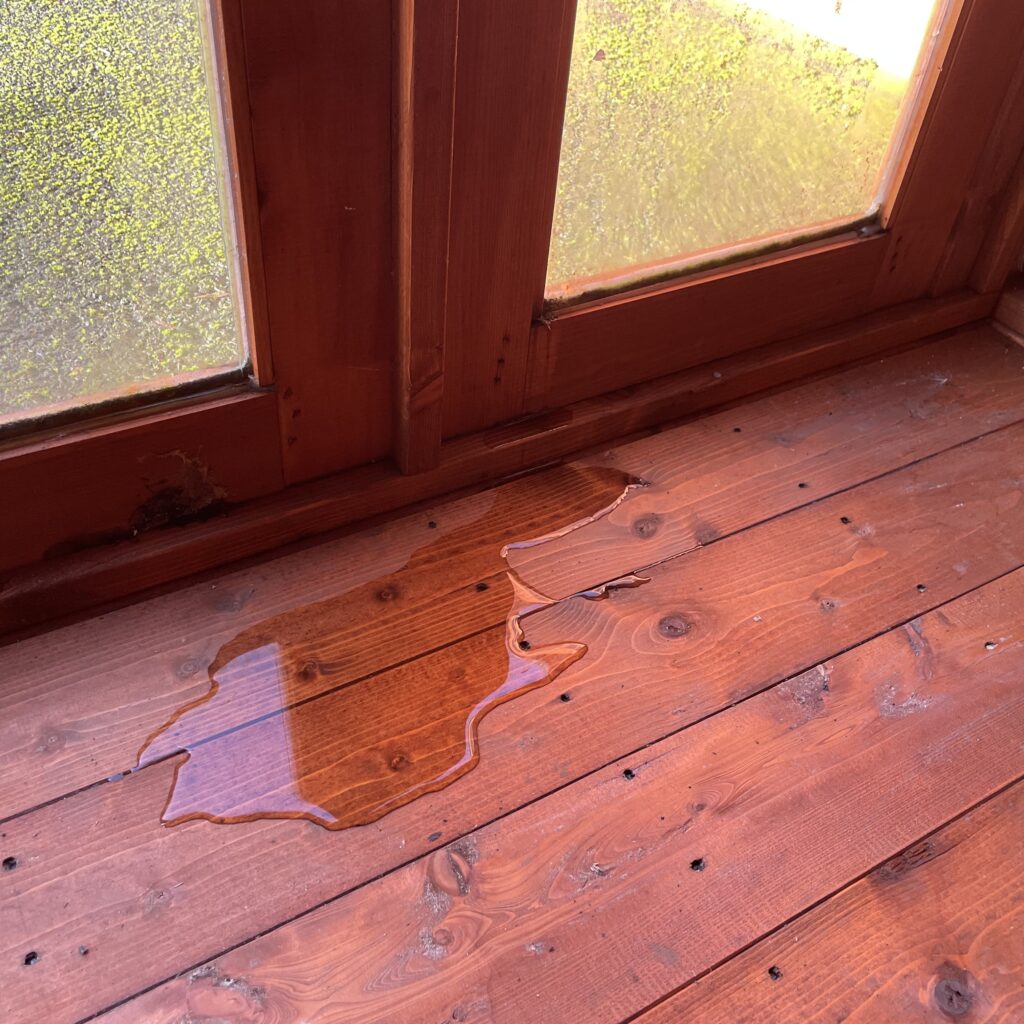
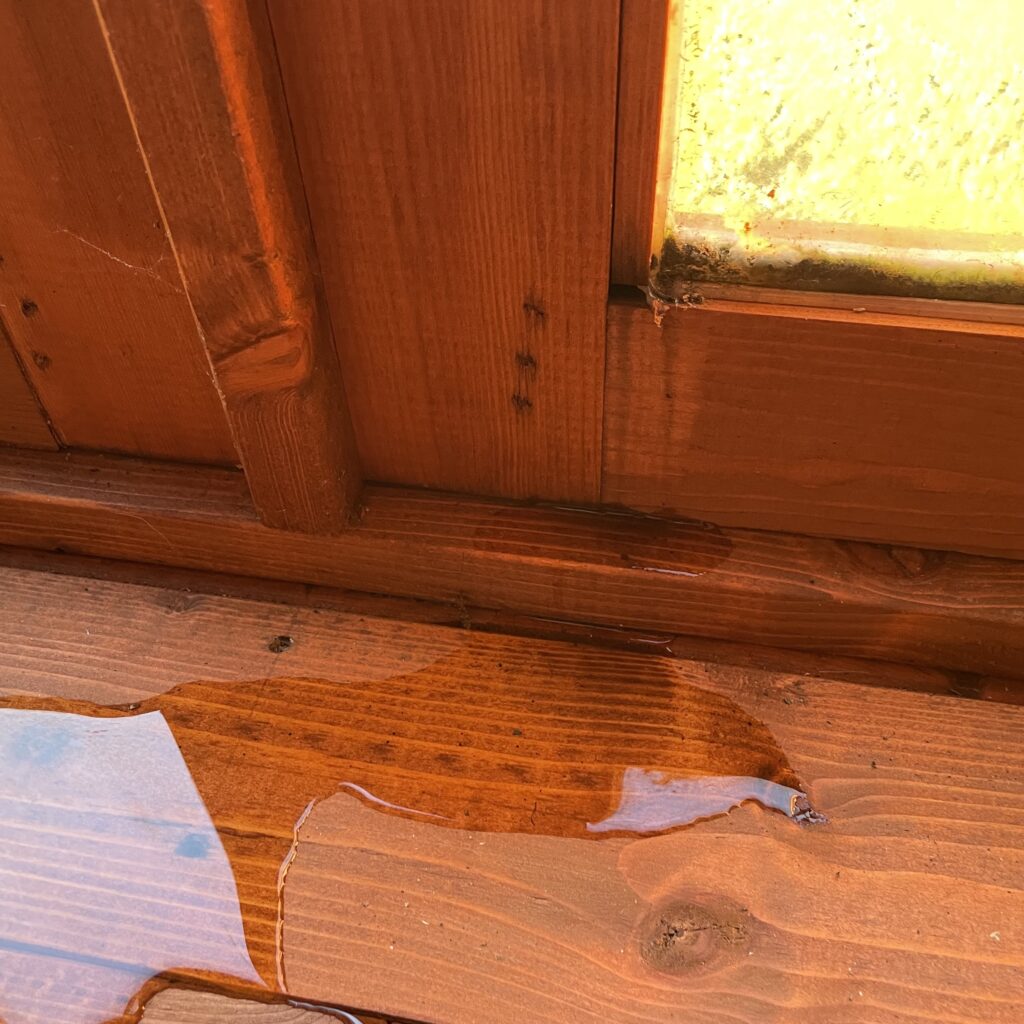
The windows are toughened glass, but installation relies on silicone sealing and small retaining nails. We did observe minor water ingress on a TigerFlex building after a heavy storm where silicone hadn’t been fully applied. That wasn’t a structural fault — just a reminder that careful installation matters.
Take your time, apply the sealant properly, and it isn’t an issue.
Size Considerations (Important)
At the smallest sizes — particularly 4×4 ft — this building feels more like a glazed enclosure than a usable summer house. With so much glass, usable space becomes limited very quickly.
In our view, the TigerFlex summer houses work best when:
- You choose a deeper footprint
- You have a specific layout constraint
- You value flexibility over pure aesthetics
At the largest sizes (around 12×6 ft), it’s also worth comparing this model with Tiger’s more traditional summer houses, which often feel more visually cohesive at that scale.
Who This Summer House Is For
This building makes the most sense if you:
- Need flexible door and window placement
- Have an awkward or non-standard garden layout
- Want maximum light for the footprint
- Prefer function and adaptability over traditional styling
- Are happy with a modern, modular aesthetic
Who Should Probably Look Elsewhere
You may be better served by another Tiger model if you:
- Want a purely leisure-focused summer house
- Prioritise traditional aesthetics
- Want a building designed primarily for seating and entertaining
- Are buying at the very largest sizes where purpose-built designs shine
How It Compares to Other Tiger Options
- Versus the Pent Full Pane version:
The apex feels airier and more uplifting due to the extra height. If light and internal volume matter, the apex has the edge. - Versus the Tiger Penthouse or traditional summer houses:
Those models feel more elegant and leisure-oriented, but lack the layout flexibility of TigerFlex. - Versus standard modular garden rooms:
This feels significantly more solid and better finished than most modular alternatives at a similar price point.
Final Verdict
The TigerFlex Shiplap Apex Full Pane Summer House is a clever, well-engineered solution for people who need flexibility and light more than traditional charm.
It isn’t the prettiest summer house Tiger make — and it doesn’t try to be. What it offers instead is adaptability, solid construction, and a bright internal space that works well when used for the right reasons.
If you need flexibility, it makes a lot of sense.
If aesthetics come first, Tiger’s traditional ranges may suit you better.
Either way, this is a thoughtfully designed building that does exactly what it sets out to do — and does it well.