EXPERT REVIEWED
  FREE DELIVERY
  INSTALATION AVAILABLE
 Tigerflex Shiplap Pent Full Pane Summerhouse – Show Site Review
First Added - November 28 2025
Last Updated - November 28 2025 - 0 Data Points Updated - 0 Data Points Added
Reviewed & curated by a panel of garden building experts. Using methodology 1.1
Product ID: tiger-sheds-tigerflex-shiplap-pent-full-pane-summerhouse
Size: Multiple sizes available
Merchants Checked: 10
Hands-On Inspection at the Otley Show Site
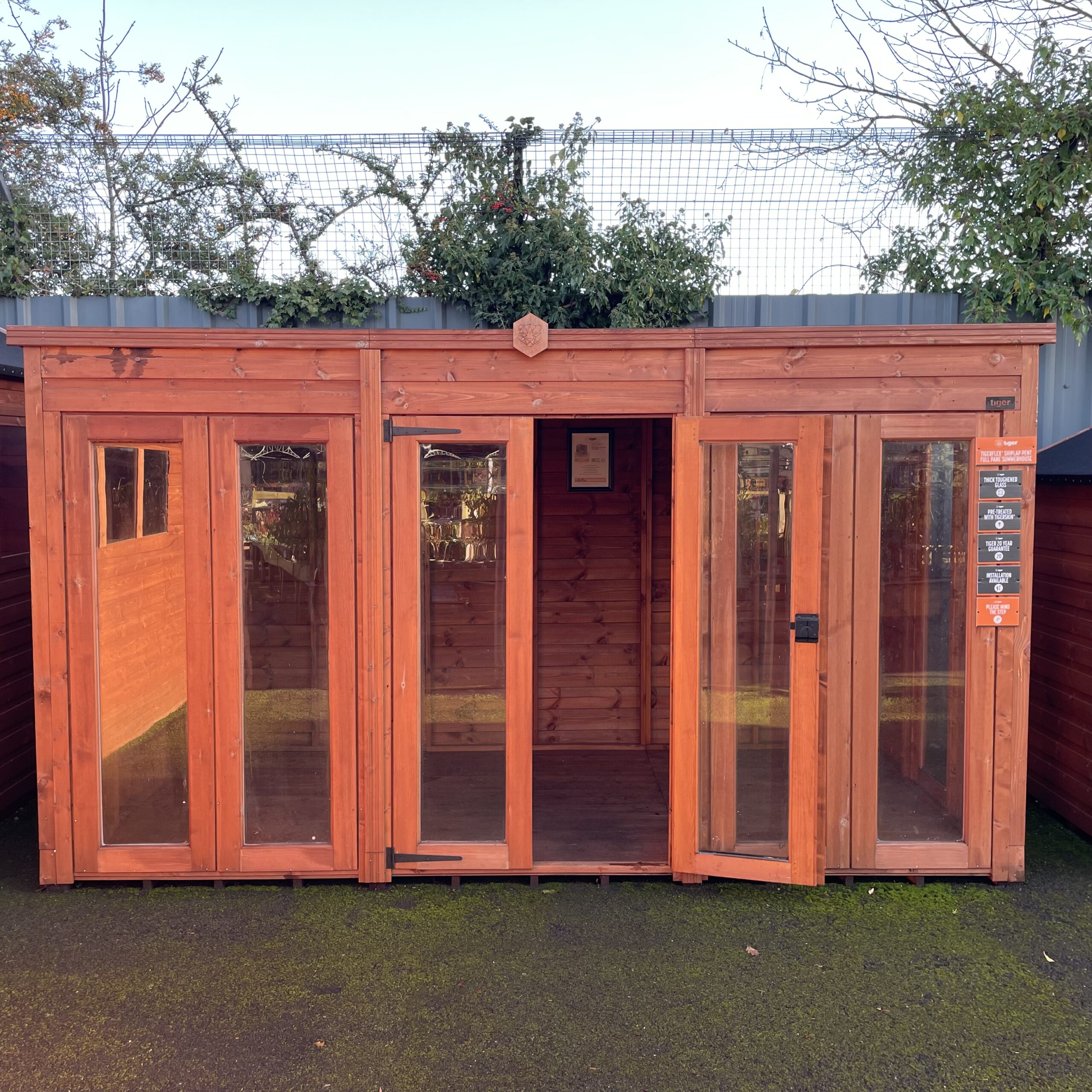
When we reviewed the TigerFlex Shiplap Pent Full Pane Summer House at Tiger’s Otley show site, what made the inspection genuinely interesting was that this was our first time stepping inside a TigerFlex summer house, rather than a shed or log cabin.
That matters, because going into this review, I wasn’t entirely convinced.
Up until this point, my only real hands-on experience with the TigerFlex system had been through a 19mm TigerFlex log cabin. Structurally it was sound, but internally it left me a little cold. The modular joins were more visually intrusive than I’d expected, and while everything did its job, it didn’t quite win me over emotionally.
So I arrived at Otley with a real question mark in my mind:
Would the TigerFlex system feel compromised when applied to a summer house — a building where light, atmosphere, and internal feel matter just as much as strength?
The short answer is: no.
But the reasons why are worth unpacking properly.
Who This Summer House Is Actually For
Before getting into construction details, it’s important to be clear about who this building is aimed at, because context changes how you judge it.
The TigerFlex Pent Full Pane Summer House is available in sizes from 4×4 up to 12×6. That immediately places it in a slightly different category to Tiger’s traditional summer houses, most of which start at 12×6 and go larger.
This isn’t designed to replace Tiger’s flagship retreats or large contemporary summer houses. Instead, it exists to serve people who want:
- A contemporary pent-roof look
- Large expanses of glazing relative to footprint
- Flexible door and window positioning
- Fast delivery, even in peak season
- A building that can work in tight, awkward, or non-standard garden layouts
And that last point is more important than it sounds.
Many gardens simply don’t suit a “textbook” summer house layout. Fences, trees, neighbouring buildings, sun direction — all of these affect where doors and windows should go, not where a fixed-panel design forces them to be.
This is where the TigerFlex system starts to make sense.
Delivery Speed: An Underrated Advantage
One of the big, often overlooked advantages of the TigerFlex range is speed.
During peak spring and summer months, it’s not unusual to wait 8–12 weeks for a traditionally built summer house. With TigerFlex, two weeks is often achievable, even when demand is high .
That’s not a small difference.
If you’re trying to:
- Make use of a specific season
- Work around landscaping schedules
- Replace an existing structure quickly
- Or simply don’t want your summer slipping away while you wait
Then fast, reliable delivery becomes a real, practical benefit — not just a marketing line.
First Impressions at the Otley Show Site
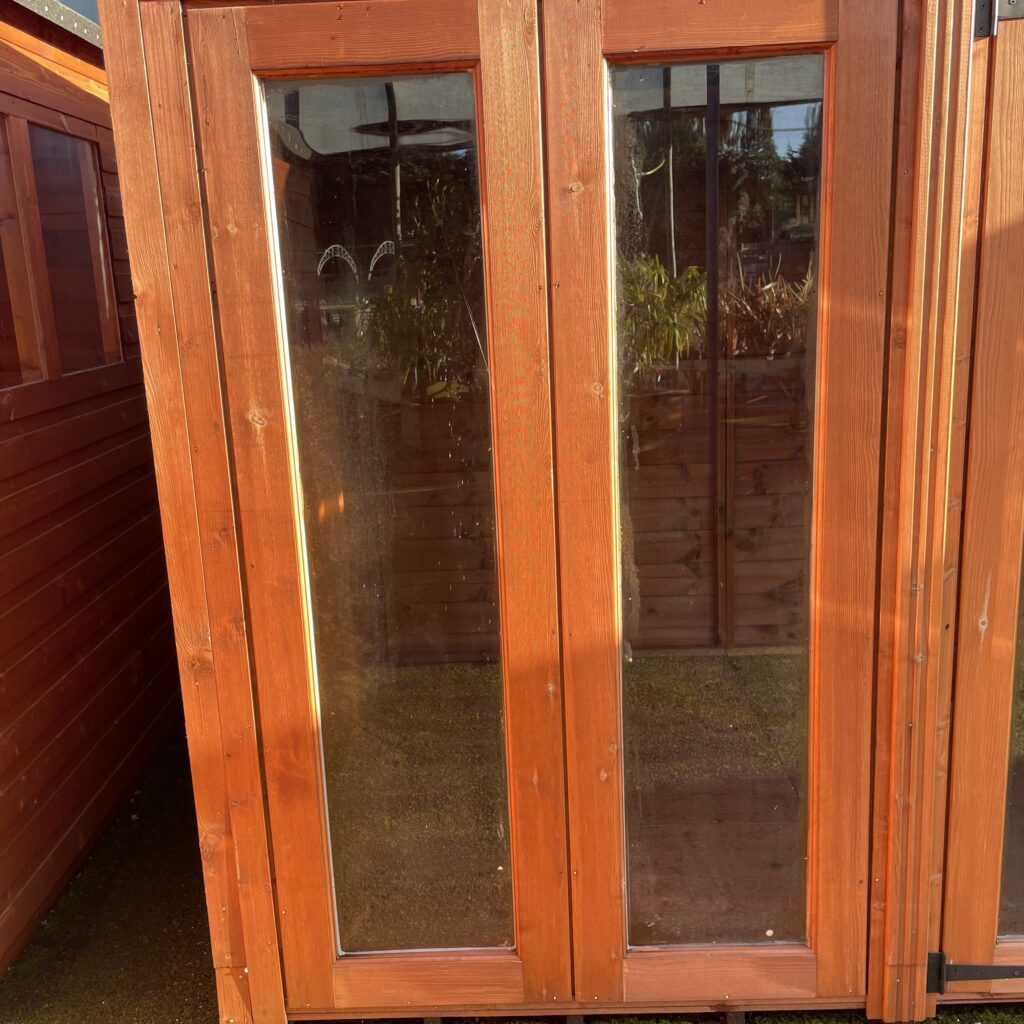
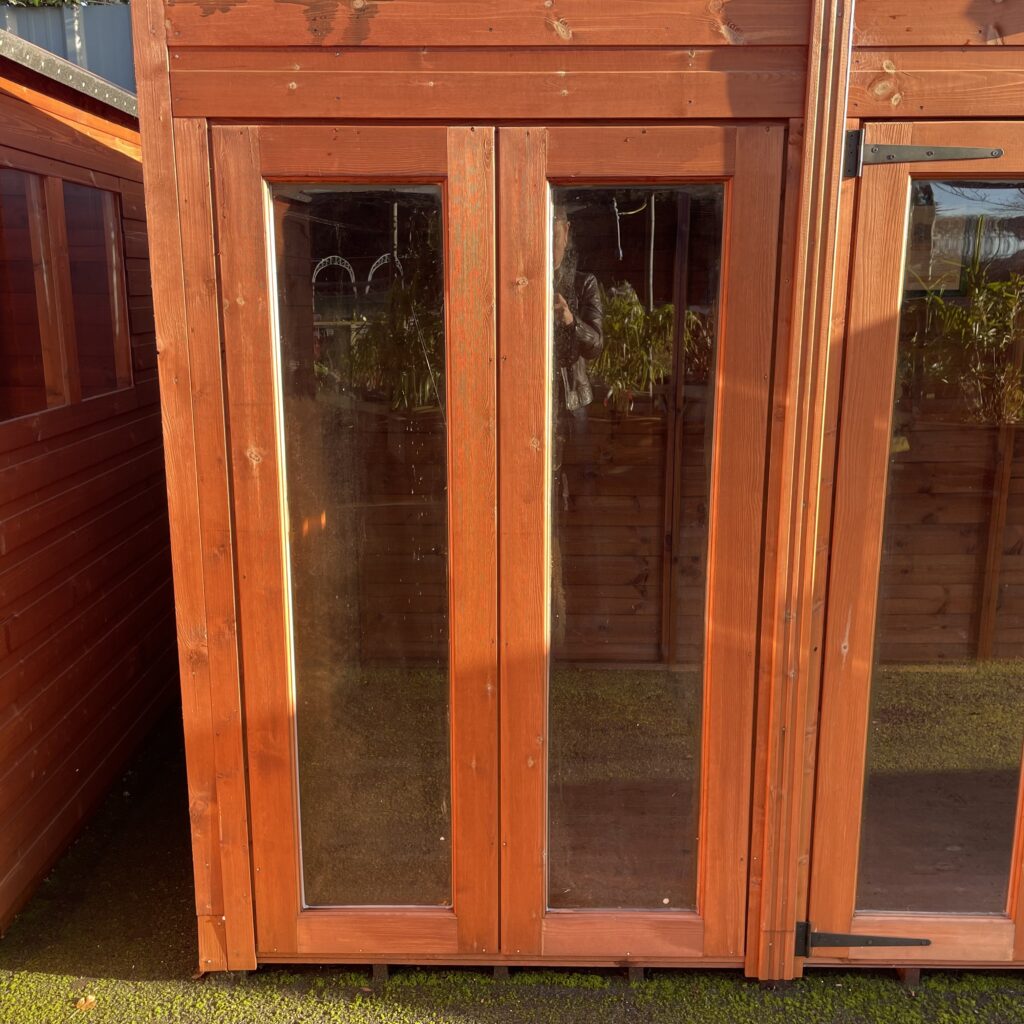
Standing in front of the building at Otley, the first thing that struck me was how much light it lets in.
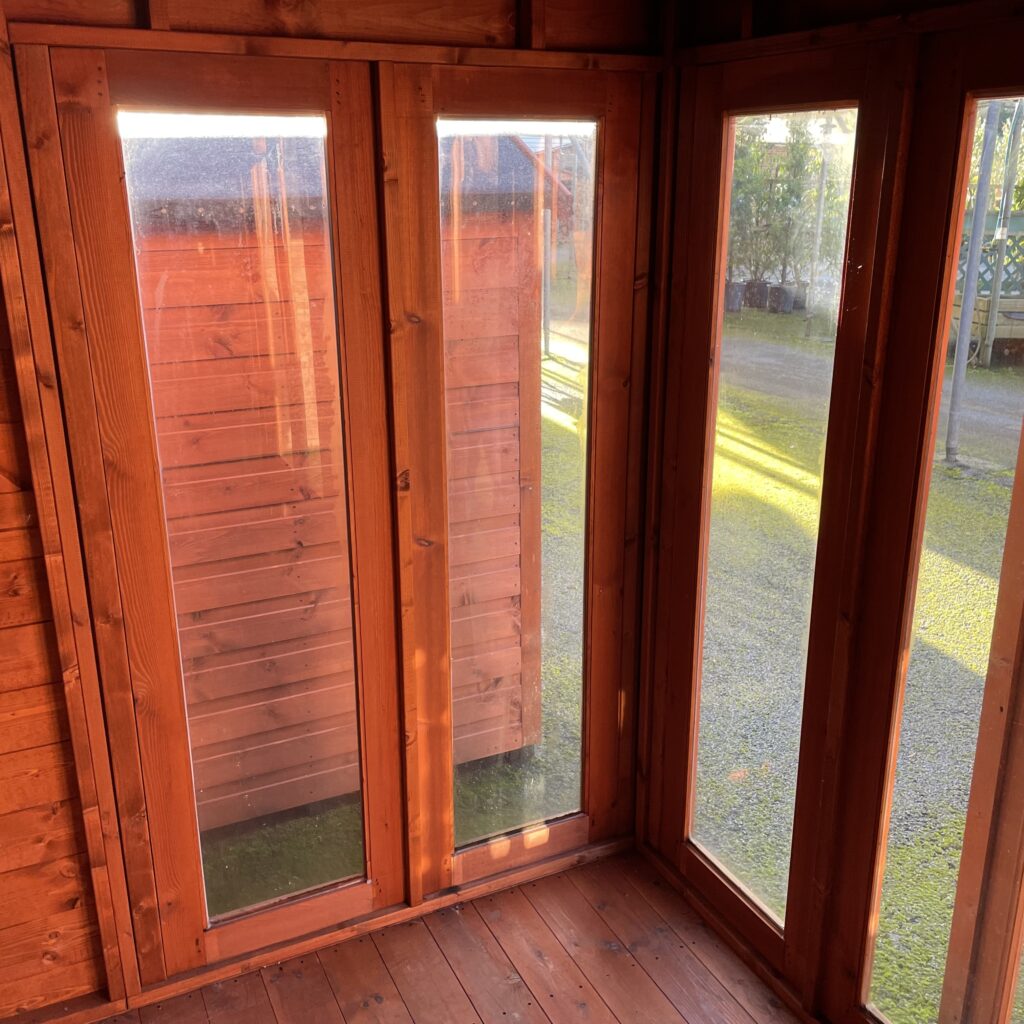
The full-pane glazing looks clean, modern, and — crucially — not over-framed.
That’s important, because one of the risks with modular systems is that structural framing starts to eat into window space. You end up with thick timber interrupting sightlines and breaking up the glass visually.
That doesn’t happen here.
There’s enough timber to give the panels rigidity, but not so much that the windows feel boxed-in or heavy. The balance is right.
From the outside, it looks contemporary without being stark — modern, but still recognisably timber-built rather than flat-pack or industrial.
Doors, Cladding & Initial Build Quality
Opening the doors was my first real “tell”.
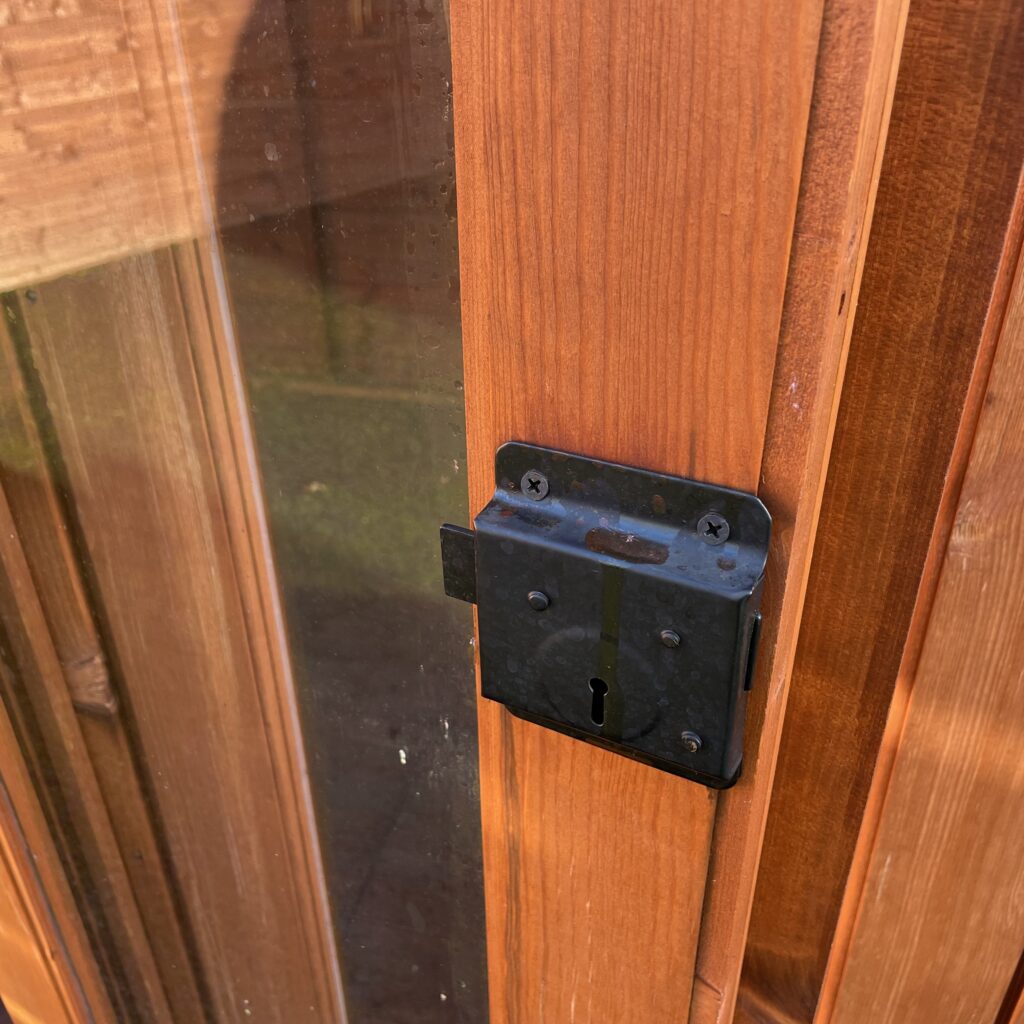
They’re pre-hung, and it shows.
There was no resistance, no catching, no sense that you’d need to wrestle them into alignment during installation. They opened smoothly, closed cleanly, and sat square in the frame.
That smoothness you feel at the show site is almost certainly what you’ll experience once it’s assembled at home — assuming it’s installed on a properly prepared base.
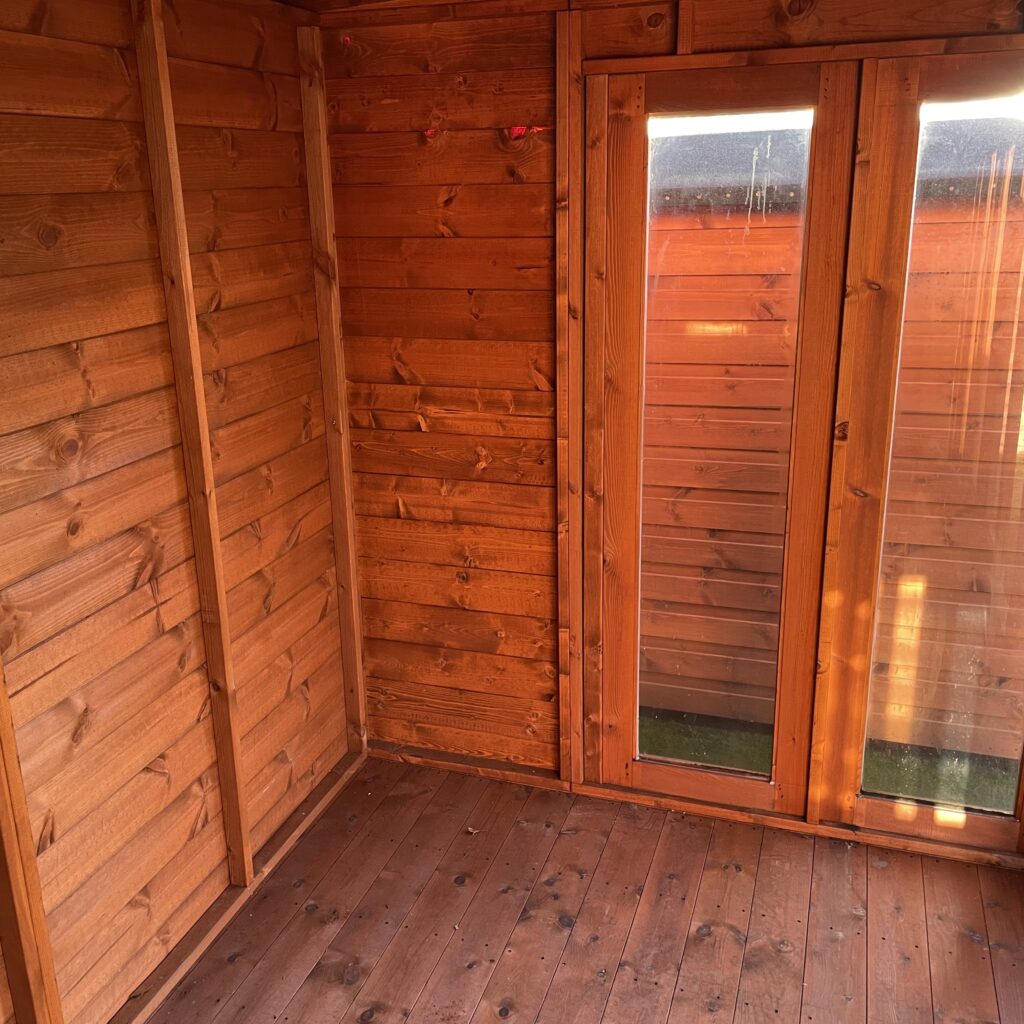
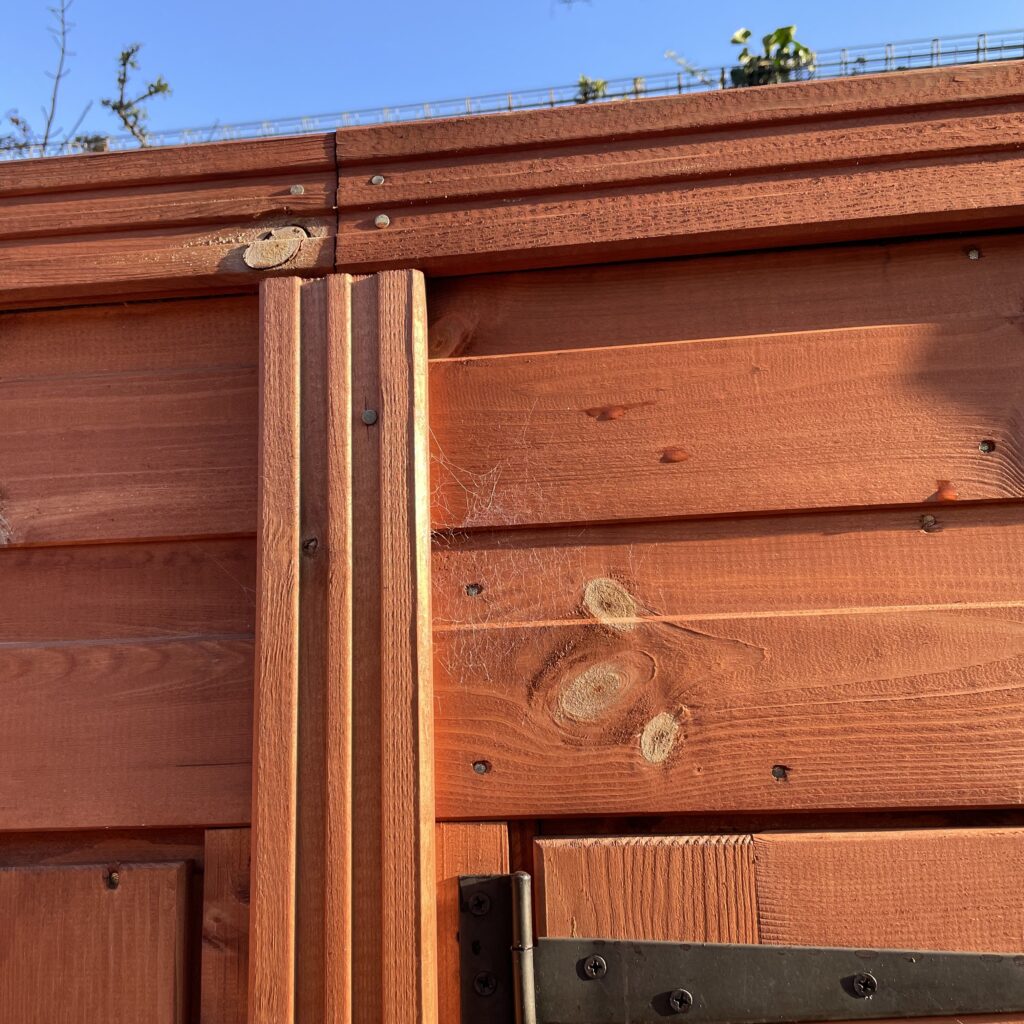
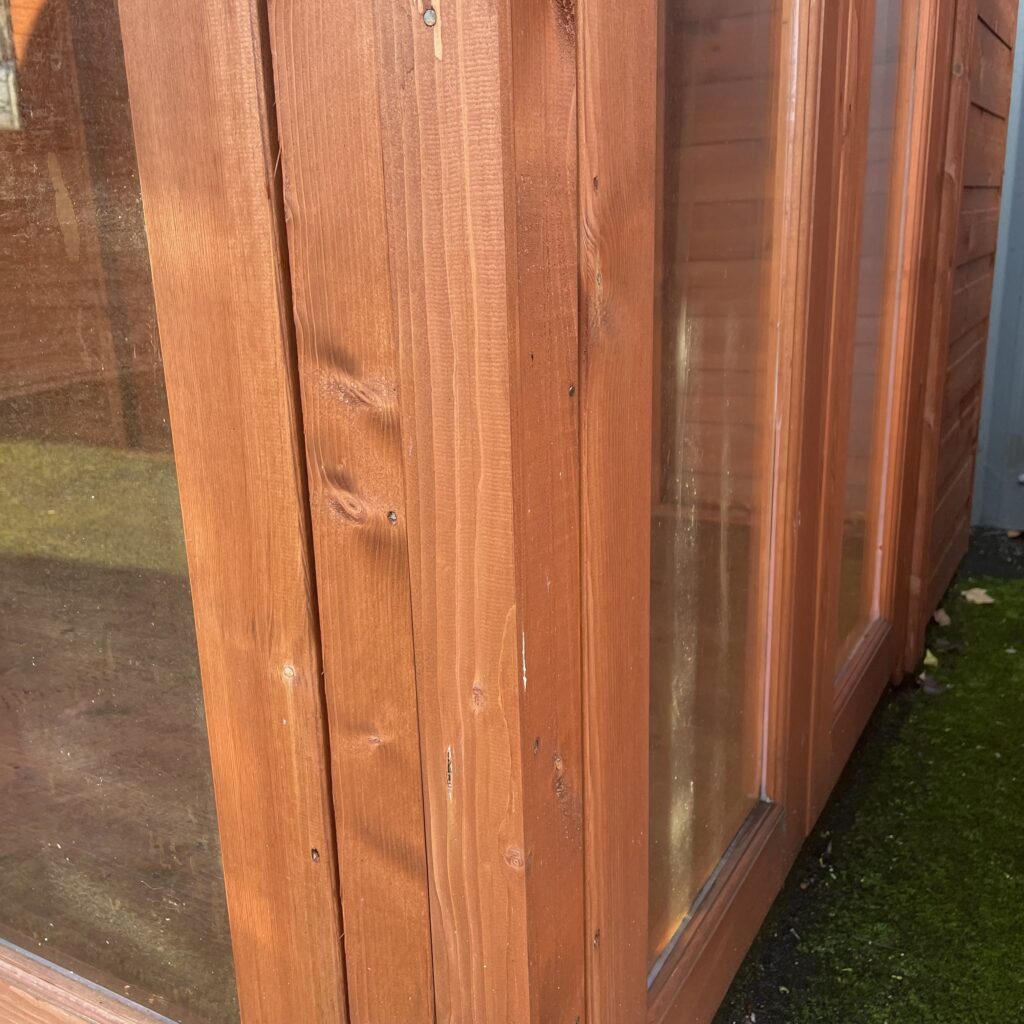
The external cladding is 12mm shiplap tongue-and-groove, which is the same standard Tiger use across their better sheds and summer houses. It’s smooth, well milled, and reassuringly solid — no rough cuts, no fuzzy edges, no obvious shortcuts .
At this point, my earlier reservations about the TigerFlex system were already starting to soften.
The Floor: A Quiet Confidence Test
The floor is always one of the first things I test, because it tells you a lot about how a building will feel long-term.
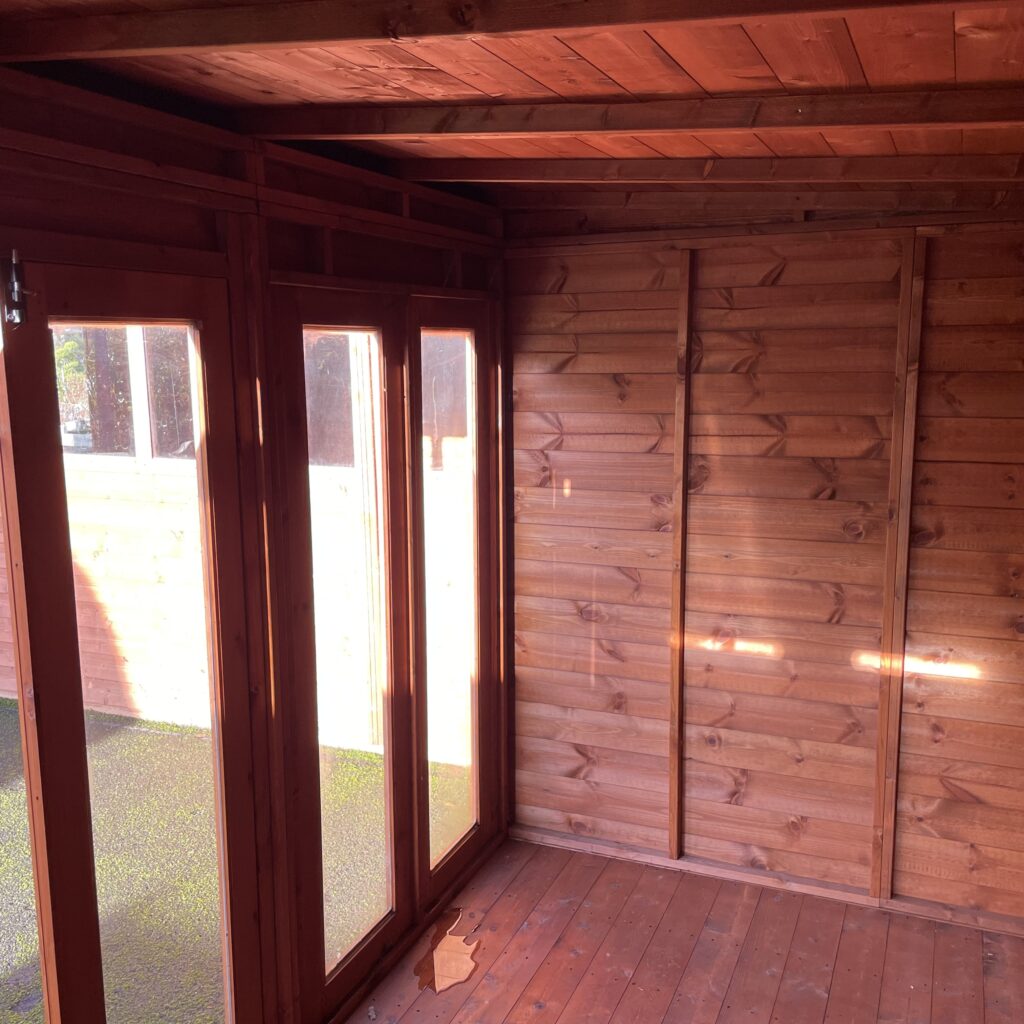
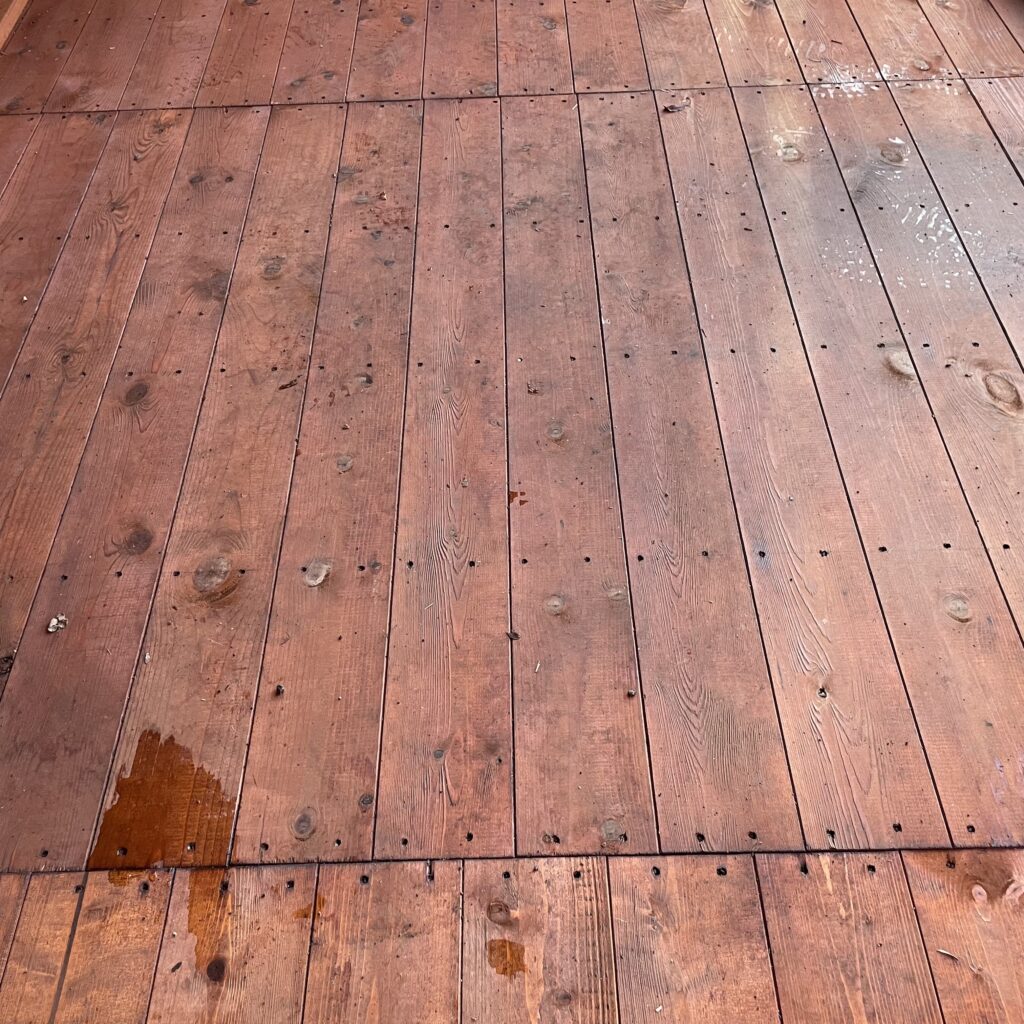
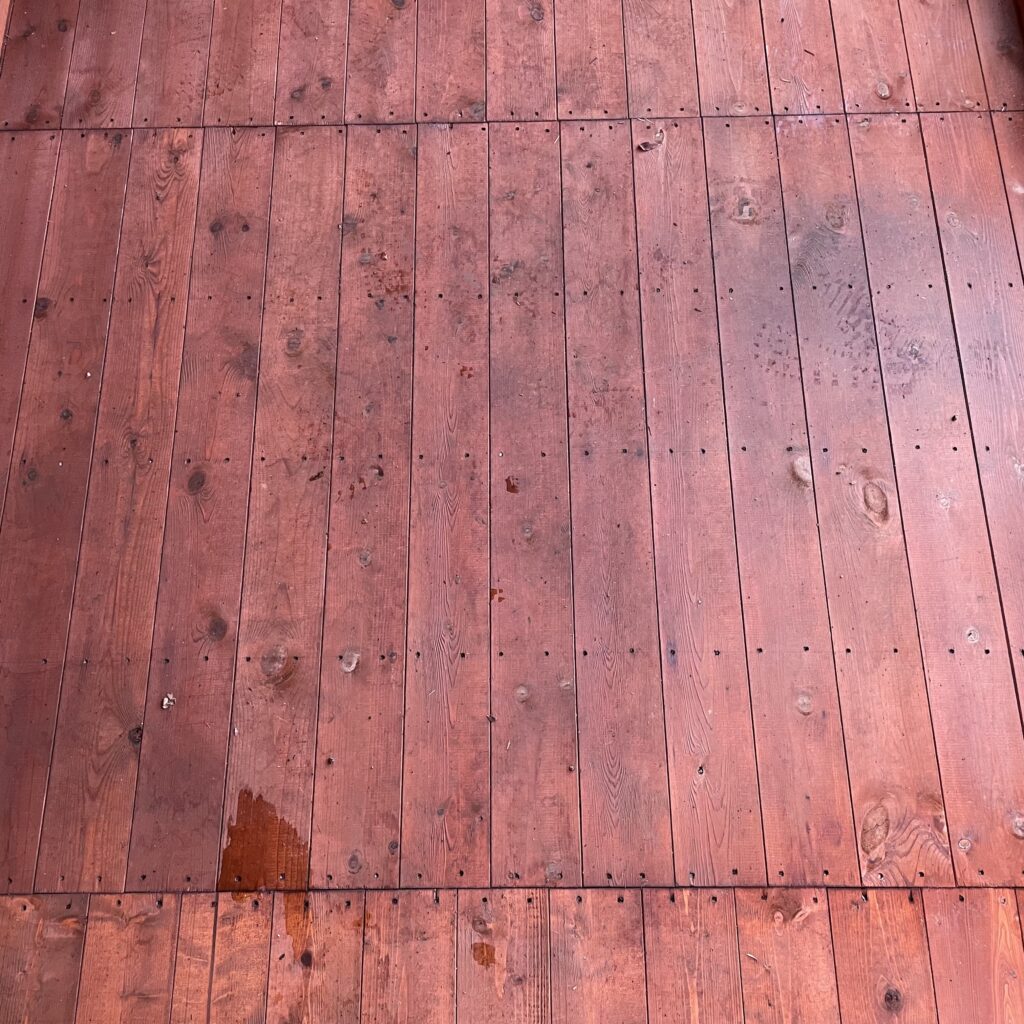
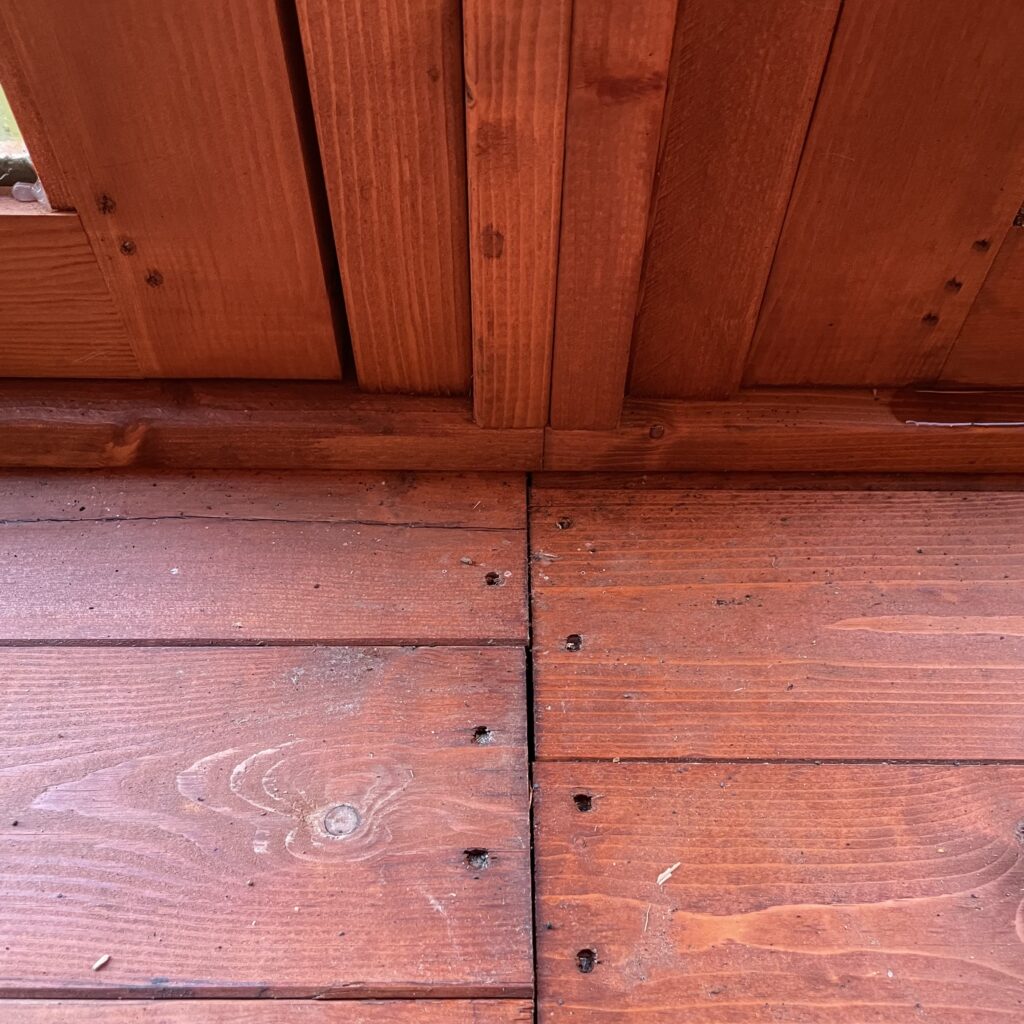
The unit we inspected was made up of three floor modules, and the joins were impressively clean. No visible gaps, no lips between panels, no unevenness underfoot.
We carried out our usual 75kg central load test, measuring before and after using a laser. The result was around 2mm of deflection.
To put that into real-world context: that’s roughly the thickness of a pound coin.
Walking around inside, the floor felt:
- Solid
- Quiet
- Sure-footed
No creaks. No springiness. No sense that the panels were flexing independently.
For a modular floor system, that’s an excellent result.
Walls, Framing & Why Modular Helps Here
This is the point where the TigerFlex system genuinely impressed me.
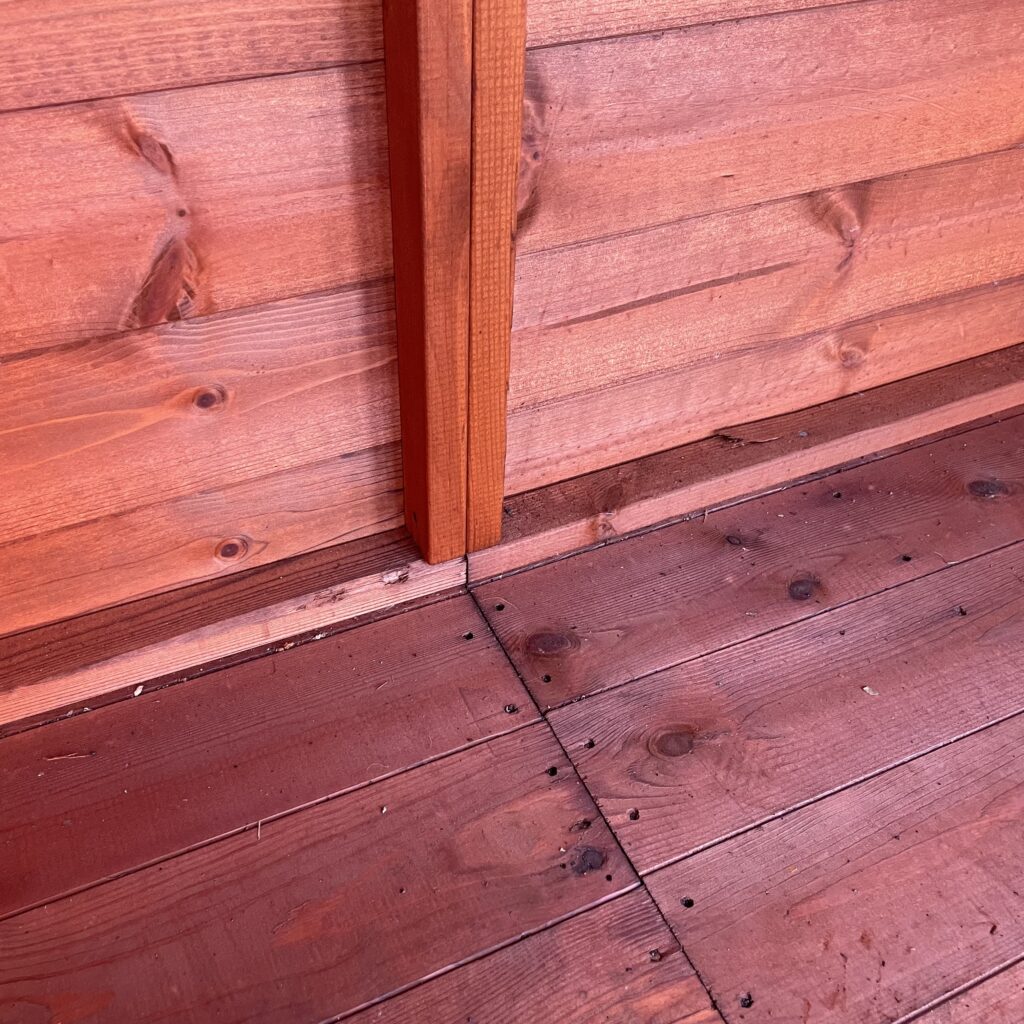
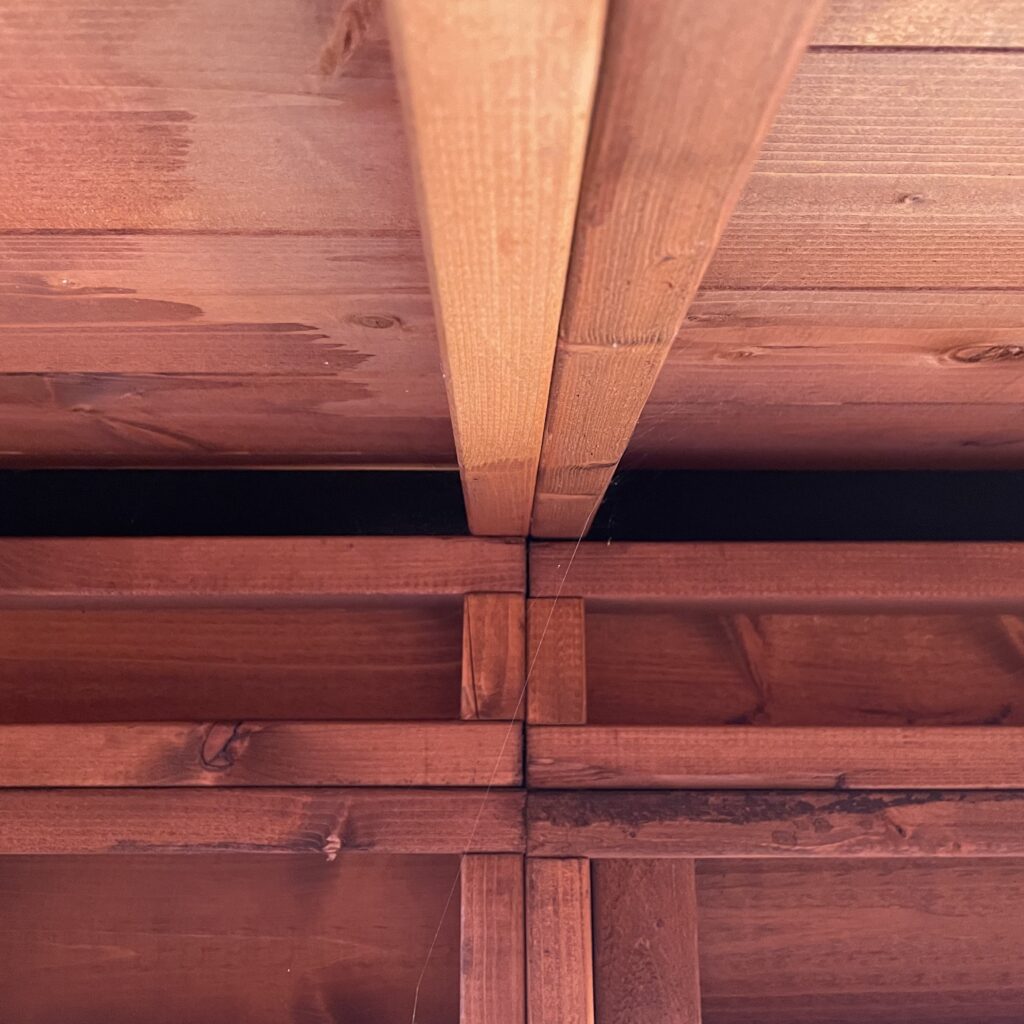
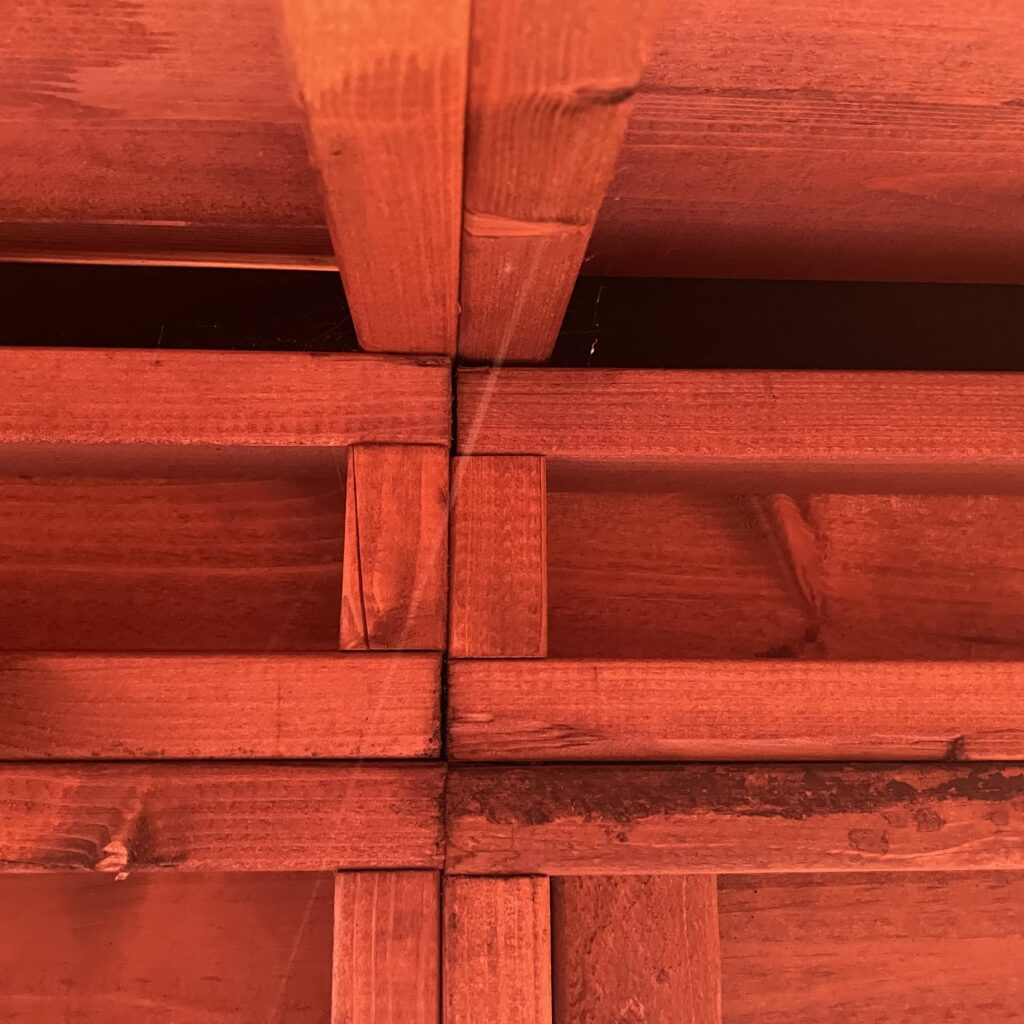
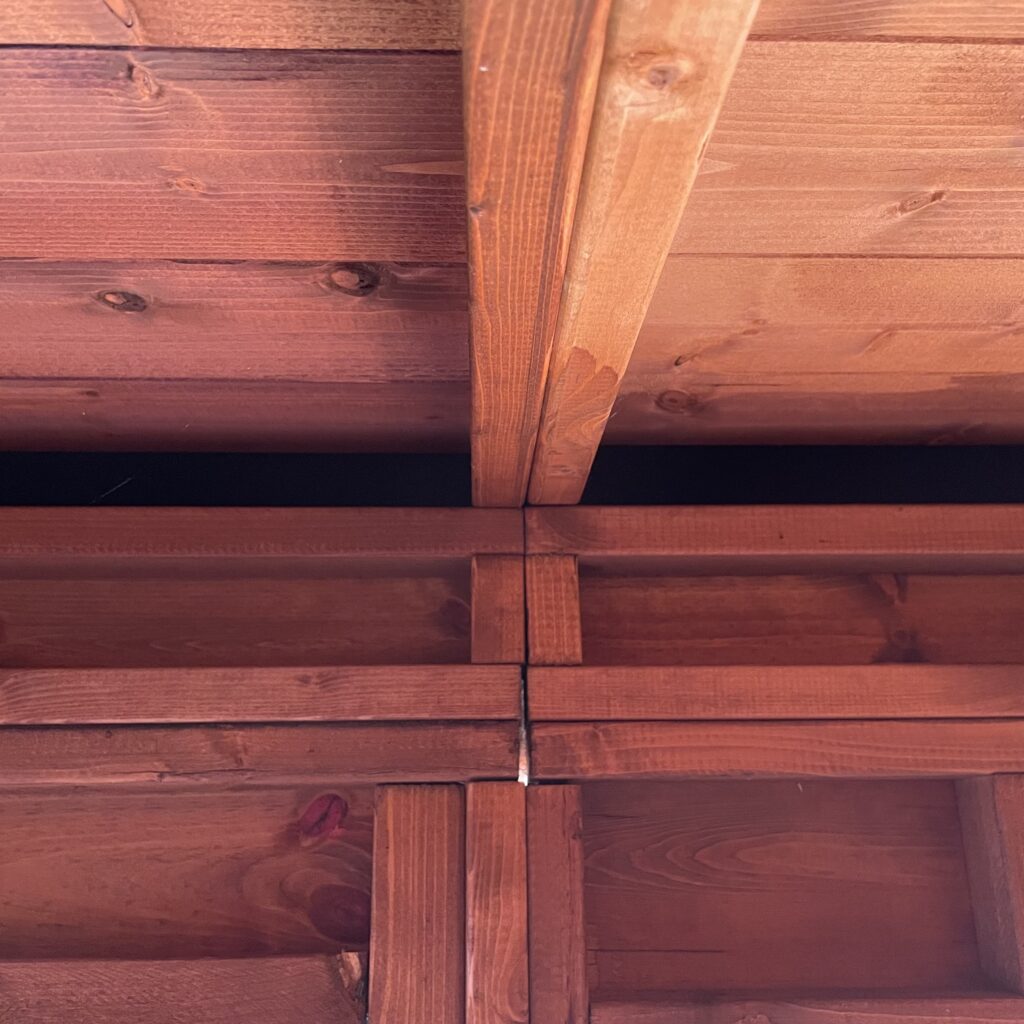
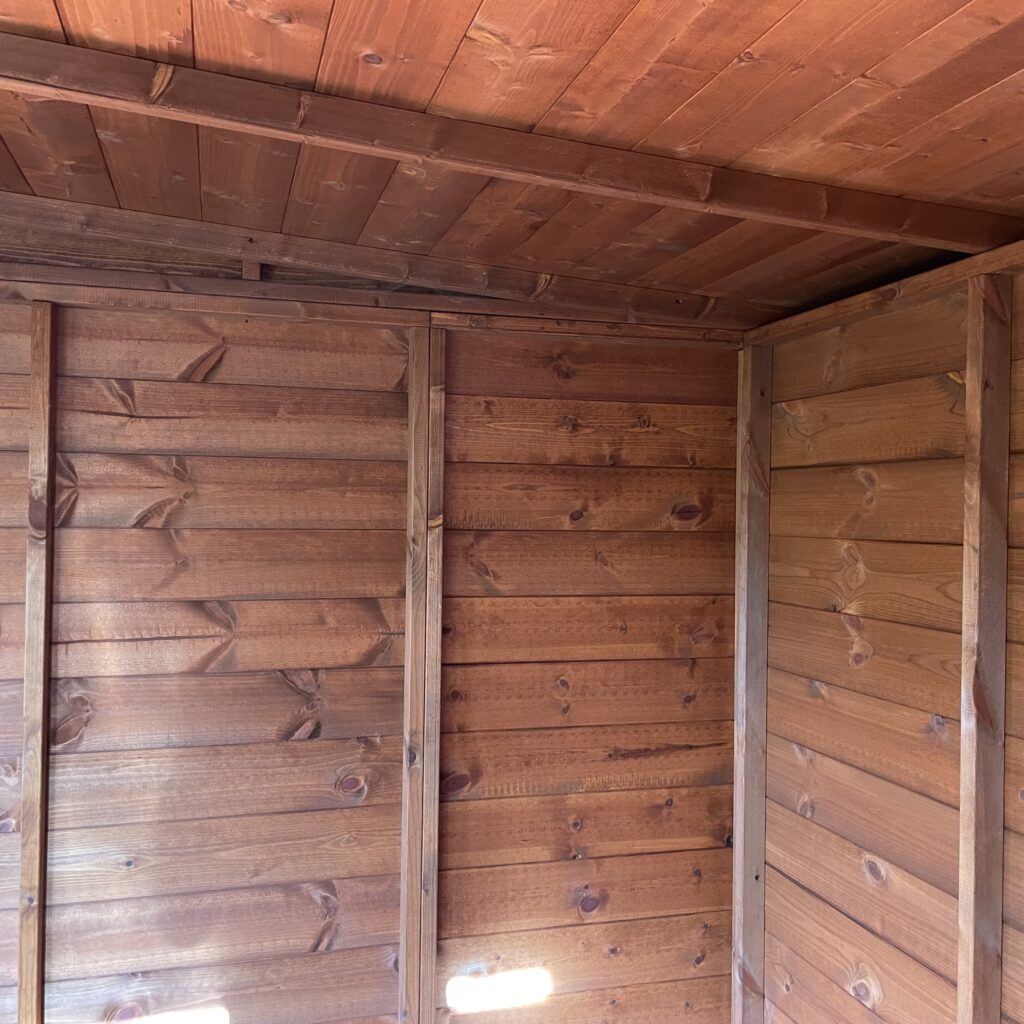
In a traditional summer house, you usually have single framing members running vertically. In the TigerFlex system, where panels meet, framing is effectively doubled.
Those doubled sections then tie into the roof structure, and in the pent-roof design there’s a continuous band of reinforcement running around the top of the walls — almost like a structural halo.
The result is a building that feels locked together, rather than stacked.
At no point did the structure feel compromised by its modular nature. If anything, it felt more rigid than some non-modular summer houses we’ve inspected at a similar price point.
That was unexpected — and genuinely reassuring.
The Pent Roof: Subtle but Effective
Pent roofs don’t always get the credit they deserve.
In this case, the pent design contributes both aesthetically and structurally. Internally, it creates a sense of openness without pushing the building too tall. Externally, it keeps the lines clean and modern.
More importantly, the way the roof ties into the wall framing adds stiffness across the whole structure.
It doesn’t feel like a lid placed on top — it feels integrated.
Windows & The One Area We Always Flag
The glazing itself is toughened glass, which is exactly what you want in a summer house — safer, stronger, and more durable than standard horticultural glass .
However, this is the one area where we consistently flag a note of caution across much of the Tiger range.
The installation method involves:
- Applying silicone
- Seating the glass
- Tacking it in place with small glazing beads
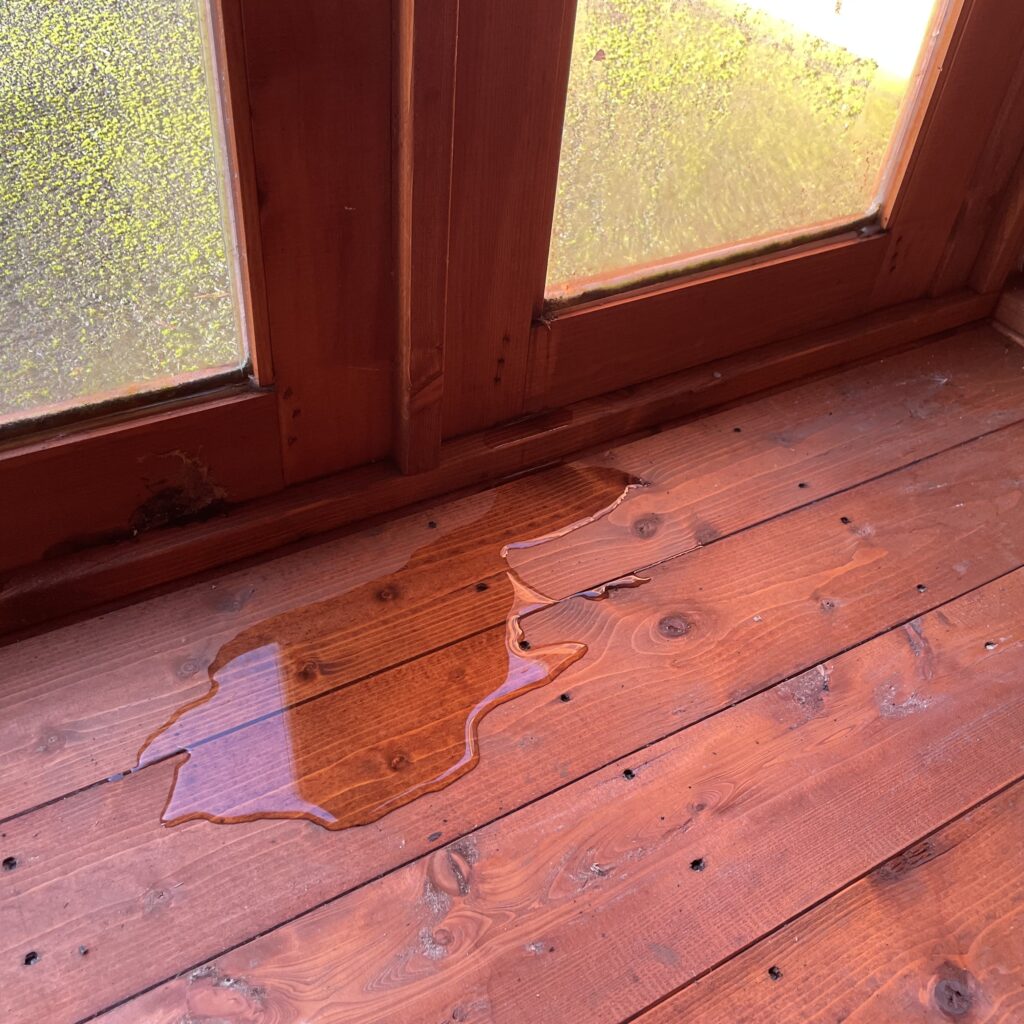
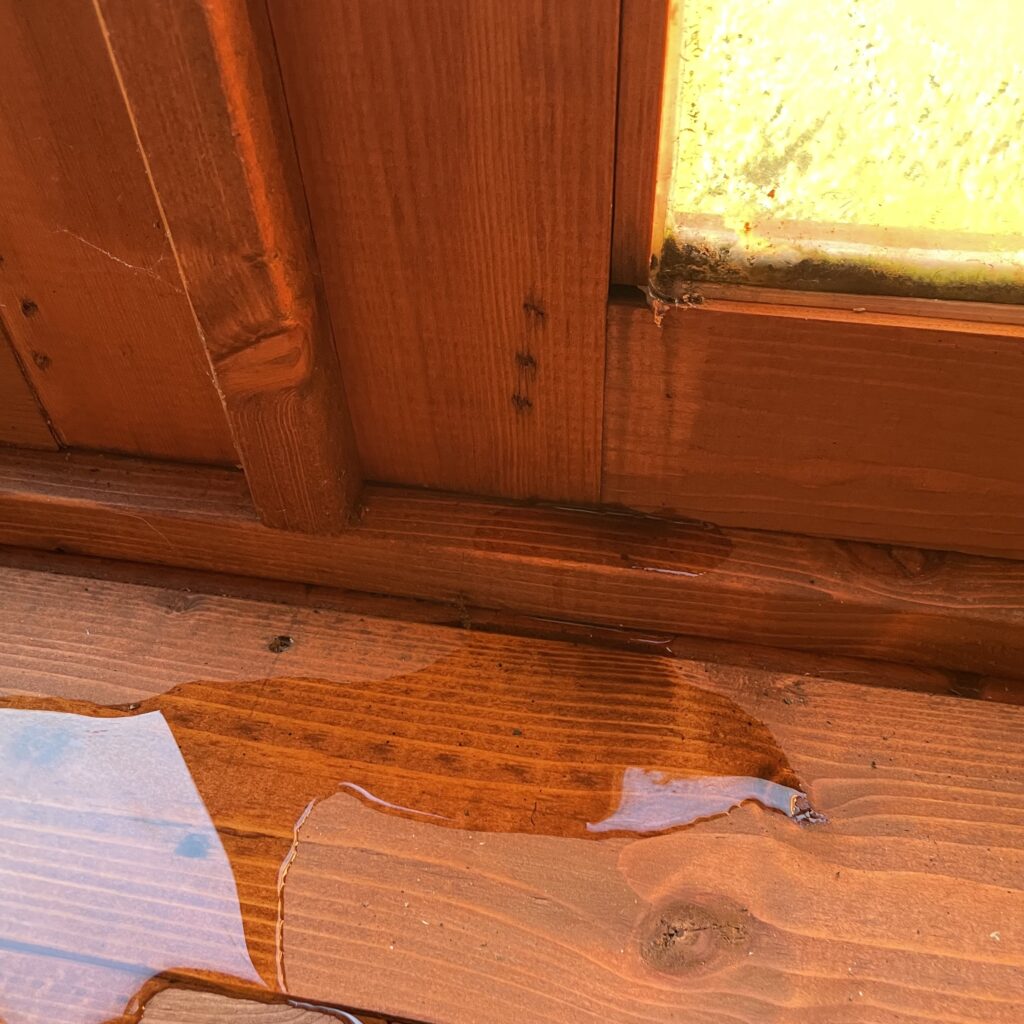
When we visited Otley, it was after a storm, and we noticed minor water ingress at the bottom of one pane.
Importantly, this wasn’t due to:
- Warped timber
- Poor panel alignment
- Or flaws in the modular joins
It was simply a small area where silicone hadn’t been fully applied.
In a way, that was reassuring — because it showed the structure itself was sound. But it’s also a reminder that careful glazing installation matters.
Do it properly, and you’ll be fine. Rush it, and you may regret it later.
How It Felt Inside (The Post-Storm Reality Check)
Inside the building, the contrast with the outside conditions was immediate.
It was:
- Noticeably drier
- Quieter
- Slightly warmer
- Calm, compared to the cold, wet conditions outside
The air inside had that unmistakable dry timber smell, rather than the dampness you sometimes encounter in cheaper garden buildings.
For a structure built with 12mm cladding, that’s exactly what you want to experience.
Light levels were excellent, but not harsh. The glazing floods the space without making it feel exposed or clinical.
It felt like somewhere you’d actually want to sit — not just somewhere you could.
Living With the Space: Day-to-Day Reality
One of the things I always ask myself during an inspection is:
Would this still feel good after six months of real use?
In this case, I think the answer is yes — provided it’s used for the right purpose.
As a:
- Small garden room
- Reading space
- Compact home office
- Light hobby room
- Or simply a place to sit and enjoy the garden
It works extremely well.
The glazing creates a strong connection with the outside without making the space feel flimsy or temporary.
Where It Sits in the Tiger Range
This is where nuance matters.
There’s a sweet spot in the size range.
- The smallest sizes (4×4, 4×6) can feel a bit too compact to fully exploit all that glazing.
- The largest size (12×6) starts to overlap with Tiger’s more traditional summer houses, which — aesthetically — may be a better choice at that footprint.
If you’re firmly in the small-to-mid-size category, this building makes a lot of sense.
If you’re pushing into larger footprints, it’s worth comparing it carefully with Tiger’s purpose-built summer houses and retreat models.
Final Verdict
Overall, the TigerFlex Shiplap Pent Full Pane Summer House is a very well-made building, and it genuinely changed my opinion of the TigerFlex system in a positive way.
It doesn’t feel like a compromise.
It doesn’t feel temporary.
And it doesn’t feel like a “shed pretending to be a summer house”.
Instead, it feels like a thoughtfully engineered modular building, designed to solve real-world problems around space, light, layout, and delivery time.
If you’re looking for:
- A small to mid-sized contemporary summer house
- Fast delivery
- Flexible configuration
- Solid, well-engineered construction
This is a strong contender.
And as a modular pent-roof summer house done properly?
This one genuinely surprised us — in a good way.