EXPERT REVIEWED
  FREE DELIVERY
  INSTALATION AVAILABLE
 Tigerflex Shiplap Pent Windowless Double Door Shed – Expert Review
First Added - November 28 2025
Last Updated - November 28 2025 - 0 Data Points Updated - 0 Data Points Added
Reviewed & curated by a panel of garden building experts. Using methodology 1.1
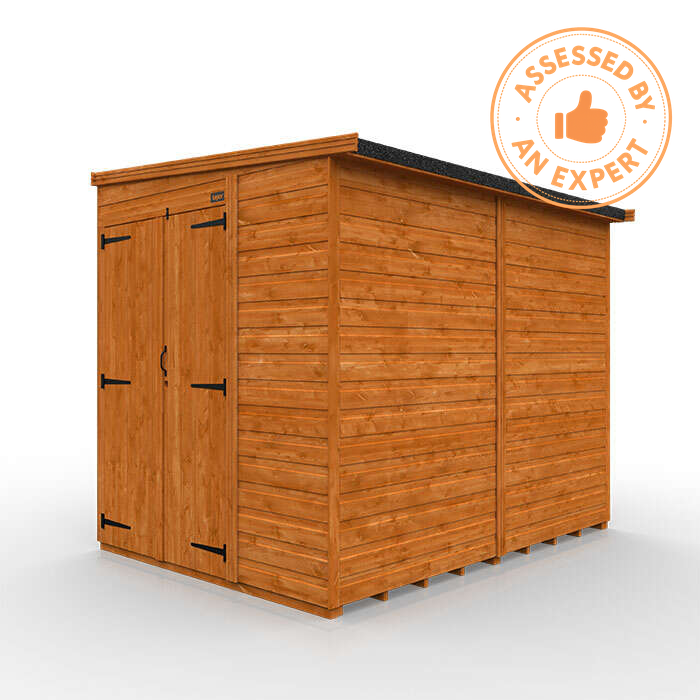
Product ID: tiger-sheds-tigerflex-shiplap-apex-windowless-double-door-shed
Size: Multiple sizes available
Merchants Checked: 10
The TigerFlex Shiplap Pent Double Door Windowless Shed is the sort of building that makes sense the moment you picture a real UK garden: a fence line you don’t want to lose, a narrow access route, a shed that has to do honest storage duty all year round — and a roof shape that doesn’t waste height where you don’t need it.
Where an apex roof is all about symmetry and classic shed character, the pent roof is about practicality. It’s a cleaner, more modern silhouette, it typically encourages water to shed in a single direction, and it tends to feel more “usable” at the front edge because you get that higher face exactly where you’re standing, lifting, wheeling, and reaching.
In TigerFlex form, the pent design becomes even more interesting — not because it turns the shed into something exotic, but because it quietly removes the usual headaches: giant wall panels you can’t get into the garden, awkward door placement, and that classic problem where the shed layout forces you to compromise. With TigerFlex, you configure the panels to suit your space, and the pent roof simply leans into that “make it work for your garden” philosophy.
At-a-glance: what this shed is really for
This is a windowless, double-door storage shed — which is a very particular (and very useful) combination.
- Windowless means privacy, security, and fewer weak points.
- Double doors means wide access for bulky kit (mowers, bikes, tool chests, furniture).
- Pent roof means a slightly more “workmanlike” feel: better placement against boundaries, a cleaner profile, and more practical headroom where you actually stand.
If you want a bright hobby room, this isn’t it. But if you want a shed that behaves like a shed — a secure, reliable store that you can load heavily and forget about — the pent double-door format is one of the most sensible layouts you can choose.
First impressions: the pent roof changes the attitude
Stand in front of the shed and the first thing the pent roof does is pull your eye forward. It’s not trying to be quaint. It looks purposeful — almost like a smart storage unit rather than a traditional garden feature.
What I like about the pent roof on a windowless shed is that it suits the psychology of the product. You’re not buying it for charm. You’re buying it because you’ve got equipment you want stored properly, out of sight, and easy to get to.
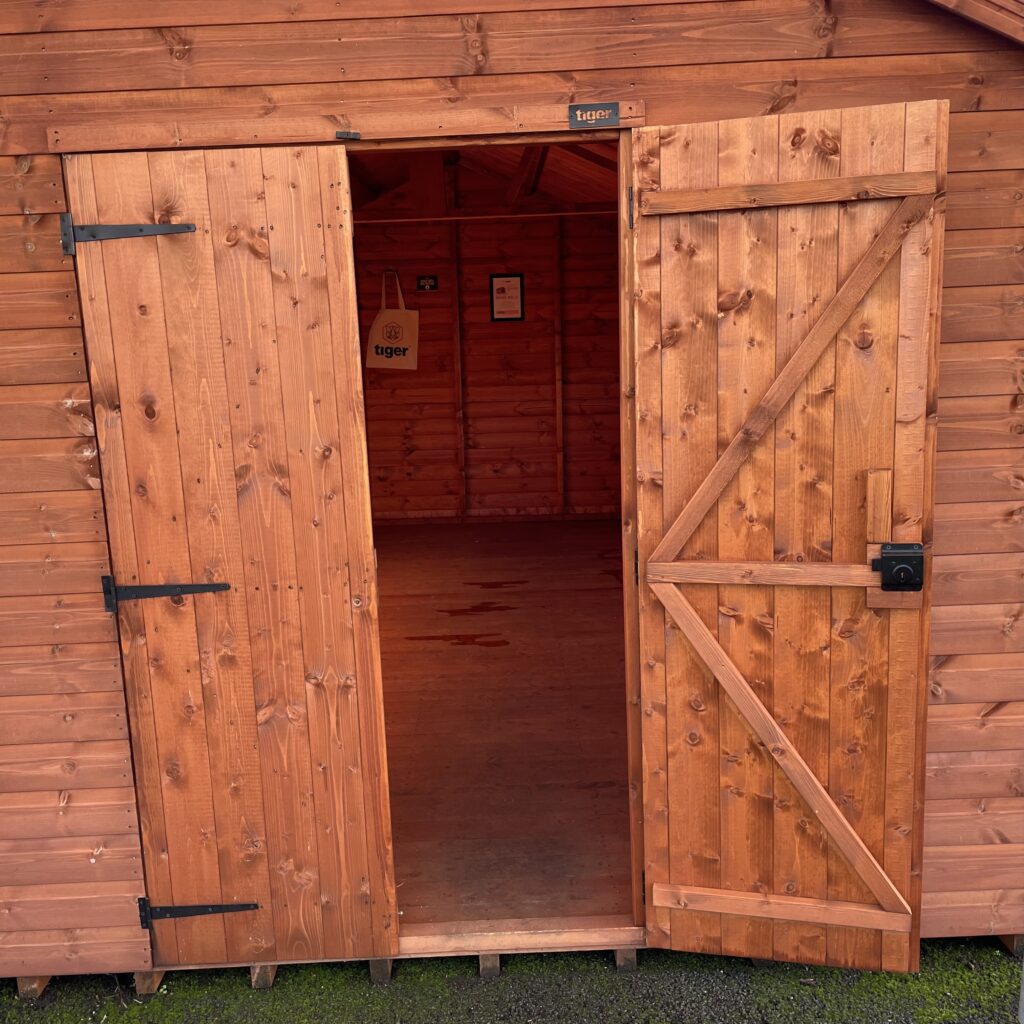
And that’s where the double doors come in: before you even touch anything, you can tell this shed is designed to be used in big, practical movements — open wide, move the awkward object, close up again. No shuffling. No swearing. No clipped handlebars or mower wheels catching a narrow doorway.
The double doors: wide access without the usual flimsiness
Double doors can be brilliant — or they can be the weak point of the entire building. The difference usually comes down to two things: bracing and alignment.
On the TigerFlex double-door format, the doors tend to feel more disciplined than you’d expect because each leaf is inherently smaller than a single big door. That matters. Narrower doors don’t twist as easily, the bracing tends to do more work per square inch, and hinge load is more evenly behaved over time.
In day-to-day use, it’s the “feel” that tells you everything:
- The doors open without that sudden diagonal drag you get on cheaper sheds.
- They shut with a firmer, more square landing — less of a rattle, more of a confident close.
- When both are closed, the front feels like a proper barrier rather than two panels waiting to be bullied.
The practical advantage is obvious the first time you use it properly. You can walk kit straight in. You can stand at the threshold and load the back corners without contorting. You can open the shed up wide to ventilate it after rain, then lock it down and return it to “storage mode”.

Security: strong fundamentals, with one honest upgrade worth considering
A windowless shed starts with an advantage: there is simply less to attack. No glass. No obvious “weak corner” to exploit. It’s a plain, private timber shell designed to keep things out of sight.
With double doors, the security story becomes more nuanced — not because the doors are weak, but because the door area is always the most likely target. On most sheds in this class, hinges are fixed using standard external screws. That’s common. It’s normal. But if you’re storing high-value kit (and people often are, precisely because the doors are wide), it’s worth doing one simple thing:
- Add hinge bolts or tamper-resistant fixings, and/or
- Fit an internal security bar or a cross-door brace for peace of mind.
It’s not a criticism. It’s just the reality of timber sheds: if security matters, treat it like a system. The shed gives you the strong shell; you add one small upgrade and you remove the most common vulnerability.
Inside the shed: why pent roofs often feel more usable
Here’s the part people don’t always expect: the roof shape changes how you use the interior. A pent roof tends to create a slightly different rhythm inside the space. You naturally gravitate to the taller face when you’re moving things in and out, and the “slope direction” subtly influences where shelves, hooks, ladders, and long-handled tools want to live.
On a windowless model, the doors effectively become your light source. That means the most “workable” zone is often the front third of the shed — and a pent roof suits that perfectly because it typically gives you your most comfortable headroom right where you’re standing.
With double doors, you also get something else: air control. Windowless sheds can feel a little still on damp days. Open both doors and the whole interior clears quickly. Close and lock, and it returns to being that quiet, private store.
Floor and wall behaviour: where good sheds feel different
On a well-built shed, you notice quality in two very unromantic places: under your feet and in the way the walls respond when you lean against them.
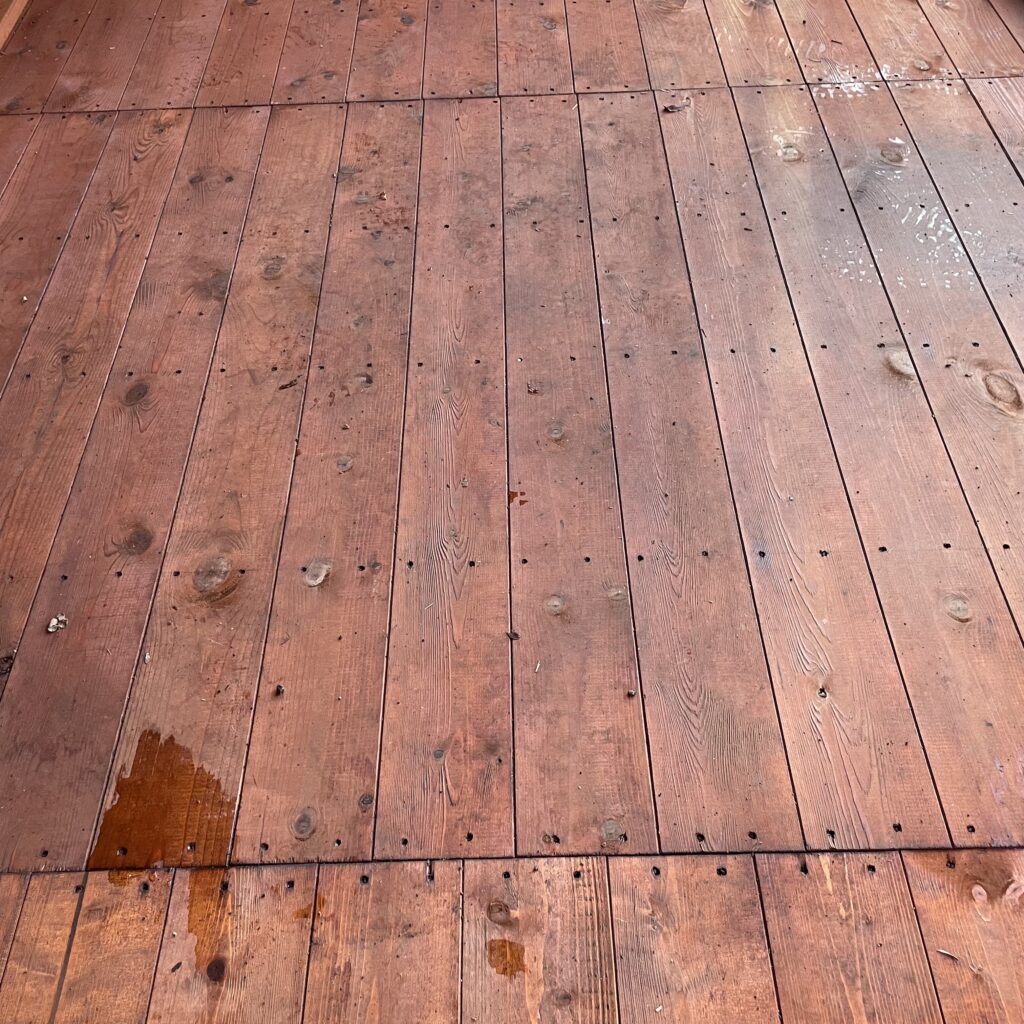
A tongue-and-groove floor typically feels less “hollow” than sheet materials. You don’t get the same drum-skin sensation as OSB. And on a properly framed wall, you get controlled movement — not the unnerving flex that makes you feel as if you could push the shed out of square.
In TigerFlex form, the modular panel system can actually help the overall feel because the wall runs are made from shorter sections. That means more joints, yes — but also more framing points and more opportunities for the structure to lock together as a whole.
Cladding details: the “quiet signals” of a better shed
Most buyers look at a shed and ask, “Is it thick?” That matters, but the more revealing question is: how well is it made?
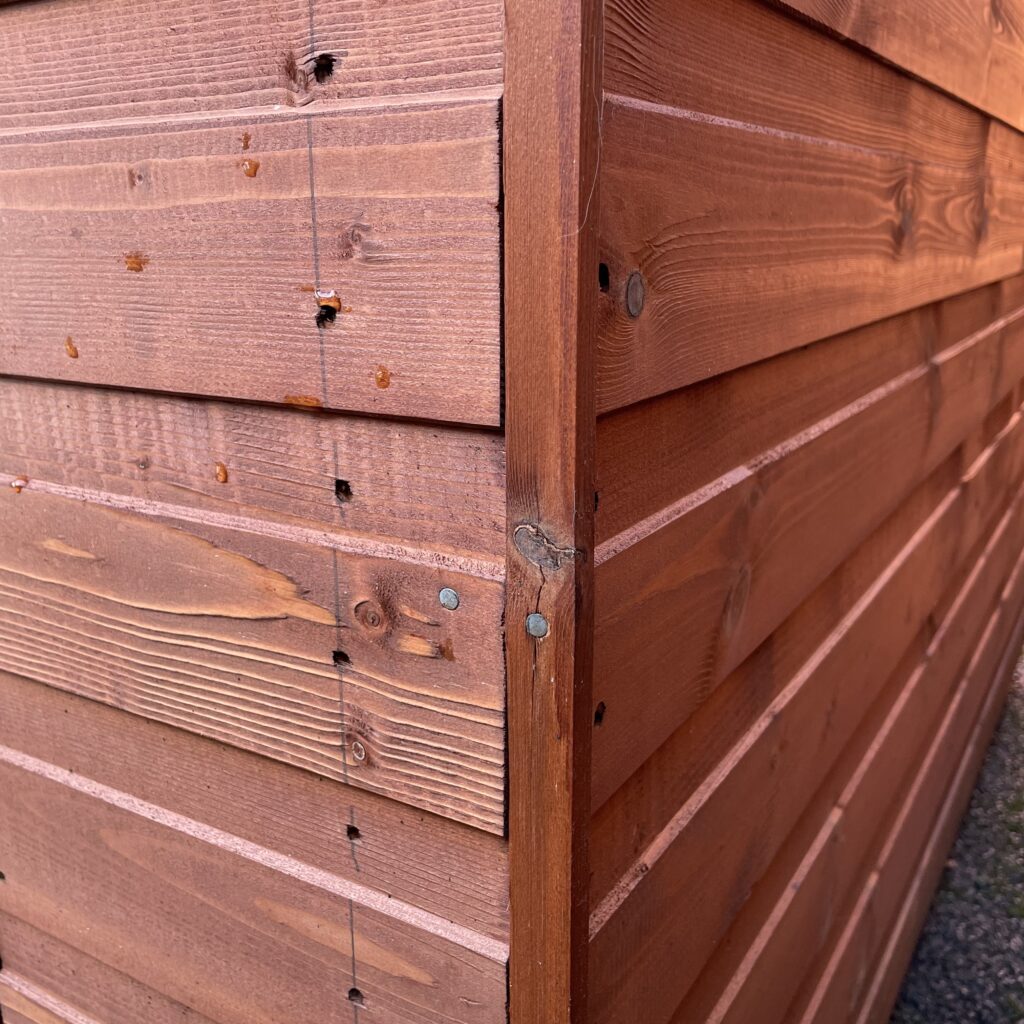
With shiplap tongue-and-groove, the quality signals are subtle:
- Consistent machining (boards sitting tight without awkward gaps).
- Clean joins that don’t look stressed or forced.
- A profile that encourages water to run away, not sit and soak.
When those details are right, sheds age better. They stay tighter. They resist that slow, seasonal loosening that turns some sheds into draughty boxes by year three.

Roof feel and refinement: what you notice when you look up
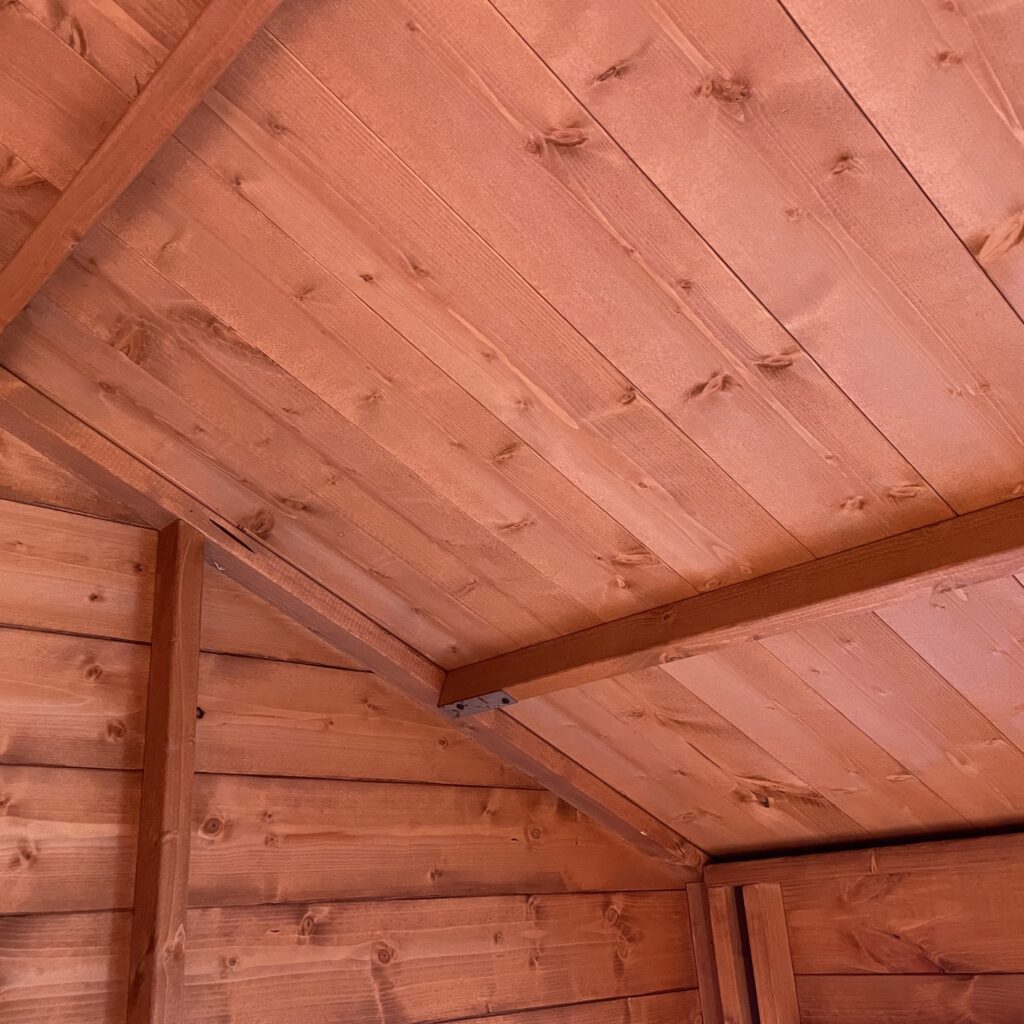
A pent roof is sometimes described as “simple”, but the best ones don’t feel cheap — they feel intentional. From inside, what matters is whether the roof boards look neat, whether the framing looks square, and whether everything gives the impression of being designed to stay put rather than merely survive assembly day.
On well-finished sheds, the ceiling view tells you a lot. If the boards look aligned and the framing looks tidy, you can usually expect the roof to stay calmer in wind, stay tighter in winter, and behave more predictably over the years.
Placement, base, and longevity: the unglamorous truth
If there’s one thing that decides whether a shed feels “tight and right” or slowly turns into a nuisance, it’s the base. A good shed on a bad base becomes a bad shed. Doors rub. Roof lines drift. Gaps appear. And people blame the shed.
A pent shed, in particular, rewards careful placement because you can choose which direction you want water run-off, and you can choose where you want the higher face. Set it up with a firm, level base, give the floor a little breathing room above surrounding ground level, and you dramatically reduce long-term moisture problems.
And then there’s treatment. Dip treatment is a start, but longevity comes from what you do after assembly: a proper wood preserver or paint, applied thoroughly, then maintained. That is how you cash in on the headline guarantee and keep the building behaving like a “proper shed” year after year.
Range overview: how to choose the right size
The pent double-door windowless format works across sizes, but it shines brightest in the mid-range footprints — the sizes where you’re storing awkward objects and you actually need the doors to earn their keep.
- Smaller sizes suit tool storage and compact gardens; they feel boxy and very rigid.
- Mid sizes (where mowers, bikes, and bulky kit become the norm) are where double doors feel like a genuine upgrade.
- Larger sizes start to behave more like mini-workshops in volume, but still keep the “secure store” personality because the design is windowless.
If you already know you want double doors, the question usually isn’t “do I need them?” — it’s “what size makes them worthwhile?” If you’re moving big kit regularly, they’re worth it. If you’re mostly storing hand tools, a single door may be enough.
Final verdict: a more practical shed for real gardens
The TigerFlex Shiplap Pent Double Door Windowless Shed is not a shed that tries to charm you. It tries to make your life easier.
You get the privacy and security benefits of a windowless build, the day-to-day usability of a wide entrance, and the purposeful practicality of a pent roof that suits modern gardens and boundary placement. Add a simple hinge-security upgrade if you’re storing higher value kit, treat it properly after assembly, and you’ve got a shed that should quietly do its job for years — without drama, without fuss, and without that creeping sense that you bought something disposable.
If you want a storage shed that feels like a tool, not a toy, the pent double-door TigerFlex format is one of the smartest choices in the range.